
Senior Living $300 a Month


Emergency SOS Phone

Orthopedic Pillow

Mattress Topper Memory Foam
Senior living doesn’t have to break the bank. With creative planning and support from Medicaid, veterans’ benefits, and nonprofit programs, it’s possible to find quality care for just $300 a month. While this price point covers basic housing, understanding what’s included and what’s not is key to making an informed decision. This guide explores real-world examples, financial strategies, and practical tips to help seniors access safe, supportive living environments without sacrificing dignity or comfort.
Finding quality senior living for just $300 a month might sound too good to be true—but it’s absolutely possible with the right approach. While traditional assisted living communities typically start at $4,000–$6,000 per month, there are niche models, public funding programs, and creative housing solutions that bring costs way down. The key isn’t always finding a “cheap” place—it’s matching the right type of support with realistic expectations about what $300 can and cannot cover.
Many people assume senior living means full-time nursing care or luxury amenities, but that’s far from the truth. For seniors who are mobile, need minimal assistance, or qualify for government aid, $300 a month can cover safe, clean, and socially engaging housing. It may mean sharing a unit with another resident, living in a smaller space, or accepting slightly older infrastructure—but modern senior living communities prioritize dignity, accessibility, and peace of mind above all else.
This article walks through how seniors and families can navigate this budget-friendly path. We’ll explore real examples, break down exactly what $300 covers, discuss eligibility for financial assistance, and offer practical advice for researching and applying to affordable senior housing options. Whether you’re helping a parent transition or planning your own future, understanding these alternatives opens doors you might not have known existed.
Key Takeaways
- Medicaid can cover most of the cost: In many states, Medicaid pays for room and board in certain senior living settings, effectively reducing out-of-pocket expenses to around $300 per month.
- Not all $300 plans include care services: At this price point, you’re typically paying only for housing—assistance with daily activities like bathing or medication may require additional fees or specialized programs.
- Veterans’ Aid and Attendance benefits are often underused: Many eligible veterans receive monthly stipends that can supplement income and make affordable senior living accessible.
- Nonprofit and faith-based communities offer low-cost options: Some religious organizations and charitable groups operate senior housing with sliding-scale fees based on income.
- Shared accommodations reduce costs significantly: Room-sharing or congregate living arrangements can bring monthly housing costs down to $300 or less while still providing safety and social interaction.
- Location affects pricing more than type of community: Rural areas or smaller towns often have lower rents than urban centers—your geographic location plays a bigger role in affordability than whether you choose assisted living vs. independent living.
- Caregiver support networks can fill service gaps: Local Area Agencies on Aging (AAA) and volunteer programs may provide meal delivery, transportation, or light housekeeping at no extra cost.
📑 Table of Contents
- What Does “Senior Living” Mean at $300 a Month?
- How Medicaid Helps Make Senior Living Affordable
- Other Ways to Reduce Senior Living Costs
- What Kind of Senior Living Options Fit the $300 Budget?
- Tips for Finding and Applying to Affordable Senior Housing
- Real Examples of $300 Senior Living in Action
- Common Myths About Low-Cost Senior Living Debunked
- Preparing for the Transition: What Seniors and Families Need to Know
What Does “Senior Living” Mean at $300 a Month?
When we talk about senior living at $300 a month, we’re usually referring to basic residential housing rather than full-service assisted living. Think of it like renting a modest apartment—but designed specifically for older adults. These communities often include shared dining areas, common spaces, and some level of staff presence during business hours. However, they don’t typically offer 24/7 personal care, medical monitoring, or private bathrooms unless paid extra.
For example, consider a small, family-run retirement home in a rural town. Residents pay $295 per month for a furnished bedroom, three meals a day in a communal dining room, weekly housekeeping, and access to a nurse on-call. There’s no elevator, but the building has wide hallways and grab bars in bathrooms. This fits the $300 model perfectly: housing plus core services, but not hands-on assistance.
Compare that to a typical assisted living facility where $300 only covers rent—you’d still need to pay separately for medications, showers, laundry, and emergency response systems. That’s why understanding the scope of services is so important. Always ask: What does my monthly fee include? Who handles emergencies? Is there someone available if I fall?
Another angle is congregate housing—think “senior apartments” where multiple units share kitchens, laundries, and lounges. Places like Decorating A Senior Living Apartment show how thoughtful design can make even modest spaces feel welcoming. These models keep costs low by maximizing shared resources while still offering independence.
Ultimately, $300 senior living isn’t about luxury—it’s about safety, companionship, and basic support. If you’re willing to trade private baths for shared dining or accept scheduled check-ins instead of round-the-clock care, this budget becomes viable. And thanks to government programs and nonprofit initiatives, it’s becoming more common nationwide.
How Medicaid Helps Make Senior Living Affordable

Visual guide about Senior Living $300 a Month
Image source: d1qiigpe5txw4q.cloudfront.net
One of the biggest game-changers for seniors on a tight budget is Medicaid. In most states, Medicaid covers the cost of room and board in licensed adult foster homes, board-and-care facilities, or even some types of assisted living—effectively letting residents pay only their personal allowance (around $100–$200 per month). That leaves just $100–$200 out of pocket, well within the $300 range.
Here’s how it works: If you live in a state-approved senior home and qualify financially, Medicaid pays the facility directly. You keep your SSI check untouched and use part of it for incidentals like clothing, phone bills, or personal care items. The facility gets reimbursed at a set rate—often close to the actual cost of care—so operators stay in business without raising prices.
But eligibility matters. Medicaid has strict income and asset limits. As of 2024, single applicants must have under $2,800 in countable assets and monthly income below $1,000 (though many states use higher thresholds). Married couples have different rules, and some states allow “spousal impoverishment protections.”
If you’re unsure about eligibility, contact your local Department of Social Services or visit Medicaid.gov. They can run a pre-screening tool and connect you with a case manager who specializes in elder law.
Also worth noting: Not every senior living setting accepts Medicaid. Smaller homes, newer developments, or high-end communities may refuse public funds due to administrative burdens or profit motives. But plenty of reputable, family-owned operations do accept it—especially in rural areas where staffing shortages make Medicaid reimbursement essential.
Pro tip: When touring facilities, always ask if they accept Medicaid and what the approval process looks like. Some require six months of documentation; others handle everything online. Knowing this upfront prevents surprises later.
In short, Medicaid transforms “impossible-to-afford” into “manageable-with-planning.” With it, $300/month becomes a realistic anchor for housing—not just a dream.
Other Ways to Reduce Senior Living Costs

Visual guide about Senior Living $300 a Month
Image source: needgenius.com
Beyond government aid, several other strategies let seniors stretch their dollars further. Shared living is one of the most effective. In roommate setups, two people split rent, utilities, and groceries—cutting individual costs by nearly half. Many communities actively encourage this model because it reduces isolation and increases occupancy rates.
Faith-based organizations also play a big role. Churches, synagogues, mosques, and temples sometimes operate subsidized senior housing. At places like Glenwell A Depaul Senior Living Community, residents benefit from both spiritual support and affordable rates. Fees are often based on income, meaning lower-income seniors pay less than wealthier ones.
Another overlooked resource is Veterans Affairs (VA) benefits. The Aid and Attendance pension provides up to $2,300/month for wartime veterans needing help with daily tasks. Even if you don’t need full-time care, this extra cash can cover rent, food, or transportation. Eligibility depends on military service duration and current health status—but many veterans qualify without realizing it.
Local nonprofits and charities also chip in. Groups like Meals on Wheels deliver nutritious dinners daily, saving hundreds in meal prep costs. Volunteer driver networks get seniors to medical appointments. And some organizations offer free home modifications—handrails, ramps, better lighting—to prevent falls.
Finally, timing matters. Moving during off-season (November through February) often yields lower rates. Smaller towns rarely have waiting lists, so you can negotiate or secure spots faster. And remember: Utilities, internet, and cable aren’t included in base fees—budget those extras separately.
By combining these approaches, seniors can turn $300 into a sustainable living solution. It’s not glamorous, but it’s honest, dignified, and increasingly common.
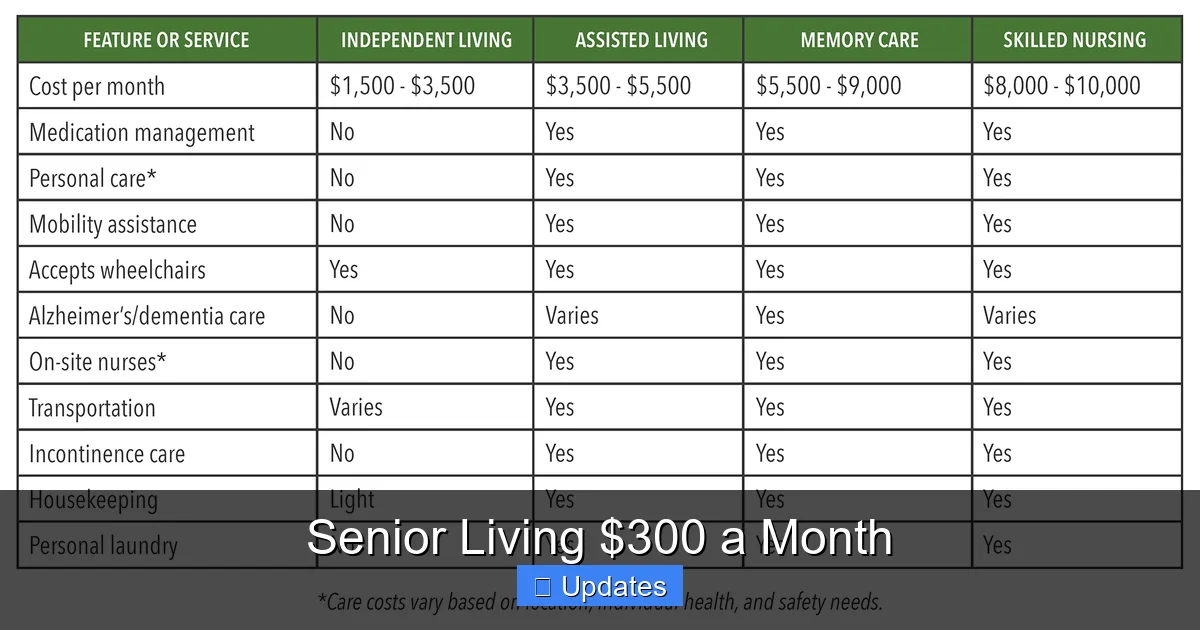
What Kind of Senior Living Options Fit the $300 Budget?
Visual guide about Senior Living $300 a Month
Image source: edgewoodhealthcare.com
Not all senior housing looks the same—and thankfully, several models fit comfortably under $300. Let’s walk through the most realistic options:
Adult Foster Care Homes: These are licensed homes run by individuals (not corporations) who provide room, board, and light supervision. Residents share common areas but have private bedrooms. Staff are present during waking hours, and meals are served family-style. Average cost: $275–$325/month. Ideal for those who want structure but value home-like privacy.
Board-and-Care Facilities: Similar to foster homes but larger—sometimes 8–12 residents. Offer structured schedules, medication management, and transportation. Often located in quiet neighborhoods. Cost: $290–$350/month. Look for places with updated fire alarms and wheelchair-accessible entrances.
Congregate Housing: Found in HUD-funded projects or nonprofit developments, these resemble apartments with shared kitchens and lounges. Residents cook their own meals but enjoy social events and maintenance-free living. Rent averages $280–$310/month. Check if your city offers Section 202 housing vouchers.
Religious Retirement Communities: Many churches operate low-cost housing for members over 60. Amenities vary, but basics like meals and cleaning are included. Fees are sliding-scale. Example: Langdon Place Of Nashua A Senior Living Community Photos shows how affordability blends with community spirit.
Co-Housing Models: Two or more seniors pool resources to lease a duplex or triplex. They hire part-time caregivers or rely on neighbors for help. Total housing cost splits evenly. Very DIY but flexible. Just ensure clear agreements about responsibilities.
Avoid for-profit assisted living unless heavily subsidized—those rarely dip below $2,500. Instead, focus on licensed, non-corporate settings. Ask about resident turnover rates, staff training, and emergency protocols before committing.
Remember: Lower price = fewer bells and whistles. But modern affordable senior living emphasizes safety, cleanliness, and human connection—not marble floors or golf courses.
Tips for Finding and Applying to Affordable Senior Housing
Ready to take the plunge? Here’s how to find and secure a spot in a $300 senior living arrangement:
Start locally. Your Area Agency on Aging (AAA) is your best friend. Call them first—they maintain waiting lists, know which facilities accept Medicaid, and can refer you to subsidized programs. They also offer free consultations about benefits like How To Start A Senior Living Home-related grants or tax credits.
Next, search online databases like NursingHomeCompare.gov or your state’s health department website. Filter by “adult foster care” or “board and care” and sort by lowest monthly rate. Read reviews carefully—but don’t rely solely on stars. Call former residents’ families if possible.
When touring, ask pointed questions:
– What happens if I fall at night?
– How often are rooms cleaned?
– Are pets allowed?
– Can I have overnight guests?
– Is there a nurse available after hours?
Also verify licenses. In most states, adult foster homes must register with the Department of Health. Cross-check names against disciplinary records.
Application timelines vary. Some places admit immediately; others wait 3–6 months. Bring proof of income, ID, and a doctor’s note confirming independence level. Don’t forget to apply for Medicaid early—it takes weeks to process.
Lastly, trust your gut. If the place feels rushed, disorganized, or unwelcoming, keep looking. Dignity shouldn’t cost extra, even at $300 a month.
Real Examples of $300 Senior Living in Action
Let’s look at real-world cases to see how this works in practice:
In rural Ohio, 78-year-old Margaret moved into a faith-based co-op after her husband passed. She shares a two-bedroom apartment with another widow and splits rent ($240), utilities ($60), and groceries ($100). Their neighbor, a retired nurse, checks in twice daily. Meals are cooked together on rotation. Margaret pays $290 total monthly—including a small contribution to the co-op fund. She walks daily, attends Bible study, and uses Meals on Wheels when she’s sick.
Meanwhile, in Florida, Vietnam veteran James leveraged his VA pension to cover most costs. He lives in a licensed adult foster home that accepts Medicaid. His monthly fee is $275, and he keeps his Aid and Attendance benefit untouched. The home provides three meals, medication reminders, and transport to dialysis. James says, “It’s not fancy, but it’s safe, clean, and the staff treats us like family.”
Even in cities, options exist. Take Maria in Portland, Oregon. She shares a studio in a HUD-assisted complex with another woman. Their rent is $295/month thanks to a Section 202 voucher. They shop together, cook simple meals, and attend senior center events. A volunteer driver helps with appointments. “I felt scared moving out alone,” Maria admits, “but now I have friends and routine.”
These stories prove that $300 senior living isn’t a compromise—it’s a lifeline. With smart choices and community support, affordability and quality of life go hand-in-hand.
Common Myths About Low-Cost Senior Living Debunked
Misconceptions abound—and they stop people from finding affordable help. Let’s clear them up:
Myth #1: “$300 places are dirty or unsafe.” False. Licensed adult foster homes undergo regular inspections for cleanliness, pest control, and fire safety. Standards are strict—even if enforcement varies by state.
Myth #2: “Only poor people qualify.” Nope. Middle-income seniors use Medicaid, VA benefits, or sliding-scale fees. Asset protection trusts and spousal income strategies open doors regardless of net worth.
Myth #3: “You lose all privacy.” Not necessarily. Private bedrooms, personal locks, and quiet hours are standard. Shared spaces encourage socializing, not intrusion.
Myth #4: “No one will visit.” Wrong. Most communities welcome family visits, hold potlucks, and organize outings. Loneliness is more likely in isolated apartments than in communal settings.
Myth #5: “It’s temporary until something better comes along.” Actually, many seniors thrive in these environments long-term. Routine, familiarity, and peer support boost mental health.
Don’t let myths scare you away. Talk to residents, read verified reviews, and tour multiple places. Affordability doesn’t equal inferiority—just different priorities.
Preparing for the Transition: What Seniors and Families Need to Know
Planning ahead makes the move smoother for everyone involved. Start six months before needed:
Assess health status honestly. Can you bathe, dress, and eat independently? Do you need help managing meds? This determines whether $300 housing suffices or if added services are necessary.
Gather documents early: birth certificate, marriage license, Social Security card, recent bank statements, tax returns, and physician contacts. Medicaid applications require extensive paperwork.
Talk openly with loved ones. Discuss fears, preferences, and boundaries. Involve siblings or children in decisions—but don’t let them override your wishes.
Pack lightly. Most small senior homes have limited storage. Keep essentials (clothes, photos, medications) in labeled bins. Avoid bulky furniture.
Schedule a trial visit. Spend a weekend staying overnight to test comfort levels. Observe staff interactions, meal quality, and neighborhood noise.
Finally, build a support network. Identify nearby relatives, friends, or neighbors who can check in regularly. Join local senior groups—online or in-person—for camaraderie.
With preparation, the transition becomes empowering, not overwhelming. Remember: You deserve safe, respectful housing—no matter your budget.
Frequently Asked Questions
Is $300 a month really enough for senior living?
Yes, but it usually covers only housing—not full care services. With Medicaid, VA benefits, or shared living, many seniors pay around $300 monthly for safe, clean, and social senior housing. You’ll likely need to handle personal care separately or rely on community volunteers.
Can I use Medicaid to pay for senior living at $300 per month?
Absolutely. In most states, Medicaid pays room and board in licensed adult foster homes or board-and-care facilities. Residents then pay their personal allowance (~$100–$200), keeping total out-of-pocket costs near $300/month. Eligibility depends on income and assets.
What kind of senior living fits a $300 budget?
Options include adult foster care homes, board-and-care facilities, congregate housing, religious retirement communities, and co-housing models. These emphasize shared spaces, basic supervision, and community over luxury amenities.
Are there risks to choosing cheaper senior living?
All housing carries risks, but reputable $300 facilities meet state safety standards. The main trade-offs are fewer private bathrooms, less staffing, and simpler decor—not neglect. Research thoroughly and tour multiple places before deciding.
How do I apply for affordable senior housing?
Contact your local Area Agency on Aging first—they maintain waiting lists and know which facilities accept Medicaid or subsidies. Gather income/asset documents, apply for benefits early, and tour potential homes while asking about emergency procedures and staff availability.
Will I lose my independence living in a $300 senior community?
Not at all. Most residents make their own meals, manage finances, and schedule activities. Shared living fosters autonomy while reducing isolation. You retain control over visitors, routines, and personal choices—just with added support when needed.