
Low Income Senior Housing Pet Friendly


Big Button Mobile Phone

Orthopedic Pillow

Weekly Pill Organizer
Finding low income senior housing pet friendly options is essential for aging adults who want to maintain companionship without sacrificing affordability. Many programs now welcome pets, but knowing where to look makes all the difference. This guide walks you through eligibility, locations, and practical tips to help you and your pet thrive.
Living on a fixed income can make housing feel out of reach—especially when you’re looking for something both affordable and welcoming to your beloved pet. For many older adults, having a dog or cat isn’t just about comfort; it’s about companionship, routine, and even improved mental health. Yet traditional low-income senior housing has often excluded pets, citing liability concerns or outdated policies. That’s changing fast.
Today, more communities across the U.S. recognize that pets enrich seniors’ lives and are updating their rules accordingly. From subsidized apartments in Washington State to nonprofit-run complexes in Texas, you *can* find low income senior housing pet friendly options that fit your budget and lifestyle. The challenge? Knowing where to look and what to expect during the application process.
This article breaks it all down—what pet-friendly senior housing looks like, how to qualify, which states have the best options, and real-life strategies to secure a spot for you and your four-legged friend. Whether you’re exploring cities like Spokane, WA or smaller towns in Idaho, we’ve got you covered.
Key Takeaways
- Pet-friendly policies are expanding: More low-income senior housing communities now allow pets due to growing awareness of their emotional benefits for seniors.
- Eligibility matters: Income limits, age requirements, and lease terms vary by program—always verify details before applying.
- Support services often include pet care: Some facilities offer pet grooming, walking assistance, or vet discounts as part of resident benefits.
- Documentation is key: You may need veterinary records, proof of vaccinations, or a pet agreement form to qualify.
- Location impacts availability: Urban areas like Vancouver, WA or Spokane, WA have more options than rural regions—check local listings regularly.
- Waiting lists still exist: Even with pet approval, many low-income senior housing units operate on waitlists lasting months or years.
- Nonprofit and HUD programs lead the way: Organizations like Habitat for Humanity and HUD-funded developments frequently offer the most accessible pet-friendly senior housing.
📑 Table of Contents
- What Is Low Income Senior Housing?
- How to Qualify for Low Income Senior Housing with Pets
- Best States and Cities for Pet-Friendly Low Income Senior Housing
- Tips for Finding Available Units Fast
- Real Stories: Seniors Who Found Pet-Friendly Homes
- Common Misconceptions About Pet-Friendly Senior Housing
- Resources to Help You Navigate the Process
- Final Thoughts: You Deserve Companionship Without Sacrifice
What Is Low Income Senior Housing?
Low income senior housing refers to government-subsidized or nonprofit-developed residential units designed specifically for adults aged 62 and over who meet strict income guidelines. These programs aim to reduce financial strain while ensuring safe, clean, and accessible living environments. Unlike market-rate rentals, these communities often include utilities, maintenance, and sometimes meals or transportation services.
Most importantly, eligibility depends on household size and annual earnings—not credit scores or rental history. In fact, many applicants qualify based solely on Social Security, pension checks, or Supplemental Security Income (SSI). Because of this, thousands of seniors nationwide rely on these homes to age with dignity and independence.
The Role of HUD and Section 202 Programs
The Department of Housing and Urban Development (HUD) administers several key programs, including Section 202 Supportive Housing for the Elderly. These federally funded initiatives partner with private developers to build affordable apartments for low-income seniors. While not all Section 202 properties explicitly allow pets, recent policy shifts encourage pet inclusion to support residents’ well-being.
Similarly, state housing authorities often run their own programs with varying pet policies. For example, Oregon’s Senior Housing Assistance Program allows small dogs and cats in most buildings, while California prioritizes accessibility and emotional support animals. Always check your local authority’s website—they usually publish clear guidelines online.
Why Pet Ownership Matters for Seniors
Research consistently shows that pets reduce loneliness, encourage physical activity (like daily walks), and even lower blood pressure. A study from the University of Missouri found that pet owners reported higher life satisfaction and fewer depressive symptoms compared to non-pet owners. For seniors living alone, especially those with mobility issues, having a companion animal can be transformative.
Yet despite these benefits, fear of eviction or discrimination keeps some seniors from adopting or keeping pets. Fortunately, modern low-income senior housing increasingly embraces this reality—because happy, healthy residents mean stronger communities.
How to Qualify for Low Income Senior Housing with Pets

Visual guide about Low Income Senior Housing Pet Friendly
Image source: seniorsprotalk.com
Qualifying involves more than just meeting income thresholds. Most programs require proof of age, residency, and financial need, plus adherence to specific pet rules. Here’s what typically applies:
Income Limits Vary by Location
Each community sets its own income ceiling, usually between 30% and 80% of the area median income (AMI). For instance, in Spokane, WA, a one-person household earning under $35,000 annually might qualify, while a two-person home needs under $40,000. These figures adjust yearly—so always confirm current limits.
Age Requirements Are Standard
Unless designated as “assisted living” or “memory care,” most low-income senior housing requires tenants to be at least 62 years old. Some exceptions exist for disabled individuals under 62, but documentation from a physician or disability agency is required.
Pet Policies Differ Widely
Even within the same city, one building may ban all animals while another welcomes three cats. Common restrictions include:
– Maximum weight (often 25–40 pounds)
– Breed limitations (no pit bulls or Rottweilers in some places)
– Number of pets per unit (usually one or two)
You’ll likely need to submit a pet addendum signed by both you and property management. This document outlines responsibilities like waste cleanup, noise control, and emergency contact info for your veterinarian.
Veterinary Documentation Is Usually Required
Expect to provide:
– Proof of up-to-date vaccinations (rabies, distemper, etc.)
– Spay/neuter certification
– Microchip ID number
– Recent health exam report
Some facilities also require a behavior assessment if your pet has known aggression issues. Don’t worry—many shelters offer low-cost spay/neuter clinics and basic vaccines for seniors on fixed incomes.
Best States and Cities for Pet-Friendly Low Income Senior Housing

Visual guide about Low Income Senior Housing Pet Friendly
Image source: apartmentguide.com
While no state guarantees pet acceptance everywhere, certain regions stand out for their inclusive policies and high availability. Below are top choices based on resident feedback, program transparency, and actual pet allowances.
Washington State: Leading the Way
Washington offers robust options in both urban and suburban areas. In Vancouver, WA, for example, several HUD-assisted complexes permit cats and small dogs under 25 pounds. Similarly, Spokane hosts multiple pet-friendly developments like The Gardens at Riverfront, which waives pet deposits for seniors enrolled in Medicaid.
Washington’s Department of Commerce actively promotes pet inclusion through training workshops for property managers. As a result, waitlists here tend to move faster than national averages.
Idaho and Montana: Quiet, Affordable Alternatives
In Meridian, Idaho, nonprofits like Mercy Housing operate low-income senior housing that welcomes emotional support animals without weight restrictions. Meanwhile, Billings, MT features affordable complexes near medical centers—ideal for seniors managing chronic conditions alongside pet care routines.
Texas: Flexible Rules in Rural and Suburban Hubs
From Tyler to McKinney, Texas provides surprisingly flexible pet policies. Many faith-based organizations run affordable housing projects that treat pets as family members. Just remember to verify breed bans—some counties prohibit specific dog types regardless of size.
California: High Costs Offset by Generous Pet Benefits
Despite expensive rent caps, California leads in offering value-add services. In Chula Vista and Natomas, many low-income senior apartments include free pet grooming once a month and discounted vet visits through partnerships with local clinics. However, waitlists can exceed two years, so apply early.
Pacific Northwest Remains Top Choice
Overall, the Pacific Northwest—especially Washington and Oregon—offers the highest concentration of truly pet-inclusive low-income senior housing. Communities there often prioritize holistic wellness, making pets a natural part of the equation.
Tips for Finding Available Units Fast
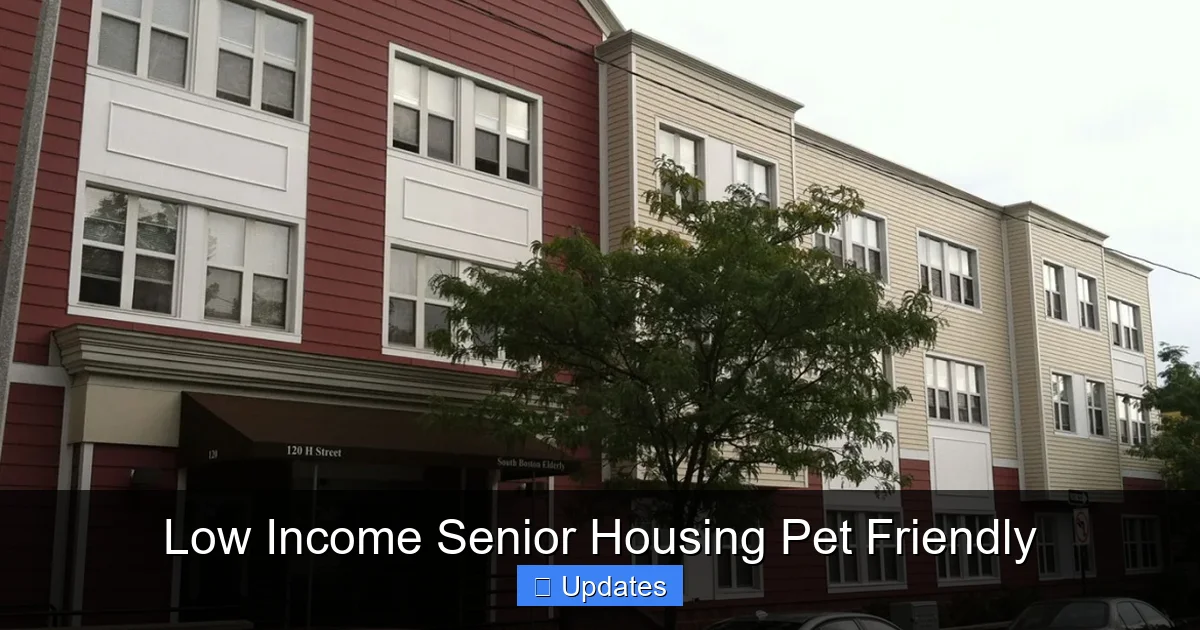
Visual guide about Low Income Senior Housing Pet Friendly
Image source: lowincomehousing.us
Securing a spot isn’t automatic. Here’s how to increase your chances:
Start Your Search Early
Many popular complexes open applications just once every six months. If you wait until you’re ready to move, you could miss your window entirely. Set calendar reminders and monitor websites like HUD’s public housing authority directory or NCHousingConnect.
Contact Multiple Agencies
Don’t limit yourself to one provider. Reach out to local Area Agencies on Aging (AAA), United Way chapters, and senior centers. They often know about hidden gems—places that aren’t advertised widely but accept new residents.
Consider Shared Waiting Lists
Some states pool applicants into regional lists. For example, in Minnesota, St. Paul’s low-income senior housing shares availability with Minneapolis. Being on both lists doubles your odds.
Prepare Your Pet Profile in Advance
Have your vet write a letter vouching for your pet’s good behavior. Include photos and a brief description. When the time comes, you’ll already have everything documented.
Be Honest About Your Needs
If you need wheelchair ramps or hearing loops, mention them upfront. Facilities catering to accessibility often appreciate proactive communication—and they may fast-track your application.
Real Stories: Seniors Who Found Pet-Friendly Homes
Meet Eleanor, 78, from Spokane, WA. After her husband passed away, she worried about living alone until her rescue terrier, Max, joined the family. “I couldn’t imagine moving without him,” she says. Thanks to The Plaza at Riverfront—a pet-friendly low-income senior housing complex—she’s been able to stay close to her daughter while enjoying daily walks with Max.
Then there’s James, 65, in Boise, ID. He adopted a senior cat named Luna after retiring from teaching. His housing provider waived the pet fee because Luna helps calm his anxiety. “They treated us like partners, not tenants,” James recalls.
These stories aren’t outliers. With persistence and the right approach, thousands of seniors like Eleanor and James are thriving alongside their pets in dignified, affordable homes.
Common Misconceptions About Pet-Friendly Senior Housing
Many seniors assume pet ownership disqualifies them from affordable housing—but that’s rarely true today. Let’s clear up other myths:
Myth: Only Service Animals Are Allowed
False. While service animals (for disabilities) are always permitted under the Fair Housing Act, therapy and emotional support animals are also protected—especially in low-income senior housing focused on wellness.
Myth: All Pets Must Be Small
Not necessarily. Some communities allow large dogs if they pass temperament tests or live in ground-floor units. Others simply cap weight instead of size.
Myth: Pet Deposits Are Unaffordable
Actually, many pet-friendly low-income senior housing programs eliminate or reduce deposits significantly. Some don’t charge at all—as long as your pet behaves.
Myth: You Can’t Bring Your Existing Pet
You absolutely can! Just follow the documentation steps mentioned earlier. Existing pets often have an easier path than newly adopted ones.
Resources to Help You Navigate the Process
Navigating bureaucracy can feel overwhelming. Use these trusted sources:
– HUD Exchange: https://www.hudexchange.info/ – Find local housing authorities and read official pet policies.
– AARP Housing Guide: Offers step-by-step instructions tailored for seniors.
– National Council on Aging (NCOA): Provides income calculators and application checklists.
– Local Senior Centers: Staff often host workshops on housing rights and pet care.
Additionally, consider joining Facebook groups like “Pet Owners Over 60” or “Affordable Senior Housing USA.” Members share firsthand experiences and alert each other to openings.
Final Thoughts: You Deserve Companionship Without Sacrifice
Aging doesn’t mean leaving your best friend behind. Thanks to evolving policies and compassionate providers, finding low income senior housing pet friendly is more achievable than ever. Yes, challenges remain—waitlists, paperwork, occasional resistance—but the payoff is worth it.
Your pet brings joy, purpose, and unconditional love. Now, you can keep that bond strong while staying safe, supported, and stress-free. Start researching today, gather your documents, and reach out to local agencies. The perfect home—with your furry sidekick—is closer than you think.
Frequently Asked Questions
Can I bring my dog to low-income senior housing if it’s over 25 pounds?
It depends on the specific property, but many communities allow larger dogs if they meet behavioral standards or reside in ground-floor units. Always check the pet policy and submit a veterinarian’s letter confirming good behavior.
Do I need to pay a pet deposit in pet-friendly senior housing?
Many low-income senior housing complexes waive or reduce pet deposits significantly—or eliminate them entirely. Some only require a small monthly pet fee instead. Policies vary by location, so ask during your application.
Are emotional support animals accepted in all low-income senior housing?
Yes, under the Fair Housing Act, emotional support animals must be accommodated in all federally assisted housing, including low-income senior developments. Documentation from a licensed mental health professional is usually required.
How long do waiting lists typically last for pet-friendly senior housing?
Wait times range from a few weeks to over two years, depending on demand and location. Urban areas like Vancouver, WA or Spokane, WA often have shorter lists than rural regions. Applying early is crucial.
What if my pet has a history of aggression?
Some facilities may still accept your pet if you provide a recent behavioral evaluation from a certified trainer or veterinarian. Ground-floor units or limited-hour access might also help manage safety concerns.
Can I adopt a new pet after moving into low-income senior housing?
Most communities allow new pets after approval, but you’ll need to submit updated documentation and possibly pay a small fee. Always notify management first—even if your current pet meets all requirements.