
Senior Human Resources Manager Job Description


Automatic Can Opener

Leg Massager for Circulation

Memory Foam Seat Cushion
A senior human resources manager plays a critical leadership role in shaping organizational culture, driving talent strategy, and ensuring compliance across HR functions. This strategic position oversees everything from recruitment and employee relations to performance management and workforce planning. With a focus on aligning HR initiatives with business goals, senior HR managers are essential partners in building high-performing teams and supporting long-term company success.
Have you ever wondered what it takes to be a senior human resources manager? It’s not just about handling paperwork or organizing team-building events. This role sits at the heart of any successful organization—guiding how people work together, grow professionally, and contribute to the bottom line. If you’re passionate about people and strategy, this could be your dream job.
In today’s fast-paced business world, companies need more than great products or services—they need strong teams. That’s where a senior human resources manager comes in. This individual doesn’t just manage HR tasks; they shape the entire employee experience. From hiring top talent to ensuring workplace fairness, their influence touches every level of the company.
But what exactly does a senior human resources manager do every day? Let’s break it down.
Key Takeaways
- Strategic Leadership: Senior HR managers lead HR strategy, align it with business objectives, and drive organizational change initiatives.
- Talent Management: They oversee recruitment, onboarding, retention, and succession planning to build a strong, capable workforce.
- Compliance & Risk Mitigation: Ensures the organization adheres to labor laws, employment regulations, and internal policies to minimize legal risks.
- Employee Relations: Acts as a mediator between employees and leadership, fostering open communication and resolving conflicts professionally.
- Performance & Development: Designs and implements performance appraisal systems, training programs, and professional development opportunities.
- HR Technology & Analytics: Leverages HRIS platforms and data analytics to improve decision-making and track workforce metrics.
- Cross-Functional Collaboration: Works closely with executives, department heads, and external partners to support business growth and innovation.
📑 Table of Contents
- The Role of a Senior Human Resources Manager: An Overview
- Core Responsibilities of a Senior Human Resources Manager
- Required Skills and Qualifications
- Career Path and Advancement Opportunities
- Industry-Specific Variations
- Tips for Excelling in Your Senior HR Manager Role
- Conclusion: Why This Role Matters More Than Ever
The Role of a Senior Human Resources Manager: An Overview
At its core, the senior human resources manager job description centers around leadership, strategy, and execution. Unlike entry-level HR roles that focus on day-to-day administrative duties, this position requires deep expertise, emotional intelligence, and the ability to think several steps ahead. These managers often report directly to the C-suite, such as the Chief Executive Officer (CEO) or Chief People Officer (CPO), and play a pivotal role in shaping company culture.
One of the most exciting aspects of being a senior HR manager is the opportunity to influence major decisions. Whether it’s restructuring teams during a merger, launching diversity initiatives, or redesigning performance review systems, these professionals are trusted advisors. Their insights help leaders make informed choices that benefit both the company and its employees.
Moreover, the senior HR manager acts as a bridge between upper management and staff. They ensure that company policies are communicated clearly, that employee concerns are heard and addressed, and that leadership stays aligned with workforce needs. In short, they help create an environment where people feel valued, motivated, and ready to perform at their best.
Core Responsibilities of a Senior Human Resources Manager
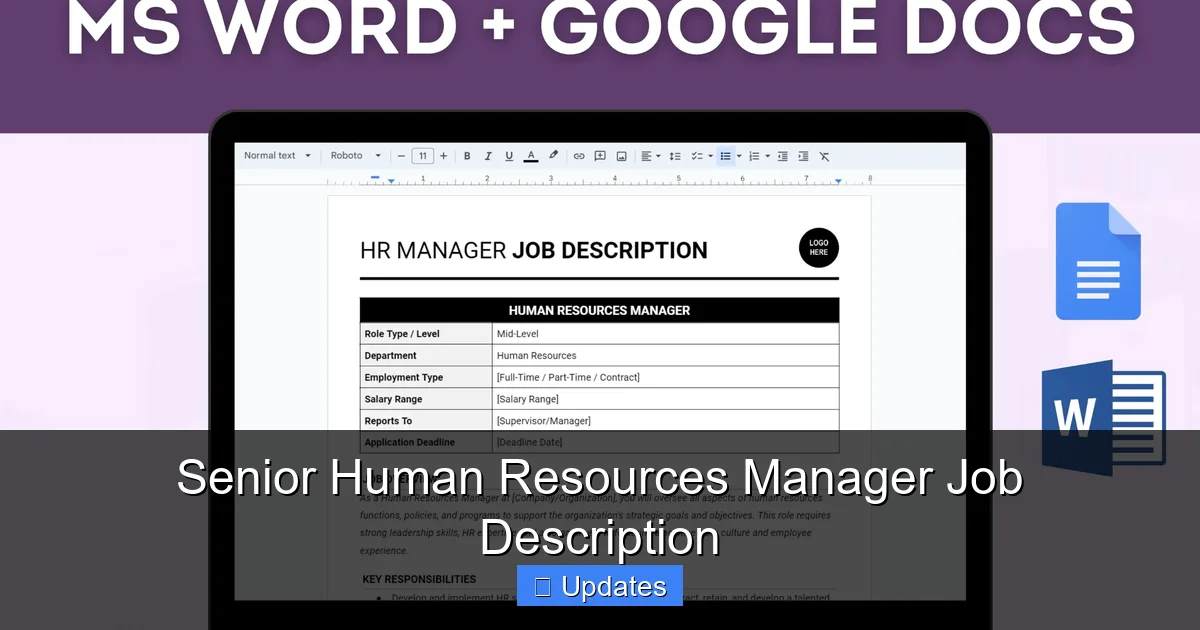
Visual guide about Senior Human Resources Manager Job Description
Image source: probiztemplates.com
The scope of responsibilities for a senior human resources manager is broad and dynamic. While specific duties may vary by industry or company size, there are several consistent themes across all such roles. Below are some of the key areas they typically oversee:
1. Talent Acquisition and Workforce Planning
Recruitment is one of the most visible parts of the senior HR manager’s job. They design hiring strategies, define ideal candidate profiles, and collaborate with hiring managers to attract qualified applicants. But it doesn’t stop at filling open positions—these managers also forecast future staffing needs based on business growth, market trends, and turnover rates.
For example, if a tech company plans to expand into new markets, the senior HR manager might initiate a talent pipeline project to identify and develop future leaders. Or, in a retail chain preparing for holiday season surges, they’d coordinate temporary staffing solutions.
Internal mobility is another focus area. Instead of always looking externally, senior HR managers encourage promotions, transfers, and cross-training to retain top performers and reduce dependency on external hires.
2. Employee Relations and Conflict Resolution
Maintaining positive employee relations is crucial for morale and productivity. A senior HR manager listens to concerns, mediates disputes, and ensures fair treatment across departments. When issues arise—like harassment complaints or performance problems—they conduct investigations thoroughly and confidentially.
They also foster open-door policies, encouraging employees to voice ideas or raise red flags without fear of retaliation. By building trust, they help prevent small issues from escalating into larger ones.
3. Compensation, Benefits, and Total Rewards
Designing competitive compensation packages is another hallmark of this role. The senior HR manager researches industry standards, evaluates internal equity, and recommends salary structures that attract and retain talent. They also manage benefits programs—health insurance, retirement plans, paid time off—and educate employees on available options.
In addition, they may implement incentive programs like bonuses, stock options, or recognition awards to boost motivation and loyalty.
4. Training, Development, and Performance Management
Upskilling employees isn’t just good—it’s essential. Senior HR managers develop learning paths tailored to different roles and career stages. This includes leadership training for managers, technical workshops for specialists, and soft skills sessions for customer-facing teams.
They also establish performance evaluation frameworks that are transparent, objective, and aligned with company goals. Regular check-ins between employees and supervisors become more meaningful when guided by clear expectations set by HR leadership.
5. Compliance and Risk Management
Staying compliant with federal, state, and local employment laws is non-negotiable. The senior HR manager ensures that hiring practices, disciplinary actions, leave policies, and workplace safety protocols meet legal requirements. Any lapse could result in costly lawsuits or reputational damage.
They keep up-to-date on changes in legislation—like updates to the Fair Labor Standards Act (FLSA) or the Americans with Disabilities Act (ADA)—and adjust company policies accordingly.
6. Organizational Culture and Change Management
Perhaps the most intangible yet powerful aspect of the role is cultural stewardship. The senior HR manager helps define the company’s values, mission, and behavioral norms. They champion initiatives that promote inclusion, diversity, and well-being.
When the company undergoes significant changes—such as mergers, digital transformations, or remote work transitions—the senior HR manager leads the change management effort. They communicate vision, address resistance, and support employees through periods of uncertainty.
Required Skills and Qualifications
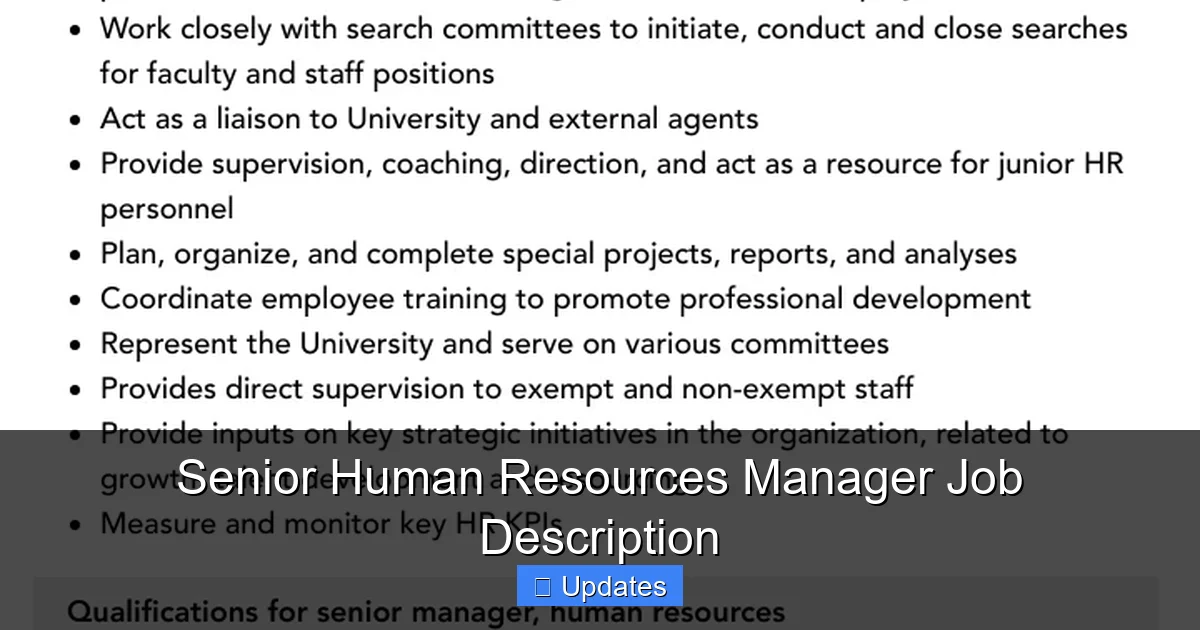
Visual guide about Senior Human Resources Manager Job Description
Image source: asset.velvetjobs.com
To thrive as a senior human resources manager, candidates must possess a blend of hard and soft skills. Here’s what employers typically look for:
Education and Experience
Most organizations require a bachelor’s degree in human resources, business administration, psychology, or a related field. Many senior-level roles prefer candidates with a master’s degree, especially in HR management, organizational development, or an MBA with a concentration in HR.
Relevant experience is equally important. Employers usually seek professionals who have held progressive HR roles—such as HR generalist, HR specialist, or HR coordinator—before advancing to management. Typically, five to ten years of experience are expected, depending on the organization’s complexity.
Certifications can also give candidates an edge. Credentials like SHRM-CP (Society for Human Resource Management Certified Professional), PHR (Professional in Human Resources), or SPHR (Senior Professional in Human Resources) demonstrate expertise and commitment to the profession.
Leadership and Interpersonal Abilities
As a leader, the senior HR manager must inspire confidence and credibility. They coach other HR staff, mentor junior colleagues, and represent the HR function in executive meetings. Strong communication skills—both verbal and written—are vital for presenting reports, drafting policy documents, and delivering feedback.
Empathy and emotional intelligence are just as important. Dealing with sensitive situations requires tact, discretion, and the ability to remain calm under pressure.
Analytical and Strategic Thinking
HR decisions should never be made in a vacuum. The senior HR manager uses data to inform choices—whether analyzing turnover rates, measuring employee engagement scores, or forecasting hiring needs. Familiarity with HR analytics tools and dashboards helps them spot trends and recommend actionable improvements.
Strategic thinking allows them to anticipate future challenges and align HR initiatives with long-term business goals. For instance, if the company aims to go public, the HR manager might start building governance structures or succession plans in advance.
Knowledge of HR Systems and Technology
Modern HR departments rely heavily on technology. The senior HR manager should be proficient in HR information systems (HRIS) like Workday, BambooHR, or SAP SuccessFactors. They use these platforms to automate workflows, store employee records securely, and generate insightful reports.
They also stay current with emerging HR tech—AI-driven recruitment tools, virtual onboarding software, or wellness tracking apps—and evaluate which innovations can enhance efficiency and employee experience.
Career Path and Advancement Opportunities
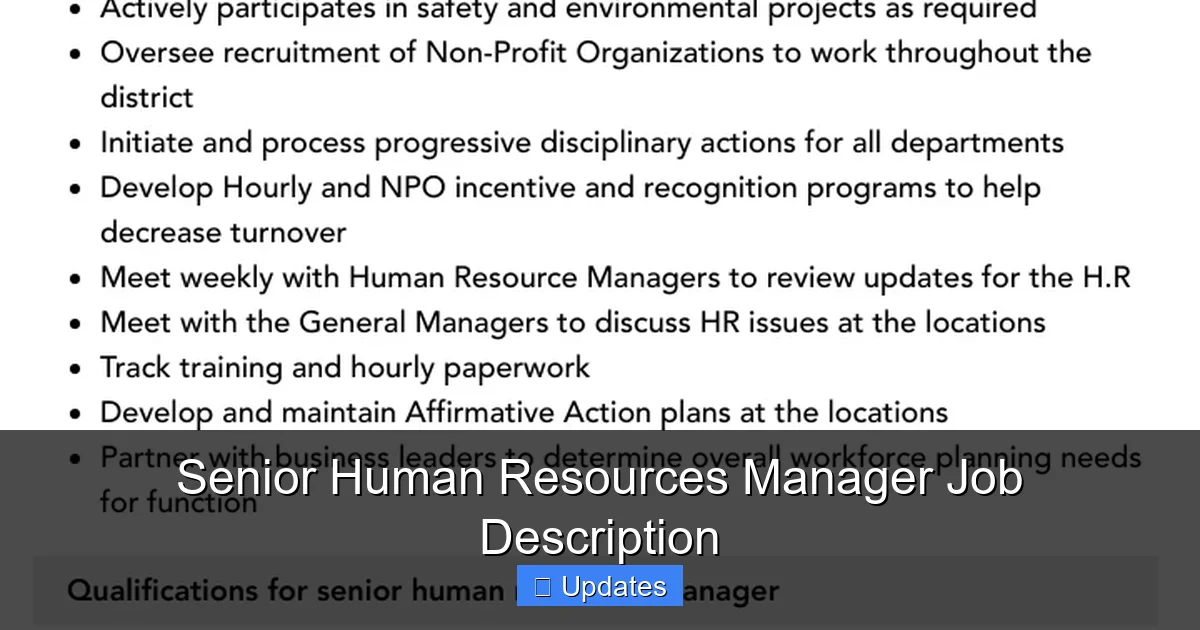
Visual guide about Senior Human Resources Manager Job Description
Image source: asset.velvetjobs.com
Becoming a senior human resources manager is often the culmination of a rewarding career journey. Most professionals enter HR in entry-level roles and climb the ladder through dedication and skill development.
Starting out, individuals might work as HR assistants, coordinators, or generalists—handling tasks like scheduling interviews, maintaining files, or processing payroll. As they gain experience, they take on more complex responsibilities, such as managing employee benefits or leading special projects.
After several years, many transition into supervisory or specialist roles. From there, the path to senior management is natural. Some move laterally into adjacent fields like talent acquisition, learning & development, or organizational effectiveness before stepping into a senior HR manager position.
Once established, career advancement can include roles like Vice President of Human Resources, Chief People Officer, or even Chief Human Capital Officer. Alternatively, experienced senior HR managers may launch consulting firms or join executive search firms specializing in placing HR leaders.
Continuous learning is key. Attending conferences, pursuing certifications, and networking within professional associations like SHRM or HRCI help professionals stay ahead in a competitive field.
Industry-Specific Variations
While the core functions of a senior human resources manager remain consistent, the specifics can differ significantly across industries. Let’s explore a few examples:
Technology Sector
In tech companies, senior HR managers often deal with high-growth environments, global teams, and rapid innovation cycles. They may focus heavily on employer branding to compete for elite talent, implement agile HR processes, or support hybrid/remote work models.
They also prioritize diversity in engineering and product roles, recognizing that inclusive teams drive better outcomes.
Healthcare Industry
Healthcare organizations require HR managers with specialized knowledge of medical regulations, nurse staffing ratios, and patient care standards. These professionals ensure compliance with HIPAA, manage credentialing for clinicians, and support wellness programs for frontline workers.
Given the emotional intensity of healthcare jobs, they also emphasize mental health resources and burnout prevention.
Manufacturing and Logistics
In manufacturing, senior HR managers handle union negotiations, safety compliance (OSHA standards), and shift-based scheduling. They often work closely with operations teams to maintain production continuity while supporting hourly worker needs.
Training programs here might focus on technical skills, equipment operation, and quality control.
Nonprofit Organizations
Nonprofits operate under budget constraints but place high value on mission alignment. Senior HR managers in this sector emphasize volunteer coordination, donor appreciation events, and staff retention strategies that reflect organizational values.
They may also manage grants tied to human capital development or diversity initiatives.
No matter the industry, the senior HR manager remains a strategic partner dedicated to people and performance.
Tips for Excelling in Your Senior HR Manager Role
If you’re already in this position—or aspiring to reach it—here are some practical tips to help you succeed:
Build Trust Across All Levels
Your reputation hinges on consistency and integrity. Be transparent about decisions, follow through on commitments, and treat everyone—regardless of title—with respect. Employees will speak highly of you if they feel heard and valued.
Practice Proactive Communication
Don’t wait for crises to act. Share updates regularly, explain policy changes beforehand, and invite feedback. When employees understand “why” behind decisions, they’re more likely to accept them.
Stay Curious About Business Trends
Read industry publications, attend leadership seminars, and study competitors’ HR strategies. Understanding broader economic shifts helps you anticipate workforce impacts and propose forward-thinking solutions.
Invest in Your Team
Mentor HR staff, delegate effectively, and celebrate their wins. A strong HR team reflects positively on you and increases overall departmental impact.
Embrace Data-Driven Decisions
Use surveys, exit interviews, and performance metrics to guide your recommendations. Leaders appreciate evidence-based proposals over assumptions.
Conclusion: Why This Role Matters More Than Ever
The senior human resources manager job description encompasses far more than administrative oversight. Today’s HR leaders are strategic architects who shape organizational success by nurturing human potential. In an era where talent is the ultimate competitive advantage, their contributions cannot be overstated.
From navigating regulatory complexities to fostering inclusive cultures, these professionals wear many hats—coach, counselor, negotiator, innovator. Their work directly influences employee satisfaction, retention, and engagement—all of which ripple through the entire business.
Whether you’re currently serving in this role or dreaming of one day stepping into it, remember: great HR leadership starts with empathy, backed by strategy. And that’s something worth striving for.
If you’re interested in exploring similar leadership roles, consider checking out our article on the Senior Vice President Human Resources Job Description, which outlines executive-level responsibilities and global HR strategy. You might also find it helpful to read about Senior HR Generalist Job Description to understand foundational HR competencies before moving into management.
Frequently Asked Questions
What does a senior human resources manager do on a daily basis?
A senior human resources manager oversees strategic HR functions such as talent acquisition, employee relations, performance management, compliance, and organizational development. They lead HR teams, advise executives, and ensure policies align with business goals.
How much does a senior human resources manager earn?
Salaries vary by location, industry, and company size. On average, senior HR managers in the U.S. earn between $90,000 and $140,000 annually, with top earners in major cities or large corporations exceeding $160,000 when including bonuses and benefits.
What qualifications are needed to become a senior HR manager?
Typically, a bachelor’s degree in HR, business, or a related field is required, along with 5–10 years of progressive HR experience. Certifications like SHRM-CP or PHR are often preferred, and advanced degrees or MBAs can provide a competitive edge.
Is a senior HR manager a good career choice?
Yes, it’s a stable and fulfilling career with strong growth prospects. As organizations prioritize human capital, skilled HR leaders are in high demand across industries, offering opportunities for advancement into executive roles.
Can a senior HR manager work remotely?
Many senior HR managers enjoy hybrid or remote arrangements, especially in tech-forward companies. However, some responsibilities—like conducting investigations or attending leadership meetings—may require occasional in-person presence.
What’s the difference between an HR manager and a senior HR manager?
A senior HR manager typically has more experience, oversees multiple HR functions or departments, and reports directly to C-level executives. They focus on strategy and organizational impact rather than day-to-day operations handled by regular HR managers.