
Senior Executive Assistant Job Description


Cane with LED Light

Adaptive Eating Utensils

Memory Foam Seat Cushion
A senior executive assistant job description outlines a strategic support role that goes beyond scheduling and emails. This position requires strong organizational skills, discretion, and the ability to manage complex tasks for top-level leaders. It’s a career path with growth, responsibility, and real impact.
So, you’ve heard the term “senior executive assistant” thrown around in job postings or office conversations. Maybe you’re curious about what the role really entails—or perhaps you’re considering applying for one. Either way, you’re in the right place.
Let’s start with the basics: a senior executive assistant (often called a senior EA) is more than just someone who schedules meetings and answers phones. This role is a critical support function for top-level executives—like CEOs, CFOs, or VPs—who need a trusted partner to manage their daily operations. Think of it as being the behind-the-scenes engine that keeps the executive’s world running smoothly.
But here’s the thing: the senior executive assistant job description has evolved dramatically over the past decade. It’s no longer just about administrative tasks. Today’s senior EAs are strategic partners. They manage complex projects, coordinate cross-departmental initiatives, and often act as a gatekeeper for their executive’s time and attention. In many organizations, they’re the first point of contact for key stakeholders, making their professionalism and judgment vital to the company’s image.
Key Takeaways
- Strategic Support Role: Senior executive assistants act as right-hand partners to C-suite executives, managing calendars, communications, and high-level projects.
- Advanced Organizational Skills: Success in this role demands exceptional time management, attention to detail, and the ability to prioritize multiple demands.
- Confidentiality and Discretion: Handling sensitive information is a core responsibility, requiring trustworthiness and professional integrity.
- Communication Mastery: Clear, professional written and verbal communication is essential for interacting with internal teams, clients, and external partners.
- Technology Proficiency: Mastery of tools like Microsoft Office, Google Workspace, and project management software is a must.
- Problem-Solving Ability: Senior EAs often anticipate issues and resolve them proactively without waiting for direction.
- Career Growth Potential: Many senior executive assistants move into operations, project management, or even executive roles with experience.
📑 Table of Contents
What Does a Senior Executive Assistant Do?
At its core, the senior executive assistant job description revolves around providing high-level administrative and operational support to one or more senior leaders. But that’s just the surface. The real magic happens in the details—the proactive planning, the quiet problem-solving, and the ability to anticipate needs before they’re even voiced.
Let’s break it down into key responsibilities.
Calendar and Schedule Management
One of the most visible duties is managing the executive’s calendar. This isn’t just about blocking time for meetings. It’s about optimizing their day for maximum productivity. A senior EA might:
– Schedule internal and external meetings, including board meetings, investor calls, and team check-ins.
– Coordinate travel arrangements, including flights, hotels, ground transportation, and itineraries.
– Buffer time between meetings to allow for prep, follow-up, or unexpected delays.
– Reschedule or prioritize appointments based on urgency and strategic importance.
For example, imagine the CEO has a last-minute request to meet with a major client. The senior EA doesn’t just find an open slot—they assess the impact on other commitments, notify affected parties, and ensure the executive has all the necessary materials ready.
Communication and Correspondence
Senior EAs often serve as the executive’s voice. They draft emails, prepare presentations, and respond to routine inquiries on their behalf. This requires excellent writing skills and a deep understanding of the executive’s tone and priorities.
They might:
– Compose and edit emails, memos, and reports.
– Screen and prioritize incoming communications.
– Prepare talking points for meetings or speeches.
– Act as a liaison between the executive and other departments.
For instance, if the CFO is preparing for an earnings call, the senior EA might gather financial data, draft Q&A responses, and coordinate with the communications team to ensure consistency.
Project and Event Coordination
Many senior EAs take on project management duties. They might lead or support initiatives like:
– Organizing company-wide events (e.g., annual retreats, holiday parties, or product launches).
– Managing the executive’s involvement in external partnerships or industry conferences.
– Tracking key performance indicators (KPIs) and preparing status reports.
A practical example: the CEO wants to launch a new employee wellness program. The senior EA could be tasked with researching vendors, scheduling pilot sessions, collecting feedback, and presenting a summary to the executive for final approval.
Confidentiality and Discretion
This role often involves handling sensitive information—mergers, layoffs, executive transitions, or legal matters. The senior EA must maintain strict confidentiality and exercise sound judgment at all times.
They might:
– Manage access to confidential files and documents.
– Attend private meetings and take accurate, secure notes.
– Ensure that only authorized individuals receive sensitive updates.
Trust is everything here. One misstep—like accidentally forwarding an email—can have serious consequences. That’s why integrity is non-negotiable.
Problem-Solving and Initiative
Great senior EAs don’t wait to be told what to do. They anticipate problems and take action. For example:
– If a key team member is out sick, they might reschedule meetings or delegate tasks.
– If a travel delay threatens a critical meeting, they’ll rebook flights and notify attendees.
– If the executive is overwhelmed, they might suggest delegating lower-priority tasks.
This proactive mindset is what separates a good EA from a great one.
Key Skills and Qualifications
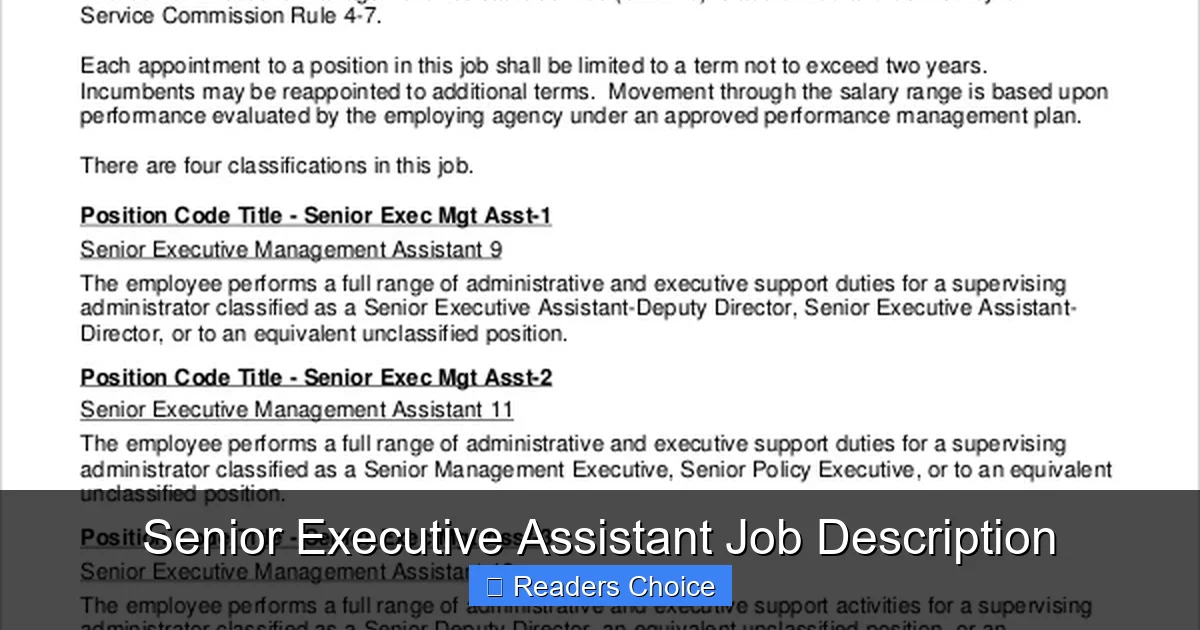
Visual guide about Senior Executive Assistant Job Description
Image source: images.sampletemplates.com
So, what does it take to succeed in a senior executive assistant role? It’s not just about being organized—it’s about having a unique blend of soft skills, technical abilities, and emotional intelligence.
Organizational and Time Management Skills
This is the foundation of the role. Senior EAs juggle multiple priorities, often with tight deadlines. They need to:
– Use tools like Outlook, Google Calendar, or Asana to track tasks and deadlines.
– Break large projects into manageable steps.
– Set reminders and follow up consistently.
Tip: Try the “Eisenhower Matrix” to prioritize tasks by urgency and importance. This helps avoid getting stuck in reactive mode.
Communication and Interpersonal Skills
You’ll interact with everyone from interns to board members. That means:
– Speaking clearly and professionally, whether in person, on the phone, or via email.
– Listening actively to understand needs and concerns.
– Building rapport with colleagues and external partners.
For example, when coordinating a meeting with a busy investor, the EA must be polite, concise, and responsive—often under pressure.
Technical Proficiency
Modern senior EAs are tech-savvy. Common tools include:
– Microsoft Office Suite (Word, Excel, PowerPoint, Outlook)
– Google Workspace (Docs, Sheets, Gmail, Calendar)
– Project management software (Trello, Asana, Monday.com)
– Video conferencing platforms (Zoom, Microsoft Teams)
Bonus points if you know how to create pivot tables in Excel or design clean PowerPoint slides. These skills save time and impress executives.
Attention to Detail
A single typo in a board report or a missed time zone in a travel itinerary can cause major issues. Senior EAs must:
– Proofread all documents before sending.
– Double-check dates, names, and numbers.
– Maintain accurate records and filing systems.
Pro tip: Use checklists for recurring tasks like travel planning or report submissions. It reduces errors and builds consistency.
Emotional Intelligence and Adaptability
Executives are human—they have good days and bad days. A great senior EA reads the room, adjusts their approach, and stays calm under pressure.
They might:
– Adjust their tone based on the executive’s mood.
– Offer support during stressful periods (e.g., crunch time before a product launch).
– Stay flexible when priorities shift suddenly.
This emotional awareness builds trust and strengthens the working relationship.
Leadership and Initiative
Even though it’s a support role, senior EAs often lead by example. They might:
– Mentor junior administrative staff.
– Suggest process improvements (e.g., a new filing system or meeting template).
– Take ownership of projects from start to finish.
For instance, if the executive team struggles with inconsistent meeting notes, the EA could create a standardized template and train others to use it.
Typical Career Path and Growth Opportunities
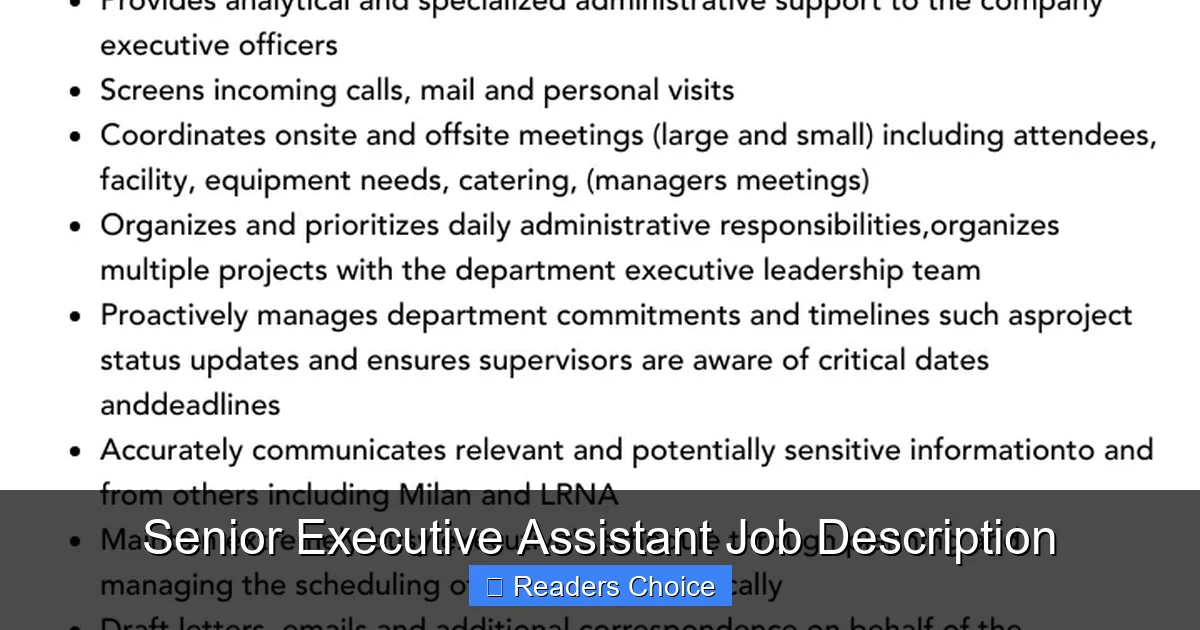
Visual guide about Senior Executive Assistant Job Description
Image source: asset.velvetjobs.com
One of the best things about being a senior executive assistant is the career growth potential. This role offers a front-row seat to leadership decision-making, giving you invaluable experience.
Entry-Level to Senior EA
Most senior EAs start as administrative assistants or executive assistants. With 3–5 years of experience, strong performance, and additional responsibilities, they can advance to the senior level.
Key milestones might include:
– Taking on more complex projects.
– Supporting multiple executives.
– Leading team initiatives.
Beyond the EA Role
Many senior EAs transition into other roles, such as:
– **Operations Manager:** Using their organizational skills to oversee daily business functions.
– **Project Manager:** Leading cross-functional initiatives with timelines and budgets.
– **Chief of Staff:** A strategic role that supports the CEO with high-level planning and coordination.
– **Executive Coach or Consultant:** Leveraging their experience to advise other leaders.
Some even move into executive roles themselves—especially if they’ve built strong relationships and demonstrated leadership.
Continuing Education and Certifications
While not always required, certifications can boost your credibility. Consider:
– **Certified Administrative Professional (CAP):** Offered by the International Association of Administrative Professionals (IAAP).
– **Project Management Professional (PMP):** For those interested in project leadership.
– **Microsoft Office Specialist (MOS):** Validates advanced software skills.
These credentials show commitment and can open doors to higher-paying roles.
Salary and Job Outlook
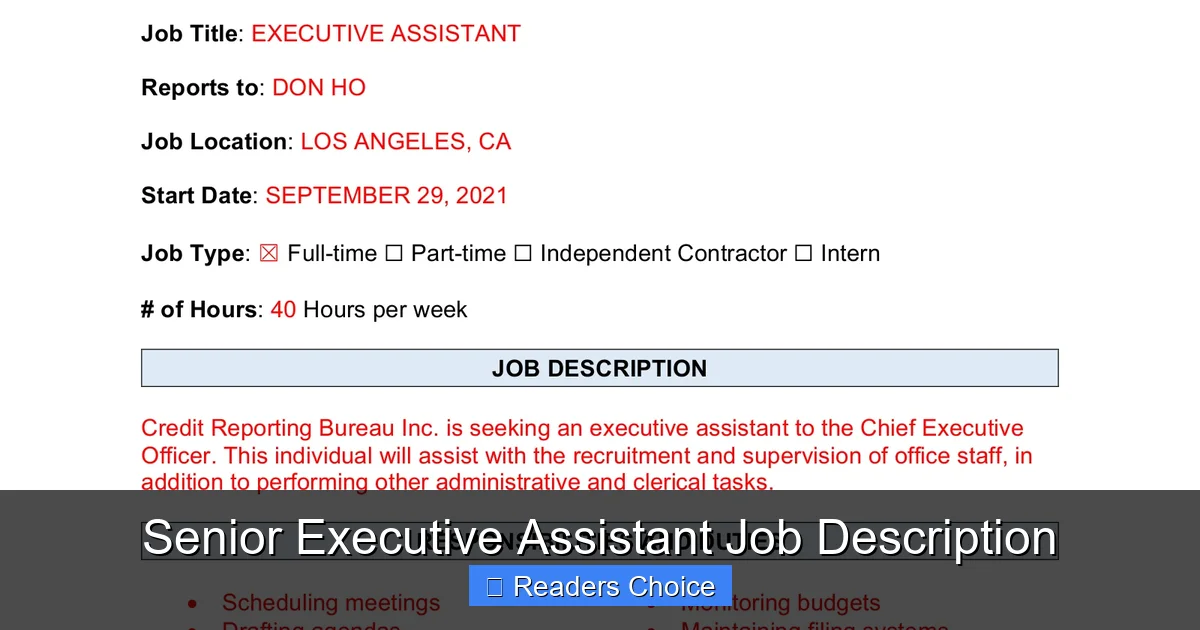
Visual guide about Senior Executive Assistant Job Description
Image source: i0.wp.com
Compensation for senior executive assistants varies by location, industry, and company size—but it’s generally competitive.
Average Salary Range
According to recent data:
– **United States:** $65,000–$95,000 per year, with top earners in major cities (like New York or San Francisco) making over $100,000.
– **United Kingdom:** £35,000–£55,000 annually.
– **Canada:** CAD $60,000–$85,000.
Bonuses, benefits, and stock options may also be included, especially in tech or finance sectors.
Job Market Trends
The demand for skilled senior EAs remains strong. Why?
– Executives are busier than ever and need reliable support.
– Companies are recognizing the strategic value of administrative roles.
– Remote and hybrid work has increased the need for organized, tech-savvy assistants.
In fact, the U.S. Bureau of Labor Statistics projects steady growth for administrative roles, with senior positions seeing higher demand due to their complexity.
Industries That Hire Senior EAs
While every industry needs administrative support, some sectors offer more opportunities:
– **Technology:** Fast-paced environments with frequent product launches and investor relations.
– **Finance and Banking:** High-stakes meetings, regulatory compliance, and global operations.
– **Healthcare:** Complex scheduling for executives managing hospitals or research teams.
– **Consulting:** Travel-heavy roles requiring flawless logistics.
– **Nonprofits:** Often under-resourced, so senior EAs wear many hats.
How to Write a Strong Senior Executive Assistant Job Description
If you’re an employer or HR professional, crafting a clear and compelling job description is key to attracting top talent.
Key Components to Include
A strong senior executive assistant job description should cover:
– **Job Title:** Be specific—e.g., “Senior Executive Assistant to the CEO.”
– **Summary:** A brief overview of the role and its importance.
– **Responsibilities:** List 6–10 core duties (use bullet points for readability).
– **Qualifications:** Required education, experience, and skills.
– **Preferred Skills:** Nice-to-haves like bilingualism or project management experience.
– **Company Culture:** Highlight values, work environment, and growth opportunities.
– **Compensation and Benefits:** Be transparent about salary range and perks.
Example Job Description Snippet
“We are seeking a highly organized and proactive Senior Executive Assistant to support our Chief Executive Officer. The ideal candidate will manage complex calendars, coordinate high-level meetings, and serve as a trusted partner in daily operations. This role requires exceptional communication skills, discretion, and the ability to thrive in a fast-paced environment.”
Avoid Common Pitfalls
– Don’t make the description too vague (e.g., “handles administrative tasks”).
– Avoid listing every possible duty—focus on the most important ones.
– Don’t forget to mention remote work options or flexible hours if available.
Tips for Aspiring Senior Executive Assistants
Ready to level up your career? Here’s how to stand out:
Build a Strong Portfolio
Even if you don’t have a formal portfolio, create one that showcases your achievements. Include:
– Samples of well-written emails or reports (with sensitive info redacted).
– Before-and-after examples of process improvements you’ve implemented.
– Testimonials from executives or colleagues.
Network Strategically
Attend industry events, join professional groups (like IAAP or local admin associations), and connect with other EAs on LinkedIn. Many senior roles are filled through referrals.
Seek Feedback and Mentorship
Ask your executive for regular feedback. What’s working? What could improve? Also, find a mentor—someone who’s been in the role longer and can offer guidance.
Stay Curious and Keep Learning
The best EAs are lifelong learners. Take online courses in leadership, communication, or project management. Stay updated on industry trends and new tools.
Develop a Personal Brand
Be known for reliability, positivity, and initiative. When people think of you, they should think: “This person gets things done.”
Conclusion
The senior executive assistant job description represents a dynamic, high-impact role that blends administrative excellence with strategic thinking. It’s not just about keeping the wheels turning—it’s about driving them forward.
Whether you’re an aspiring EA, a current professional looking to grow, or an employer crafting a job posting, understanding the depth and value of this role is essential. With the right skills, mindset, and dedication, a senior executive assistant can become an indispensable asset to any organization—and a launchpad for an even greater career.
So, if you thrive on organization, love solving problems, and want to work closely with top leaders, this might just be the perfect path for you. The role demands a lot—but the rewards, both professional and personal, are well worth it.
Frequently Asked Questions
What’s the difference between an executive assistant and a senior executive assistant?
A senior executive assistant typically has more experience, handles higher-level responsibilities, and often supports C-suite executives. They may manage complex projects, lead other admin staff, and act with greater autonomy compared to a standard executive assistant.
Do I need a degree to become a senior executive assistant?
Not always. Many senior EAs have associate’s or bachelor’s degrees, but relevant experience and proven skills are often more important. Certifications and on-the-job performance can compensate for formal education.
Can a senior executive assistant work remotely?
Yes, many companies now offer remote or hybrid options for senior EAs, especially post-pandemic. Success in a remote role requires strong self-discipline, communication, and comfort with digital tools.
What software do senior executive assistants use most?
Common tools include Microsoft Office, Google Workspace, Zoom, Slack, and project management platforms like Asana or Trello. Proficiency in these is often expected.
How do I advance from executive assistant to senior executive assistant?
Gain experience, take on more responsibilities, demonstrate initiative, and seek feedback. Volunteering for high-visibility projects and earning certifications can also accelerate your promotion.
Is the senior executive assistant role stressful?
It can be, especially during busy periods or when supporting multiple executives. However, strong time management, boundaries, and support systems help manage stress effectively.