
Senior Dog Heart Murmur Grade 4 Life Expectancy


Page Magnifier Sheet

Bathroom Grab Bar Set

Automatic Pill Dispenser
A Grade 4 heart murmur in senior dogs indicates moderate to severe valve disease and often requires ongoing veterinary care. While life expectancy varies based on breed, age, and overall health, early diagnosis and proper management can significantly improve quality of life and longevity. With the right treatment plan—including medications, diet changes, and regular checkups—many dogs live comfortably for months or even years after diagnosis.
Key Takeaways
- Grade 4 heart murmurs are serious: They indicate significant blood flow turbulence due to valve damage, usually requiring prompt veterinary attention.
- Life expectancy varies widely: Factors like breed, underlying cause (mitral vs. tricuspid valve disease), and response to treatment influence survival time.
- Early detection is critical: Regular senior wellness exams help catch murmurs before they progress to more dangerous stages.
- Treatments can extend life: Medications like pimobendan slow progression and manage symptoms effectively in many cases.
- Quality of life matters most: Focus on comfort, nutrition, and emotional well-being supports both the dog and caregiver during this journey.
- Monitor closely at home: Watch for coughing, fatigue, or breathing difficulties—these may signal worsening heart function.
- Work with a vet cardiologist: Specialized care ensures accurate diagnosis and tailored treatment plans for complex cases.
Your senior dog has just been diagnosed with a Grade 4 heart murmur—and now you’re worried. You’ve heard murmurs described as “grades” before, but what does Grade 4 actually mean? And more importantly, how long will your beloved companion have with you?
Let’s break it down together.
First off—don’t panic. A heart murmur isn’t always a death sentence. In fact, many dogs with heart issues go on to live happy, fulfilling lives with proper care. But understanding what Grade 4 specifically means is essential for making informed decisions about your dog’s health and future.
In veterinary medicine, heart murmurs are graded on a scale from 1 to 6 based on their intensity, timing, and characteristics. Think of these grades as a way for veterinarians to quickly assess how much disruption there is to normal blood flow through the heart. A Grade 4 murmur falls squarely in the middle-to-high range—it’s loud enough to be heard clearly through the stethoscope, often accompanied by other signs of heart disease, and may require immediate intervention.
This article walks you through everything you need to know about senior dog heart murmur Grade 4 life expectancy: what causes it, how it’s diagnosed, treatment options, realistic timelines, and how to keep your dog comfortable every step of the way. Whether you’re preparing for a vet visit or already navigating treatment, we’ve got your back.
Key Takeaways
- Understanding senior dog heart murmur grade 4 life expectancy: Provides essential knowledge
📑 Table of Contents
- What Is a Heart Murmur in Dogs?
- Understanding the Grading System for Heart Murmurs
- Causes and Risk Factors for Grade 4 Murmurs in Senior Dogs
- Diagnosis Process: What Happens When You Hear “Grade 4”?
- Senior Dog Heart Murmur Grade 4 Life Expectancy: Realistic Expectations
- Treatment Options for Managing Grade 4 Heart Murmurs
- Signs Your Senior Dog’s Condition Is Worsening
- How to Support Your Dog Emotionally During This Time
- When to Consider Quality of Life Over Longevity
- Prevention Tips for Future Generations
- Final Thoughts: You’re Not Alone
What Is a Heart Murmur in Dogs?
Before diving into Grade 4 specifically, let’s clarify what a heart murmur really is. At its core, a murmur is simply abnormal sound heard during a heartbeat—like extra noise in the rhythm. It doesn’t mean your dog has a broken heart (pun intended!), but rather that blood is flowing through the heart chambers or valves in an unusual way.
Most murmurs aren’t caused by life-threatening conditions. Some puppies are born with innocent murmurs that disappear as they grow. However, in older dogs, especially seniors, murmurs often point to underlying structural problems—most commonly mitral valve disease (MVD) or dilated cardiomyopathy (DCM).
Mitral valve disease is by far the most common cause of heart murmurs in aging dogs. The mitral valve sits between the left atrium and left ventricle of the heart; when it leaks or doesn’t close properly, blood backs up into the lungs over time, leading to fluid buildup and reduced oxygen delivery to tissues. This condition typically affects small to medium breeds like Cavalier King Charles Spaniels, Chihuahuas, and Miniature Schnauzers more frequently than larger breeds.
On the other hand, dilated cardiomyopathy involves enlargement and weakening of the heart muscle itself, which impairs pumping efficiency. This tends to show up more in large breeds like Dobermans, Boxers, and German Shepherds.
So while all heart murmurs involve some degree of abnormal blood flow, the root cause determines urgency, treatment approach, and ultimately—life expectancy.
Understanding the Grading System for Heart Murmurs
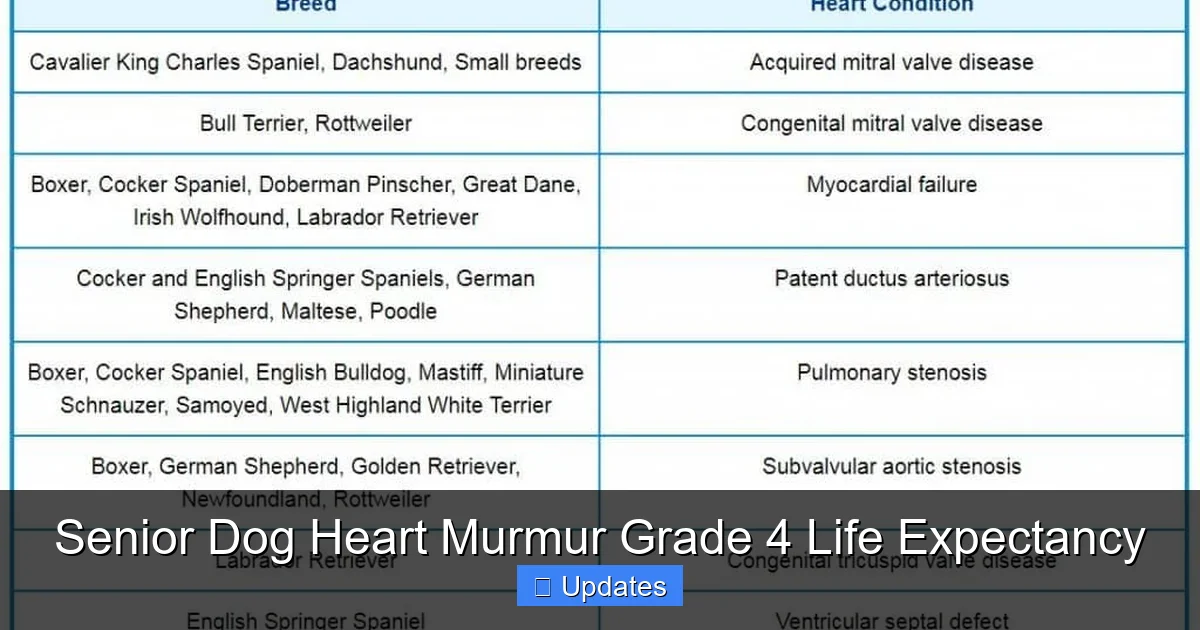
Visual guide about Senior Dog Heart Murmur Grade 4 Life Expectancy
Image source: fidoseofreality.com
Veterinarians use a standardized grading system developed by the American College of Veterinary Internal Medicine (ACVIM) to describe murmurs. Here’s how it breaks down:
- Grade 1: Very soft, only detectable by experienced examiners, rarely associated with disease.
- Grade 2: Mildly audible, still often considered innocent unless other symptoms appear.
- Grade 3: Moderately loud, easily heard, may indicate mild structural changes.
- Grade 4: Loud, definitely pathologic, usually accompanied by physical signs like lethargy or coughing.
- Grade 5: Very loud, accompanied by palpable thrill (vibration felt under the skin), strongly linked to severe dysfunction.
- Grade 6: Extremely intense, even audible without a stethoscope, often seen in advanced cases.
Now, here’s something important: **the grade alone doesn’t tell the whole story**. Two dogs can have identical Grade 4 murmurs, but one might be stable on medication while the other shows rapid decline. That’s why veterinarians combine the murmur grade with additional diagnostics like echocardiograms, chest X-rays, ECGs, and blood tests to get a full picture.
Still, generally speaking, a Grade 4 murmur signals that significant heart involvement has occurred. It’s no longer “innocent”—it’s a warning sign that demands action.
Causes and Risk Factors for Grade 4 Murmurs in Senior Dogs

Visual guide about Senior Dog Heart Murmur Grade 4 Life Expectancy
Image source: vetexplainspets.com
As dogs age, wear-and-tear on heart valves becomes more likely. Think of the mitral valve as rubber bands getting brittle over time—they don’t snap immediately, but eventually they stretch out of shape. This gradual process leads to regurgitation (blood leaking backward), which strains the heart and triggers compensatory mechanisms.
Several factors increase risk:
- Breed predisposition: Small breeds like Cavaliers, Poodles, and Terriers develop MVD earlier and faster.
- Age: Most cases occur in dogs over 8–10 years old; giant breeds may start showing signs around 7.
- Gender: Female dogs tend to progress faster than males with similar diagnoses.
- Obesity: Extra weight stresses the cardiovascular system unnecessarily.
- Hypertension (high blood pressure): Often secondary to kidney disease, it accelerates valve damage.
- Lack of routine vet visits: Early signs like subtle coughs or occasional panting get overlooked until things worsen.
It’s worth noting that not all Grade 4 murmurs stem from valve disease. Rarely, congenital defects, infections (endocarditis), tumors, or trauma can also cause high-grade murmurs. Your vet will rule these out through thorough testing.
Diagnosis Process: What Happens When You Hear “Grade 4”?
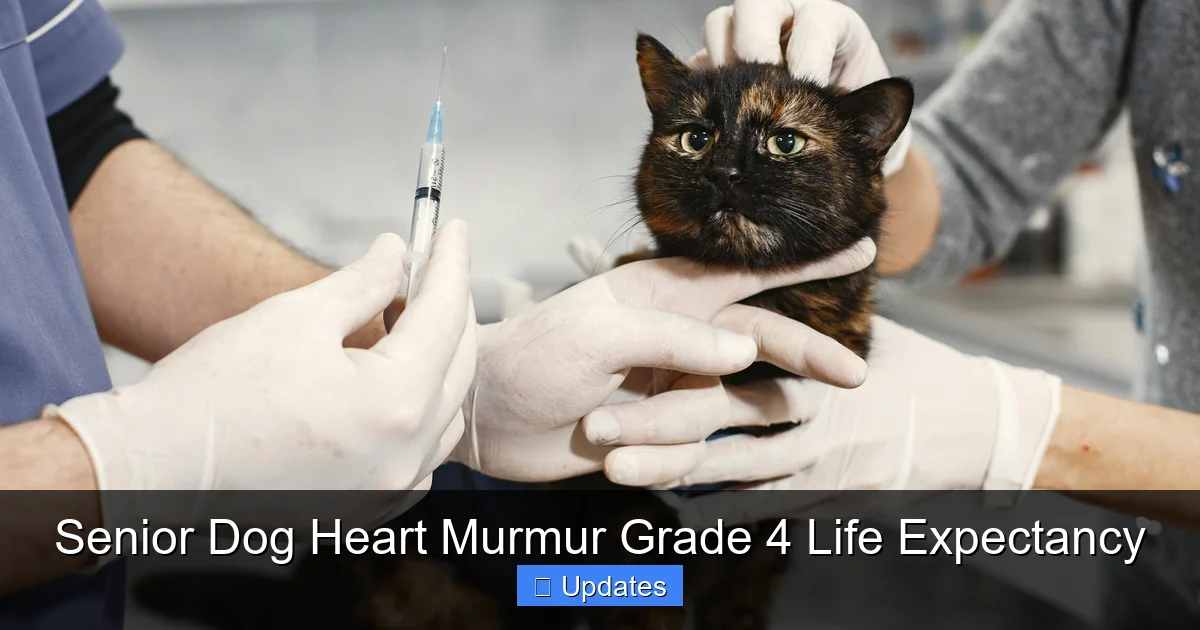
Visual guide about Senior Dog Heart Murmur Grade 4 Life Expectancy
Image source: images.pexels.com
Receiving a Grade 4 diagnosis is overwhelming—but knowing what comes next helps ease anxiety. Here’s the typical diagnostic roadmap:
Step 1: Physical Examination
Your vet listens carefully to your dog’s heart and lungs, checking for irregular rhythms, fluid buildup, or weak pulses. They may note signs like rapid breathing, abdominal distension, or poor coat quality.
Step 2: Electrocardiogram (ECG/EKG)
This measures electrical activity of the heart. It can detect arrhythmias such as atrial fibrillation, which often accompany advanced MVD.
Step 3: Chest X-ray
Shows whether fluid has accumulated in the lungs (pulmonary edema) or if the heart chambers are enlarged. Enlarged left atria are classic in MVD.
Step 4: Echocardiogram (ultrasound of the heart)
This is the gold standard. It reveals actual valve structure, thickness, leakage severity, chamber sizes, and ejection fraction (how well the heart pumps). Results guide treatment intensity and prognosis.
Step 5: Blood Tests
Check kidney/liver function, thyroid levels, and cardiac enzymes like NT-proBNP—a protein released when the heart is stressed.
Sometimes, further imaging like CT or MRI is needed if the cause remains unclear.
Senior Dog Heart Murmur Grade 4 Life Expectancy: Realistic Expectations
This is the million-dollar question—and honestly, there’s no single answer. Life expectancy hinges on multiple variables:
- Type of heart disease: Mitral valve disease progresses slowly; DCM can escalate quickly.
- Response to treatment: Dogs who tolerate medications well and avoid complications live longer.
- Comorbidities: Kidney disease, diabetes, or arthritis complicate management and shorten lifespan.
- Owner compliance: Consistency with meds, diet, exercise limits, and follow-up appointments makes a huge difference.
- Breed size: Small breeds average 2–4 years post-diagnosis; large breeds may see 6–12 months depending on DCM presence.
That said, studies show median survival times vary:
- Untreated Grade 4 MVD: Often 6–18 months.
- Treated with pimobendan + ACE inhibitors: Up to 3–5 years reported in mild-moderate cases.
- Advanced DCM with arrhythmia: May drop to weeks or months without aggressive care.
Importantly, “life expectancy” shouldn’t be confused with “quality of life.” Many owners report their dogs remain playful, affectionate, and engaged for extended periods—even with Grade 4 murmurs—as long as symptoms are controlled.
One client shared with me: “Our 12-year-old Cavalier was diagnosed with a Grade 4 murmur last year. He’s still chasing squirrels in the yard, begging for dinner, and napping peacefully beside us at night. We manage his condition like clockwork, and he’s thriving.”
Another told me sadly, “We didn’t realize how sick our Great Dane was until it collapsed. By then, the DCM had progressed too far.”
The takeaway? Don’t assume the worst. Work closely with your vet to tailor a plan that prioritizes both longevity *and* comfort.
Treatment Options for Managing Grade 4 Heart Murmurs
There’s no cure for most forms of acquired heart disease, but modern veterinary cardiology offers powerful tools to slow progression and control symptoms. Treatment isn’t one-size-fits-all—your vet will adjust based on test results, your dog’s age, and tolerance.
Medications Commonly Prescribed:
- Pimobendan (Vetmedin): A calcium channel blocker that improves heart contraction and reduces workload. Proven to extend survival in dogs with MVD and DCM.
- ACE inhibitors (e.g., Enalapril): Lower blood pressure and reduce fluid retention in the lungs.
- Dietary diuretics (furosemide/Lasix): Help drain excess fluid if present.
- Anticoagulants (e.g., Clopidogrel): Prevent clots in dogs with atrial fibrillation.
- Antiarrhythmics (e.g., Sotalol): Stabilize irregular heartbeats.
Nutritional Support:
Switching to a low-sodium senior dog food can ease strain on the heart. Wet foods help maintain hydration without overloading electrolytes. Consider consulting a veterinary nutritionist—they design custom meal plans addressing specific organ needs.
Lifestyle Adjustments:
Keep activity moderate. No sprinting or steep climbs! Provide easy access to water, elevate food bowls slightly (reduces neck strain during eating), and create quiet resting spots away from drafts.
Regular Monitoring:
Plan check-ups every 3–6 months initially, then annually once stable. Each visit includes repeat echocardiograms, blood pressure checks, and symptom reviews.
Remember: Medication adherence is non-negotiable. Missing doses risks sudden decompensation—something no pet parent wants to experience.
Signs Your Senior Dog’s Condition Is Worsening
Even with treatment, some dogs decline gradually. Stay alert for red flags:
- Persistent coughing or gagging (especially at night): Indicates fluid backing up into airways.
- Sudden weakness or collapse: Could signal arrhythmia or acute pulmonary edema.
- Loss of appetite or weight loss: Reduced oxygen delivery saps energy.
- Blue-tinged gums or labored breathing: Hypoxia (low oxygen) demands emergency care.
- Restlessness or inability to settle: Discomfort from fluid buildup.
If you notice any of these, contact your vet immediately. Time is critical.
Conversely, positive signs include continued interest in food, stable weight, normal bathroom habits, and joyful greetings. Celebrate those!
How to Support Your Dog Emotionally During This Time
A heart murmur diagnosis changes everything—but love remains constant. Here’s how to nurture your dog’s spirit:
- Maintain routines: Predictability reduces stress. Feed meals at same times, play gentle games, cuddle nightly.
- Use calming aids: Adaptil diffusers mimic mother dog pheromones; soft music or white noise helps.
- Offer choice moments: Let them pick where to nap, which toy to chew, or whether to go outside.
- Practice patience: If they need slower walks or rest mid-task, honor it without guilt.
- Share joy intentionally: Sniff walks, belly rubs, and silly voices work wonders.
And don’t forget self-care. Grieving a diagnosis is real. Talk to friends, join online support groups, or reach out to organizations like Forever Dream Senior Dog Sanctuary for community.
When to Consider Quality of Life Over Longevity
This conversation is never easy—but necessary. There comes a point where extending life feels more harmful than helpful. Signs it’s time to discuss end-of-life care include:
- Recurrent hospitalizations despite treatment
- Refusal to eat or drink for >24 hours
- Prolonged suffering (gasping, unable to stand, no awareness)
- Owner burnout or inability to provide care
You know your dog best. Use our Senior Dog Quality of Life Scale PDF as a tool to evaluate daily happiness objectively.
Hospice care—providing comfort without curative intent—is valid, loving, and widely available through veterinary hospices or palliative specialists.
Prevention Tips for Future Generations
While you can’t prevent inherited conditions entirely, you can advocate responsibly:
- Screen breeding dogs for heart disease via echocardiography.
- Choose reputable breeders who prioritize health over appearance.
- Spay/neuter early if appropriate (some studies link intact females to higher MVD risk).
- Feed high-quality diets rich in taurine and omega-3s (linked to better cardiac outcomes).
And always, always schedule annual wellness exams starting at age 7 (small dogs) or 6 (large breeds). Early murmur detection buys precious months—or even years—of good health.
Final Thoughts: You’re Not Alone
A Grade 4 heart murmur diagnosis is scary. But remember: you’re equipped with knowledge, compassion, and a dedicated veterinary team. Together, you can navigate this journey with grace.
Focus less on numbers (months or years) and more on moments: your dog wagging their tail after a walk, licking your hand while watching TV, or sighing contentedly in sleep. Those are the true measures of a fulfilled life.
For more resources on senior dog care—including nutrition guides, comfort products, and emotional support tools—explore our site. And if you ever feel lost, know there’s a community ready to listen.
Frequently Asked Questions
Can a senior dog live with a Grade 4 heart murmur?
Yes, many senior dogs live for years with Grade 4 murmurs when properly managed. Treatment with medications like pimobendan, dietary adjustments, and close monitoring can significantly extend both lifespan and quality of life.
How serious is a Grade 4 heart murmur in dogs?
A Grade 4 murmur is considered pathologic and usually indicates significant heart valve disease or muscle dysfunction. It requires prompt veterinary evaluation and often lifelong treatment, but it’s not immediately life-threatening if addressed early.
What causes a Grade 4 heart murmur in senior dogs?
The most common cause is degenerative mitral valve disease (MVD), where the heart valve thickens and leaks over time. Less commonly, dilated cardiomyopathy or congenital defects may be responsible. Age, breed, and genetics all play roles.
Is surgery an option for dogs with Grade 4 heart murmurs?
Surgery is rarely viable for Grade 4 murmurs because the heart damage is typically too extensive. Treatment focuses on managing symptoms and slowing progression with medications, diet, and lifestyle changes instead.
How often should a senior dog with a Grade 4 murmur see the vet?
Initially, every 3–6 months for checkups, blood pressure monitoring, and echocardiograms. Once stable, annual visits may suffice. Always contact your vet sooner if symptoms worsen.
Does diet affect life expectancy for dogs with heart murmurs?
Absolutely. Low-sodium senior dog foods help reduce fluid buildup and strain on the heart. High-quality proteins and balanced electrolytes support overall organ function. Consult a veterinary nutritionist for personalized plans.