
Low Income Senior Housing Bowling Green Ky


Toilet Seat Bidet Attachment

Mattress Topper Memory Foam

Smart Health Watch for Seniors
Finding low income senior housing in Bowling Green, Kentucky can provide essential support for older adults with limited financial means. This guide walks you through available programs, eligibility requirements, and practical steps to secure a comfortable, affordable place to call home. Whether you’re a senior, caregiver, or family member, understanding your options is the first step toward better living conditions and peace of mind.
Living on a fixed income as a senior can make finding safe, affordable housing feel overwhelming—especially in a growing city like Bowling Green, Kentucky. But the good news? You don’t have to figure it all out alone. There are real, tangible resources designed specifically for low-income seniors just like you. From federally funded apartments to nonprofit-supported communities, Bowling Green offers several paths to dignified and comfortable living. This article breaks down everything you need to know about accessing low income senior housing in Bowling Green, KY—so you can focus on what matters most: your well-being, independence, and peace of mind.
If you’re searching for help navigating local housing options, understanding eligibility rules, or simply learning how other seniors in your situation have found stability, you’re in the right place. We’ll walk through program types, application processes, and even share insider tips from those who’ve been there. By the end, you’ll feel more confident taking the next step toward securing a home that supports your needs and respects your dignity.
Key Takeaways
- Affordable Options Exist: Several subsidized housing programs specifically serve low-income seniors in the Bowling Green area, including public housing and HUD-assisted units.
- Eligibility Matters: Most programs require applicants to be 62 or older and meet income limits based on federal poverty guidelines.
- Waiting Lists Are Common: Due to high demand, many affordable senior housing communities maintain long waiting lists—planning early is key.
- Support Services Available: Many facilities offer meal programs, transportation, social activities, and health-related assistance to enhance quality of life.
- Local Resources Help: Organizations like the South Central Kentucky Council of Governments and Area Agency on Aging connect seniors with housing and support services.
- Documentation Is Essential: Be prepared with proof of age, income, residency, and citizenship or legal status when applying.
- Explore Alternatives: If traditional senior housing isn’t immediately available, consider shared housing, roommate matches, or temporary shelters while on waitlists.
📑 Table of Contents
- Understanding Low Income Senior Housing in Bowling Green, KY
- Types of Affordable Senior Housing Programs Available
- Eligibility Requirements for Low Income Senior Housing
- How to Apply for Low Income Senior Housing in Bowling Green
- Tips for Securing Low Income Senior Housing Faster
- Community Resources Supporting Senior Housing Needs
- Success Stories: How Seniors Found Stability in Bowling Green
Understanding Low Income Senior Housing in Bowling Green, KY
When we talk about “low income senior housing” in Bowling Green, we’re referring to residential options where rent is subsidized or capped based on a resident’s income—typically for adults aged 62 and over. These aren’t luxury condos or retirement resorts; they’re purpose-built communities that prioritize affordability, accessibility, and community connection. In Kentucky, these programs are often managed through partnerships between local governments, nonprofits, and federal agencies like the U.S. Department of Housing and Urban Development (HUD).
Unlike market-rate apartments, low income senior housing in Bowling Green usually comes with income restrictions. For example, a household of one may qualify only if their annual income doesn’t exceed around $30,000, depending on the specific program. Rent itself is typically calculated as 30% of adjusted gross income, meaning the lower your income, the less you pay each month. Some facilities also cover utilities, housekeeping, or offer meal plans—further reducing out-of-pocket expenses.
It’s important to note that not all senior housing is created equal. While some buildings focus purely on shelter, others integrate wellness services, transportation, or even on-site medical staff. The best options strike a balance between affordability and quality of life, ensuring residents feel supported rather than institutionalized.
Types of Affordable Senior Housing Programs Available
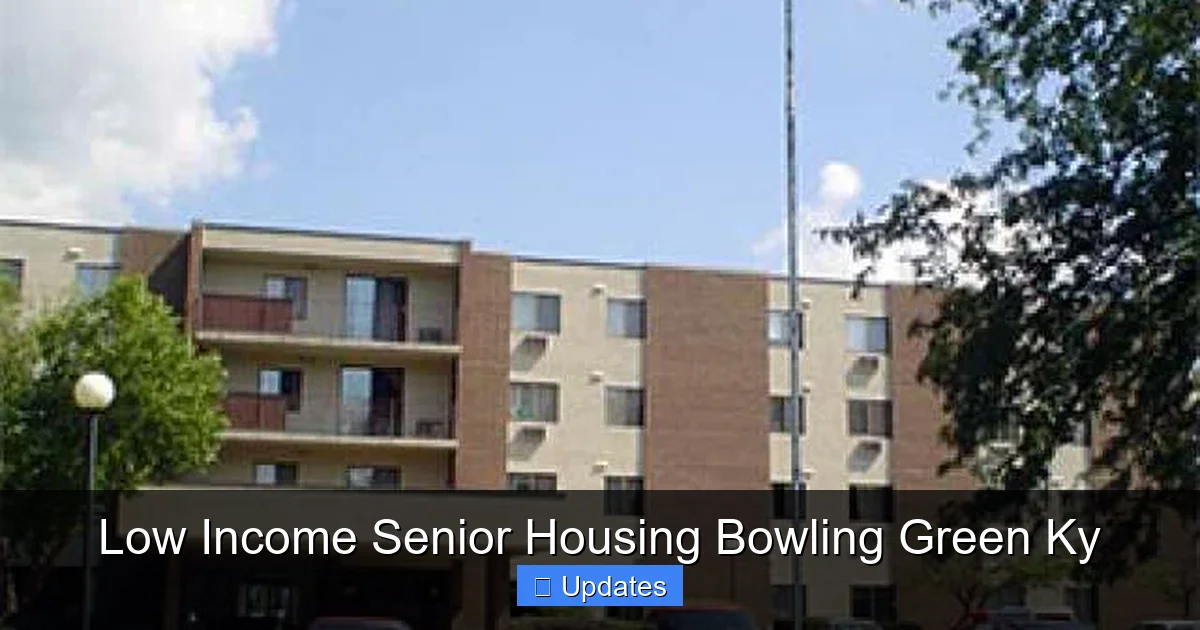
Visual guide about Low Income Senior Housing Bowling Green Ky
Image source: lowincomehousing.us
Bowling Green offers several types of low income senior housing programs, each with unique features and eligibility criteria. Understanding these categories helps you identify which path might work best for your situation.
Public Housing for Seniors
Administered by the Bowling Green-Warren County Housing Authority, public housing provides federally subsidized apartments for eligible seniors. Units are scattered across the city and include one- and two-bedroom layouts. Residents pay about 30% of their monthly income toward rent, with the rest covered by government subsidies. Utilities may or may not be included, so ask during tours.
One major advantage? Applications are processed quickly compared to some private programs, though availability fluctuates due to demand. You’ll need to prove you’re at least 62 years old and meet income thresholds—usually under 80% of the area median income. Preference is sometimes given to veterans, disabled individuals, or those experiencing homelessness.
Section 202 Supportive Housing
This HUD-backed program funds developments specifically built for very-low-income seniors. Unlike standard public housing, Section 202 properties often include supportive services like meal delivery, health screenings, or transportation assistance. In Warren County, a few such communities exist near downtown Bowling Green, offering studio and efficiency units ideal for independent living.
What sets this apart is the blend of affordability and service. Monthly rent remains tied to income, but additional perks reduce isolation and improve health outcomes. Unfortunately, waiting lists can stretch six months to a year, so prompt application is crucial.
Rural Rental Assistance Program (RRAP)
While most people associate RRAP with farmland or small towns, it’s still relevant in parts of western Kentucky. This HUD initiative helps cover the gap between what low-income families pay and what landlords charge in rural areas. Though Bowling Green is classified as urban, neighboring rural zones benefit greatly—meaning referrals or temporary stays might be possible through regional coordinators.
Nonprofit & Faith-Based Housing
Organizations like Catholic Charities or local churches sometimes operate affordable senior housing with sliding-scale rents. These aren’t always HUD-funded, so income limits vary. However, they often foster tight-knit communities and host regular social events, which combat loneliness—a real concern for aging adults.
For instance, St. Joseph’s Place in Bowling Green offers subsidized units for seniors earning up to 50% of the area median income. Amenities include weekly bingo nights, van rides to grocery stores, and access to counseling. While not government-run, these places fill critical gaps left by public systems.
Shared Housing & Roommate Matching
If traditional senior housing has long waitlists, consider shared housing. Programs like “Roommate Referral Services” match compatible seniors seeking companionship and cost-sharing. One person pays for a bedroom and private bath, another handles cooking or cleaning—mutually beneficial arrangements that keep costs low and social connections strong.
Local agencies like the South Central Kentucky Council of Governments often facilitate these pairings, vetting participants for compatibility before matching them. It’s not for everyone, but many find it surprisingly fulfilling.
Eligibility Requirements for Low Income Senior Housing

Visual guide about Low Income Senior Housing Bowling Green Ky
Image source: lowincomehousing.us
Navigating eligibility can feel like decoding a foreign language—but it doesn’t have to be. Here’s what every applicant should know:
First and foremost, you must be at least 62 years old. Some programs accept younger residents if they’re disabled (under 14 CFR Part 8 regulations), but age is the primary gatekeeper. Proof of birth date (driver’s license, passport, or Social Security card) is non-negotiable.
Next comes income verification. Applicants must submit recent pay stubs, pension statements, Social Security letters, or bank records showing total household earnings. Single individuals generally qualify if their income falls below $27,900 annually (as of 2024 HUD figures for Warren County). Couples face slightly higher caps—around $35,000—but remember: joint applications count both incomes.
Citizenship or legal residency is required for most HUD programs. Non-citizens may qualify if they hold permanent residency cards (green cards) or asylum status. Immigration documentation must accompany your application.
Background checks are standard. Minor infractions (e.g., noise complaints) won’t disqualify you, but eviction history or drug-related offenses could. Landlords want stable, law-abiding tenants!
Finally, residency proof—like a utility bill or lease agreement—establishes Bowling Green as your primary residence. Out-of-town applicants aren’t barred, but local preference often applies.
How to Apply for Low Income Senior Housing in Bowling Green

Visual guide about Low Income Senior Housing Bowling Green Ky
Image source: lowincomehousing.us
The application journey starts long before you see your keys. Follow this roadmap to avoid frustration:
Begin by contacting the Bowling Green-Warren County Housing Authority directly. Their office at 1001 College Ave. Suite B handles public housing inquiries. Call (270) 745-3663 or email [email protected] to request an application packet. Don’t rely solely online forms—phone conversations clarify nuances faster.
Gather required documents ahead of time:
– Photo ID (state ID or passport)
– Social Security cards for all household members
– Three months of bank statements
– Tax returns or benefit award letters
– Proof of address (utility bill dated within last 60 days)
Fill out the form carefully. Double-check numbers—typos waste processing time! Include a brief personal statement explaining why you need housing (e.g., “I lost my home after my husband passed; I live alone on $1,200/month SSDI”). Honesty builds trust.
Submit everything via mail or in person. Drop-offs get same-day receipt confirmation; mailed packages take 5–7 business days. Expect to wait 2–6 weeks for initial screening results.
If approved, you’ll enter a lottery or priority queue. Waitlist order depends on factors like disability status, veteranhood, or proximity to family. Check your position monthly—some spots open unexpectedly when others decline.
Once called, schedule a tour. Inspect plumbing, flooring, and heating/cooling systems. Ask neighbors about management responsiveness. Trust your gut!
Tips for Securing Low Income Senior Housing Faster
Waiting feels impossible, but smart strategies shorten the timeline:
Start early. Never wait until you’re desperate. Begin applications 12–18 months before needed move-in dates. Many seniors apply preemptively during tax season when financial documents are fresh.
Build relationships. Volunteer at senior centers or food pantries. Staff recognize your name and advocate internally. Personal referrals sometimes jumpstart reviews.
Stay organized. Track submission dates, document copies, and follow-up calls in a binder or digital folder. Missed deadlines = lost chances.
Consider backup plans. Simultaneously explore roommate matches or temporary shelters like Hope Lodge (for cancer patients) or local church hospitality ministries. Flexibility prevents stagnation.
Leverage local networks. Attend Bowling Green Senior Center meetings (held Tuesdays at 10 AM). Connect with AARP Kentucky chapters. They host workshops on housing rights and application tricks.
Don’t overlook smaller properties. Sometimes mom-and-pop operators offer hidden gems with shorter waits than corporate complexes. Word-of-mouth leads to these opportunities.
Lastly, remain patient but persistent. Rejection letters sting, but reapply every 60 days if no response arrives. Persistence beats perfection.
Community Resources Supporting Senior Housing Needs
You’re not alone in this fight. Bowling Green boasts robust support systems:
The South Central Kentucky Council of Governments (SCKCOG) coordinates regional aging services. Their website (https://www.sckcog.org) hosts downloadable housing guides, phone directories, and eligibility checklists. Call (270) 745-3300 for case managers who walk you through every step.
Area Agencies on Aging (AAA) operate under SCKCOG. Staff conduct free home assessments, help modify homes for safety (grab bars, ramps), and connect clients to rental subsidies. Schedule visits at (270) 745-3300 ext. 205.
Legal Aid of the Bluegrass assists seniors facing eviction or unfair denials. Free consultations available Mon–Fri, 9 AM–4 PM. Protect your rights!
United Way of Southern Kentucky (211 dial-free) connects callers to emergency housing, utility assistance, and food banks. Trained specialists know every resource in the area.
Local libraries—especially the downtown branch—offer computer classes teaching online applications. Volunteers sit beside you, typing forms step-by-step. No tech fear allowed!
Faith communities matter too. Churches like First United Methodist or St. Christopher’s run soup kitchens and overnight stays during cold snaps. Pastoral care teams often know about unadvertised housing slots.
Success Stories: How Seniors Found Stability in Bowling Green
Meet Margaret, 78, who moved into a Section 202 apartment after her fixed income couldn’t cover rising rent. “I was terrified,” she admits, “but the staff helped me apply while I still had my hair!” Within four months, she secured a studio near the library. Weekly bingo nights became lifelines—she made friends, reduced anxiety, and even joined a walking group. “Now I pay $85/month total,” she beams. “Utilities included!”
Then there’s James, 71, a Vietnam vet turned public housing resident. His landlord waived pet fees for his rescue terrier, Buddy. “He kept me from feeling abandoned,” James shares. “Management even shoveled snow for us.” He credits AAA staff for smoothing his application process. “They explained everything. I wouldn’t have survived without them.”
These stories repeat daily. With preparation and patience, stability follows.
Frequently Asked Questions
What is the minimum age requirement for low income senior housing in Bowling Green, KY?
Most programs require applicants to be at least 62 years old. Some exceptions exist for disabled individuals under federal fair housing laws, but age is the primary criterion for low income senior housing in Bowling Green, KY.
How do I calculate if my income qualifies me for subsidized senior housing?
Income limits are typically set at 50–80% of the area median income for Warren County. For a single person, this means staying under approximately $27,900 annually. Submit tax returns or benefit letters to confirm eligibility during application.
Are utilities included in low income senior housing rent?
It varies by property. Public housing may exclude utilities, while Section 202 or nonprofit-run facilities often include water, trash, or electricity in the base rent. Always ask during tours to budget accurately.
Can I apply for multiple senior housing programs at once?
Yes! Applying to several options increases your chances. Just ensure you meet each program’s specific requirements and update contact information promptly if selected.
What should I bring to my housing authority appointment?
Bring photo ID, Social Security cards, three months of bank statements, tax returns, proof of address (utility bill), and any disability or veteran documentation. Organize everything in a folder beforehand.
Is there emergency housing if I lose my apartment?
Yes. Dial 211 or contact the South Central Kentucky Council of Governments at (270) 745-3300. They coordinate temporary shelters, motel vouchers, and rapid rehousing programs for seniors in crisis.