
Senior Buyer Job Description Responsibilities


Bathtub Grab Bar

Toilet Seat Bidet Attachment

Memory Foam Seat Cushion
A Senior Buyer plays a vital role in driving cost savings, ensuring quality, and maintaining strong supplier relationships across complex supply chains. This strategic position requires deep market knowledge, negotiation expertise, and leadership skills to manage high-value purchasing decisions that impact an organization’s bottom line. From developing sourcing strategies to mentoring junior buyers, a senior buyer is pivotal in shaping procurement success.
Key Takeaways
- Strategic Sourcing: Senior buyers develop long-term sourcing strategies aligned with company goals, reducing costs and improving supply chain resilience.
- Supplier Relationship Management: They build and maintain strong partnerships with key vendors to ensure reliability, quality, and competitive pricing.
- Market Analysis & Forecasting: These professionals monitor industry trends, commodity prices, and geopolitical factors to anticipate supply risks and opportunities.
- Team Leadership: Senior buyers often lead junior staff, mentor team members, and contribute to cross-functional initiatives involving finance, operations, and engineering.
- Contract Negotiation: They negotiate high-stakes contracts covering terms, pricing, delivery schedules, and service-level agreements to maximize value.
- Compliance & Risk Management: Ensuring ethical sourcing, regulatory compliance, and mitigating supply chain disruptions are core responsibilities.
- Technology Proficiency: Mastery of ERP systems, e-procurement tools, and data analytics supports informed decision-making and process efficiency.
📑 Table of Contents
What Does a Senior Buyer Do? Understanding the Role
If you’re stepping into or considering a career in procurement, you’ve likely come across the title “Senior Buyer”. But what does that really mean? At its core, a Senior Buyer is someone who doesn’t just place orders—they drive business strategy through intelligent purchasing decisions. Think of them as the bridge between your company and the world of suppliers, raw materials, and finished goods. While a regular buyer might focus on day-to-day transactions, a Senior Buyer operates at a strategic level, influencing everything from budget planning to product development timelines.
The role blends analytical thinking with interpersonal savvy. You’ll be analyzing market trends, forecasting demand, negotiating with suppliers, and sometimes even mentoring younger team members. In many organizations, especially those with complex supply chains—like manufacturing or retail—the Senior Buyer is seen as a trusted advisor within the procurement department and beyond. Their decisions can directly affect production schedules, customer satisfaction, and overall profitability.
This isn’t a job where you simply follow instructions from above. Instead, it’s about taking initiative, asking the right questions, and finding creative solutions when things go sideways. Whether it’s a sudden spike in material costs or a supplier facing production delays, the Senior Buyer must act quickly and decisively. And let’s be honest—no two days are ever exactly alike. One moment you might be reviewing contract terms under pressure, and the next, you’re presenting findings to senior leadership.
Core Responsibilities of a Senior Buyer
So, what are the actual duties that define a Senior Buyer’s day-to-day work? Let’s break it down into manageable chunks. These responsibilities typically fall into several key categories: strategic sourcing, supplier management, cost analysis, and collaboration with internal teams.

Visual guide about Senior Buyer Job Description Responsibilities
Image source: interviewprep.org
1. Strategic Sourcing and Procurement Planning
At the heart of every successful procurement function lies solid sourcing strategy. As a Senior Buyer, you’ll be responsible for identifying new sourcing opportunities, evaluating potential suppliers, and developing plans that align with organizational objectives. This could involve anything from selecting raw materials for manufacturing to choosing logistics partners for distribution.
For example, imagine your company is launching a new line of eco-friendly packaging. Your task would be to research sustainable materials, reach out to certified suppliers, compare pricing and lead times, and ultimately recommend the best option. It’s not just about finding the lowest price—it’s about balancing cost, quality, sustainability, and reliability. And yes, you’d need to present your recommendations to stakeholders, explaining why one choice over another makes sense for the business.
Another part of this responsibility involves creating and updating procurement policies and procedures. That means staying updated on industry standards, legal requirements, and best practices so your organization remains compliant and efficient. You may also conduct periodic reviews of existing suppliers to ensure they continue meeting performance benchmarks.
2. Supplier Relationship Management (SRM)
Building strong relationships with suppliers isn’t just courteous—it’s critical to long-term success. A Senior Buyer spends considerable time managing these partnerships, which includes regular communication, performance evaluations, and joint problem-solving.
Let’s say a key component supplier is consistently missing delivery deadlines. Instead of cutting ties immediately, you’d schedule a meeting to understand their challenges. Maybe they’re understaffed, dealing with raw material shortages, or facing unexpected regulatory hurdles. By working together to find a solution—perhaps adjusting order volumes or exploring alternative shipping routes—you preserve trust while minimizing disruption to your operations.
Additionally, you’ll track supplier KPIs such as on-time delivery rates, defect rates, and responsiveness to issues. These metrics help identify areas for improvement and inform future negotiations. Strong SRM also opens doors for innovation—suppliers who feel valued are more likely to share insights about new technologies or cost-saving alternatives.
3. Cost Analysis and Budget Oversight
One of the most visible aspects of being a Senior Buyer is controlling costs. You’ll regularly analyze spending patterns, identify savings opportunities, and report on cost variances to management. This requires digging into invoices, purchase orders, and market data to spot anomalies or inefficiencies.
Take, for instance, a scenario where steel prices suddenly rise due to global trade tensions. As a Senior Buyer, you’d need to assess whether to lock in current prices through forward contracts, switch to alternative materials, or absorb the increase temporarily while seeking long-term fixes. Each option carries risk, so you’d weigh factors like inventory levels, production schedules, and profit margins before deciding.
Budget oversight also means collaborating closely with finance teams to forecast procurement expenses accurately. You’ll input data into financial models and adjust projections based on real-world developments. Transparency here builds credibility and helps secure buy-in for major purchases or investments in new suppliers.
4. Contract Negotiation and Legal Compliance
Negotiating contracts may sound intimidating, but it’s a skill you develop over time. As a Senior Buyer, you’ll draft, review, and finalize agreements that cover everything from payment terms to liability clauses. Your goal? To protect your organization’s interests while fostering mutually beneficial deals.
Consider a situation where you’re signing a multi-year agreement with a packaging supplier. You’d negotiate not only unit prices but also minimum order quantities, penalty clauses for late deliveries, and provisions for price adjustments tied to inflation indices. All of these details matter because they affect cash flow, operational flexibility, and risk exposure.
Legal compliance is equally important. You must ensure contracts adhere to local, state, and federal regulations—especially if dealing with international suppliers. This might include verifying export licenses, understanding tariff structures, or confirming adherence to environmental standards. When in doubt, consulting with legal counsel is always wise.
5. Cross-Functional Collaboration
Procurement doesn’t happen in a vacuum. You’ll frequently collaborate with departments like engineering, marketing, sales, and logistics. For example, when a product design changes, engineers will notify you so you can update bill-of-materials (BOM) lists and source replacement components quickly.
In retail environments, marketers might request exclusive merchandise for seasonal promotions. As the Senior Buyer, you’d coordinate with vendors to secure limited-run products, negotiate favorable display allowances, and ensure timely fulfillment. Without seamless communication, even the best strategy can fall apart.
These collaborations extend beyond routine tasks. You may participate in project teams aimed at reducing waste, improving sustainability, or expanding into new markets. Your perspective as someone deeply connected to the supply chain brings valuable insight into feasibility, timing, and resource allocation.
Required Skills and Qualifications
Becoming an effective Senior Buyer isn’t just about knowing how to fill out purchase orders. It demands a mix of hard and soft skills, along with relevant education and experience. Here’s what employers typically look for:

Visual guide about Senior Buyer Job Description Responsibilities
Image source: ziprecruiter.com
Education and Certifications
Most companies require at least a bachelor’s degree in business, supply chain management, economics, or a related field. Some prefer candidates with advanced degrees or certifications like Certified Professional in Supply Management (CPSM), Certified Purchasing Manager (CPM), or Certified Supply Chain Professional (CSCP). These credentials signal commitment to the profession and deepen your knowledge base.
Technical Proficiency
You should be comfortable using enterprise resource planning (ERP) systems such as SAP or Oracle, as well as e-procurement platforms like Coupa or Ariba. Familiarity with data visualization tools (e.g., Excel, Power BI) helps you present insights clearly during meetings.
Analytical Mindset
The ability to interpret complex datasets—such as historical spending trends or supplier performance reports—is crucial. You’ll use this information to make recommendations that balance short-term needs with long-term goals.
Communication and Interpersonal Skills
Whether writing emails, making phone calls, or leading workshops, clear communication is non-negotiable. You’ll often interact with people from diverse backgrounds, cultures, and levels of authority—so adaptability and emotional intelligence matter.
Problem-Solving Abilities
Supply chains are inherently unpredictable. Emergencies happen: hurricanes disrupt ports, tariffs increase costs overnight, and suppliers unexpectedly go out of business. Your capacity to think critically under pressure sets you apart.
Attention to Detail
A single typo in a contract can lead to costly disputes. Similarly, missing a deadline in a requisition form can halt production lines. Precision isn’t optional—it’s foundational to your role.
Career Path and Advancement Opportunities
Starting as a Junior Buyer or Purchasing Assistant, many professionals climb the ladder to become Senior Buyers within 3–7 years. Advancement often depends on performance, leadership potential, and willingness to take on additional responsibilities. Some Senior Buyers transition into roles like Procurement Manager, Category Manager, or Director of Supply Chain Operations.
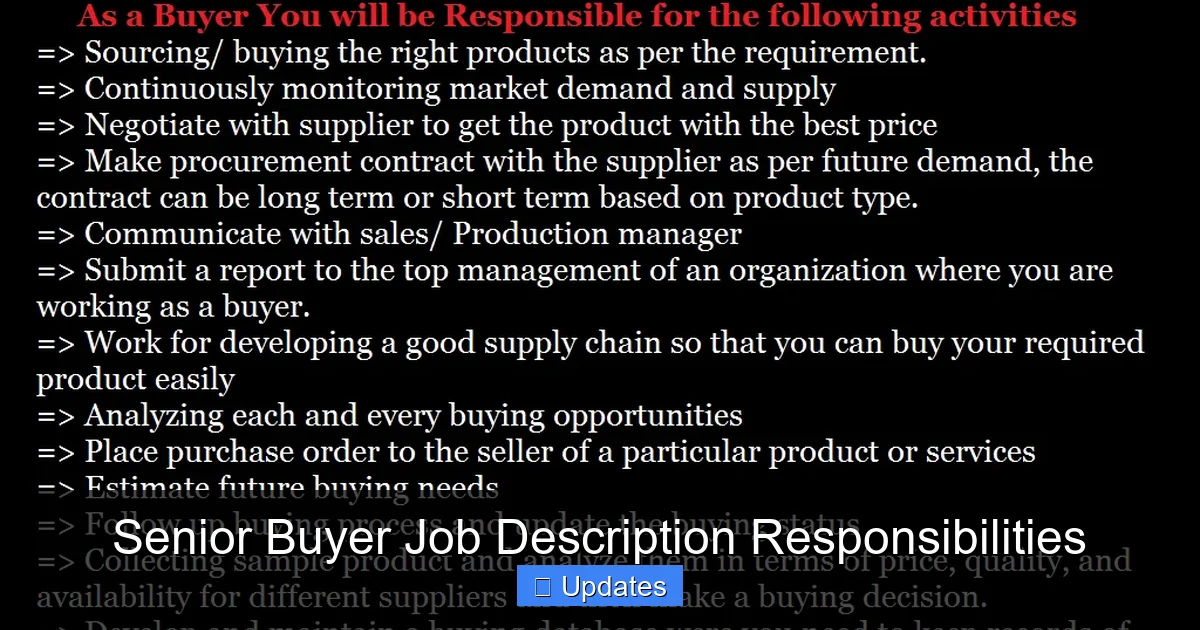
Visual guide about Senior Buyer Job Description Responsibilities
Image source: i2.wp.com
Others leverage their expertise to move into adjacent fields such as logistics, operations management, or even entrepreneurship. The transferable skills—negotiation, strategic planning, stakeholder management—are highly valued across industries.
For those interested in continuous growth, pursuing professional development courses or attending conferences like ISM’s Annual Conference can open new doors. Networking with peers through LinkedIn groups or local chapters of the National Association of Purchasing Management (NAPM) also provides mentorship and job leads.
Industry Trends Impacting Senior Buyers Today
The world of procurement is evolving rapidly. Several trends are reshaping how Senior Buyers operate:
- Sustainability and Ethical Sourcing: Consumers and regulators increasingly demand transparency in supply chains. Senior Buyers now prioritize suppliers with strong ESG (Environmental, Social, Governance) practices.
- Digital Transformation: AI-driven demand forecasting, blockchain for traceability, and robotic process automation (RPA) streamline workflows and reduce manual errors.
- Globalization vs. Localization: While global sourcing offers cost advantages, recent events have prompted companies to diversify suppliers and bring some production closer to home.
- Crisis Preparedness: Pandemics, wars, and natural disasters have made resilience a top priority. Senior Buyers are building contingency plans and stress-testing supply networks.
Staying ahead means embracing change proactively. Ask yourself: How can I apply new technologies? What emerging risks should I monitor? Who are the rising stars in my network I could learn from?
Tips for Excelling as a Senior Buyer
If you’re aspiring to become a top-tier Senior Buyer, here are actionable tips to accelerate your progress:
- Build a Diverse Network: Attend industry events, join online forums, and connect with peers on LinkedIn. Relationships often lead to referrals, collaborations, and insider knowledge.
- Stay Curious About Markets: Follow news sources like Bloomberg, Reuters, and industry-specific publications. Understanding macroeconomic shifts helps you anticipate price fluctuations.
- Practice Active Listening: When discussing requirements with internal teams, listen carefully to uncover hidden needs. Sometimes, what they say isn’t the whole story.
- Document Everything: Keep detailed records of negotiations, decisions, and rationale. This protects you legally and clarifies thinking during audits or reviews.
- Mentor Others: Sharing knowledge positions you as a leader. Offer guidance to junior colleagues—it strengthens team morale and institutional memory.
Conclusion: Why Senior Buyers Matter
In today’s interconnected economy, the role of a Senior Buyer extends far beyond rubber stamps and email threads. These professionals are strategic enablers whose choices ripple across departments, influence brand reputation, and directly impact profitability. Whether you’re managing a $100-million procurement budget or optimizing a niche component supply, your contribution shapes the success of your organization.
If you enjoy solving puzzles, thrive in dynamic environments, and want to see tangible results from your efforts, this career path offers immense satisfaction. Plus, with growing demand for skilled procurement talent, now is a great time to invest in your development.
Ready to take the next step? Explore our related articles on Senior Financial Analyst Job Description and Senior Project Director Job Description to broaden your understanding of high-impact roles in business. And if you’re curious about other senior-level positions, check out Senior HR Generalist Job Description for insights into human resources leadership.
Frequently Asked Questions
What qualifications do I need to become a Senior Buyer?
Most employers require a bachelor’s degree in business, supply chain management, or a related field, plus 3–5 years of procurement experience. Certifications like CPM or CPSM are often preferred and can enhance your credentials.
How much does a Senior Buyer typically earn?
Salaries vary by industry, location, and company size, but according to recent data, the average annual salary for a Senior Buyer in the U.S. ranges from $70,000 to $95,000, with bonuses and benefits common.
Can a Senior Buyer work remotely?
Yes, especially in tech-driven roles or with large organizations that support hybrid work models. However, collaboration with suppliers and internal teams may require occasional in-person visits or travel.
What software do Senior Buyers use daily?
Common tools include ERP systems (SAP, Oracle), e-procurement platforms (Coupa, Ariba), Excel for analysis, and CRM software to manage supplier relationships effectively.
Is experience in manufacturing necessary?
Not always, though industry-specific knowledge is valuable. Many Senior Buyers transition between sectors—retail, healthcare, construction, etc.—by leveraging transferable skills like negotiation and strategic planning.
What soft skills are most important for a Senior Buyer?
Strong communication, problem-solving, adaptability, and emotional intelligence are essential. You’ll frequently interact with diverse stakeholders, so building rapport and managing conflict gracefully matters greatly.
