
Senior Account Executive Job Description


Kitchen Timer with Large Display

Hands-Free Neck Magnifier

Orthopedic Pillow
A senior account executive is a seasoned sales professional who manages key client relationships, drives revenue growth, and leads strategic account planning. This role blends relationship management, negotiation, and business development to deliver long-term client success and company profitability.
Key Takeaways
- Core Responsibilities: Senior account executives manage high-value client accounts, develop strategic growth plans, and ensure customer satisfaction and retention.
- Required Skills: Strong communication, negotiation, problem-solving, and CRM proficiency are essential for success in this role.
- Experience Level: Typically requires 5+ years in sales or account management, with a proven track record of meeting or exceeding quotas.
- Industry Variability: Job duties may differ across industries like SaaS, tech, healthcare, or financial services, but core principles remain consistent.
- Career Growth: This role often leads to positions like Sales Director, VP of Sales, or Chief Revenue Officer (CRO).
- Compensation: Senior account executives earn competitive salaries with performance-based bonuses and commissions.
- Remote Opportunities: Many companies now offer hybrid or fully remote work options for this role, increasing flexibility.
📑 Table of Contents
What Is a Senior Account Executive?
A senior account executive is a senior-level sales professional responsible for managing and growing relationships with key clients. Unlike entry-level sales roles that focus on lead generation and cold outreach, senior account executives work with existing high-value accounts to expand business, increase revenue, and ensure long-term satisfaction. They act as the primary point of contact for major clients, understanding their needs, aligning solutions, and driving strategic growth.
This role is critical in industries where customer retention and upselling are vital—such as software as a service (SaaS), technology, consulting, and enterprise services. Senior account executives don’t just sell; they build partnerships. They understand that their success is tied not only to closing deals but also to nurturing trust and delivering consistent value over time. In many organizations, they report to a sales manager or director and often mentor junior account managers.
Key Differences from Junior Roles
While a junior account executive might focus on onboarding new clients or handling smaller accounts, a senior account executive takes ownership of complex, high-revenue accounts. They are expected to anticipate client needs, identify expansion opportunities, and resolve escalated issues. Their work involves deeper strategic thinking and cross-functional collaboration with product, marketing, and customer success teams.
For example, a junior account executive at a CRM software company might help a small business set up their system. In contrast, a senior account executive would work with a Fortune 500 client to integrate the CRM across multiple departments, negotiate multi-year contracts, and identify upsell opportunities like advanced analytics or AI features.
Core Responsibilities of a Senior Account Executive
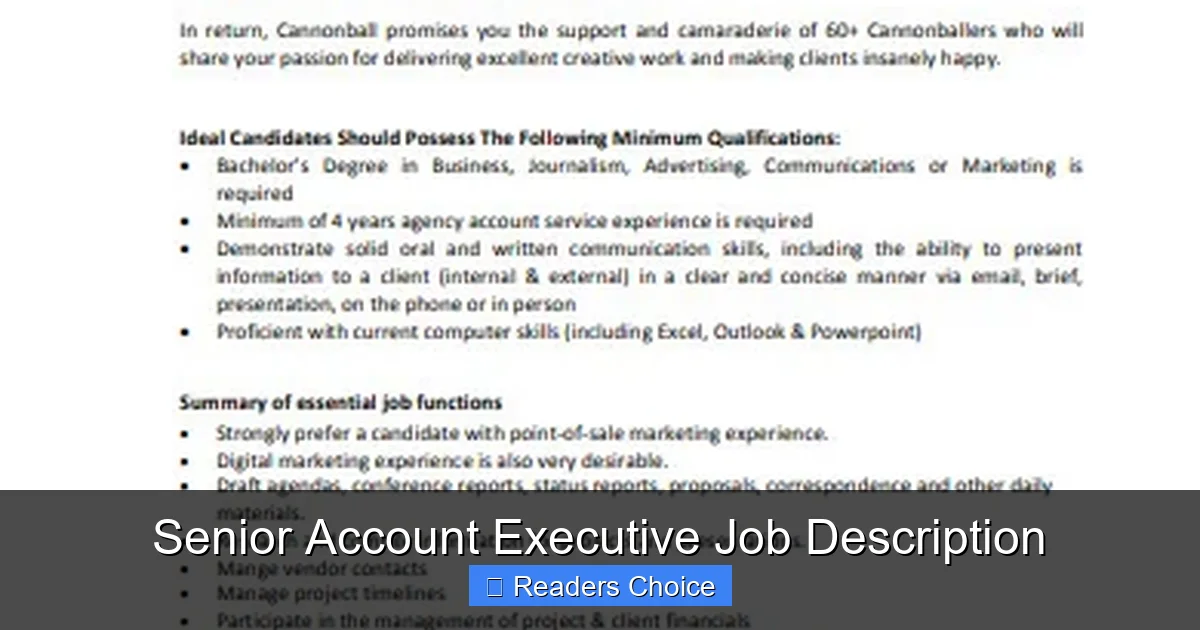
The senior account executive job description centers around driving revenue through strategic account management. While specific duties vary by company and industry, the core responsibilities are consistent across the board. These professionals are accountable for the entire client lifecycle—from onboarding to renewal and expansion.
Visual guide about Senior Account Executive Job Description
Image source: images.examples.com
Client Relationship Management
Building and maintaining strong relationships is the foundation of this role. Senior account executives regularly meet with clients—either in person, via video calls, or through site visits—to understand their evolving needs, address concerns, and reinforce the value of the partnership. They act as trusted advisors, not just vendors.
For instance, if a client is experiencing low user adoption of a software platform, the senior account executive would collaborate with the customer success team to identify training gaps and recommend tailored onboarding programs. They might also introduce new features that align with the client’s goals, turning a challenge into an opportunity for growth.
Revenue Growth and Account Expansion
A major part of the job is identifying and capitalizing on upsell and cross-sell opportunities. This could mean introducing a client to a premium tier of service, adding new users or licenses, or integrating complementary products. Senior account executives use data analytics and regular business reviews to pinpoint growth areas.
Let’s say a healthcare provider uses a telemedicine platform for patient consultations. The senior account executive might notice that the client could benefit from adding mental health modules or remote monitoring tools. By presenting a data-driven case—such as improved patient outcomes or cost savings—they can justify the expansion and secure additional revenue.
Contract Negotiation and Renewals
Renewing contracts is a critical responsibility. Senior account executives lead renewal discussions, often negotiating terms, pricing, and service levels. They must balance client expectations with company profitability, ensuring both parties feel valued.
For example, during a renewal conversation, a client might request a discount due to budget constraints. The senior account executive could offer a slight reduction in exchange for a longer contract term or a commitment to expand services in the next year. This win-win approach preserves the relationship while protecting revenue.
Strategic Account Planning
Each key account has a strategic plan developed and maintained by the senior account executive. This plan outlines goals, milestones, risk factors, and growth opportunities. It’s a living document that guides interactions and ensures alignment between the client and the company.
Imagine a senior account executive managing a global retail chain. Their strategic plan might include quarterly business reviews, annual goal setting, and a roadmap for digital transformation. They’d track metrics like customer satisfaction (CSAT), net promoter score (NPS), and revenue growth to measure success.
Cross-Functional Collaboration
Senior account executives don’t work in isolation. They partner with product teams to relay client feedback, work with marketing on targeted campaigns, and support customer success in resolving issues. This collaboration ensures a seamless client experience.
For example, if a client requests a custom feature, the senior account executive would gather requirements, present them to the product team, and manage expectations on timelines. They act as the bridge between the client and internal stakeholders, ensuring transparency and accountability.
Essential Skills and Qualifications
To excel as a senior account executive, professionals need a blend of hard and soft skills. While technical knowledge is important, interpersonal abilities often make the biggest difference in long-term success.

Visual guide about Senior Account Executive Job Description
Image source: asset.velvetjobs.com
Communication and Presentation Skills
Clear, confident communication is non-negotiable. Senior account executives must articulate complex ideas simply, whether they’re presenting to a C-suite executive or explaining a technical solution to a non-technical stakeholder. They also need strong listening skills to truly understand client needs.
Tip: Practice storytelling. Instead of listing features, tell a story about how your solution helped a similar client achieve their goals. For example, “One of our clients reduced onboarding time by 40% after implementing our training module—here’s how we can do the same for you.”
Negotiation and Persuasion
Negotiation is a daily activity, from pricing discussions to contract terms. Senior account executives must be persuasive without being pushy. They focus on mutual benefit, using data and empathy to build consensus.
Example: When a client pushes back on price, instead of immediately discounting, the executive might say, “I understand budget is a concern. Let’s look at the ROI—our solution has saved clients an average of $200K annually. Could we explore a phased rollout to fit your budget?”
Problem-Solving and Critical Thinking
Clients rely on senior account executives to solve problems quickly and creatively. Whether it’s a service outage, a billing error, or a strategic roadblock, they must assess the situation, identify root causes, and implement solutions.
Tip: Use the “5 Whys” technique to dig deeper. For example, if a client is unhappy with response times, ask: Why? (Slow support.) Why? (Understaffed team.) Why? (Budget cuts.) This helps uncover the real issue and propose a lasting fix.
CRM and Sales Technology Proficiency
Most companies use customer relationship management (CRM) tools like Salesforce, HubSpot, or Zoho. Senior account executives must be fluent in these platforms to track interactions, manage pipelines, and generate reports.
Beyond CRM, they should be comfortable with tools like Zoom, Slack, Google Workspace, and analytics dashboards. Staying tech-savvy helps them work efficiently and impress clients with organized, data-driven insights.
Industry and Product Knowledge
Deep understanding of the company’s products and the client’s industry is essential. Senior account executives must stay updated on market trends, competitor offerings, and regulatory changes that could impact their accounts.
For example, a senior account executive in the financial services sector should know about compliance standards like GDPR or SOX. This knowledge builds credibility and helps them position solutions effectively.
Typical Career Path and Advancement
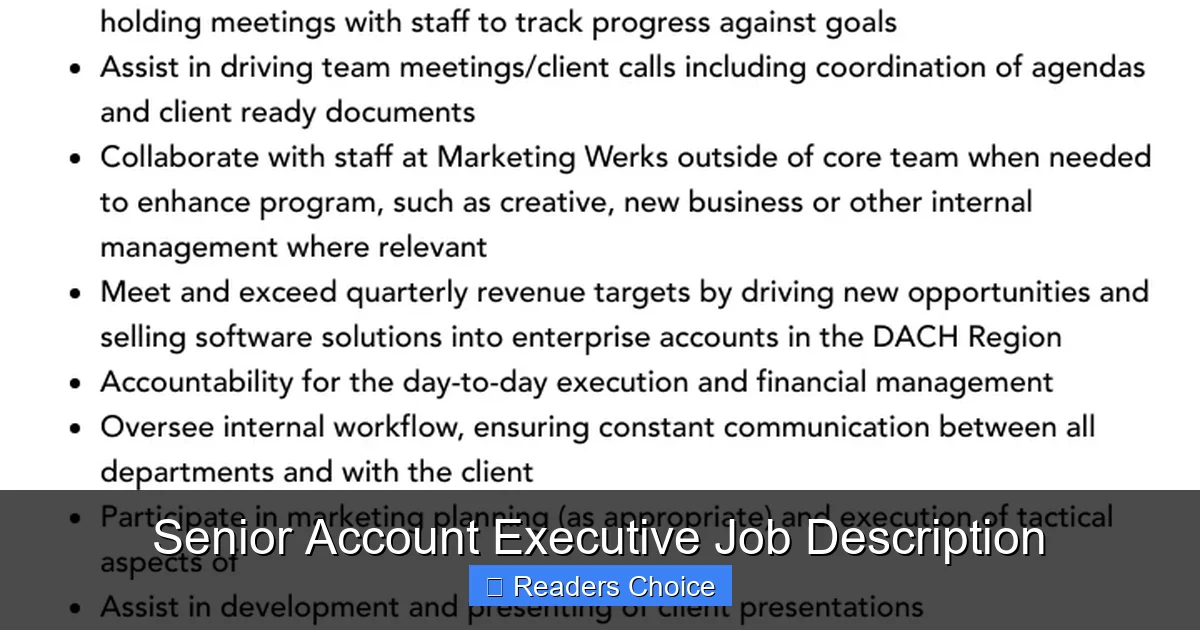
The senior account executive role is often a stepping stone to higher leadership positions. With experience and proven results, professionals can move into director-level roles or even executive positions.
Visual guide about Senior Account Executive Job Description
Image source: asset.velvetjobs.com
Entry Points and Experience Requirements
Most senior account executives have 5–8 years of experience in sales or account management. They typically start as account executives, then progress to senior roles after consistently exceeding targets and demonstrating leadership.
Some companies also promote from within—customer success managers or business development representatives with strong relationship skills may transition into senior account executive roles.
Next Steps in the Career Ladder
After mastering the senior account executive role, common next steps include:
- Sales Director: Oversees multiple account executives and sets regional or national sales strategy.
- VP of Sales: Leads the entire sales organization, focusing on revenue growth and team development.
- Chief Revenue Officer (CRO): A C-suite role responsible for all revenue-generating functions, including sales, marketing, and customer success.
- General Manager or Business Unit Leader: Takes ownership of a product line or market segment.
Each step requires broader strategic thinking, people management skills, and a deeper understanding of business operations.
Continuing Education and Certifications
While not always required, certifications can boost credibility and open doors. Consider pursuing:
- Certified Sales Professional (CSP): Offered by the National Association of Sales Professionals.
- HubSpot Sales Software Certification: Demonstrates proficiency in modern sales tools.
- MBA or Executive Education: Helpful for those aiming for C-suite roles.
Many senior account executives also attend industry conferences, webinars, and workshops to stay current and network with peers.
Salary and Compensation Overview
Compensation for senior account executives is typically competitive, combining a base salary with performance-based incentives. Earnings vary by industry, location, and company size.
Base Salary Ranges
In the U.S., the average base salary for a senior account executive ranges from $80,000 to $130,000 annually. High-cost areas like San Francisco or New York may offer higher base pay, while smaller markets may be on the lower end.
For example, a senior account executive at a mid-sized SaaS company in Austin might earn $95,000 base, while one at a Fortune 500 tech firm in Seattle could start at $120,000.
Bonuses and Commissions
Most roles include a variable component—commissions or bonuses tied to performance. This can add $30,000 to $100,000 or more annually, depending on quota attainment and company profitability.
Commission structures vary. Some companies use a straight percentage of revenue, while others offer tiered incentives—higher payouts for exceeding targets. For instance, hitting 100% of quota might earn a 10% bonus, while 120% could unlock 15%.
Additional Benefits
Beyond salary, senior account executives often receive:
- Health, dental, and vision insurance
- Retirement plans (401(k) with matching)
- Flexible PTO and remote work options
- Stock options or equity (common in startups and tech firms)
- Professional development stipends
These benefits enhance job satisfaction and support long-term career growth.
Work Environment and Flexibility
The work environment for senior account executives is dynamic and often fast-paced. While some roles are office-based, many now offer hybrid or fully remote options.
Remote and Hybrid Work Trends
The rise of digital communication tools has made remote work feasible for account executives. Companies value the flexibility it offers, especially when managing clients across time zones.
For example, a senior account executive based in Chicago might manage clients in London, Tokyo, and Los Angeles. With tools like Zoom, Slack, and CRM dashboards, they can stay connected without constant travel.
Travel Requirements
Some roles require travel—typically 20% to 50% of the time—for client meetings, conferences, or on-site reviews. Travel frequency depends on the industry and client base.
Tip: If you prefer less travel, look for roles at companies with regional hubs or strong virtual engagement models. Many B2B SaaS companies now conduct most client interactions online.
Work-Life Balance
While the role can be demanding—especially during renewal periods or major deals—many companies promote work-life balance through flexible schedules and mental health support.
Senior account executives are encouraged to set boundaries, delegate tasks, and use time-blocking techniques to manage their workload effectively.
Tips for Succeeding as a Senior Account Executive
Success in this role goes beyond hitting numbers. It’s about building trust, delivering value, and growing with your clients.
Build Long-Term Relationships
Focus on partnership, not transactions. Check in regularly, even when there’s no immediate sale. Send personalized updates, share industry insights, and celebrate client milestones.
Example: After a client launches a new product, send a congratulatory note and offer a free consultation to see how your solution can support their next phase.
Be Proactive, Not Reactive
Don’t wait for problems to arise. Anticipate needs based on data and trends. If a client’s usage drops, reach out before they consider canceling.
Tip: Set up automated alerts in your CRM to flag at-risk accounts. Then, create a re-engagement plan with tailored offers or support.
Leverage Data and Analytics
Use data to guide decisions. Track metrics like customer lifetime value (CLV), churn rate, and expansion revenue. Present insights during business reviews to show your strategic value.
For instance, share a dashboard showing how your solution has reduced their operational costs by 25% over two years. This reinforces ROI and builds confidence.
Invest in Continuous Learning
The best senior account executives are lifelong learners. Stay curious about your industry, your clients’ businesses, and new sales methodologies.
Read books like The Challenger Sale or Never Split the Difference. Attend webinars, join sales communities, and seek mentorship from leaders in your field.
Ask for Feedback
Regularly ask clients and managers for feedback. What are you doing well? Where can you improve? Use this input to refine your approach.
Example: After a quarterly review, send a short survey: “How would you rate our communication? What could we do better?” This shows humility and commitment to growth.
Conclusion
The senior account executive job description reflects a high-impact, client-focused role that blends sales expertise with strategic relationship management. These professionals are essential to driving revenue, ensuring customer satisfaction, and shaping long-term business success.
With the right skills, experience, and mindset, a senior account executive can build a rewarding career with ample opportunities for advancement. Whether you’re considering this path or looking to excel in your current role, focus on delivering value, building trust, and growing with your clients. In today’s competitive landscape, that’s what truly sets top performers apart.
Frequently Asked Questions
What is the difference between an account executive and a senior account executive?
A senior account executive typically manages larger, more complex accounts and has more experience—usually 5+ years—compared to a standard account executive. They also take on strategic planning, mentorship, and higher-stakes negotiations.
Do senior account executives work remotely?
Yes, many companies offer remote or hybrid work options for senior account executives, especially in tech and SaaS industries. This allows them to manage clients across regions without constant travel.
What industries hire senior account executives?
Senior account executives are in demand across industries like technology, SaaS, healthcare, financial services, consulting, and manufacturing—any sector with complex B2B sales cycles.
How much do senior account executives make?
Base salaries range from $80,000 to $130,000 in the U.S., with total compensation often exceeding $150,000 when including bonuses and commissions.
What skills are most important for a senior account executive?
Key skills include communication, negotiation, CRM proficiency, problem-solving, and deep product and industry knowledge. Emotional intelligence and relationship-building are also critical.
Can a customer success manager become a senior account executive?
Yes, customer success managers with strong sales acumen and relationship skills can transition into senior account executive roles, especially if they have experience driving renewals and expansions.