
Padded Cane Handle Explained: Benefits and Fit


Smart Health Watch for Seniors

Adaptive Eating Utensils

Smart Digital Photo Frame
Quick Answer
A padded cane handle is a walking cane grip covered or made with cushioning material, such as foam or soft rubber, to make holding the cane more comfortable. It may reduce pressure on the palm and improve grip comfort, but the handle must still fit your hand securely and the cane must provide the right level of walking support.
What Is a Padded Cane Handle?
A padded cane handle is the part of a walking cane that you hold, designed with a soft or cushioned surface. Instead of gripping only a hard plastic, metal, or wooden handle, your hand rests against a layer of material intended to make contact more comfortable.
Depending on the design, the padding may consist of foam, cushioned rubber, gel-like material, or another soft covering. Some handles have padding molded directly into the grip, while others use a separate cover fitted over an existing handle.
The purpose is to improve the experience of holding and controlling a cane during everyday movement. A hard handle may feel uncomfortable when pressure repeatedly falls on the same area of the palm. A suitable padded grip can soften that contact and make the cane easier to hold.
However, a padded handle is a comfort feature, not a guarantee of better balance or greater weight-bearing capacity. The cane’s construction, height, base, rubber tip, and suitability for the user remain essential to safe walking.
How Does a Padded Cane Handle Improve Comfort?
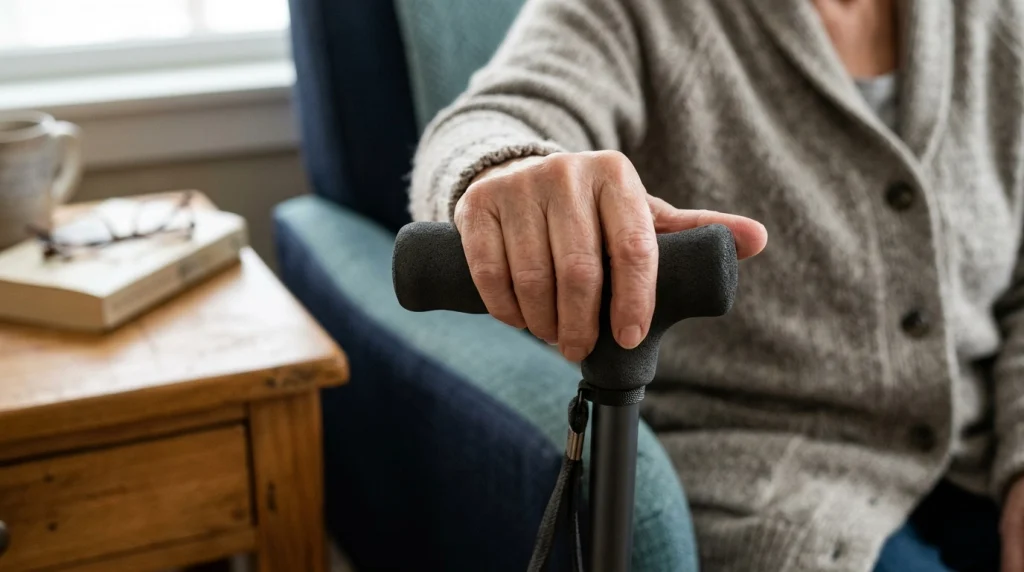
A padded handle changes the surface your hand presses against when you hold and guide the cane. The cushioning can make the grip feel less rigid and may help reduce localized discomfort, particularly for someone who finds a hard handle unpleasant.
The actual benefit depends on the padding’s thickness, firmness, texture, and fit. Softness alone does not determine whether a handle will feel comfortable or remain secure during use.
Reduced pressure on the hand
A cushioned surface may soften pressure where the palm and fingers contact the handle. This can be helpful during routine walking when the user repeatedly grips the cane to guide its movement and obtain support.
Nevertheless, padding cannot eliminate all pressure. If the handle is too narrow, too large, poorly shaped, or held with excessive force, discomfort may continue even when the surface feels soft.
A more comfortable gripping surface
Some people dislike the rigid feel of conventional cane handles. A padded grip may feel gentler against the skin and provide a more pleasant surface for regular use.
The covering should also allow the user to maintain control without squeezing excessively. A grip that feels slippery, compresses too much, or rotates in the hand can undermine the intended benefit.
Potential relief from hand fatigue
People who use a cane regularly may find that a comfortable grip makes repeated handling less tiring. However, fatigue can also result from poor cane height, incorrect walking technique, hand weakness, or using a cane when another mobility aid is needed.
For additional guidance on choosing a suitable grip, the Mayo Clinic’s advice on choosing and using canes explains why hand comfort, grip shape, and correct fitting all matter.
Who May Benefit From a Padded Cane Handle?
A padded cane handle may suit someone who needs a walking cane and finds a hard grip uncomfortable. The most useful question is whether cushioning addresses the person’s particular difficulty without compromising a secure hold.
- Older adults who use a cane regularly: A comfortable grip may make routine handling more pleasant during household activities and outdoor walks.
- People who experience pressure discomfort: Cushioning may soften the contact between the handle and areas of the palm that feel uncomfortable against a hard surface.
- People who prefer a softer grip: Foam or cushioned rubber may feel more agreeable than rigid plastic, wood, or metal.
- People comparing different handle styles: Padding offers another feature to consider alongside handle shape, width, and overall cane fit.
- People who find a narrow handle uncomfortable: A padded grip with a suitable diameter may feel better, provided the increased thickness does not make grasping difficult.
Padding is not automatically the right solution for someone with arthritis, reduced hand strength, limited finger movement, or persistent wrist pain. A broader ergonomic handle or a contoured palm grip may be more suitable if the main difficulty involves hand position rather than a hard surface.
If gripping a cane securely is difficult, or walking causes frequent loss of balance, a physical or occupational therapist can help assess both the handle and the type of mobility aid needed.
What Are the Limitations of a Padded Cane Handle?
The main limitation is that cushioning addresses the contact between your hand and the handle, not every problem associated with cane use. A soft grip may improve comfort, but it cannot correct an unsuitable cane or replace the support required for safe walking.
- Too much cushioning: A very soft grip may compress under pressure and feel less stable or predictable to some users.
- Excessive thickness: A bulky covering can make the handle harder to grasp, especially for someone with limited finger movement.
- Slippery surfaces: Some materials may become difficult to hold when wet, sweaty, worn, or contaminated with lotion.
- Wear and deterioration: Padding can tear, loosen, flatten, or shift, potentially affecting grip security.
- Unresolved hand pain: Cushioning may not address pain caused by an unsuitable handle shape, excessive loading, or an underlying hand or wrist problem.
There is also an important distinction between comfort and support. A padded grip does not automatically make a standard cane appropriate for someone who needs substantial weight-bearing assistance. If a cane cannot provide the support you need, changing its handle alone will not solve the problem.
Warning
Do not add a loose, bulky, or slippery covering to a cane handle if it makes the grip unstable. Stop using a cane with a loose handle, damaged shaft, or unreliable adjustment lock until the problem has been corrected.
Padded vs. Foam, Rubber, and Ergonomic Cane Handles
These terms can overlap. A padded handle describes cushioning, while foam and rubber identify common materials. An ergonomic handle describes a design intended to suit the hand’s position or shape. A single cane grip may combine several of these features.
| Handle type | Main characteristic | What to consider |
|---|---|---|
| Padded handle | A cushioned contact surface | Comfort, thickness, and grip security |
| Foam handle | Soft, lightweight cushioning | Compression, wear, and texture |
| Rubber handle | A rubber gripping surface, with firmness varying by design | Surface traction and comfort |
| Ergonomic handle | A shape designed around hand position and contact | Palm fit, wrist angle, and ease of control |
These categories are not mutually exclusive. For example, an ergonomic handle may have a padded foam surface, while a rubber handle may be firm rather than cushioned.
If a conventional curved grip is the main source of discomfort, compare its shape with the options described in our guides to palm grip cane handles and offset cane handles. A different shape may be more helpful than adding padding alone.
How Do You Choose a Comfortable and Secure Padded Grip?
Choose a padded handle by checking how it fits your hand and how securely you can control the cane. Do not select a grip based only on its softness or appearance.
- Check the handle diameter. Hold the grip naturally. Your fingers should wrap around it as comfortably as possible without painful squeezing or excessive stretching.
- Assess the cushioning. Look for padding that feels comfortable but does not compress so much that the handle becomes difficult to control.
- Check the surface. Make sure the material feels secure in your hand and is not torn, loose, or excessively slippery.
- Consider the shape. A straight, curved, or contoured grip can feel different even when each has the same amount of padding.
- Check cane height. Stand upright in your usual walking shoes and let your arm hang naturally. The handle should generally line up with your wrist crease, with your elbow slightly bent when holding the cane.
- Inspect the whole cane. Check the shaft, handle connection, adjustment lock, and rubber tip. All components must be in sound condition.
- Try it under appropriate supervision if needed. If your grip is weak or your balance is uncertain, ask a qualified mobility professional to assess the fit before relying on the cane.
The MedlinePlus guide to using a cane also explains correct handle height, walking technique, and the importance of checking the cane’s contact tip.
Tip
When comparing grips, pay attention to how your hand feels after holding the cane naturally, not just when you first touch the padding. The handle should allow a secure grasp without forcing your wrist into an uncomfortable position.
Can You Add Padding to an Existing Cane Handle?
Sometimes, but compatibility and safety matter. A purpose-made handle cover may be suitable when the manufacturer permits its use and the cover fits securely without changing the grip in a way that interferes with control.
Before using an added covering, check that it cannot rotate, slide off, bunch up, or become slippery. It should not obstruct buttons, adjustment mechanisms, or other functional parts of the cane.
Avoid improvised coverings that significantly increase the handle’s thickness or conceal cracks and loose connections. Do not drill into, cut, or otherwise modify a load-bearing cane to attach padding.
If the existing handle causes persistent pain, numbness, or tingling, a replacement handle or a different cane design may be more appropriate than a cover. Check with the manufacturer or a mobility professional before replacing or modifying a structural component.
How Should You Maintain a Padded Cane Handle?
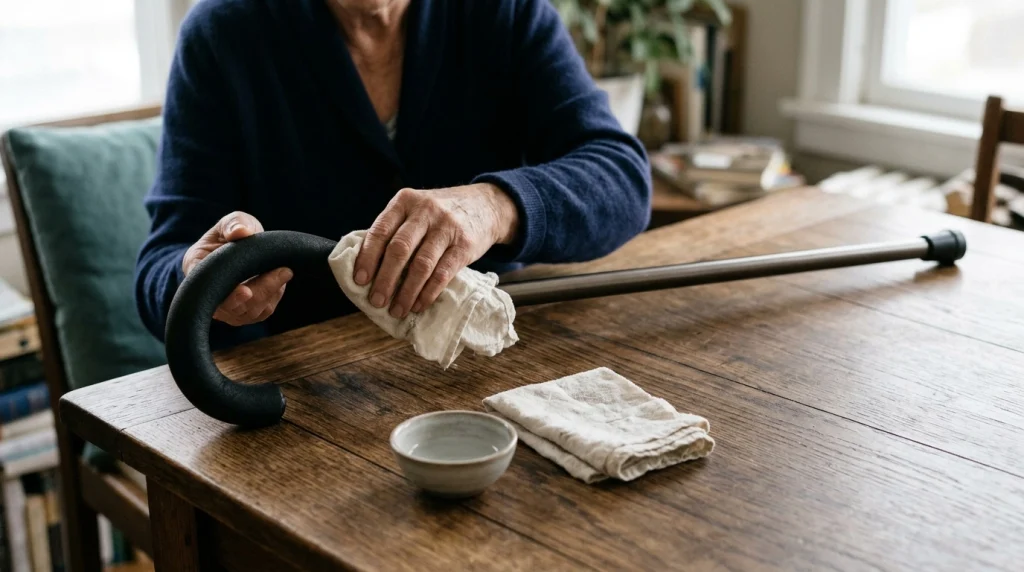
Regular inspection helps identify changes that could affect comfort or control. Follow the manufacturer’s cleaning instructions because foam, rubber, and other covering materials may react differently to cleaners, heat, or moisture.
- Check for tears, cracks, peeling, and exposed hard surfaces.
- Make sure the padding does not twist or move independently of the handle.
- Clean the grip as directed and let it dry fully before use.
- Replace a damaged or persistently slippery covering rather than relying on it for support.
- Inspect the cane’s rubber tip and shaft as well as the handle.
If the cane suddenly feels unstable, the handle becomes loose, or your hand develops new discomfort, stop and reassess the equipment before continuing to rely on it. A comfortable handle is useful only when the complete cane remains safe to use.
Frequently Asked Questions
Is a padded cane handle better than a hard handle?
It may be more comfortable for someone who dislikes pressure from a hard surface. However, the best choice depends on hand size, grip strength, handle shape, and whether the padded material remains secure.
Can a padded cane handle help with arthritis?
It may improve comfort for some people with hand arthritis, but cushioning does not treat arthritis or guarantee pain relief. A suitably shaped ergonomic grip may be more useful when joint position or grasping difficulty is the main concern.
Does a padded handle make a cane more stable?
Not automatically. Padding changes the handle’s contact surface, while overall stability depends on the cane design, correct fit, tip condition, walking technique, and the user’s mobility needs.
Which is better, foam or rubber padding?
Neither material is universally better. Foam may feel softer, while rubber can provide a different balance of firmness and surface grip. Compare the actual texture, thickness, durability, and comfort of the specific handle.
Can I put a foam cover over my existing cane handle?
Yes, if the cover is compatible and stays firmly in place without making the grip too thick or slippery. Follow the cane manufacturer’s guidance and avoid modifications that could weaken or destabilize the handle.
When should I replace a padded cane handle?
Consider replacement if the padding tears, loosens, compresses excessively, becomes slippery, or causes discomfort. If the handle connection or cane shaft is damaged, stop using the cane until it has been properly repaired or replaced.
Conclusion
A padded cane handle adds cushioning to the surface you hold, potentially making a walking cane more comfortable for everyday use. Its value depends on whether the material, thickness, and shape suit your hand while allowing you to maintain a secure grip.
Before choosing one, check the handle’s fit, the cane’s height, and the condition of the shaft and rubber tip. If padding does not resolve hand discomfort, consider a different grip design or seek a professional assessment. Most importantly, choose a cane that provides appropriate support for your walking needs rather than relying on softness alone.
Related Product
Padded Walking Cane Handle Covers
A compatible padded handle cover may make an existing cane more comfortable to hold, provided it fits securely and does not interfere with grip control.
As an Amazon Associate, we earn from qualifying purchases.