
Nebulizer vs Inhaler: Which method is easier to use correctly?

Electric Mobility Scooter

Lap Desk for Reading

Reading Light for Bed
Nebulizer vs Spacer is not quite a direct device-versus-device match. A nebulizer turns liquid medicine into a mist, while a spacer works with a metered-dose inhaler to help deliver medicine to the lungs.
The right choice depends on the prescribed medicine, the user’s breathing needs, and how easy each method is to use.
Quick Comparison
For many seniors who can use a prescribed metered-dose inhaler, a spacer can offer a simple and portable setup. It can also make inhaler timing easier.
A nebulizer may suit someone who has difficulty using an inhaler correctly or who has specifically been prescribed nebulized medicine. It usually needs more equipment and setup.
The device should match the prescribed medicine and the user’s ability to use it correctly.
Nebulizer vs Spacer At a Glance
Both devices can help deliver inhaled medicine, but they work in very different ways.

| Feature | Nebulizer | Spacer |
|---|---|---|
| Main role | Turns liquid medicine into mist | Works with a metered-dose inhaler |
| Setup | More steps | Simple |
| Portability | Usually lower | Usually higher |
| Power | Many models need power | No separate power |
| Ease of use | Good with mask or mouthpiece | Easier with correct inhaler technique |
| Cleaning | More parts to clean | Simple but still needs cleaning |
| Senior use | Useful for some users | Useful for many inhaler users |
Nebulizer Review for Senior Use
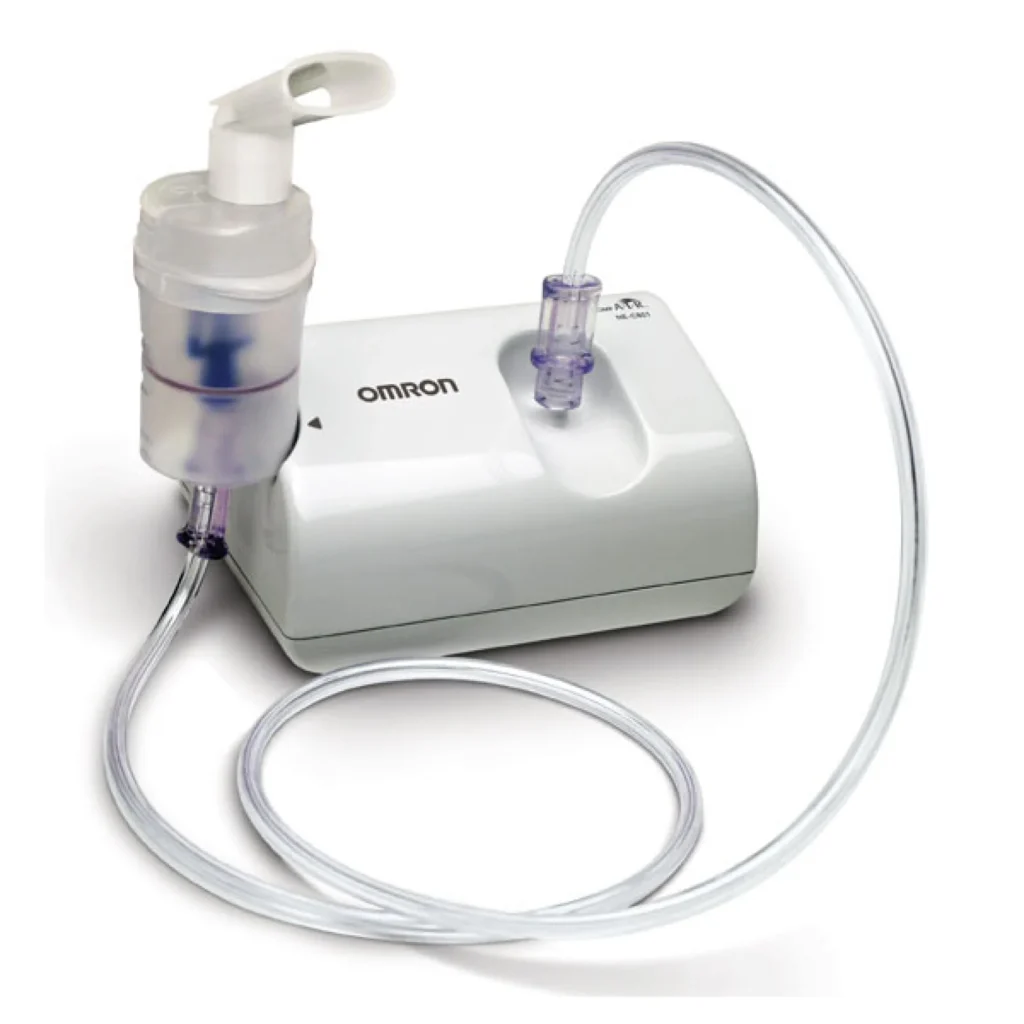
A nebulizer uses a machine to turn liquid medicine into a fine mist. The user breathes the mist through a mouthpiece or mask. Some nebulizers are designed for home use, while others are used in clinical settings.
Ease of Use
A nebulizer can be helpful when pressing an inhaler and breathing at the right time is hard. The user normally sits upright, adds the prescribed medicine, connects the parts, and breathes through the mouthpiece or mask while the device runs.
This can reduce the need for precise hand-and-breath timing.
However, there are more parts to handle. Tubing, the medicine cup, mouthpiece or mask, and the machine all need to be set up correctly.
Key Strengths
- Can work with liquid medicine prescribed for nebulization.
- May be easier for some users who struggle with inhaler timing.
- Can be used with a mouthpiece or mask, depending on the device.
- May be useful for people who have been specifically prescribed nebulized treatment.
Potential Drawbacks
- More setup than a spacer and inhaler.
- Less convenient to carry around.
- Needs regular cleaning.
- Some models need access to electrical power.
- Treatment can require sitting in one place while the device operates.
Spacer Review for Senior Use
A spacer is a holding chamber used with a compatible metered-dose inhaler. It helps make inhaler use easier and can improve delivery of medicine to the lungs.
Ease of Use
A spacer can be helpful when coordinating an inhaler puff with breathing is difficult. The inhaler connects to the spacer, and the user breathes through the chamber after the medicine is released.
For someone with limited hand strength, the exact inhaler and spacer design still matter. The user must be able to hold the device, create a good seal, and follow the prescribed technique.
Key Strengths
- Compact compared with most nebulizer setups.
- Does not need a separate power source.
- Can make a metered-dose inhaler easier to use.
- Easy to carry for many users.
- Can reduce the need for precise timing between pressing the inhaler and breathing in.
Potential Drawbacks
- It must be compatible with the inhaler.
- Correct technique still matters.
- It needs regular cleaning.
- It is not a replacement for a nebulizer when nebulized medicine has been prescribed.
Which Is Easier for Seniors to Use?
For a senior who can use a prescribed inhaler, a spacer may be easier for everyday use because the setup is small and simple. It can also reduce some of the timing demands of using a metered-dose inhaler.
A nebulizer may be easier for a person who struggles with inhaler technique. The user can breathe the mist through a mouthpiece or mask instead of coordinating an inhaler puff with breathing.
| Senior Need | Nebulizer | Spacer |
|---|---|---|
| Simple setup | More steps | Fewer steps |
| Easy carrying | Less convenient | More convenient |
| Limited inhaler timing skills | May help | Can also help |
| Trouble holding an inhaler | May be easier | Depends on inhaler |
| Home treatment | Yes, when prescribed | Yes |
| Quick daily setup | Usually slower | Usually faster |
The important point is that easier does not mean the same for everyone. Hand strength, breathing ability, vision, memory, and the prescribed medicine can all affect the choice.
Performance Comparison
These devices should not be judged like two competing machines. They perform different jobs.
A nebulizer converts liquid medicine into an inhaled mist. A spacer holds medicine released from a compatible metered-dose inhaler and helps the user inhale it.
For some medicines and conditions, both methods may be part of treatment. But the device should not be changed simply because one looks easier.
NHS guidance notes that salbutamol, for example, can be given through an inhaler or nebulizer, with nebulized treatment generally used in more severe asthma or COPD situations.
Comfort, Accessibility, and Senior-Friendly Design
Comfort depends on the user’s needs.
A nebulizer can be useful when a mask is easier than holding an inhaler. It can also remove some of the hand-and-breath coordination needed with an inhaler.
A spacer is often more convenient for travel and everyday use. It can also make a metered-dose inhaler easier to use. NHS guidance says a spacer can help users get the right amount of medicine into the lungs.
For a senior with limited dexterity, check:
- How easy the parts are to hold.
- Whether the mouthpiece is comfortable.
- Whether a mask is available when appropriate.
- Whether the device is easy to see.
- Whether cleaning is manageable.
- Whether a caregiver can set it up if needed.
Features Comparison
The most useful features are the ones that reduce errors and make routine use easier.
| Feature | Nebulizer | Spacer |
|---|---|---|
| Medicine delivery | Liquid medicine as mist | Medicine from compatible inhaler |
| Mask option | Common on some models | Available with some spacer systems |
| Separate machine | Yes | No |
| Portability | Usually lower | Usually higher |
| Cleaning | More components | Fewer components |
| Power need | Often yes | No |
Price, Maintenance, and Long-Term Value
The purchase price varies by model, so an exact price is not useful without checking the current device and market.
A nebulizer may involve more parts and accessories. The user may need to clean the medicine cup, mouthpiece or mask, tubing, and other parts according to the manufacturer’s instructions.
A spacer has fewer components, but it still needs proper cleaning. Guidance from the American Lung Association says to clean the inhaler chamber or spacer according to its package instructions.
Long-term value is therefore less about the cheapest device and more about which system the user can use correctly and maintain consistently.
Who Should Choose a Nebulizer?
A nebulizer may be worth discussing with a healthcare professional if:
- The person has been prescribed nebulized medicine.
- Using an inhaler correctly is difficult.
- A mask is easier to manage than an inhaler mouthpiece.
- A caregiver will help with setup.
- The treatment plan specifically calls for a nebulizer.
Do not switch from an inhaler to a nebulizer, or the other way around, without appropriate medical guidance.
Who Should Choose a Spacer?
A spacer may be a good fit when:
- The prescribed medicine comes in a compatible metered-dose inhaler.
- The user finds inhaler timing difficult.
- Portability matters.
- A simple setup is preferred.
- The user can follow the required breathing steps.
- A healthcare professional recommends a spacer.
Different spacers may not be interchangeable with every inhaler, so compatibility matters.
Nebulizer vs Spacer — Final Verdict
There is no single winner because a nebulizer and spacer are not direct substitutes in every situation.
Best for portability: Spacer
Best for a simple setup: Spacer
Best when nebulized medicine is prescribed: Nebulizer
Best for some users who struggle with inhaler coordination: Either may be appropriate, depending on the treatment plan
Best choice for medical suitability: The device prescribed for the user’s specific medicine and needs
For many seniors who already use a compatible metered-dose inhaler, a spacer can make everyday use easier. A nebulizer can be more suitable when nebulized treatment is prescribed or when inhaler use is not practical.
Scoring Summary
Because these devices serve different purposes, a simple product score can be misleading. A fair comparison is better based on the user’s treatment plan, technique, mobility, setup needs, and maintenance ability.
| Category | Nebulizer | Spacer |
|---|---|---|
| Portability | Lower | Higher |
| Setup simplicity | Moderate | Higher |
| Inhaler coordination | Not required | Still needed |
| Maintenance simplicity | Lower | Higher |
| Flexibility for prescribed use | Depends on medicine | Depends on inhaler |
How We Evaluate These Devices
This comparison focuses on practical factors that matter to older adults.
We look at ease of use, setup, accessibility, comfort, cleaning, portability, maintenance, and long-term practicality. We also consider whether a device may be harder to manage for someone with limited dexterity or mobility.
No hands-on testing is assumed here. Product claims should be checked against the current instructions for the specific device.
Senior-Specific Buying Considerations
Before choosing a nebulizer or spacer, look at these points.
Physical Effort
Check whether the user can hold the inhaler, attach the spacer, or manage nebulizer parts.
Controls
A nebulizer may have a power switch and other parts. A spacer has fewer controls but still needs correct inhaler use.
Maintenance
Think about who will clean the device and how often.
Storage
A spacer takes little space. A nebulizer usually needs room for the machine and accessories.
Setup
Choose a system the user can manage safely and correctly. If a caregiver helps, make sure the caregiver also knows the proper steps.
Safety
Use only the medicine and dose prescribed for the user. If breathing symptoms are severe or suddenly worse, follow the person’s medical action plan and seek appropriate medical help.
Common Buying Mistakes
Avoid these mistakes when comparing the two:
- Choosing based only on device price.
- Assuming a nebulizer is always stronger.
- Assuming a spacer works with every inhaler.
- Ignoring cleaning requirements.
- Buying a nebulizer without knowing which medicine it will use.
- Changing the prescribed delivery method without professional advice.
Safety
Respiratory medicines are not interchangeable simply because two devices can deliver inhaled medicine.
A spacer should be compatible with the prescribed inhaler. NHS guidance also recommends having inhaler technique checked by a doctor, nurse, or pharmacist when needed.
If a senior has significant breathing problems, a new or worsening symptom, or uncertainty about which device to use, the safest step is to contact the appropriate healthcare professional rather than choosing a device based only on convenience.
Frequently Asked Questions
Is a nebulizer better than a spacer?
Not in every situation. They serve different roles. A nebulizer delivers liquid medicine as a mist, while a spacer works with a compatible metered-dose inhaler.
Is a spacer easier to use than a nebulizer?
For many users, a spacer is easier to carry and set up. A nebulizer may be easier for someone who has difficulty with inhaler coordination.
Can a spacer replace a nebulizer?
Not automatically. The correct device depends on the prescribed medicine and treatment plan.
Does a spacer need cleaning?
Yes. Follow the cleaning instructions supplied with the spacer and inhaler system.
Can seniors use a nebulizer at home?
Yes, when a healthcare professional has prescribed or recommended nebulized treatment and shown the user how to operate it.
Should I choose based on ease of use alone?
No. Ease of use matters, but medicine compatibility, prescribed treatment, correct technique, cleaning, and the user’s ability to manage the device are also important.
Conclusion
Nebulizer vs Spacer is really a comparison between two different ways of delivering inhaled medicine. A spacer is compact and can make a compatible metered-dose inhaler easier to use. A nebulizer provides mist from liquid medicine and may be useful when that form of treatment is prescribed.
For seniors, the best choice is the one that fits the prescribed medicine and can be used correctly and safely. When there is uncertainty, a doctor, nurse, or pharmacist can check the technique and help select the appropriate delivery method.