
Low Income Senior Housing in Gwinnett County Ga


Voice Assistant Smart Speaker

Adaptive Eating Utensils

Bathroom Grab Bar Set
Finding affordable senior housing in Gwinnett County, Georgia, can be challenging—but not impossible. Many government-assisted and nonprofit programs exist to support low-income seniors with safe, comfortable living environments. This guide walks you through available options, eligibility requirements, application tips, and local resources tailored specifically for seniors in Gwinnett County.
Finding a safe, affordable place to live as a senior shouldn’t feel overwhelming—especially when you’re on a fixed income. In Gwinnett County, Georgia, many low-income seniors face rising costs and limited options, but there are real solutions out there. From federally funded apartments to community-based support programs, you don’t have to figure it all out alone. This article breaks down everything you need to know about low income senior housing in Gwinnett County Ga, including where to look, how to qualify, and what to expect during the application process.
Whether you’re currently renting, thinking about downsizing, or helping a loved one plan ahead, understanding your choices now can save time, stress, and money later. Let’s dive into the details so you can make informed decisions about your next home.
Key Takeaways
- Multiple housing types: Options include subsidized apartments, supportive living communities, and public housing designed specifically for seniors with limited income.
- Eligibility matters: Most programs require applicants to meet age (typically 62+), income limits, and sometimes asset thresholds set by HUD or local agencies.
- Waitlists are common: Due to high demand, many affordable senior housing programs operate on waitlists—some lasting months or even years.
- Local agencies help: Gwinnett County offers case management, application assistance, and referrals through its aging services office.
- Additional benefits: Beyond rent subsidies, some housing includes utilities, meals, transportation, or healthcare coordination at no extra cost.
- Nonprofit partners matter: Organizations like Gwinnett County Housing Authority and local nonprofits provide critical support for navigating the system.
- Plan ahead: Start your search early and gather documents like birth certificates, Social Security statements, and tax returns to speed up approval.
📑 Table of Contents
- Understanding Low-Income Senior Housing in Gwinnett County
- Types of Low-Income Senior Housing Available in Gwinnett County
- How to Qualify for Low-Income Senior Housing in Gwinnett County
- Where to Apply: Official Agencies & Resources
- Practical Tips for Securing Affordable Senior Housing
- Beyond Housing: Additional Support for Gwinnett County Seniors
- Conclusion: Your Next Steps Toward Comfortable, Affordable Living
Understanding Low-Income Senior Housing in Gwinnett County
Gwinnett County is one of Georgia’s fastest-growing regions, with a diverse population that includes thousands of older adults aged 65 and over. As life expectancy increases and medical advances allow people to live longer, the need for accessible, affordable housing becomes even more urgent. Fortunately, several programs exist to help seniors maintain independence while managing tight budgets.
Low-income senior housing refers to residential units—often apartments or townhomes—that offer reduced rent based on a tenant’s income. These aren’t just cheaper places to live; they’re designed with seniors in mind. Features may include grab bars in bathrooms, emergency call systems, wheelchair accessibility, and proximity to medical care or public transit.
Most importantly, these homes are regulated by federal or state guidelines to ensure fairness and sustainability. For example, the U.S. Department of Housing and Urban Development (HUD) sets income limits each year, and properties must follow strict rules about rent calculations, lease terms, and resident rights.
In Gwinnett County, the primary agency overseeing much of this housing is the Gwinnett County Housing Authority. They manage Public Housing and administer Section 8 vouchers, which can be used toward senior-specific developments. There are also nonprofit developers and faith-based organizations building or leasing units exclusively for low-income seniors.
Why Waitlists Are Part of the Process
You might hear that affordable senior housing has long waitlists. That’s true—and it’s not unusual. Demand far exceeds supply, especially in suburban areas like Gwinnett. When a unit opens up, applicants are selected based on factors like date of application, income level, household size, and sometimes medical needs.
This doesn’t mean giving up hope. Being proactive increases your chances significantly. Keep checking for updates, attend community meetings, and ask about alternative waiting lists or overflow options.
The Role of Case Management
One advantage of living in assisted senior housing is access to case managers or social workers. These professionals help residents apply for benefits, coordinate health services, and connect them with local resources. In Gwinnett County, agencies like the Newton County Senior Center (which serves nearby communities) offer similar support, though Gwinnett has its own dedicated aging services division.
Case management is especially helpful for seniors who are isolated, have chronic conditions, or struggle with paperwork. It turns what could be a confusing process into a manageable one.
Types of Low-Income Senior Housing Available in Gwinnett County
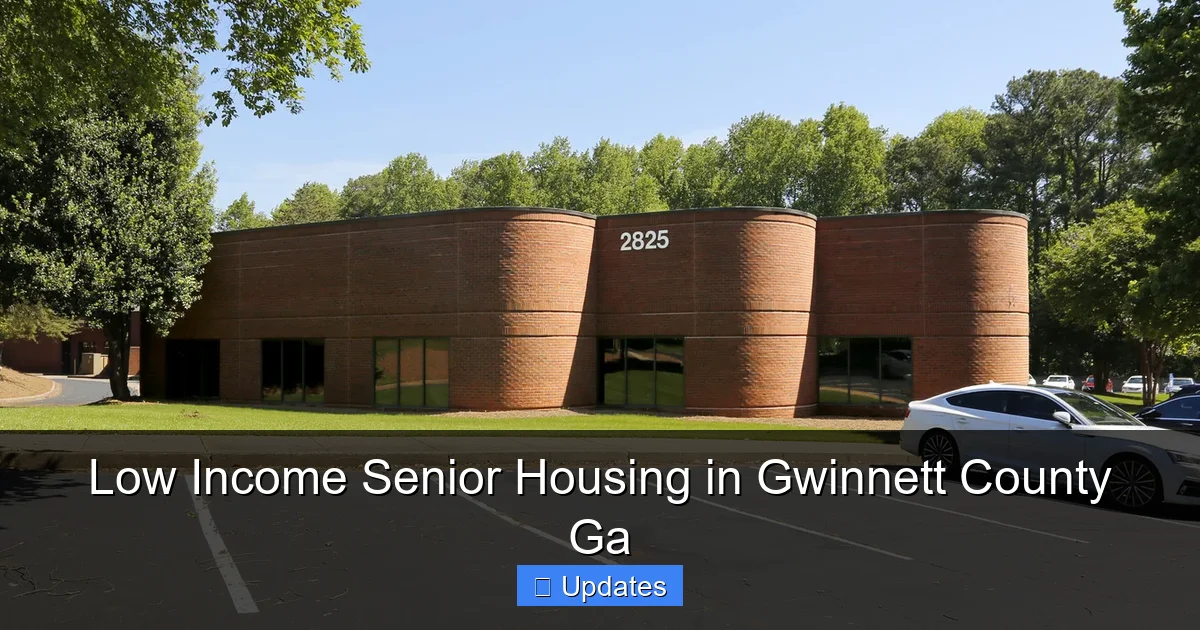
Visual guide about Low Income Senior Housing in Gwinnett County Ga
Image source: lowincomehousing.us
Not all affordable senior housing looks the same. Gwinnett offers several models, each with unique features and eligibility criteria. Understanding the differences helps you choose the best fit for your lifestyle and budget.
Public Housing for Seniors
Administered by the Gwinnett County Housing Authority, public housing provides subsidized rent in designated apartment complexes. Many of these buildings are reserved for households where at least one member is over 62. Rent is typically set at 30% of your monthly income—not a flat rate, but a sliding scale.
Examples include:
– Briarwood Apartments: Located near Lawrenceville, this complex offers 1- and 2-bedroom units with energy-efficient appliances and on-site laundry.
– Cedar Grove Senior Village: A newer development with modern finishes, accessible design, and a community room for events.
To apply, visit the Housing Authority’s website or stop by their office at 437 Winder Highway, Suite 100, Lawrenceville, GA 30046.
Section 8 Project-Based Vouchers
Unlike tenant-based Section 8, project-based vouchers are tied to specific properties. If approved, you pay 30% of your income toward rent, and the voucher covers the rest. This model ensures long-term affordability because the subsidy stays with the unit.
Some Gwinnett senior properties participate in this program, including:
– Parkside at Sugarloaf: Offers studio and one-bedroom units with fitness centers and scheduled transportation.
– Village at Meadowbrook: Known for its quiet setting and close-knit resident community.
Again, availability depends on waitlist status. The Housing Authority accepts applications quarterly, so mark your calendar.
Nonprofit-Developed Senior Communities
Organizations like Habitat for Humanity and local faith groups often build affordable housing with volunteer labor and donations. While not always exclusively for seniors, some projects prioritize older adults.
For instance, Gwinnett Cares partners with developers to create mixed-income housing where a certain percentage of units go to low-income seniors. These homes usually include basic amenities and may offer utility assistance.
Another example is Sandy Springs Presbyterian Church’s outreach program, which helps connect seniors with subsidized rentals through church networks.
Supportive Living & Assisted Living Alternatives
While true assisted living requires private-pay or Medicaid waivers (not generally covered by standard low-income programs), some supportive housing models blend affordability with light care services. These might include meal delivery, medication reminders, or wellness checks—without requiring full-time nursing.
These hybrid options are growing in popularity among seniors who want independence but still need occasional support.
How to Qualify for Low-Income Senior Housing in Gwinnett County
Visual guide about Low Income Senior Housing in Gwinnett County Ga
Image source: lowincomehousing.us
Eligibility isn’t automatic. Programs use strict criteria to ensure resources reach those most in need. Here’s what you’ll typically need:
Age Requirements
Most programs require at least one occupant to be 62 or older. Some exceptions exist for younger individuals with disabilities, but senior-focused housing prioritizes those 65+.
Income Limits
Your gross annual income must fall below a threshold set annually by HUD. For Gwinnett County in 2024:
– One-person household: $49,600 or less
– Two-person household: $56,700 or less
– Three-person household: $63,750 or less
Note: This includes wages, Social Security, pensions, disability payments, and other regular income sources. Assets like savings accounts or retirement funds may also count toward eligibility in some cases.
Asset Limits
Some programs cap total assets at $8,000 (individual) or $12,000 (couple). Exceptions apply for IRAs, burial plots, and primary vehicles.
Residency & Citizenship Status
Applicants must be U.S. citizens or legal residents. Proof of residency in Gwinnett County may be required, depending on the property.
Background Checks
All applicants undergo criminal background and credit history reviews. Minor infractions may disqualify you, so honesty during screening is crucial.
Application Tips
– Gather documents early: birth certificate, Social Security card, tax returns, bank statements, proof of income (e.g., SSA-1099).
– Submit applications promptly—even before you move. Being on the list improves odds if space opens.
– Attend informational workshops hosted by the Gwinnett County Aging Division.
Where to Apply: Official Agencies & Resources

Visual guide about Low Income Senior Housing in Gwinnett County Ga
Image source: lowincomehousing.us
Navigating housing applications can feel daunting, but Gwinnett County makes it easier through multiple touchpoints.
Gwinnett County Housing Authority
The central hub for public housing and Section 8. Their staff can walk you through forms, answer questions, and confirm eligibility.
Website: gwinnetthousing.org
Phone: (770) 822-8500
Address: 437 Winder Highway, Suite 100, Lawrenceville, GA 30046
Gwinnett County Aging Division
Part of the Department of Community Affairs, this office provides case management, benefit counseling, and housing referrals. They also host monthly senior fairs with vendors and workshops.
Website: gwinnettcounty.com/aging
Phone: (770) 822-7000
Georgia Division of Aging Services
State-level support for housing, nutrition programs, and caregiver resources. They can refer you to regional coordinators who understand local inventory.
Website: aging.state.ga.us
United Way of Greater Atlanta – 211 Helpline
Dial 211 or visit unitedwayatlanta.org for real-time housing matches, utility assistance, and crisis support.
Faith-Based & Nonprofit Networks
Churches, synagogues, and charities often know about hidden gems—units not advertised online due to low vacancy. Ask around your congregation or senior center.
Practical Tips for Securing Affordable Senior Housing
Even with perfect qualifications, competition is fierce. Use these strategies to boost your chances:
Start Early & Stay Persistent
Don’t wait until you’re desperate. Begin researching 12–18 months before you anticipate needing housing. Sign up for email alerts from housing authorities and check websites weekly.
Leverage Local Connections
Talk to neighbors, doctors, or pharmacists. Word-of-mouth leads are powerful—especially in tight-knit communities.
Consider Nearby Counties
If Gwinnett’s waitlists are too long, explore adjacent areas like DeKalb, Fulton, or Hall County. Sometimes cross-county programs exist, or smaller towns have shorter lines.
Look for “No Waiting List” Opportunities
Occasionally, properties rotate vacancies or accept overflow from other locations. Check HUD’s Vacancy Reports or call directly.
Use Technology Wisely
Sites like A Place for Mom, SeniorLiving.org, and HUD.gov let you filter by location, price, and amenities. Set up saved searches to get instant notifications.
Attend Senior Fairs & Workshops
Events held at libraries, community centers, or senior hubs often feature housing providers offering immediate openings.
Beware of Scams
Never pay upfront fees to “guarantee” placement. Legitimate agencies never charge application fees. Report suspicious calls or emails to the Federal Trade Commission.
Beyond Housing: Additional Support for Gwinnett County Seniors
Affordable housing is just the first piece of the puzzle. Many low-income seniors also struggle with food insecurity, transportation gaps, or isolation. Fortunately, Gwinnett offers wraparound services:
Meals on Wheels
Delivers nutritious meals to homebound seniors. Eligibility: 60+, income-based sliding scale. Call (770) 822-7000 ext. 245.
Transportation Assistance
Free or discounted rides via Gwinnett RideShare or volunteer driver networks. Essential for medical appointments and grocery trips.
Utility Bill Help
Programs like LIHEAP (Low Income Home Energy Assistance Program) assist with heating/cooling costs. Apply through United Way 211.
Mental Health & Counseling
Gwinnett Behavioral Health offers free or low-cost therapy for seniors dealing with depression, grief, or anxiety.
Legal Aid
Georgia Legal Services Program helps seniors navigate eviction threats, landlord disputes, or estate planning.
Conclusion: Your Next Steps Toward Comfortable, Affordable Living
Navigating low income senior housing in Gwinnett County Ga takes patience and persistence—but you’re not alone. With the right knowledge and support, finding a safe, dignified place to call home is absolutely achievable. Whether you choose public housing, a nonprofit community, or a Section 8-supported apartment, remember: starting early, staying organized, and leaning on trusted resources dramatically improve your odds.
Take action today: visit the Gwinnett County Housing Authority, schedule a consultation with the Aging Division, or simply call 211 to begin your journey. Small steps now lead to big wins later—for your peace of mind, your health, and your future.
—
Frequently Asked Questions
What is the average wait time for low-income senior housing in Gwinnett County?
Wait times vary by property but commonly range from 6 months to 2 years. Some popular developments have longer lines, while others occasionally open spots unexpectedly. Staying on multiple waiting lists increases your chances.
Can I apply for senior housing if I have a roommate under 62?
Yes, as long as one adult in the household is 62 or older. Roommates under 62 don’t affect eligibility, though all occupants must pass background checks and meet income limits based on total household size.
Are pets allowed in low-income senior housing?
Many properties allow small pets with deposit or monthly fee. Service animals are always permitted regardless of policy. Always ask about breed restrictions or weight limits when touring units.
Does Gwinnett County offer housing for veterans?
Yes! Veterans with honorable discharge may qualify for priority placement or specialized programs. Contact the Gwinnett County Housing Authority or the Georgia Department of Veterans Services for details.
What if my income rises above the limit after moving in?
Rent adjusts automatically based on updated income reporting. You won’t lose your home unless you exceed limits by 20% or more. Regular recertification keeps things fair.
Is there help paying first month’s rent or security deposits?
Some nonprofit partners offer limited deposit assistance. LIHEAP and utility companies may cover connection fees. United Way 211 can connect you to emergency grants. Always ask during application.