
Low Income Senior Housing Daytona Beach Florida


Glucose Monitor Kit

Sock Aid for Seniors
Medication Reminder Alarm
Finding low income senior housing in Daytona Beach, Florida doesn’t have to be overwhelming. With a range of subsidized apartments, supportive services, and community programs tailored for older adults, you can enjoy safe, dignified living without financial strain. Whether you’re looking for independent living, assisted care, or memory support, local resources are available to help you thrive in your golden years.
Living in Daytona Beach as a senior brings sunshine, scenic views, and a relaxed coastal lifestyle. But for many older adults on fixed incomes, rising costs of living can make housing one of the biggest challenges. That’s where low income senior housing in Daytona Beach, Florida comes in. These specially designated communities provide safe, comfortable, and affordable housing tailored to the needs of older adults—often including meals, transportation, and wellness programs.
But with so many options and complex application processes, it can feel confusing to know where to start. This guide walks you through everything you need to know about finding and qualifying for low income senior housing in Daytona Beach. From eligibility requirements to available amenities and how to apply, we’ve got you covered.
Key Takeaways
- Affordable Options Exist: Multiple subsidized senior housing communities in Daytona Beach offer rent assistance based on income, helping seniors stay in their homes affordably.
- Eligibility Based on Income: Most low income senior housing programs require applicants to meet specific income limits, often at or below 50% of the area median income.
- Supportive Services Included: Many complexes provide meal programs, transportation, health screenings, and social activities—enhancing quality of life beyond just shelter.
- Waitlists Are Common: Due to high demand, some Daytona Beach senior housing units have waiting lists; applying early is essential for securing placement.
- Local Resources Help Navigate Options: Agencies like Area Agency on Aging (AAA) and nonprofit organizations offer free guidance in finding and applying for suitable housing.
- Proximity to Medical Care: Daytona Beach offers access to clinics, pharmacies, and hospitals within easy reach of most senior housing locations.
- Pet-Friendly Units Available: Some low income senior housing communities allow pets, which many seniors consider vital companionship and emotional support.
📑 Table of Contents
- What Is Low Income Senior Housing?
- Types of Low Income Senior Housing in Daytona Beach
- How to Qualify for Low Income Senior Housing in Daytona Beach
- Where to Find Low Income Senior Housing in Daytona Beach
- Amenities & Support Services in Daytona Beach Senior Housing
- Cost Breakdown: How Much Does It Really Cost?
- Common Challenges & How to Overcome Them
- Success Stories from Daytona Beach Residents
- Planning Ahead: What If I Don’t Qualify Yet?
- Final Thoughts: Your Home Awaits in Daytona Beach
What Is Low Income Senior Housing?
Low income senior housing refers to subsidized apartment communities specifically designed for adults aged 62 and older who meet certain income thresholds. These aren’t just regular apartments—they’re managed by government agencies or nonprofit organizations that receive funding to keep rents low.
In Daytona Beach, these properties are typically funded through federal programs like HUD (U.S. Department of Housing and Urban Development), state initiatives, or partnerships with local nonprofits. The goal? To ensure that older adults—many of whom rely solely on Social Security, pensions, or disability benefits—can live independently without worrying about unaffordable rent.
Unlike assisted living facilities or nursing homes, most low income senior housing allows residents to maintain their independence while still receiving support services. Think: full kitchens, private bathrooms, laundry facilities, and optional meal plans. It’s not institutional care—it’s home-like living with built-in financial relief.
Types of Low Income Senior Housing in Daytona Beach

Visual guide about Low Income Senior Housing Daytona Beach Florida
Image source: cdn.uslowcosthousing.com
Not all senior housing is the same. In Daytona Beach, you’ll find several types of low income senior housing, each serving different needs:
1. Public Housing for Seniors
Administered by local public housing authorities, these developments offer deeply subsidized rents based strictly on income. Residents pay only 30% of their adjusted monthly income toward rent, with the rest covered by subsidies. Units may include studios, one- and two-bedroom apartments, and some offer shared dining areas.
One example is the Daytona Beach Housing Authority, which manages multiple senior-only properties such as Pine Manor Apartments and Oakridge Commons. While wait times can be long, these units provide the lowest possible rent for eligible seniors.
2. Section 202 Supportive Housing
Funded by HUD under its Section 202 program, these communities target very-low-income seniors (typically 50% of AMI or less). Beyond affordable rent, they often include supportive services like weekly wellness checks, group activities, and sometimes on-site health clinics.
In Volusia County, several Section 202 properties exist near Daytona Beach, including Sunset Gardens and Briarwood Village. These aren’t full-service facilities—residents live independently but have access to help when needed.
3. Nonprofit-Developed Senior Communities
Organizations like Episcopal Housing Corporation or Volunteers of America operate affordable senior housing across Florida. Their Daytona Beach properties blend affordability with community spirit—think communal gardens, game rooms, and volunteer-led social events.
For instance, St. Mary’s Senior Residences offers pet-friendly units with shuttle service to downtown shops and medical centers. Rent is capped at 30% of income, and priority is given to veterans and those with disabilities.
4. Congregate Housing with Meals
These are apartments paired with daily meal programs—usually breakfast and dinner served in a common dining room. Ideal for seniors who want independence but still crave company and nutrition support.
Bayview Manor in Daytona Beach falls into this category. It’s not just about meals though—there’s bingo nights, movie screenings, and even a partnership with a local clinic for flu shots every fall.
How to Qualify for Low Income Senior Housing in Daytona Beach

Visual guide about Low Income Senior Housing Daytona Beach Florida
Image source: lowincomehousing.us
Getting into low income senior housing isn’t automatic—there’s an application process, and not everyone qualifies. Here’s what you need to know:
Age Requirement
Most programs require applicants to be at least 62 years old. Some exceptions exist for younger individuals with disabilities, especially if they receive SSI/SSDI benefits.
Income Limits
Income is the biggest gatekeeper. For Daytona Beach, HUD defines “low income” as earning no more than 50% of Volusia County’s Area Median Income (AMI). As of 2024, that means:
– Single seniors: $38,000/year max
– Couples: $43,400/year max
This includes all sources: Social Security, pension, part-time work, rental income, etc. If your total household income exceeds this, you likely won’t qualify unless it’s a smaller unit (like a studio) with lower income caps.
Asset Limits
HUD also sets asset limits—generally $50,000 for a single person and $75,000 for couples (excluding primary home and retirement accounts). Too much savings could disqualify you.
Background Checks & Rental History
Like any apartment, landlords run background checks. Past evictions or serious lease violations may prevent approval. However, minor issues from decades ago are usually forgiven.
Application Process Tips
Start early! Waitlists for Daytona Beach senior housing average 6–24 months. Gather documents beforehand:
– Birth certificate or passport
– Proof of income (Social Security statements, bank statements)
– ID and residency proof
– Completed HUD Form 92006-SF
Visit the Area Agency on Aging website (see next section) to download forms or schedule a pre-screening appointment.
Where to Find Low Income Senior Housing in Daytona Beach
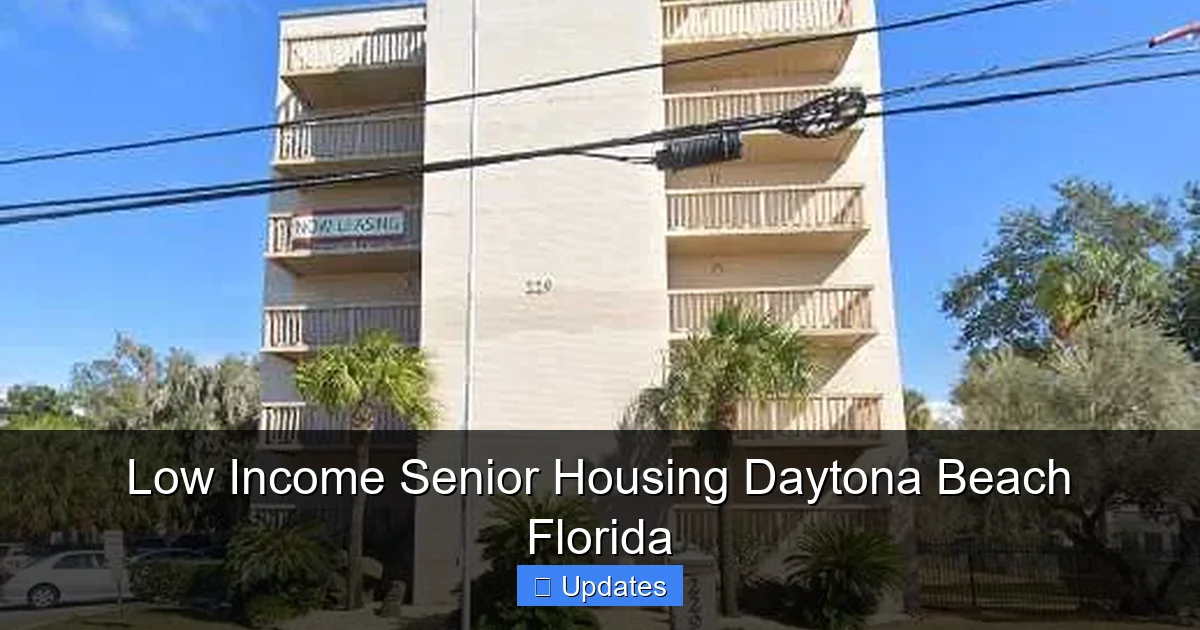
Visual guide about Low Income Senior Housing Daytona Beach Florida
Image source: lowincomehousing.us
You don’t have to search blindly. Several trusted resources list available properties and help with applications:
The Area Agency on Aging of Volusia County
This nonprofit acts as your go-to navigator for senior services in Daytona Beach. They maintain updated lists of subsidized housing, assist with applications, and even help arrange tours. Call (386) 257-2750 or visit volusiaaging.org for the latest info.
They also host “Housing Fairs” twice yearly where representatives from 10+ properties set up booths. You can compare floor plans, ask questions, and submit applications on the spot.
HUD Resource Locator Tool
Go to hud.gov/hudgis, enter “Daytona Beach, FL,” filter by “Senior Housing” and “Subsidized,” and browse interactive maps. Clicking each pin shows contact details, vacancy status (if available), and whether pets are allowed.
Note: Availability changes daily, so call ahead before visiting.
Nonprofit Partners
Groups like Salvation Army Elder Services and Florida Housing Finance Corporation publish annual reports listing newly opened senior housing projects. Subscribe to their newsletters or follow them on Facebook for alerts.
Also check with churches in Daytona Beach—many partner with housing providers to refer congregants.
Amenities & Support Services in Daytona Beach Senior Housing
Beyond cheap rent, low income senior housing in Daytona Beach often includes extras that improve daily life:
Transportation
Many complexes offer free or discounted shuttles to grocery stores, doctor appointments, and senior centers. Bayview Manor, for example, runs a weekly bus to Publix and Walgreens.
On-Site Health Programs
Regular blood pressure checks, glucose monitoring, and vaccination drives are common. Some buildings even employ part-time nurses.
Social Activities
Bingo, arts & crafts, book clubs, and movie nights keep loneliness at bay. During winter months, indoor swimming pools and exercise classes become popular.
Meal Plans
Daily hot lunches reduce cooking burdens for those with mobility issues. Dietary restrictions (diabetic, gluten-free) are usually accommodated.
Security Features
Emergency call buttons in bathrooms, keycard entry systems, and night patrols give peace of mind—especially important for isolated seniors.
Pets Welcome
Emotional support animals are permitted in most Daytona Beach senior housing. Just provide documentation from a licensed therapist if required.
Cost Breakdown: How Much Does It Really Cost?
Let’s bust a myth: “Low income” doesn’t mean free. But it does mean drastically reduced.
On average, seniors in Daytona Beach pay between **$300 and $800 per month** for rent, depending on income and unit size. For someone making $20,000/year, that might drop to **just $150/month**. Utilities may or may not be included—always ask during tours.
Compare that to market-rate apartments in Daytona Beach, where one-bedrooms start around $1,200–$1,600. Even with utilities, low income senior housing saves hundreds monthly.
Some properties charge a small utility allowance, while others require tenants to pay water/sewer separately. Cable TV and internet aren’t covered—but many offer subsidized broadband through local partnerships.
Remember: The lower your income, the lower your rent. There’s no sliding scale based on assets alone—only income matters for determining payment.
Common Challenges & How to Overcome Them
Despite good intentions, accessing low income senior housing isn’t always smooth sailing. Here’s what to watch out for—and how to fix it:
Long Waitlists
As mentioned earlier, demand exceeds supply. Solution? Apply to multiple properties. Don’t put all eggs in one basket.
Confusing Paperwork
HUD forms can seem intimidating. Tip: Bring a friend or family member to help fill things out. The AAA offers free application workshops every Tuesday at 10 AM.
Limited Access to Information
Older adults may not use smartphones or computers. Call (386) 257-2750—they’ll mail you brochures or send volunteers to deliver them.
Scams Targeting Seniors
Be wary of “fees” to get on a list. Legitimate low income senior housing NEVER charges application or processing fees. Report suspicious calls to the FTC at ftc.gov/complaint.
Location Trade-Offs
Some affordable units are farther from medical centers or shopping. Consider proximity to public transit or ask about ride programs. Alternatively, explore nearby cities like Ormond Beach or Port Orange—they have fewer waitlists.
Success Stories from Daytona Beach Residents
Take Mildred H., 78, who moved into Sunset Gardens after her husband passed away. “I was terrified of being alone and broke,” she says. “But here, I get three meals a day, a ride to my cardiology appointment, and friends who check on me. Rent is only $200 a month—thank God.”
Or James T., 65, a Vietnam vet living at Briarwood Village. “They waived my pet fee because I have a diabetic cat,” he laughs. “And the nurse comes by every Thursday to draw blood. I don’t feel invisible anymore.”
These stories show that low income senior housing in Daytona Beach isn’t just about shelter—it’s about dignity, connection, and security.
Planning Ahead: What If I Don’t Qualify Yet?
Maybe you’re not quite 62 yet, or your income is slightly too high. Don’t lose hope!
Consider these alternatives:
– Look into assisted living grants through Florida’s Department of Elder Affairs.
– Check if you qualify for Medicaid waivers that cover home modifications or personal care aides.
– Explore shared housing programs where two seniors split rent in a larger home.
Also remember: Income limits change annually. If you’re close now, reapply next year—your situation might shift.
Final Thoughts: Your Home Awaits in Daytona Beach
Finding low income senior housing in Daytona Beach, Florida requires patience, persistence, and planning—but it’s absolutely doable. With the right resources, you can trade financial stress for peace of mind, knowing you have a warm place to call home surrounded by caring neighbors and helpful staff.
Start by calling the Area Agency on Aging. Take a tour. Ask questions. And most importantly, believe that affordable, dignified housing is within reach.
The sun will still rise over the ocean—and so will your new chapter.
Frequently Asked Questions
What is the income limit for low income senior housing in Daytona Beach?
For 2024, the income limit is 50% of Volusia County’s Area Median Income. That means a single senior must earn $38,000 or less annually, and a couple can earn up to $43,400 to qualify.
Are there pet-friendly low income senior housing options in Daytona Beach?
Yes, several Daytona Beach senior housing communities allow pets, including cats and small dogs. Some even welcome emotional support animals with proper documentation.
How long are the waitlists for Daytona Beach senior housing?
Waitlists typically range from 6 to 24 months due to high demand. Applying to multiple properties increases your chances of getting off the list sooner.
Do low income senior housing units include utilities?
It varies by property. Some include water and sewage in the rent, while others require tenants to pay utilities separately. Always ask during tours to avoid surprises.
Can I apply if I’m under 62 but disabled?
Possibly. Some programs accept applicants under 62 if they have a qualifying disability and receive SSI or SSDI benefits. Contact the Area Agency on Aging for exceptions.
Is there transportation provided by senior housing communities?
Many Daytona Beach low income senior housing complexes offer free or low-cost shuttles to medical appointments, grocery stores, and senior centers—check with individual properties for schedules.