
Low Income Senior Housing Colorado


Reacher Grabber Tool

Folding Walking Stick with Seat

Toilet Safety Rails
Finding low income senior housing in Colorado doesn’t have to be overwhelming. With state-funded programs, nonprofit partnerships, and federally subsidized apartments, thousands of older adults access dignified, affordable living each year. This guide walks you through eligibility requirements, application tips, and real examples so you can make informed decisions. Whether you’re a senior, caregiver, or family member, knowing where to start saves time and stress.
Finding safe, affordable housing as a senior shouldn’t feel like climbing a mountain. In Colorado—a state known for its mountains, outdoor adventures, and growing retiree population—accessing low income senior housing is possible with the right information and support. Whether you’re a lifelong Coloradan looking to downsize or a newcomer seeking stability, understanding how these programs work can open doors that might otherwise seem locked.
The reality is this: many seniors live on Social Security, pensions, or modest retirement savings. When medical costs rise and inflation eats into fixed incomes, even basic rent becomes unmanageable. That’s why Colorado offers several pathways to secure, comfortable housing tailored specifically for older adults who meet financial and age criteria. From federal programs to community-based nonprofits, the state has built a safety net—but it requires knowing where to look.
Let’s walk through everything you need to know about qualifying, applying, and thriving in low-income senior housing across Colorado.
Key Takeaways
- Eligibility is income-based: Most Colorado low-income senior housing programs cap income at 50–80% of the area median income (AMI), depending on the program.
- Waiting lists are common: Popular programs like HUD Section 202 or state-assisted housing often have long wait times—apply early and consider backup options.
- Utilities may be included: Many subsidized senior housing units cover water, heat, electricity, or internet, reducing monthly expenses significantly.
- Age and residency matter: Applicants typically need to be 62+ and live in Colorado for a minimum period, though some exceptions exist.
- Support services vary: Some complexes offer meals, transportation, wellness checks, or social activities—check what’s included before applying.
- Nonprofits bridge gaps: Organizations like Catholic Charities or local Area Agencies on Aging help navigate applications and provide advocacy.
- Alternative housing exists: If traditional housing has long waits, consider shared housing, accessory dwelling units (ADUs), or rent-assistance vouchers.
📑 Table of Contents
- Understanding Low-Income Senior Housing in Colorado
- How to Qualify for Low Income Senior Housing in Colorado
- Top Low-Income Senior Housing Programs in Colorado
- Finding Low-Income Senior Housing Near You in Colorado
- Tips for a Successful Application
- Life in Low-Income Senior Housing: What to Expect
- Common Myths About Low-Income Senior Housing
- Resources and Contacts in Colorado
Understanding Low-Income Senior Housing in Colorado
Low-income senior housing refers to residential properties designed for adults aged 62 and over that receive public or private funding to keep rents affordable. These aren’t just “cheap apartments”—they’re purpose-built communities offering dignity, security, and often supportive services.
In Colorado, these housing options fall into three main categories:
– **HUD-Assisted Properties**: Funded by the U.S. Department of Housing and Urban Development (HUD), these include Section 202 Supportive Housing for the Elderly and project-based rental assistance.
– **State-Funded Programs**: Managed by the Colorado Division of Housing or regional housing authorities, these prioritize local residents and sometimes blend state and federal dollars.
– **Nonprofit & Faith-Based Developments**: Groups like Mercy Housing, Presbyterian Homes, or local churches operate affordable senior villages with sliding-scale rents.
What sets them apart? Rents are calculated based on your income—not market rates. For example, if your monthly income is $1,500, you might pay only $300 toward rent under HUD guidelines. Utilities, maintenance, and even meal plans may be covered too.
But here’s the catch: availability is limited, and demand far exceeds supply. Still, with persistence and smart planning, you can increase your chances of finding a place that fits.
How to Qualify for Low Income Senior Housing in Colorado
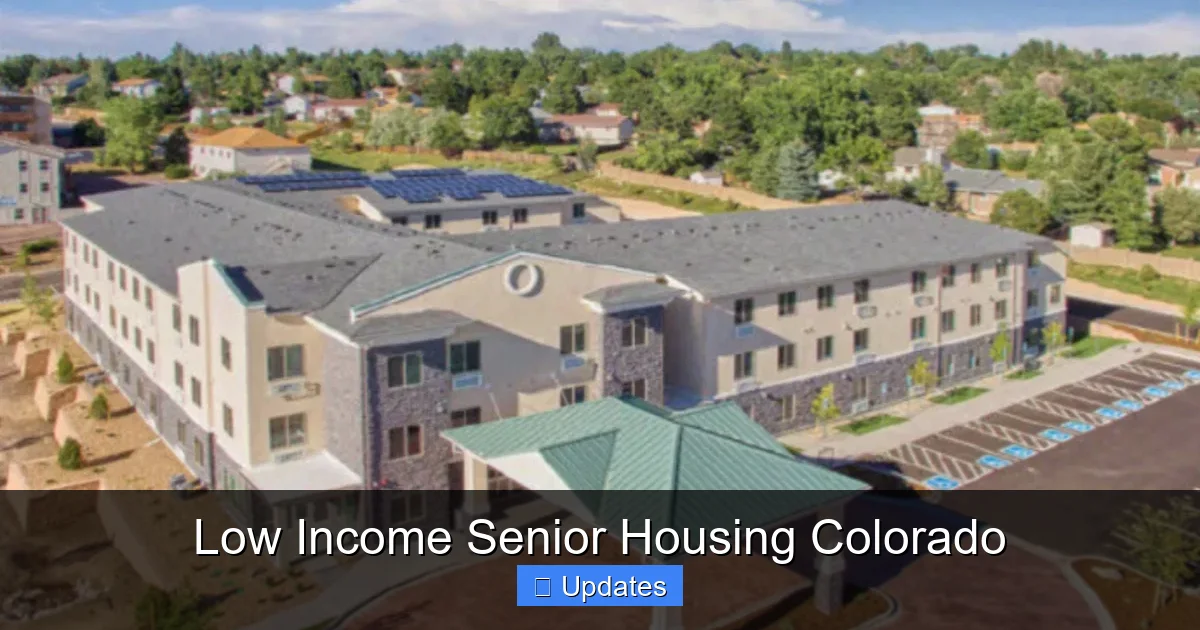
Visual guide about Low Income Senior Housing Colorado
Image source: krdo.b-cdn.net
Qualifying isn’t about being poor—it’s about meeting specific income thresholds tied to your household size and location. Let’s break it down.
Income Limits Vary by County
Colorado uses the Area Median Income (AMI) as a benchmark. AMI differs by county because cost of living varies widely—from Denver to rural San Juan County, the numbers change. As of 2024:
– In Denver Metro: 50% AMI for a one-person household is roughly $3,800/month gross income.
– In Pueblo: The same threshold drops to around $2,900/month.
Most low-income senior housing programs accept applicants earning **no more than 50–60% of AMI**. Some luxury developments allow up to 80%, but those are rarer and still require proof of need.
Age and Residency Requirements
You must generally be **at least 62 years old**. A few newer developments target 55+, but true senior housing focuses on older adults.
You also need to prove Colorado residency—usually shown via a driver’s license, utility bill, or voter registration. Temporary residents (like snowbirds) may face restrictions unless they maintain primary residence in the state.
Background and Rental History Checks
While income drives eligibility, landlords still screen for:
– No history of property damage
– Clean criminal background (minor infractions may be waived)
– Ability to pay rent consistently
If you’ve had past issues, don’t panic—explain them upfront during interviews. Many programs offer second chances, especially if you’re currently stable.
Top Low-Income Senior Housing Programs in Colorado

Visual guide about Low Income Senior Housing Colorado
Image source: lowincomehousing.us
Not all programs are equal. Here are the most reliable options, organized by type.
HUD Section 202 Supportive Housing
Administered through local Public Housing Authorities (PHAs), Section 202 provides deeply discounted rents for seniors with disabilities or low incomes. Each PHA manages its own waiting list.
**Pros**:
– Rent capped at 30% of adjusted income
– Subsidies cover utilities in most cases
– Access to case management and health referrals
**Cons**:
– Waiting lists stretch 2–5+ years in cities like Denver or Colorado Springs
– Limited number of units per complex
To apply, visit your local PHA website. For example, Denver Housing Authority (DHA) runs [low income senior housing Denver](https://seniorsprotalk.com/low-income-senior-housing-denver-co/) with online portals for applications.
Colorado Housing Assistance Corporation (CHAC)
CHAC funds nonprofit developers statewide. Their portfolio includes properties like The Gardens at Cherry Creek in Denver or Willow Creek Commons in Fort Collins.
**Key Features**:
– Mixed-income communities (some units reserved for very low-income seniors)
– On-site nurses or wellness coordinators
– Transportation to medical appointments
Apply directly through the property manager—often listed on [seniorsprotalk.com](https://seniorsprotalk.com).
Area Agencies on Aging (AAA)
Each Colorado county has an AAA office. While they don’t own housing, they act as navigators:
– Help fill out complex applications
– Alert you when new units open
– Connect you to emergency rental assistance if approved but waitlisted
Contact your local AAA early—they’re lifelines.
Finding Low-Income Senior Housing Near You in Colorado

Visual guide about Low Income Senior Housing Colorado
Image source: seniorsprotalk.com
Searching feels daunting, but tools exist to simplify it.
Use National Databases
Websites like [www.hud.gov](https://www.hud.gov) let you filter by city, income, and disability status. Enter “Colorado” and “Senior” into their search bar to see active listings.
Another great resource: [Colorado Department of Local Affairs (DOLA)](https://cdola.colorado.gov) maintains a statewide housing locator.
Check Local Newspapers and Community Boards
Older adults often share leads through libraries, senior centers, or faith groups. Ask at places like:
– Arapahoe County Senior Services
– Jefferson County Office on Aging
– Boulder County Human Services
Staff there know which buildings have openings before ads go live.
Leverage Social Media and Forums
Facebook groups like “Colorado Seniors Living Together” or Reddit’s r/ColoradoSeniors post real-time updates. Be cautious of scams—always verify property ownership before sharing personal info.
Tips for a Successful Application
Getting approved isn’t guaranteed—but these strategies boost your odds.
Start Early and Apply Widely
Don’t put all eggs in one basket. Apply to 3–5 different properties, even if they seem far away. Sometimes a small town has shorter waits than a major city.
Gather Documents Ahead of Time
Have ready:
– Proof of income (Social Security statements, pension stubs, bank deposits)
– ID and birth certificate
– Rental history (past landlords’ contact info)
– Disability documentation (if applicable)
Scanning everything saves weeks later.
Follow Up Regularly
Call every 3–4 months. If someone declines you, politely ask why. Feedback helps refine future applications.
Consider Backup Plans
If waitlists are too long, explore alternatives like:
– Shared housing (roommates reduce costs)
– Rent assistance programs (e.g., Colorado Emergency Rental Assistance)
– Modular homes or ADUs (accessory dwelling units) on existing property
For inspiration, check out [low income senior housing in Fort Collins](https://seniorsprotalk.com/low-income-senior-housing-in-fort-collins/), which balances affordability with mountain views.
Life in Low-Income Senior Housing: What to Expect
Living in a subsidized senior complex isn’t just about saving money—it’s about quality of life.
Community and Companionship
Many residents cite friendships formed over shared elevators or weekly bingo nights as the biggest perk. Loneliness affects seniors deeply, and these communities combat isolation naturally.
On-Site Amenities
Look for features like:
– Grab bars in bathrooms
– Emergency call systems in units
– Walking paths and gardens
– Computer labs or craft rooms
Some even host intergenerational events with nearby schools!
Rules and Responsibilities
Expect quiet hours, pet policies, and guest limits. But most rules exist to protect everyone’s safety and peace—not to restrict freedom.
Common Myths About Low-Income Senior Housing
Let’s clear up misconceptions that scare people away.
**Myth 1: “These places are dirty or dangerous.”**
Reality: HUD and state agencies inspect properties regularly. Most are clean, modern, and well-maintained.
**Myth 2: “I won’t get privacy.”**
Reality: Private studios and one-bedrooms are available. Shared spaces are common but optional.
**Myth 3: “I’ll lose benefits if I move in.”**
Reality: Rent subsidies don’t affect SSI, Medicare, or Medicaid—though reporting income changes is required.
Always verify claims with your caseworker or legal aid.
Resources and Contacts in Colorado
Here’s who to call when you’re ready to apply:
– **Colorado Division of Housing**: [cdola.colorado.gov/housing](https://cdola.colorado.gov/housing)
– **National Resource Center on Housing and Care**: 1-800-747-5777
– **Metropolitan Denver AAA**: (303) 433-3500
– **Northern Colorado AAA**: (970) 498-6480
Also explore similar guides like [low income senior housing Colorado Springs Co](https://seniorsprotalk.com/low-income-senior-housing-colorado-springs-co/) for city-specific insights.
Remember: You’re not alone. Thousands of Coloradans found homes through these programs last year. With patience and preparation, you can too.
Frequently Asked Questions
What is the income limit for low income senior housing in Colorado?
It varies by county and program, but most accept applicants earning 50–60% of the Area Median Income (AMI). For example, in Denver, that’s about $3,800/month for a single person. Always check with your local housing authority for exact figures.
Do I need to be disabled to qualify?
No—most standard senior housing only requires age (62+) and income level. However, some supportive housing programs reserve units for seniors with disabilities and may offer additional services like nursing care or meal delivery.
Are waiting lists really that long?
Yes. Popular programs in urban areas like Denver or Colorado Springs often have 2–5 year waits. Applying early and considering smaller towns or mixed-income developments can help shorten your wait.
Can I bring my service animal?
Generally yes—federally protected under the Fair Housing Act. Notify the property manager in writing and provide documentation if requested. Emotional support animals may also qualify under certain conditions.
Will moving into subsidized housing affect my Social Security or Medicare?
No. Your benefits remain untouched. However, you must report any significant income changes to your housing provider, as rent calculations depend on current earnings.
What if I’m turned down from multiple places?
Ask for feedback. Consider working with an Area Agency on Aging—they offer free application coaching. Also explore alternatives like shared housing or local rent assistance programs while you continue searching.