
What Are Good Hobbies for Seniors Who Like to Make Things?


Electric Recliner Lift Chair

Bathtub Transfer Bench

Lightweight Vacuum Cleaner
Quick Answer
Good hobbies for seniors who like to make things include knitting, crochet, sewing, quilting, woodworking, painting, pottery, scrapbooking, model building, gardening, baking, and card making. The best choice is comfortable, enjoyable, and easy to adapt to your space and energy; the National Institute on Aging encourages meaningful activities you enjoy as part of staying engaged in later life.
Good places to start
- Fiber crafts: Try knitting, crochet, sewing, embroidery, or simple quilting.
- Art projects: Watercolor, drawing, collage, pottery, and card making offer creative freedom.
- Building hobbies: Woodworking, model kits, birdhouses, and simple repair projects provide visible progress.
- Memory projects: Scrapbooks, family recipe books, photo albums, and keepsake boxes create something meaningful.
- Food and garden projects: Baking, bread making, container gardening, and flower arranging combine creativity with practical results.
Start comfortably
- Choose one small project that can be finished in a few short sessions before investing in lots of supplies.
As of 2026, seniors also have more ways to learn these hobbies through libraries, community centers, local studios, online classes, and beginner kits. This guide will help you choose one that fits your hands, energy, budget, and interests.
In This Guide
- What Are the Best Making Hobbies for Seniors?
- Which Fiber Crafts Are Good for Older Adults?
- Are Painting, Pottery, and Paper Crafts Good Choices?
- What Can Seniors Build With Wood and Model Kits?
- Which Hobbies Create Useful or Edible Things?
- What Hobbies Work With Limited Dexterity or Mobility?
- How Should a Senior Start a New Making Hobby?
- Why Can Making Things Be So Satisfying?
- Frequently Asked Questions
What Are the Best Making Hobbies for Seniors?
The best hands-on hobbies are enjoyable enough to repeat and simple enough to fit comfortably into everyday life. Knitting, painting, woodworking, baking, gardening, sewing, clay work, and scrapbooking are all strong choices.
Definition: A making hobby is a leisure activity where you create, build, grow, decorate, repair, cook, or assemble something primarily for enjoyment and personal satisfaction.
You do not need to be artistic. Many making hobbies rely more on patience and curiosity than natural talent.
Compare popular hands-on hobbies
| Hobby | Basic Setup | Space Needed | Good First Project | Typical Session |
|---|---|---|---|---|
| Knitting | Needles and yarn | Very little | Dishcloth | 15–45 minutes |
| Watercolor | Paint, brush, paper | Small table | Greeting card | 20–45 minutes |
| Scrapbooking | Photos, paper, adhesive | Small table | One family page | 30–60 minutes |
| Woodworking | Project-dependent tools | Moderate | Small shelf or box | 30–90 minutes |
| Air-dry clay | Clay and simple tools | Small table | Pinch bowl | 20–45 minutes |
| Baking | Basic kitchen tools | Kitchen | Muffins or bread | 30–90 minutes |
I would not choose solely by what looks impressive. A hobby you enjoy for twenty minutes each week is more useful than an ambitious project that stays untouched.
Section Takeaway: The best hobby matches your curiosity, available space, physical comfort, and preferred level of difficulty.
Which Fiber Crafts Are Good for Older Adults?
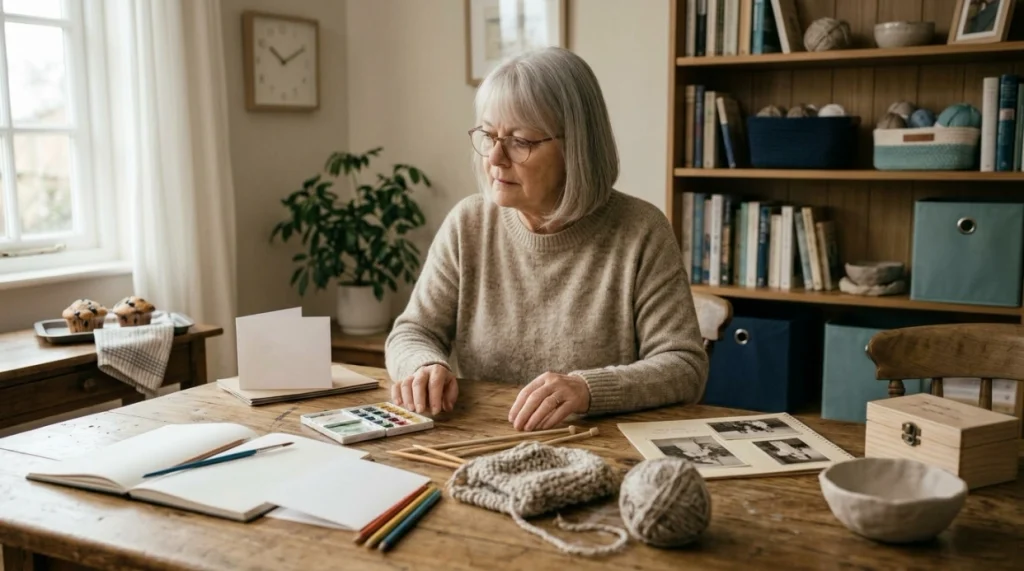
Knitting, crochet, sewing, embroidery, and quilting are excellent choices for seniors who enjoy color, texture, pattern, and practical projects. They can also be done alone or socially.
Knitting and crochet
Knitting and crochet require only a small amount of space. Yarn and an unfinished project also fit easily into a bag.
- Begin with one basic stitch.
- Choose light-colored yarn that is easy to see.
- Try a scarf, dishcloth, or simple square first.
- Use larger needles or hooks if small tools feel uncomfortable.
- Take breaks before your hands become tired.
The National Institute on Aging lists knitting among hobbies older adults can enjoy with others. Group activities can add conversation without making socializing the entire focus.
Sewing, embroidery, and quilting
Sewing produces practical items such as cushion covers, aprons, bags, and clothing repairs. Quilting can turn fabric into both a creative project and a family keepsake.
Embroidery requires less room, although small stitches may be difficult with reduced vision or hand control. Larger patterns and thicker thread can make the hobby easier.
The goal does not need to be a perfect finished piece. A small project teaches more than buying supplies for a complicated quilt you never begin.
Are Painting, Pottery, and Paper Crafts Good Choices?
Yes. Visual arts are flexible making hobbies because seniors can adjust the tools, project size, level of detail, and session length.
The National Institute on Aging has examined arts participation and healthy aging, while noting that research continues into its effects on health and well-being.
Watercolor and acrylic painting
Watercolor is easy to start because a small set, paper, cup, and brush may be enough. Acrylic paint gives stronger colors and works well on canvas, wood, and decorative objects.
- Paint a single flower.
- Copy colors from a favorite photograph.
- Create a handmade birthday card.
- Paint a simple landscape.
- Decorate a small flowerpot or wooden shape.
Clay and pottery
Air-dry clay lets you experiment without owning a kiln. Simple bowls, ornaments, plant markers, and small decorations make manageable first projects.
Studio pottery offers more equipment and instruction. A local beginner class is often easier than trying to create a home pottery studio immediately.
Paper crafts and scrapbooking
Greeting cards, collage, paper flowers, photo albums, and scrapbooks work well when you enjoy arranging colors and memories. Supplies can stay simple.
A family scrapbook is especially meaningful because every page can be its own project. You can add photographs, names, dates, recipes, tickets, and brief stories gradually.
Section Takeaway: Art hobbies work well because you can simplify the project without losing the pleasure of creating something personal.
What Can Seniors Build With Wood and Model Kits?
Woodworking and model building suit seniors who enjoy measuring, assembling, problem-solving, and seeing a structure take shape. Both hobbies can range from simple kits to advanced projects.
Beginner woodworking
Woodworking does not have to mean building furniture. Start with something small enough to finish without creating a workshop full of unfinished pieces.
- A birdhouse
- A small shelf
- A planter box
- A wooden keepsake box
- A simple picture frame
Hand tools may be enough for some projects. Power tools require extra attention to vision, balance, grip strength, hearing protection, and safe work habits.
Health note: If arthritis, tremor, reduced sensation, poor balance, or vision changes affect tool control, choose safer equipment and ask a qualified professional about appropriate adaptations.
Models and miniature projects
Model cars, ships, trains, buildings, dollhouses, and miniature scenes provide the satisfaction of construction without needing a large workshop. Kits also give beginners a clear starting point.
Choose larger pieces when tiny parts become frustrating. Good lighting and a magnifying lamp can also make detailed work more comfortable.
Which Hobbies Create Useful or Edible Things?
Baking, cooking, gardening, flower arranging, soap crafts, simple home projects, and furniture refinishing can combine creativity with a useful result. That practical reward motivates many people to continue.
Cooking and baking
Cooking becomes a making hobby when you enjoy the process rather than seeing meals only as chores. Bread, pastries, decorated cookies, preserves, and family recipes can become ongoing projects.
- Recreate one family recipe.
- Learn one type of bread.
- Try a new soup each month.
- Decorate cookies for family occasions.
- Create a handwritten family recipe collection.
Gardening
Gardening creates something living rather than a finished object. Containers, herbs, flowers, raised beds, and indoor plants all let you shape a space over time.
It also involves some movement. The CDC advises adults age 65 and older to include regular physical activity appropriate to their abilities and circumstances.
Keep frequently used tools nearby. Raised containers, lightweight watering equipment, and a stable chair can reduce unnecessary bending or carrying.
Health note: Gardening intensity varies widely. Anyone with significant mobility, balance, heart, or other medical concerns should discuss demanding activity with their healthcare professional.
What Hobbies Work With Limited Dexterity or Mobility?
A good hobby should adapt to you rather than force you to work through pain or unsafe positions. Larger tools, shorter sessions, better lighting, and a comfortable workspace can transform an activity.
If hand strength is limited
- Try chunky yarn with larger crochet hooks.
- Choose wide paintbrush handles.
- Use spring-assisted scissors.
- Work with soft air-dry clay.
- Choose larger model pieces.
- Use lightweight tools when possible.
If vision is changing
- Increase task lighting.
- Use high-contrast materials.
- Choose larger patterns.
- Organize supplies in clearly marked containers.
- Consider a magnifying work lamp for close tasks.
If standing is difficult
Painting, knitting, card making, scrapbooking, model building, clay work, and many cooking preparations can be done seated. Arrange the workspace so materials stay within a comfortable reach.
Gardening can also move to raised beds or tabletop containers. The hobby does not have to disappear because the original setup no longer works.
Section Takeaway: Adapt the tools, project size, and workspace before giving up a hobby you enjoy.
How Should a Senior Start a New Making Hobby?
Start with one small project, basic supplies, and a short trial period. Avoid buying professional equipment before you know whether you enjoy the process.
- Choose the result you want. Decide whether you would enjoy making something useful, artistic, edible, decorative, or giftable.
- Pick a beginner project. Choose something you can reasonably finish within one to three sessions.
- Buy only the essentials. Borrow equipment or try a class when expensive tools are required.
- Work for 20 to 30 minutes. Short sessions help you judge whether the activity feels comfortable.
- Finish one project. Completion gives you a better sense of the hobby than collecting supplies.
- Decide what you enjoyed. Continue, modify the hobby, or try something different without treating the experiment as failure.
Where can seniors learn these skills?
Libraries, senior centers, community colleges, recreation departments, craft stores, makerspaces, museums, and local art studios often offer beginner instruction. Some groups also welcome experienced hobbyists who enjoy teaching newcomers.
Online instruction can be useful when transportation is difficult. Pause frequently and practice one technique instead of watching hours of tutorials without making anything.
Why Can Making Things Be So Satisfying?
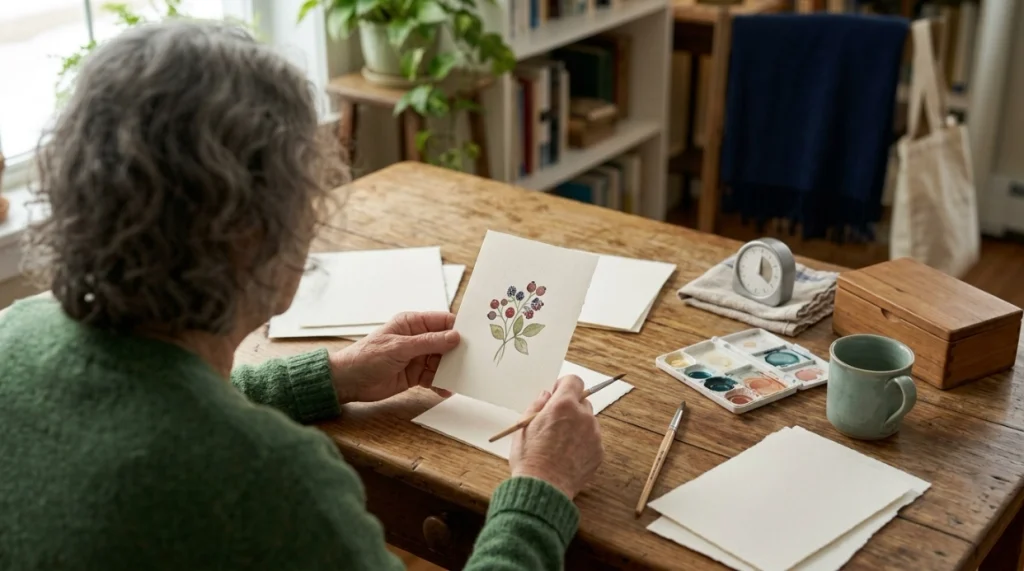
Making hobbies combine decisions, learning, attention, and visible progress. Many also create opportunities to share skills and finished projects with other people.
The National Institute on Aging discusses meaningful activities and cognitive health, while cautioning that research does not prove that a particular hobby prevents cognitive decline.
You can see your progress
A scarf grows row by row. A painting develops layer by layer, while a garden changes across weeks.
That visible progress can be satisfying even when the result is imperfect. You made something that did not exist before.
Projects can connect generations
A making hobby can also become something to share. A grandparent might teach crochet, woodworking, baking, gardening, sewing, or model building to a younger family member.
The finished item may matter less than the shared process. A recipe book, quilt, photo album, handmade box, or garden can also preserve family stories.
A hobby can be social without feeling forced
Craft groups and classes give people a shared subject to discuss. You can concentrate on the project while conversation happens naturally around it.
That can be more comfortable than joining a social activity where conversation is the only purpose. You already have something in common.
Section Takeaway: Making things can provide creativity, learning, visible progress, and an easy way to connect with other people.
Frequently Asked Questions
What is the easiest craft for seniors to start?
Adult coloring, greeting-card making, collage, watercolor, and simple air-dry clay projects are among the easiest options. They require limited equipment and can be completed in short sessions without learning complicated techniques first.
What are good hobbies for seniors with arthritis?
Comfort depends on the individual, but hobbies using larger, lightweight tools may be easier. Painting with wide-handled brushes, large-hook crochet, collage, photography, gardening with adapted tools, and simple clay work can be modified to reduce gripping and repetitive movements.
What can an older person make as gifts?
Popular handmade gifts include scarves, greeting cards, photo albums, recipe books, baked goods, small paintings, embroidered pieces, wooden boxes, ornaments, potted plants, and family scrapbooks. Choose projects you enjoy making rather than projects that create deadline pressure.
What hobbies are good for senior men who like building things?
Woodworking, model building, furniture restoration, leathercraft, electronics kits, gardening structures, carving, and home repair projects may appeal to anyone who enjoys construction. These hobbies are not gender-specific, so interest and physical comfort should guide the choice.
Can seniors learn a completely new craft?
Yes. Start with beginner tools and one simple technique rather than trying to master the whole hobby at once. Local classes and step-by-step online lessons can make unfamiliar skills easier to learn at a comfortable pace.
Are creative hobbies good for seniors who live alone?
They can be. Solo hobbies provide structure and enjoyable projects at home, while craft groups, classes, community workshops, and online groups can add social contact when desired.
How many hobbies should a retired person have?
There is no ideal number. One hobby you genuinely enjoy can be enough, while another person may prefer several activities for creativity, movement, and social connection. Choose a schedule that adds enjoyment rather than turning retirement into another list of obligations.
Choose Something You Will Want to Make Again
The best making hobby is not necessarily the most impressive one. It is the activity that makes you curious enough to return to the table, garden, kitchen, workshop, or craft bag tomorrow.
Start small. Make one card, one loaf, one painted flower, one knitted square, one model, or one container garden, then decide whether you want to make another.
That is enough to turn an experiment into a hobby.
