
Difference Between Senior Flex and Regular Flex


Indoor Security Camera

Smart Doorbell Camera

Memory Foam Seat Cushion
Choosing the right golf shaft flex is crucial for your game, especially as you age. Senior flex shafts are designed for golfers with slower swing speeds, typically due to age-related changes in strength and flexibility. Regular flex shafts require a faster swing speed to load properly and release energy. Using the wrong flex can lead to loss of distance, poor accuracy, and even physical strain. The right choice depends on your individual swing characteristics, not just your age. Getting professionally fitted is the best way to optimize your performance and enjoyment.
Key Takeaways
- Flex is about shaft bend: Shaft flex refers to how much a golf shaft bends during the swing. It’s categorized by weight (e.g., L, A, R, S, X) and must match your swing speed to store and release energy efficiently.
- Senior flex is for slower swings: Senior flex (often labeled “A” or “Senior”) is engineered for swing speeds typically below 85 mph. It’s more flexible, requiring less force to bend and launch the ball higher.
- Regular flex is for moderate swings: Regular flex (“R”) is designed for swing speeds roughly between 85-95 mph. It’s stiffer than senior flex, providing better control and a lower ball flight for faster swings.
- Age is a factor, not the rule: While many seniors benefit from senior flex, age alone doesn’t determine your needs. Physical fitness and swing speed are more important. Some athletic 70-year-olds may still need regular flex.
- The wrong flex hurts your game: A too-stiff shaft (like using regular flex on a slow swing) leads to low, weak shots with less distance. A too-flexible shaft (senior on a fast swing) causes high, ballooning shots that lack control and roll.
- Fitting is non-negotiable: The only way to know your ideal flex is through a professional fitting that measures your swing speed, tempo, and transition. Don’t guess; get data-driven advice.
- It’s about enjoyment and health: The right flex reduces strain on joints and muscles, making golf more comfortable and sustainable, allowing you to play longer and with more pleasure.
📑 Table of Contents
- Introduction: More Than Just a Number on a Shaft
- What Exactly is Shaft Flex? The Foundation
- Senior Flex: Designed for the Evolving Swing
- Regular Flex: The Standard for Moderate Power
- Head-to-Head: Key Differences Explained
- How to Choose: It’s All About Your Swing, Not Your Age
- Debunking Common Myths and Misconceptions
- The Holistic Impact: Beyond Just Distance
- Conclusion: Your Swing, Your Shaft, Your Decision
Introduction: More Than Just a Number on a Shaft
You’re standing over the ball, ready to swing. You’ve chosen your clubs carefully, but have you ever stopped to think about the very thing connecting your hands to the clubhead—the shaft? Within that slender piece of technology lies a critical variable: flex. And for golfers whose swing speed has changed over the years, the debate between senior flex and regular flex isn’t just technical jargon; it’s the key to unlocking more distance, better accuracy, and a more enjoyable round. Many players, especially those navigating the wonderful chapter of life we call “senior,” hear these terms and wonder: What’s the real difference, and which one is for me?
This isn’t about buying a “senior” club because you’ve hit a certain birthday. It’s about physics and physiology. Our bodies change. Muscles may lose some strength, joints may lose a degree of flexibility, and swing speed often gradually decreases. The golf shaft must work *with* your current swing, not against it. Using a shaft that’s too stiff for your swing is like trying to start a car in third gear—it’s a struggle that wastes energy and gets you nowhere fast. Conversely, a shaft that’s too flexible for a powerful swing can feel like a wet noodle, leading to a loss of control. Understanding the fundamental differences between senior flex and regular flex empowers you to make an informed choice that respects your body’s current capabilities and helps you play your best golf. We’re going to break it down, plain and simple.
What Exactly is Shaft Flex? The Foundation
Before we pit senior against regular, let’s establish what “flex” means. Imagine bending a fishing rod or a jump rope. A golf shaft behaves similarly during your downswing. As you accelerate the club, the shaft stores energy by bending (or “loading”). At the moment of impact, that stored energy is released, catapulting the clubhead into the ball. The rate at which a shaft returns to its straight shape is its flex.

Visual guide about Difference Between Senior Flex and Regular Flex
Image source: golfercraze.com
The Flex Spectrum: From Ladies to Extra Stiff
Manufacturers use a general spectrum, often labeled with letters:
- L (Ladies): The most flexible, for very slow swing speeds.
- A or M (Senior/Amateur): Our star of the show. More flexible than Regular.
- R (Regular): The standard for many amateur golfers with moderate swing speed.
- S (Stiff): For faster swing speeds.
- X (Extra Stiff): For tour professionals and very strong, fast swingers.
It’s crucial to know that these labels are not standardized. What one company calls “Senior Flex” might feel slightly different from another’s. This is why a professional fitting, where you test multiple shafts, is so valuable. The numbers behind the scenes—like the shaft’s overall weight and its “kick point” (where it bends most)—also interact with the flex rating to create the final performance profile.
Senior Flex: Designed for the Evolving Swing
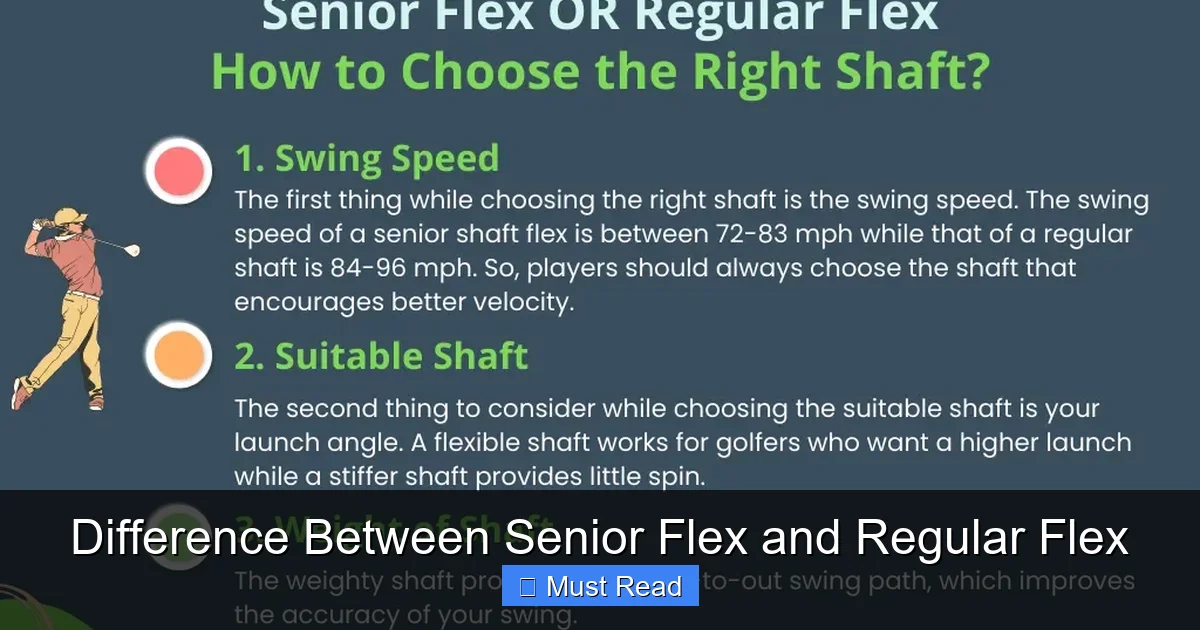
Senior flex shafts are specifically engineered with a softer tip and overall more flexible profile. This design has a specific purpose: to help golfers with slower swing speeds maximize their distance and launch conditions.
Visual guide about Difference Between Senior Flex and Regular Flex
Image source: frnggolf.com
The Physics for a Slower Tempo
If your swing speed has decreased—perhaps into the 70-85 mph range with your driver—a stiffer shaft (like Regular) likely won’t bend enough during your downswing. It remains relatively straight, failing to store significant energy. The result is a low ball flight, reduced carry distance, and a harsh, “clicky” feel at impact. A senior flex shaft, being more pliable, will bend more easily with your slower tempo. This increased bend loads the shaft properly, storing energy that gets released just as you hit the ball, resulting in a higher launch angle, more optimal spin, and crucially, more distance. It essentially helps you “cheat” physics by matching the tool to your speed.
Who Typically Benefits?
While the name suggests a demographic, the beneficiary is a swing characteristic. Golfers who often see benefits include:
- Players whose driver swing speed is consistently below 85 mph.
- Those with a smoother, more rhythmic swing tempo rather than an aggressive, forceful one.
- Golfers who have lost some strength or flexibility due to age, injury, or a less physically active lifestyle.
- Anyone who feels their shots with a regular flex shaft are consistently “low and weak.”
It’s also worth noting that senior flex isn’t just for drivers. It’s commonly used in fairway woods, hybrids, and even irons for players with slower swing speeds across the board. If you’re curious about how your age might correlate with typical swing speed changes, resources that discuss what age is considered a senior citizen often include insights into general physical trends that can affect athletic performance like golf.
Regular Flex: The Standard for Moderate Power
Regular flex shafts are the workhorse of the golf world, designed for the “average” amateur golfer with a solid, moderate swing speed.

Visual guide about Difference Between Senior Flex and Regular Flex
Image source: theleftrough.com
Built for a Faster Transition
Regular flex shafts are stiffer than senior flex. They require more force—a faster swing speed—to achieve that optimal bend and load. For a golfer with a swing speed in the 85-95 mph range, a regular flex shaft will bend correctly, storing energy and releasing it with a powerful, penetrating ball flight. The feel is often described as “responsive” or “crisp.” It provides a great balance of distance and control for those with enough speed to activate the shaft’s design.
The Performance Profile
When matched correctly, a regular flex shaft promotes:
- A slightly lower launch angle compared to senior flex, which can be beneficial in windy conditions.
- Lower spin rates on the driver for a more penetrating, running ball flight.
- A solid, confident feel at impact, with less vibration than an over-flexed shaft.
- Better control on shorter, more precise shots with irons and wedges for players with the requisite speed.
Using a regular flex shaft when you don’t have the speed to load it is a common mistake. It leads to the “low and weak” flight mentioned earlier, and you’ll feel like you’re not getting the “pop” you expect. It can also be less forgiving on off-center hits. The key takeaway: regular flex is not “better” than senior flex; it’s simply the correct tool for a different job.
Head-to-Head: Key Differences Explained
Now, let’s put them side-by-side and see how these differences play out on the course.
Swing Speed Requirement & Launch Conditions
This is the most critical distinction. Senior flex is optimized for launch. Its flexibility helps get the ball airborne easily, creating a higher apex and a softer landing. This is ideal for players who struggle to get the ball in the air or who need that extra carry distance. Regular flex, with its stiffer profile, tends to produce a flatter, more penetrating trajectory for faster swing speeds. This can mean more roll after landing, but it requires the speed to achieve the optimal launch in the first place. If your speed is too low for regular flex, you’ll see a drastic reduction in both carry and total distance.
Feel and Feedback
The feel is noticeably different. A properly matched senior flex shaft will feel “whippy” or “soft” to a fast swinger, but to its intended user, it feels energetic and lively. It provides a sense of being “in the slot” and can make the swing feel easier. A correctly matched regular flex feels solid, stable, and responsive. The feedback at impact—the sound and vibration—is also a clue. An over-stiff shaft (senior using regular) often feels harsh and produces a high-pitched “click.” An over-flexed shaft (fast swinger using senior) can feel “mushy” or produce a low, thudding sound.
Impact on Accuracy and Control
Control is a function of consistency. When your shaft flex matches your swing, the clubface is more likely to be in the correct position at impact. Senior flex, by helping a slow swing load properly, can actually improve accuracy for that player by promoting on-center hits and a consistent release. Regular flex offers a tighter dispersion for players with the speed to control it, as the stiffer shaft resists twisting more on off-center hits. For a slow swinger, the regular flex’s resistance can actually twist the face open at impact, leading to slices or pushes.
How to Choose: It’s All About Your Swing, Not Your Age
So, how do you make the right call? Forget the birthday candles. Here is your practical decision-making guide.
Step 1: Honestly Assess Your Swing Speed
This is the single most important metric. You can get this measured at most golf retailers with a launch monitor for free or a small fee. If you can’t access that, there are rough estimates. A golfer with a driver swing speed below 85 mph is very likely a candidate for senior flex. Between 85-95 mph is the regular flex sweet spot for many. Above 95 mph, you’re likely looking at stiff flexes. But these are just starting points. Your tempo and transition matter just as much.
Step 2: Consider Your Current Ball Flight
What’s your typical shot shape with your current driver?
- If you hit a low, running ball flight that struggles to get airborne, and you know your swing speed is moderate-to-slow, you are almost certainly using a shaft that is too stiff (e.g., regular when you need senior).
- If you hit a high, ballooning shot that dies quickly and you have a faster swing, you might be using a shaft that is too flexible.
These are your biggest clues.
Step 3: Think About Physical Changes and Goals
Have you noticed a decrease in your driving distance over the last few years? Do you feel like you’re “swinging harder” to get the same results? These are signs your body’s capabilities have shifted, and your equipment should follow. The goal is to make the game easier and more enjoyable. If you’re fighting your clubs, it’s time for a change. For seniors looking to maintain an active lifestyle through golf, ensuring equipment matches physical ability is paramount for long-term participation. Resources on optimizing living for health and activity often highlight the importance of adapting hobbies like golf to your current fitness level.
Step 4: The Only Sure Way: Get Fitted
We cannot stress this enough. A good fitting involves hitting several shafts of different flexes (and potentially different weights and kick points) on a launch monitor. You’ll see the data—ball speed, launch angle, spin rate, carry distance—in real-time. The shaft that gives you the best combination of distance, accuracy, and a confident feel is your winner. This 30-60 minute session is the best investment you can make in your golf game. It removes all the guesswork.
Debunking Common Myths and Misconceptions
This topic is clouded by some persistent myths that prevent players from getting the right equipment.
Myth 1: “Senior Flex is for Old, Weak Players.”
This is the biggest stigma. The term “senior” is a misnomer that focuses on age rather than physics. It should be called “slow swing speed flex.” Many strong, athletic golfers in their 50s and 60s with slower tempos use senior flex to great effect. It’s a performance tool, not an admission of decline. Conversely, some very fit 80-year-olds with naturally fast swings may still need regular or even stiff flex. Judge by your swing, not your driver’s license.
Myth 2: “All Senior Flex Shafts Are the Same.”
Absolutely not. As mentioned, brands have their own specs. One company’s senior flex might be softer than another’s. Additionally, the overall shaft weight plays a huge role. A lighter senior flex (e.g., 50 grams) will be easier to swing for someone with less strength, potentially increasing speed. A heavier senior flex (e.g., 60 grams) might be for a stronger player who still needs the bend but wants more stability. This is why testing is essential.
Myth 3: “I Can Just Buy a Senior Flex Driver and Be Done.”
Your swing speed might dictate different flexes in different clubs. You might need senior flex in your driver and fairway woods but find that your iron swing speed is faster, making a regular or even stiff iron shaft more suitable. A full set fitting is ideal, but at minimum, your woods (driver, 3W, hybrids) should be matched to your swing speed with those longer, sweeping swings.
Myth 4: “Flex Doesn’t Matter as Much as the Clubhead.”
Modern clubhead technology is incredible, but it’s useless if the shaft isn’t allowing you to deliver the clubface efficiently. The shaft is the engine. You can have the most forgiving, high-launching head in the world, but if you’re using a shaft that’s too stiff and you can’t load it, you’ll still hit low, weak shots. The head and shaft must work in harmony.
The Holistic Impact: Beyond Just Distance
Choosing the correct flex isn’t just about adding 10 yards to your drive (though that’s a nice bonus). It has profound effects on your entire golf experience.
Reduced Physical Strain and Injury Prevention
This is a massive, often overlooked benefit. Swinging a shaft that’s too stiff forces your muscles and joints to work harder to achieve the same result. It creates tension in the swing and can lead to soreness in the elbows (golfer’s elbow), shoulders, and back. A properly flexed shaft allows for a smoother, more rhythmic motion that works with your body’s natural mechanics, significantly reducing the risk of overuse injuries. For senior golfers, maintaining health to keep playing is the ultimate goal, and equipment that minimizes strain is a critical part of that strategy.
Improved Confidence and Mental Game
Golf is a mental game. When you know your equipment is optimized for you, you step up to the tee with confidence. You’re not wondering if your clubs are holding you back. You can focus on your target, your tempo, and your shot shape. That positive mindset alone can lower your scores. There’s a huge psychological benefit to hitting solid, soaring shots that you know are a result of good technique and good equipment, not a lucky fluke.
Sustaining Enjoyment and Longevity in the Game
Ultimately, golf is about fun. Frustration with poor shots because of ill-fitting equipment can suck the joy right out of the game. When you have the right flex, you’ll see more consistent ball striking, more greens in regulation, and more satisfying shots. You’ll want to play more often. This is how we keep people in the game for life. If you’re considering your options for staying active, looking into senior housing communities with golf amenities might be part of your plan, and having equipment that matches your ability is key to enjoying those facilities to the fullest.
Conclusion: Your Swing, Your Shaft, Your Decision
The difference between senior flex and regular flex is a fundamental one, rooted in the physics of how a golf shaft interacts with your unique swing speed and tempo. Senior flex is a forgiving, high-launch ally for golfers with slower swing speeds, typically (but not exclusively) found in the senior demographic. Regular flex is the standard-bearer for moderate swing speeds, offering a responsive, penetrating ball flight for those with the power to load it. Choosing based on age alone is a mistake; choosing based on your actual, measured swing characteristics is the only correct path.
The journey to the right flex starts with honest self-assessment of your ball flight and, ideally, a swing speed measurement. From there, it demands a willingness to test different options. Remember, this isn’t about ego. It’s not about playing a “senior” shaft. It’s about playing a correct shaft. The rewards are tangible: more distance, tighter accuracy, less physical strain, and a deeper, more lasting enjoyment of the game we all love. So, go get fitted. Your best golf—and your happiest joints—will thank you for it. For further reading on specific comparisons, you can explore a detailed senior flex vs. regular flex breakdown that dives into even more nuanced performance data and player testimonials.
Frequently Asked Questions
Can I use senior flex if I’m under 60?
Absolutely. Flex is determined by swing speed and tempo, not age. A 50-year-old with a smooth, 80 mph swing will likely benefit more from senior flex than a very athletic 65-year-old who swings at 100 mph. Always base your decision on your swing characteristics.
Will switching to senior flex add a lot of distance?
If you are currently using a shaft too stiff for your swing speed (e.g., regular when you need senior), you can see a significant gain in carry distance—often 10-20 yards or more—because the club will launch the ball higher and with better spin. The gain is less dramatic if you are already in the correct flex category.
Is senior flex only for drivers?
No. The principle applies to all clubs with shafts. If your swing speed is slower, you may benefit from senior flex in your fairway woods, hybrids, and even your irons. However, swing speed can vary between a driver swing and an iron swing, so a full set fitting is recommended for optimal results across your bag.
What’s the main downside of using the wrong flex?
The main downside is poor performance. A too-stiff shaft (fast swing in a slow flex) causes low, weak shots with less distance. A too-flexible shaft (slow swing in a fast flex) causes high, ballooning shots that lack control and roll. It also increases physical strain and reduces confidence.
How much does a golf shaft fitting cost?
Many golf retailers and dedicated fitting studios offer basic shaft fittings for free or a nominal fee (often credited toward a purchase). More comprehensive, full bag fittings with a master fitter can cost more, typically between $100-$300, but provide invaluable data and recommendations for all your clubs.
Can I tell what flex my current shaft is?
Yes. The flex rating (L, A/S, R, S, X) is almost always printed on the shaft itself, just above the grip. It can be small and require a close look. If it’s not visible, the model name of the shaft (e.g., “True Temper DynaVik S flex”) can be looked up online to determine its intended flex category.