
Can Hobbies Help Seniors Make New Friends?


Adaptive Eating Utensils

Portable Wheelchair

Large Display Clock with Date
Quick Answer
Yes, hobbies can help seniors make new friends because they bring people together around a shared interest and give friendships time to grow naturally. Regular group activities such as walking, gardening, crafts, volunteering, games, or classes create repeated contact without the pressure of simply walking into a room and trying to socialize. The National Institute on Aging recommends meaningful activities and hobbies as useful ways for older adults to stay engaged and connected.
Why hobbies work so well
- Shared interests: You already have something easy to discuss with other people.
- Repeat meetings: Seeing the same people each week makes conversation feel more natural.
- Less pressure: The activity gives everyone something to do while relationships develop.
- Built-in teamwork: Games, volunteering, clubs, and classes often encourage people to help each other.
- More confidence: Familiar routines can make starting conversations easier over time.
A simple place to start
- Choose one activity you already enjoy and attend the same group three or four times before deciding whether it feels right.
Making friends can feel different after retirement, a move, or a major change in daily routine. The good news is that friendship does not require becoming the most outgoing person in the room.
I prefer hobbies that create regular contact with the same people. That repeated, low-pressure contact does much of the social work for you.
In This Guide
- Why do hobbies help seniors make friends?
- Which hobbies are best for meeting new people?
- How should seniors choose the right social hobby?
- Where can seniors find hobby groups?
- How do hobby acquaintances become real friends?
- What if health, mobility, or shyness makes joining harder?
- Can online hobbies help seniors make friends?
- Frequently Asked Questions
- A simple way to get started
Why Do Hobbies Help Seniors Make Friends?
Hobbies make friendship easier because the activity gives people an immediate reason to talk. Nobody has to invent a conversation topic from scratch.
A social hobby is an enjoyable activity that regularly puts you in contact with people who share the same interest. The activity may be creative, physical, educational, competitive, or community based.
- Shared interests create easy openings. Asking about a painting, garden plant, card game, or walking route feels natural.
- Repeated meetings build familiarity. A weekly activity lets people recognize each other before deeper conversation begins.
- Doing something together removes pressure. Silence feels less awkward when everyone has an activity to focus on.
- Small favors create connection. Lending a tool, explaining a rule, or saving someone a seat can start a friendship.
This matters after retirement because many friendships once grew through work, children, neighbors, or routine errands. When those routines change, hobbies can create a new social structure.
The National Institute on Aging also encourages older adults to pursue meaningful activities and connect with people who share their interests. Its guidance includes hobby groups, classes, volunteering, walking, music, games, and community programs.
As of 2026, the basic advice remains refreshingly simple: meaningful social activity still matters. You do not need a huge social circle for an activity to be worthwhile.
Which Hobbies Are Best for Meeting New People?
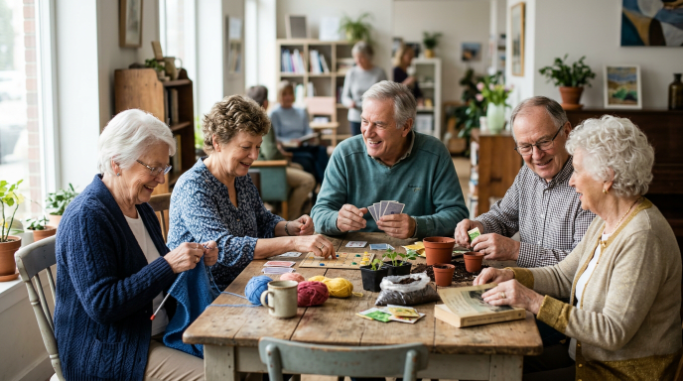
The best hobby for making friends is usually one that meets regularly and encourages interaction. A hobby you enjoy is also easier to continue long enough for friendships to form.
What kinds of hobbies create the most conversation?
- Walking groups: Walking side by side makes casual conversation easy and gives people a reason to meet regularly.
- Book clubs: The book provides a ready-made topic, which helps if starting conversations feels uncomfortable.
- Gardening clubs: Members often exchange plants, advice, seeds, and practical help.
- Card and board games: Bridge, chess, dominoes, mahjong, and other games create regular interaction.
- Craft groups: Knitting, quilting, woodworking, painting, and pottery can combine quiet work with relaxed conversation.
- Exercise classes: Tai chi, water aerobics, gentle yoga, and senior fitness programs often attract repeat participants.
- Choirs and music groups: Rehearsals create teamwork and a predictable weekly social routine.
- Volunteering: Helping a shared cause often connects people through both purpose and conversation.
How do popular senior hobbies compare?
| Hobby | Social contact | Typical physical demand | Conversation ease |
|---|---|---|---|
| Walking group | High | Low to moderate | High |
| Book club | High | Low | High |
| Craft class | Moderate to high | Low | Moderate |
| Volunteer group | High | Varies | High |
| Online hobby group | Moderate | Low | Moderate |
I would not choose a hobby only because it looks social. A weekly activity you genuinely enjoy is usually more useful than a popular club you dread attending.
How Should Seniors Choose the Right Social Hobby?
Start with your interests, energy, mobility, budget, and preferred group size. The best choice should feel sustainable rather than impressive.
Ask yourself five practical questions
- Do I already enjoy this? Familiar interests make returning easier.
- Can I attend regularly? Friendship needs repeated contact more than occasional big events.
- Does the setting encourage conversation? Some activities are naturally more social than others.
- Is the cost comfortable? A hobby becomes stressful if fees, travel, or equipment strain your budget.
- Does it suit my physical needs? Look for seated, low-impact, accessible, or online versions when needed.
Introverts may prefer book clubs, crafts, photography, or small classes. More outgoing people may enjoy dancing, community theater, travel groups, or larger volunteer projects.
There is no prize for choosing the busiest room. A group of six compatible people can create better friendships than an event with sixty strangers.
If you are returning to activity after an illness, fall, surgery, or long inactive period, choose something that fits your current abilities. Ask your healthcare professional about new exercise if you have medical concerns.
Health note: Physical activity should match your individual mobility, balance, endurance, and medical needs.
Where Can Seniors Find Hobby Groups?
Local libraries, senior centers, recreation departments, community colleges, parks, faith communities, and volunteer organizations are good starting points. Many already run low-cost activities designed around repeat attendance.
Where should you look first?
- Public libraries: Look for book clubs, computer help, craft sessions, lectures, and discussion groups.
- Senior centers: Check calendars for games, exercise, art, meals, outings, and hobby clubs.
- Community colleges: Some offer continuing education or reduced-cost classes for older adults.
- Parks departments: Ask about walking groups, gardening programs, nature activities, and recreation leagues.
- Volunteer organizations: Food programs, museums, schools, shelters, and community groups often need regular help.
- Local clubs: Search for photography, genealogy, birdwatching, crafts, chess, music, gardening, or collecting groups.
For adults age 55 and older in the United States, AmeriCorps Seniors RSVP connects volunteers with community service opportunities. Volunteering can be especially useful because the activity gives people an immediate shared purpose.
Do not judge a group after one awkward visit. New members often need two or three meetings before names, routines, and personalities begin to feel familiar.
How Do Hobby Acquaintances Become Real Friends?
Attending a hobby group creates opportunities, but friendship usually needs one extra step. Small invitations help move a relationship beyond the activity itself.
What should you say to someone you would like to know better?
- “Are you coming again next week?”
- “How long have you been doing this?”
- “Would you like to grab coffee after class?”
- “Do you know any other groups like this?”
- “I enjoyed talking with you. Would you like to exchange numbers?”
These questions work because they are simple and connected to what is already happening. They do not force immediate closeness.
I like the idea of aiming for familiarity before friendship. First you recognize someone, then you talk regularly, and later you make a small plan outside the group.
Try the three-meeting approach
- First meeting: Introduce yourself and learn one or two names.
- Second meeting: Greet those people again and continue an earlier conversation.
- Third meeting: Suggest coffee, another class, a walk, or exchanging contact information.
Not every pleasant acquaintance will become a close friend. That is normal, and it does not mean the hobby failed.
Even casual social contact can make a week feel more connected. A familiar face at Tuesday cards or Thursday gardening still matters.
What If Health, Mobility, or Shyness Makes Joining Harder?
A social hobby does not have to involve crowded rooms or demanding physical activity. The activity can be adjusted around transportation, hearing, mobility, stamina, confidence, and comfort.
What can help with common barriers?
- Limited mobility: Try seated exercise, crafts, cards, music, book clubs, or accessible community programs.
- No transportation: Look for nearby library programs, community transport, phone groups, or online meetings.
- Hearing difficulty: Smaller groups and quieter rooms may be easier than busy social events.
- Shyness: Choose structured activities where everyone has a task or discussion topic.
- Low energy: Start with a one-hour weekly activity instead of a packed schedule.
- Tight budget: Libraries, parks, volunteer groups, and community centers often have free options.
The National Institute on Aging’s guidance on staying connected suggests restarting an old hobby, learning something new, volunteering, and connecting with people who share similar interests.
If loneliness has become persistent or is affecting sleep, appetite, mood, or daily life, a hobby may be only part of the answer. Consider discussing those changes with a healthcare professional or someone you trust.
Health note: Social activities can support connection, but they are not a substitute for professional mental or medical care when it is needed.
Can Online Hobbies Help Seniors Make Friends?
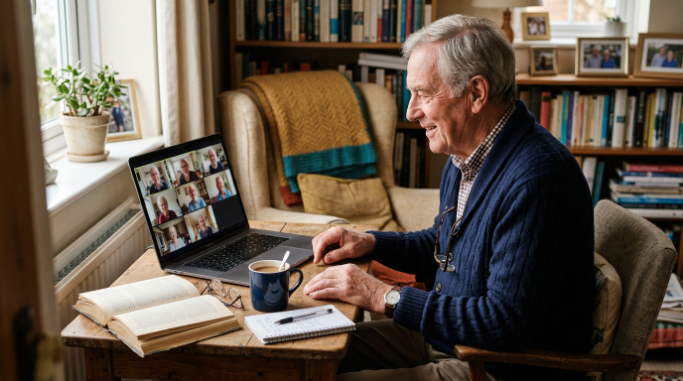
Yes. Online hobby groups can provide meaningful contact, especially when transportation, distance, weather, caregiving, or mobility limits in-person activities.
Virtual groups work best when people interact repeatedly instead of simply reading posts. Live book discussions, classes, games, craft sessions, and video meetings offer more chances for conversation.
Good online options include
- Virtual book clubs
- Online chess or card groups
- Genealogy communities
- Photography groups
- Language classes
- Craft workshops
- Music appreciation groups
- Online exercise classes with live participants
AARP’s guidance on making friends after 50 also points to clubs, volunteering, websites, and virtual activities as ways to expand social connections.
Use normal online safety habits when meeting new people. Avoid sharing financial information, passwords, or sensitive personal details with someone you only know through a group.
If an online friendship becomes established, video calls can help verify identity before any in-person meeting. Choose a public place and tell someone where you are going.
Frequently Asked Questions
Can hobbies help a lonely senior make friends?
Yes. Group hobbies create regular opportunities to meet people with similar interests, which can make conversation easier. The strongest options usually involve repeat meetings, such as a weekly class, walking group, volunteer shift, game club, or craft circle.
What is the easiest hobby for seniors who are shy?
Book clubs, crafts, puzzles, gardening, photography, and small classes can work well because the activity supplies a conversation topic. Shy people often feel more comfortable when they can focus on a task instead of feeling expected to socialize constantly.
How often should a senior attend a hobby group?
Weekly attendance is a practical goal when possible because repeated contact helps people remember names and continue conversations. There is no fixed rule, though. Consistency matters more than attending several different activities every week.
Can seniors make close friends after age 70 or 80?
Yes. Age does not prevent new friendships from forming. Shared interests, regular contact, small invitations, and dependable communication can create meaningful relationships at any stage of later life.
What hobbies are good for seniors with limited mobility?
Book clubs, card games, painting, knitting, music, genealogy, writing groups, indoor gardening, online classes, and volunteer phone programs can require little physical movement. The best choice depends on comfort, access, hearing, vision, and individual health needs.
Is volunteering considered a hobby?
Volunteering is often better described as a meaningful activity rather than a hobby, but it serves many of the same social purposes. Regular service puts people beside others who care about similar causes and creates natural opportunities for conversation and friendship.
What if I attend a group and nobody talks to me?
Give the group another visit if the atmosphere still seems welcoming. Introduce yourself to one person, ask a simple question about the activity, or speak with the organizer, who may be able to introduce you to regular members.
A Simple Way to Get Started
You do not need to find five hobbies or transform your social life in one week. Choose one activity that interests you and has a regular meeting time.
Attend it at least three times when practical. Learn a few names, sit near familiar people, and ask one small question each visit.
- Pick one hobby you enjoy.
- Choose a group that meets regularly.
- Return enough times to become familiar.
- Start one small conversation.
- Invite one person for coffee, a walk, or another activity when it feels comfortable.
Friendship often grows through ordinary repetition rather than dramatic introductions. Hobbies simply give that repetition a place to happen.
Start small, keep showing up, and give people time to become familiar. One enjoyable weekly activity may be enough to open the door to several new connections.
