
Bed Rail vs Transfer Pole: Which Setup Is Safer?


Electric Kettle with Auto Shutoff

Air Fryer for Easy Cooking

Lap Desk for Reading
Deciding between a bed rail vs transfer pole can be tough for many families. Both tools help older adults get in and out of bed safely. They offer solid support to prevent bad falls in the bedroom.
However, these two mobility aids work in very different ways. One slips right under the mattress, while the other spans from the floor to the ceiling. Picking the right tool depends on your daily habits and physical strength.

Quick Comparison
A bed rail is best for basic help with rolling over and sitting up in bed. It offers a secure grip right at the side of the mattress. A transfer pole is better for full standing support. It helps a person pull themselves up and pivot safely to a walker or wheelchair. If you need to stand fully and bear weight, a pole is much safer. If you just need a small boost to sit up, a rail works great.
At-A-Glance Comparison
Here is a quick look at how these two mobility aids compare. They both serve the same space but meet very different needs.
| Feature | Bed Rail | Transfer Pole |
| Main Use | Sitting up, rolling | Standing up, pivoting |
| Setup Style | Under the mattress | Tension mounted to ceiling |
| Weight Limit | Usually 250 to 300 lbs | Usually 300 to 350 lbs |
| Space Needed | Very little space | Needs clear floor space |
Secure Bed Rails for Senior Mobility
Bed rails slip securely under the mattress to create a strong handhold. They give seniors a firm place to hold when moving around in bed.
Ease of Use
They are very simple to use on a daily basis. You just grab the top bar to pull yourself up. Most models slide right under the mattress for a fast setup. You do not need fancy tools to install most bed rails. A simple safety strap keeps the rail tied to the bed frame.
Key Strengths
- Provides a simple handhold for sitting up safely
- Keeps the user from rolling out of bed at night
- Very low cost and easy to find in stores
- Many models have handy storage pouches for glasses
- Easy to remove or take down if you move beds
Potential Drawbacks
- Not meant to hold full standing body weight
- Can cause entrapment risks if fitted poorly to the bed
- May not work at all with adjustable power beds
Sturdy Floor-to-Ceiling Transfer Poles
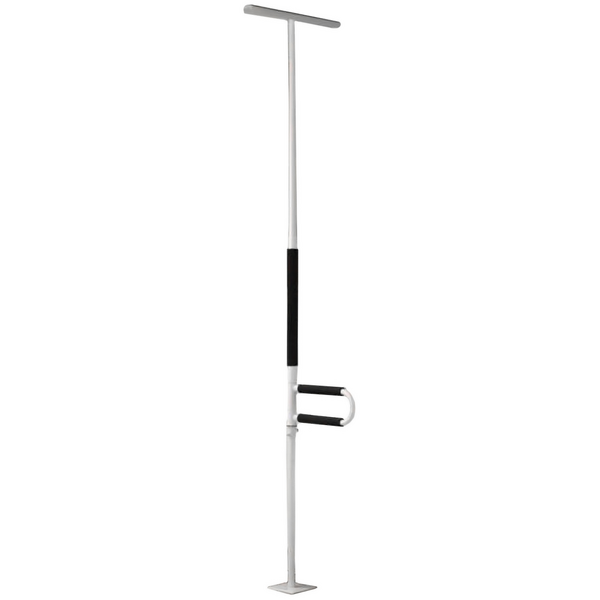
Transfer poles install tightly between the floor and the ceiling. They offer a strong, tall vertical grip for standing up.
Ease of Use
They provide a very natural pulling angle for the arms. You can hold on while standing straight up. The tension setup means no drilling in most rooms. You just use a wrench to tighten the pole until it locks. A padded grip makes it very easy to hold tightly without slipping.
Key Strengths
- Supports full body weight for standing up safely
- Great for pivoting to a wheelchair or a walker
- Does not attach to the bed frame at all
- Often features a curved, rotating handle at the top
- Works well next to a bed, couch, or toilet
Potential Drawbacks
- Costs more than a standard bed rail
- Requires a flat, sturdy ceiling to stay secure
- Takes up some floor space in the room
Which Is Easier for Seniors to Use?
When we look at daily use, the two tools serve different goals. A bed rail shines for minor bed movements. It is right there when you reach to the side. It takes almost no effort to grab and pull. It works well for seniors who just need a tiny bit of leverage to shift their hips.
“The right mobility aid makes daily tasks feel safe and simple.”
A transfer pole requires a bit more reach. However, it is much easier for full standing. If a senior lacks lower body strength, the pole handles the heavy lifting. The vertical bar allows you to slide your hands up safely as you stand. It is generally easier for seniors who use wheelchairs because the pole acts as a pivot point.
Performance Comparison
Performance depends on the needed level of daily support. A bed rail performs well for sitting up in bed. It acts as a short, sturdy lever. But if you put your full standing weight on it, it might tip or bend. It is a bed tool, not a walking tool.
A transfer pole performs like a solid tree trunk. Because it presses firmly into the ceiling and floor, it stays totally rigid. It handles heavy downward and pulling forces with ease. For complex moves, like turning to sit in a wheelchair, the pole wins. It handles shifting body weight much better than a bed rail ever could.
Comfort, Accessibility, and Senior-Friendly Design
Both items focus on firm, safe grips. Bed rails often have padded foam handles. This feels warm and soft on fragile hands. They are very accessible since they sit right next to the pillow or hip. You can grab one without fully waking up.
Transfer poles offer long, vertical grips. This means a senior can hold it at any exact height they need. This tall design is highly accessible for people of different sizes. Many poles also look like regular room fixtures. This sleek look feels much less like heavy hospital gear. Both options avoid sharp metal edges to keep thin skin safe from tears.
Features Comparison
Let us compare the extra features you might find on these tools. Each tool offers distinct perks to make life easier.
| Feature | Bed Rail | Transfer Pole |
| Grip Style | Horizontal or angled bar | Long vertical padded bar |
| Extra Add-Ons | Organizer pouches, night lights | Pivot bars, curved grab handles |
| Adjustability | Height and length can change | Fits most standard ceiling heights |
Price, Maintenance, and Long-Term Value
Price is a major difference between the two tools. A simple bed rail is quite cheap. It offers great value if you just need mild help. There is almost no maintenance needed. You just wipe the bar down when you clean the room.
A transfer pole costs a bit more upfront. However, it can prevent severe falls during bed transfers. This makes it a high-value item for long-term health and safety. You should check the tension on the pole every few weeks to keep it safe. Both items last for years without needing new parts. They both offer great long-term value for aging in place.
Who Should Choose a Bed Rail?
- Choose a bed rail if you only need help rolling over.
- Choose it if you want to prevent falling out of bed.
- Choose it if you are on a very tight budget.
- Choose it if your ceiling is vaulted or slanted.
- Choose it if you walk well but struggle to sit up.
Who Should Choose a Transfer Pole?
- Choose a transfer pole if you need help standing fully.
- Choose it if you transfer safely to a walker or wheelchair.
- Choose it if your bed is an adjustable power model.
- Choose it if you need a tall, vertical handhold.
- Choose it if you want to keep the bed area clear of straps.
Bed Rail vs Transfer Pole — Final Verdict
The real winner depends entirely on your exact mobility needs.
Best for basic bed mobility: Bed Rail
Best for safe standing and pivoting: Transfer Pole
Best value for a tight budget: Bed Rail
Best for heavy-duty support: Transfer Pole
If you just need a small boost, save money and get a bed rail. If you are unsteady on your feet when rising, invest in the transfer pole. Both are excellent tools when used the right way.
Scoring Summary
Here is how we rate these two safety aids overall. We scored them on the factors that matter most for daily living.
| Category | Bed Rail | Transfer Pole |
| Ease of Setup | 9/10 | 7/10 |
| Standing Support | 4/10 | 10/10 |
| Value for Money | 9/10 | 8/10 |
| Space Saving | 9/10 | 6/10 |
| Bed Mobility | 10/10 | 7/10 |
How We Evaluate Products
We look closely at what truly matters to seniors. We check the setup process, grip comfort, and overall physical stability. We study how real people use these daily tools in their homes. Safety is always our top priority. We evaluate the true weight limits and any hidden installation risks. We also weigh the retail cost against the long-term daily benefits. We aim to help families make smart, practical choices.
Senior-Specific Buying Considerations
Keep these practical details in mind before you buy anything.
- Ceiling Type: Poles need a flat, strong ceiling to work right. They fail on drop ceilings.
- Bed Frame: Rails need a traditional box spring or solid wood frame to strap onto.
- Hand Strength: Pick a model with a soft, thick grip if you have very weak hands.
- Floor Space: Make sure a pole will not block your clear walking path.
- Weight Limits: Always check the exact weight limit printed on the box.
Common Buying Mistakes
- Buying a bed rail for someone who needs full standing support.
- Putting a tension pole under a weak or slanted drop ceiling.
- Ignoring the official weight limit of the safety device.
- Forgetting to measure the room ceiling height before buying a pole.
- Assuming a standard rail safely works on an adjustable power bed.
- Skipping the safety strap when installing a new bed rail.
Safety
Safety must always come first with any daily mobility aid. A poorly installed bed rail can create a dangerous gap. This gap is a known entrapment risk. Always strap the rail tight to the heavy bed frame. Check it daily to ensure it has not moved.
For transfer poles, check the ceiling tension often. Wood floors and ceilings can swell or shrink with the changing weather. This shift can easily loosen the pole. Give it a firm shake test every week. If you feel dizzy when standing, always sit back down and wait. Ask a trained professional to install the device if you feel unsure. If you have severe balance issues, discuss these tools with a physical therapist first.
Conclusion
Choosing between a bed rail vs transfer pole comes down to how you move. A bed rail is a simple, cheap way to sit up and stay secure in bed. It is ideal for minor daily support and rolling over.
A transfer pole is a sturdy partner for standing up and pivoting. It costs more but offers unmatched vertical support. Take a close look at your normal morning routine. Pick the trusted tool that matches your exact physical strength and daily balance needs.