
CPAP vs Oxygen Concentrator for Senior Health


Shower Chair for Elderly

Electric Food Chopper

Adult Coloring Book
CPAP vs Oxygen Concentrator can be confusing because both devices relate to breathing. They do not do the same job, though. CPAP uses air pressure to help keep the airway open during sleep. An oxygen concentrator supplies extra oxygen when a person needs supplemental oxygen.
For seniors and caregivers, the key question is not simply which machine is better. It is which device matches the medical need. A person with obstructive sleep apnea may need CPAP, while someone with low blood oxygen may be prescribed supplemental oxygen. Some people may use both when a clinician recommends it.
Quick Comparison
CPAP is the more relevant choice for diagnosed obstructive sleep apnea because it helps keep the upper airway open during sleep.
An oxygen concentrator serves a different purpose. It raises the oxygen supplied to the user and may be used for conditions that cause low oxygen levels. It does not replace the airway support provided by CPAP.
Think of CPAP as helping keep the airway open, while an oxygen concentrator adds oxygen.

CPAP vs Oxygen Concentrator At a Glance
The table below shows the main difference in simple terms.
| Feature | CPAP | Oxygen Concentrator |
|---|---|---|
| Main purpose | Keeps the airway open during sleep | Provides supplemental oxygen |
| Common use | Obstructive sleep apnea | Low blood oxygen from certain conditions |
| Delivery | Mask and air tubing | Usually nasal cannula |
| Sleep apnea role | Direct treatment for OSA | Not a primary OSA treatment |
| Daily use | Often used during sleep | Use depends on prescription |
| Setup | Machine, mask, tubing | Concentrator, tubing or cannula |
| Maintenance | Mask, tubing, filter, humidifier when used | Filters, tubing, cannula and device care |
NHLBI describes CPAP as a device that uses mild air pressure to keep breathing airways open during sleep. Oxygen therapy, by contrast, provides extra oxygen to people who need it.
CPAP Review for Senior-Friendly Sleep
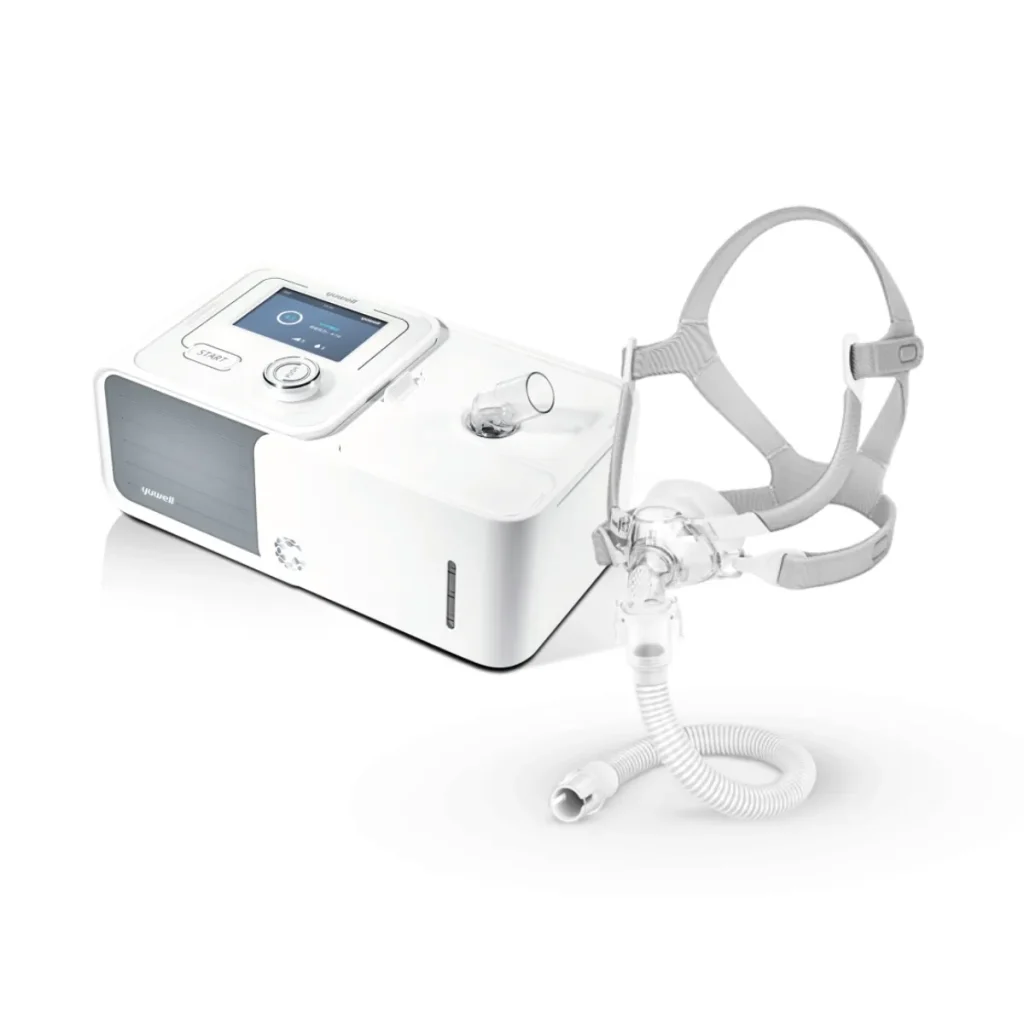
CPAP is designed to support breathing during sleep. A typical setup includes the machine, a mask, tubing, and a motor that pushes air through the tube.
Ease of Use
CPAP can take some practice. The user must place the mask correctly and become comfortable with the airflow. Mask fit matters. A poor fit can make therapy harder to tolerate.
For seniors with limited hand strength, large, simple controls may help. Mask straps and tubing also need to be easy to manage.
Key Strengths
- Directly supports an open airway during sleep.
- Commonly used for obstructive sleep apnea.
- Available with different mask styles and settings.
- Can be used with a compatible oxygen source when prescribed.
Potential Drawbacks
- Wearing a mask may take time to get used to.
- Tubing can add clutter near the bed.
- Cleaning and routine care are part of ownership.
- The wrong mask fit may reduce comfort.
CPAP should be used as directed by a healthcare professional. NHLBI notes that people may need time and patience to become comfortable with CPAP therapy.
Oxygen Concentrator Review for Seniors
An oxygen concentrator works in a different way. It draws in room air, separates oxygen from other gases, and supplies concentrated oxygen to the user. Oxygen is commonly delivered through a nasal cannula.
Ease of Use
A concentrator may feel simpler for someone who only needs supplemental oxygen. There is no CPAP mask that must seal around the face.
Still, the user needs to manage the cannula, tubing, power supply, and prescribed oxygen settings. Portable units can offer more mobility, but models vary greatly.
Key Strengths
- Provides supplemental oxygen when prescribed.
- Does not require a sleep mask.
- Can support home or portable oxygen therapy.
- Some devices are designed for transport and travel.
Potential Drawbacks
- It does not provide the same airway support as CPAP.
- Tubing can still create a trip or storage issue.
- Power use matters with home units.
- Portable oxygen needs can vary by device and prescription.
The American Lung Association notes that oxygen equipment may be used at home and that a healthcare provider can help determine the equipment that fits a person’s needs.
Which Is Easier for Seniors to Use?
The answer depends on what the person needs.
CPAP may be harder at first because of the mask, airflow, and bedtime setup. For a senior already comfortable with CPAP, though, the routine may become simple.
An oxygen concentrator may feel easier for someone who needs oxygen but does not need positive airway pressure. The nasal cannula is usually less involved than a CPAP mask.
| Usability Factor | CPAP | Oxygen Concentrator |
|---|---|---|
| Face equipment | Mask | Nasal cannula |
| Bedtime setup | More involved | Often simpler |
| Fine motor demands | Mask and straps | Cannula and controls |
| Tubing | Yes | Yes |
| Portability | Varies by model | Home and portable options exist |
| Learning curve | Often takes adjustment | Depends on device and prescription |
For seniors with limited dexterity, the best setup is often the one that fits the person’s actual routine. A simpler device is not automatically the correct medical device.
Performance Comparison
The two devices should be judged by different performance goals.
CPAP is designed to provide positive airway pressure. Its main role is to reduce airway obstruction during sleep. NHLBI identifies PAP therapy as a common treatment for obstructive sleep apnea.
Oxygen concentrators are designed to provide supplemental oxygen. Their role is different. They increase the oxygen supplied to the user rather than mechanically holding an obstructed airway open.
Research comparing CPAP with supplemental oxygen in obstructive sleep apnea has found that CPAP is more effective at reducing apnea-related events and had stronger effects on some cardiovascular measures.
| Performance Area | CPAP | Oxygen Concentrator |
|---|---|---|
| Airway support | Strong role | No |
| Supplemental oxygen | Can be combined when prescribed | Main purpose |
| OSA treatment | Established role | Not primary treatment |
| Oxygen saturation | Can improve it by treating airway events | Directly adds oxygen |
| Primary goal | Keep airway open | Deliver extra oxygen |
Comfort, Accessibility, and Senior-Friendly Design
Comfort can decide whether a device fits daily life.
With CPAP, mask shape, strap adjustment, tubing position, and airflow comfort matter. Some seniors may prefer a smaller mask. Others may prefer a design that provides more coverage.
With oxygen therapy, the nasal cannula may feel less restrictive than a mask. But tubing can still affect walking, sleeping, and room layout.
For either device, controls should be clear. Setup should be manageable. Storage should not require awkward lifting or bending.
Features Comparison
The useful features are different because the devices have different jobs.
| Feature | CPAP | Oxygen Concentrator |
|---|---|---|
| Mask options | Yes | Usually no |
| Nasal cannula | Not normally the main interface | Common |
| Air pressure control | Yes | No |
| Oxygen delivery | Only when combined with oxygen equipment | Yes |
| Portability | Depends on model | Home and portable models available |
| Humidification | Available on some systems | Device-dependent |
A feature only has value when it solves a real problem. Seniors should avoid paying more for options they do not need.
Price, Maintenance, and Long-Term Value
Price varies by model, supplier, insurance, accessories, and prescription needs. It is better to compare total ownership cost than a single sticker price.
CPAP ownership may include the machine, mask, tubing, filters, and other replacement parts. Cleaning is also important. FDA guidance emphasizes following the CPAP manufacturer’s cleaning instructions and warns against assuming alternative cleaning methods are automatically suitable.
Oxygen concentrators may require filter care, tubing, cannula replacement, and reliable electrical power. Portable oxygen systems can also add battery or charging needs.
| Cost Factor | CPAP | Oxygen Concentrator |
|---|---|---|
| Main device | CPAP machine | Concentrator |
| Regular accessories | Mask, tubing, filters | Cannula, tubing, filters |
| Cleaning | Regular equipment care | Regular equipment care |
| Power needs | Electric power | Electric power; portable models may use batteries |
| Long-term value | Strong when CPAP is medically indicated | Strong when oxygen is medically indicated |
Who Should Choose CPAP?
- Choose CPAP when a clinician has diagnosed obstructive sleep apnea and recommends PAP therapy.
- Choose CPAP when keeping the airway open during sleep is the main treatment goal.
- Choose it when a mask-based sleep routine is acceptable.
- Choose it when the user can manage regular mask and tubing care.
Who Should Choose an Oxygen Concentrator?
- Choose an oxygen concentrator when supplemental oxygen has been prescribed.
- Choose it when low oxygen levels are the main issue being treated.
- Choose it when avoiding a CPAP mask is important and the medical need is oxygen therapy rather than airway pressure.
- Choose portable oxygen equipment only when the specific device and oxygen prescription fit the user’s needs.
The American Lung Association specifically advises people who need prescription oxygen to discuss equipment choices with a healthcare provider rather than relying on over-the-counter oxygen products.
CPAP vs Oxygen Concentrator — Final Verdict
There is no useful overall winner because these devices are built for different purposes.
Best for obstructive sleep apnea: CPAP
Best for prescribed supplemental oxygen: Oxygen concentrator
Best when airway support and oxygen are both needed: A prescribed combination of therapies may be used.
Best for mask-free oxygen delivery: Oxygen concentrator, when oxygen therapy is medically appropriate.
The most important point is simple: an oxygen concentrator should not be treated as a direct replacement for CPAP in obstructive sleep apnea. Older AASM guidance states that supplemental oxygen is not recommended as the primary treatment for OSA, while more recent research continues to show that CPAP is more effective at reducing apnea-related events.
Scoring Summary
Numeric scores would be misleading here because CPAP and oxygen concentrators are not direct substitutes. A score of 9/10 versus 7/10 could suggest a product winner even when each device is appropriate for a different medical need.
| Category | CPAP | Oxygen Concentrator |
|---|---|---|
| OSA fit | Excellent match | Limited as primary therapy |
| Supplemental oxygen fit | Can be combined when prescribed | Primary role |
| Mask-free use | No | Usually yes |
| Airway support | Yes | No |
| Senior usability | Depends on mask and routine | Depends on oxygen setup |
How We Evaluate Products
This comparison focuses on practical senior needs. We look at purpose, ease of use, comfort, setup, maintenance, safety, portability, and long-term practicality.
We do not treat marketing claims as proof. We also do not claim hands-on testing where none occurred.
Senior-Specific Buying Considerations
Physical Effort
Think about lifting, moving, connecting, or storing the device. A routine that seems easy on paper may feel different at home.
Controls
Look for clear controls and settings that are easy to understand. Avoid unnecessary complexity.
Maintenance
Check what needs regular cleaning or replacement. Small parts can be frustrating for users with limited dexterity.
Storage
Keep tubing, masks, cannulas, and accessories in a clean, easy-to-reach place.
Setup
Ask whether the user can set up the device alone or needs caregiver help.
Safety
For oxygen users, keep oxygen away from flames, smoking, and other ignition sources. For CPAP, follow the manufacturer’s instructions for cleaning and equipment care.
Common Buying Mistakes
- Buying an oxygen concentrator without confirming the required oxygen prescription.
- Assuming oxygen can replace CPAP for obstructive sleep apnea.
- Choosing a device only because it looks smaller or cheaper.
- Ignoring tubing, mask, cannula, filter, and accessory costs.
- Forgetting to consider who will handle setup and routine maintenance.
- Buying a portable model without checking whether its delivery method matches the prescription.
Safety
Both devices are medical equipment, so the intended use matters.
Do not change CPAP pressure or oxygen flow on your own unless a healthcare professional has instructed you to do so. Oxygen therapy also has important fire-safety requirements. The American Lung Association recommends learning how to use oxygen safely and working with a healthcare provider to select the right equipment.
For obstructive sleep apnea, do not assume that improved oxygen saturation means the airway problem has been treated. Research has found that oxygen can improve oxygen levels while having less effect on apnea and arousal measures than CPAP.
Conclusion
CPAP vs Oxygen Concentrator is really a comparison of two different types of respiratory support. CPAP uses positive airway pressure to help keep the airway open during sleep, making it the device more directly suited to obstructive sleep apnea.
An oxygen concentrator supplies supplemental oxygen when it is prescribed for low oxygen levels. For some people, the two therapies may even be used together. The safest choice is the one that matches the diagnosed need, daily routine, and healthcare professional’s instructions.
