
Is Gardening a Good Hobby for Older Adults?


Automatic Pill Dispenser

Big Button Mobile Phone
Robot Vacuum Cleaner
Quick Answer
Yes, gardening can be an excellent hobby for older adults. It combines gentle movement, mental engagement, time outdoors, creativity, and a sense of purpose, while the National Institute on Aging encourages older adults to take part in meaningful activities they enjoy.
Why gardening can work well
- Gentle movement: Watering, planting, pruning, and light weeding can keep you moving without turning your hobby into a workout.
- Flexible setup: You can grow plants in a yard, raised bed, balcony container, or sunny window.
- Visible progress: New leaves, flowers, herbs, and vegetables provide small rewards throughout the season.
- Mental engagement: Choosing plants, planning care, and noticing changes give your mind something interesting to follow.
- Easy to adapt: Raised beds, lightweight tools, stools, and smaller gardens can reduce bending and heavy work.
Start comfortably
- Begin with a few easy plants and short sessions rather than creating a large garden all at once.
I think gardening earns its place among the best hobbies for older adults because you can make it almost as simple or ambitious as you want. A few herbs on a patio can be just as satisfying as a large vegetable plot.
As of 2026, I would focus less on how much gardening you can do and more on creating a setup you will comfortably enjoy. This guide covers the benefits, accessible options, safety, and an easy way to start.
In This Guide
- Why is gardening a good hobby for older adults?
- Does gardening count as physical activity?
- Can gardening support mental and social well-being?
- What type of gardening is easiest for seniors?
- How can older adults make gardening easier?
- How can seniors garden safely?
- How should a beginner start gardening?
- Frequently Asked Questions
- Final Takeaway
Why Is Gardening a Good Hobby for Older Adults?
Gardening works well for many older adults because one activity can provide movement, relaxation, creativity, routine, and something meaningful to care for. It also adapts easily as your space, energy, or mobility changes.
Definition: Gardening as a hobby means growing and caring for plants primarily for enjoyment, learning, food, beauty, relaxation, or personal satisfaction rather than as paid work.
It gives your day a simple sense of purpose
Plants create small jobs that have clear results. You water a dry pot, remove faded flowers, or pick a ripe tomato, and you can see what you accomplished.
That routine can be especially appealing after retirement. You have something waiting for you without the pressure of a strict schedule.
You can keep learning
Even experienced gardeners keep discovering new things. Different plants bring questions about sunlight, watering, soil, pests, pruning, and seasons.
The learning can stay as simple as you like. Growing one unfamiliar herb gives you a new project without requiring a major commitment.
Gardening can be inexpensive
A hobby does not need piles of equipment. A pot, potting mix, watering can, and a few plants can provide months of enjoyment.
You can also save seeds, divide established plants, reuse suitable containers, and swap plants with friends. Those habits make gardening easier to maintain on a retirement budget.
It offers frequent small rewards
Gardens change constantly. A seed sprouts, a bud opens, a tomato changes color, or a butterfly visits a flower.
I like this feature because success does not depend on finishing one big project. The pleasure comes from watching gradual progress.
Section Takeaway: Gardening is flexible, purposeful, and easy to scale. You can enjoy the hobby without owning a large yard or maintaining a complicated garden.
Does Gardening Count as Physical Activity?

Yes, many gardening tasks involve physical activity. The amount depends on the task, your pace, and how much lifting, walking, digging, or bending is involved.
The CDC’s physical activity guidance for adults 65 and older recommends a weekly mix of aerobic, muscle-strengthening, and balance activity. Gardening can contribute movement, but it does not automatically cover every part of those recommendations.
Common gardening movements
- Walking: Moving between beds, containers, tools, and water sources adds steps.
- Reaching: Pruning, picking vegetables, and tending containers involve controlled arm movement.
- Carrying: Small watering cans, tools, and light harvest baskets add resistance.
- Standing and sitting: Changing positions can use several muscle groups.
- Light digging: Working loose soil can be more demanding than watering or pruning.
Intensity matters. Ten minutes of gentle watering is different from spending an hour digging compacted soil.
Think of gardening as one enjoyable source of movement rather than a replacement for every type of exercise. Match the work to your current fitness and comfort.
Health note: If you have a medical condition, recent surgery, balance problems, or exercise restrictions, ask your health care professional what level of gardening activity is appropriate for you.
Can Gardening Support Mental and Social Well-Being?
Gardening can provide a calm, absorbing activity while giving you something new to observe each day. It can also become social through garden clubs, community plots, neighbors, family projects, and plant exchanges.
Gardening gives your attention somewhere to go
Many garden tasks require just enough concentration to hold your attention. You might check soil moisture, remove damaged leaves, or decide where a new plant belongs.
That combination of attention and visible progress can make a gardening session feel satisfying. You do not need to chase perfection.
Plants make conversation easy
Gardening has a natural social side. People trade tomato varieties, ask about flowers, offer cuttings, and compare what grew well this year.
A community garden can add even more interaction. However, gardening also works perfectly well as a quiet solo hobby when that is what you prefer.
You can share the results
- Give herbs or vegetables to family.
- Cut flowers for a friend.
- Grow a plant with a grandchild.
- Exchange seeds with neighbors.
- Join a local gardening club.
The garden becomes more than something you maintain. It can become an easy way to connect with other people.
What Type of Gardening Is Easiest for Seniors?
For many older adults, container and raised-bed gardening are easier than maintaining large in-ground beds. Both options can reduce the amount of bending, digging, and walking required.
| Garden style | Space needed | Bending | Good choice for |
|---|---|---|---|
| Windowsill pots | Very little | Minimal | Herbs and small houseplants |
| Patio containers | Small | Low if elevated | Flowers, herbs, peppers, lettuce |
| Raised beds | Small to medium | Reduced | Vegetables and mixed planting |
| In-ground beds | Medium to large | Usually higher | Gardeners comfortable kneeling and bending |
Raised beds
Raised beds bring plants closer to a comfortable working level. The University of Minnesota Extension notes that raised beds can improve accessibility, and about 27 inches can be a comfortable bed height for many wheelchair users.
Width matters too. You should be able to reach the center without stretching or stepping into the bed.
Container gardening
Containers are one of my favorite starting points because they make it easy to control the size of the job. Put pots near a door or chair, and routine care becomes simpler.
Keep in mind that containers can dry faster than garden soil. Position them near a convenient water source when possible.
Indoor gardening
Indoor plants remove concerns about bad weather and uneven outdoor surfaces. A bright windowsill can support herbs and other compact plants.
This option also works when outdoor space is unavailable. Start with one or two forgiving plants rather than filling every window at once.
Section Takeaway: Choose the smallest garden setup that gives you the experience you want. Accessibility matters more than garden size.
How Can Older Adults Make Gardening Easier?
The best senior-friendly garden reduces unnecessary lifting, bending, reaching, and walking. Small design changes often make a bigger difference than buying lots of specialized equipment.
Bring the plants to you
- Use raised beds or elevated containers.
- Place pots on sturdy tables or plant stands.
- Use vertical supports for climbing vegetables.
- Keep frequently tended plants near the house.
- Leave comfortable access around each bed.
Choose lighter tools
Heavy equipment can turn an enjoyable morning into a tiring one. Lightweight hoses, small watering cans, ergonomic hand tools, and long-handled tools can reduce unnecessary strain.
Penn State Extension’s guidance on gardening and aging also recommends strategies such as ergonomic tools, kneelers, garden seats, smaller garden areas, containers, and raised beds.
Make water easy to reach
A large watering can gets surprisingly heavy. Smaller cans, a lightweight hose, drip irrigation, or a nearby water connection can make routine care easier.
Put thirsty plants together when practical. That reduces repeated trips across the yard.
Give yourself somewhere to sit
A chair or bench is not a sign that you are doing less. It is part of good garden design.
Place seating where you naturally work or enjoy the view. Short breaks can help you keep the hobby pleasant instead of exhausting.
Section Takeaway: Adapt the garden to your body instead of forcing your body to adapt to the garden. Raised plants, lighter tools, nearby water, and seating can remove much of the unnecessary work.
How Can Seniors Garden Safely?
Safe gardening starts with choosing comfortable tasks and knowing when to stop. Heat, lifting, uneven surfaces, sharp tools, and overexertion deserve more attention as we age.
Avoid the hottest part of the day
Older adults are more vulnerable to heat-related illness. The CDC identifies adults age 65 and older as a group at increased risk during extreme heat.
On hot days, garden during cooler hours when conditions allow. Take breaks in shade or indoors, and follow your health care provider’s advice about hydration if you have fluid restrictions.
Protect yourself outdoors
- Wear weather-appropriate clothing.
- Use a broad-brimmed hat for shade.
- Wear sturdy, closed-toe shoes when appropriate.
- Use gloves for thorny or irritating plants.
- Keep walking paths clear of hoses and tools.
Break large jobs into smaller ones
A garden does not need to be finished in one afternoon. Divide pruning, planting, weeding, and cleanup across several short sessions.
I would rather leave one small job for tomorrow than turn a relaxing hobby into a painful day. The plants will still be there.
Be careful with lifting
Wet soil, mulch bags, large pots, and watering cans can be much heavier than they look. Divide materials into smaller loads or ask for help with the heavy work.
If a task requires straining, twisting, or lifting beyond your comfort level, change the method. A garden cart or another pair of hands can solve the problem.
Health note: Stop gardening and seek appropriate medical advice if activity causes chest pain, faintness, unusual shortness of breath, severe dizziness, or another concerning symptom.
Section Takeaway: Good gardening should leave you looking forward to the next session. Manage heat, reduce heavy lifting, keep paths clear, and stop before fatigue affects your balance or judgment.
How Should a Beginner Start Gardening?
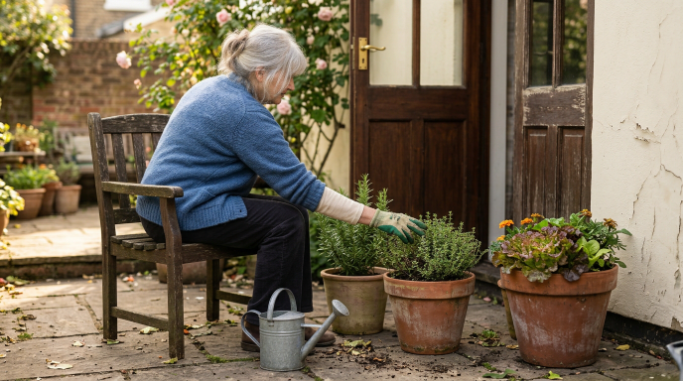
Start smaller than you think you need to. A few successful plants teach you more than an oversized garden that becomes difficult to maintain.
Try this simple first-month plan
- Choose one location. Pick a convenient balcony, patio, window, or small garden bed.
- Start with two to four plants. Choose plants suited to the available sunlight and your climate.
- Put water nearby. Make routine watering easy before adding more plants.
- Garden in short sessions. Ten or twenty comfortable minutes can be enough at first.
- Watch what happens. Notice which plants thrive and which chores you enjoy.
- Expand slowly. Add more only when the current setup still feels manageable.
Good beginner choices
The easiest plant depends on your climate and growing conditions. In many situations, herbs, lettuce, marigolds, mint in its own container, and other locally recommended plants can make manageable first projects.
Ask a local garden center or Cooperative Extension office what grows reliably in your area. Local advice is more useful than choosing plants solely because they look attractive online.
Most importantly, grow something you care about. A favorite flower or herb you use in the kitchen gives you a reason to check the garden tomorrow.
Frequently Asked Questions
Is gardening good exercise for a 70-year-old?
Gardening can provide useful movement at age 70, but its intensity varies greatly. Watering and pruning are lighter than digging or moving soil, so choose tasks that match your fitness, balance, and health and follow your clinician’s advice when medical limitations apply.
Can older adults garden if they have trouble bending?
Yes. Elevated containers, raised beds, long-handled tools, vertical planters, and garden tables can reduce bending. Keeping plants within a comfortable reach is usually more helpful than trying to maintain a traditional ground-level garden.
Is container gardening good for seniors?
Container gardening can be an excellent option because it needs little space and can be positioned at a comfortable height. Place containers near a water source and remember that potting mix may dry faster than soil in an in-ground garden.
How long should an older adult garden at one time?
There is no single session length that suits everyone. A beginner might start with 10 to 20 comfortable minutes, then adjust based on energy, weather, mobility, and the difficulty of the task rather than trying to reach a fixed gardening target.
What are the easiest vegetables for seniors to grow?
Easy vegetables depend on the local climate, season, sunlight, and growing method. Leaf lettuce, radishes, bush beans, and some compact tomato or pepper varieties can be manageable, but local Cooperative Extension guidance can help you choose dependable varieties.
Can someone garden without a yard?
Absolutely. A balcony, patio, porch, sunny window, community garden plot, or a few indoor containers can provide a satisfying gardening hobby. The best space is often the one that is easiest to reach and maintain consistently.
Is gardening still worthwhile if I can only care for a few plants?
Yes. The value of gardening does not depend on acreage or harvest size. One herb pot, a flowering container, or several houseplants can still provide routine, learning, creativity, and the pleasure of watching something grow.
Final Takeaway
So, is gardening a good hobby for older adults? For many people, yes—it is flexible, purposeful, mentally engaging, and capable of adding enjoyable movement to everyday life.
You do not need a large vegetable plot to call yourself a gardener. Start with a garden you can comfortably manage, then let your interest decide whether it grows.
If bending, heavy lifting, or a large yard has made gardening feel difficult, change the setup rather than abandoning the hobby. A raised bed, two patio pots, or a sunny windowsill may be all you need to enjoy growing again.
