
Who Qualifies for Senior Subsidized Housing in Bc


Smart Health Watch for Seniors

Spill-Proof Travel Mug

Slow Cooker Crock Pot
Senior subsidized housing in British Columbia offers safe, affordable homes for older adults with limited income. To qualify, you typically need to be 55+, have a low household income, and meet residency or medical needs criteria. Start your application early, as waitlists can be long—many programs prioritize those with urgent housing needs or disabilities.
Finding a safe, comfortable, and affordable place to call home becomes especially important as we age. For many seniors across British Columbia, subsidized housing isn’t just a preference—it’s a lifeline. With rising living costs, fixed incomes, and growing health needs, traditional market rents can quickly become unaffordable. That’s where senior subsidized housing in BC comes in. These purpose-built communities offer more than just four walls and a roof—they provide peace of mind, social connection, and access to essential services.
But here’s the thing: not everyone automatically qualifies. The rules around who gets priority can feel confusing, especially when you’re juggling paperwork, health appointments, and daily life. So let’s break it down clearly. Whether you’re a 60-year-old looking to downsize, a widowed neighbor needing support, or someone caring for a loved one, understanding the qualifications is your first step toward finding the right home.
In this guide, we’ll walk through exactly who qualifies for senior subsidized housing in BC—what the income limits are, how age and residency factor in, what special programs exist for those with disabilities or care needs, and how to navigate the application process without getting overwhelmed. Think of this as your friendly, no-nonsense roadmap to secure affordable housing that supports your independence and dignity.
Key Takeaways
- Age and residency: Most programs require applicants to be at least 55 years old and live in British Columbia.
- Income limits: Household income must fall below a set threshold—usually 30–50% of median area income—depending on the program.
- Medical or care needs: Some subsidized units prioritize seniors with mobility issues, chronic illness, or require assisted living support.
- Housing authority involvement: Applications are processed through BC Housing or local housing societies like Vancouver Affordable Housing Agency (VAHA).
- Waitlists apply: Due to high demand, many programs maintain long waitlists; being approved doesn’t guarantee immediate placement.
- Assets matter: Your total assets (like savings or property) may affect eligibility—some programs cap asset values.
- Specialized options exist: Programs like Seniors’ Supports & Services (SSS) offer tailored housing for those needing extra care or support.
📑 Table of Contents
- What Is Senior Subsidized Housing in BC?
- Who Qualifies Based on Age and Residency?
- Understanding Income Limits for Eligibility
- Asset Limits and Net Worth Considerations
- Medical Needs and Specialized Senior Housing Programs
- How the Application Process Works
- Common Myths About Senior Subsidized Housing in BC
- Resources to Help You Apply
- Conclusion: Your Path Forward
What Is Senior Subsidized Housing in BC?
Before diving into who qualifies, it helps to understand what we mean by “subsidized housing.” In British Columbia, these aren’t luxury condos or vacation rentals—they’re purpose-built residential buildings designed specifically for low-income seniors. They come in many forms: independent living apartments, congregate care facilities, supportive housing units, and even some shared-living models.
The word “subsidized” means the government covers part of the rent so residents pay only a portion of their income—often between 25% and 30%. This ensures affordability while still allowing seniors to keep most of their pension, CPP, OAS, or other income for food, healthcare, and personal expenses.
These buildings are managed either by non-profits (like the YWCA or local housing societies), Indigenous housing organizations, or directly by BC Housing—the provincial Crown corporation responsible for affordable housing policy. Many include added benefits: meal programs, housekeeping, transportation, wellness activities, and emergency response systems.
It’s worth noting that while all these options serve seniors, they’re not all the same. Some focus on active aging with minimal support, others provide full-time nursing or memory care. Knowing which type fits your lifestyle and budget is key—and yes, your eligibility depends heavily on that.
Who Qualifies Based on Age and Residency?
Visual guide about Who Qualifies for Senior Subsidized Housing in Bc
Image source: thinkglink.com
Let’s start with the basics: who qualifies for senior subsidized housing in BC? The primary gatekeepers are usually age and location.
Most subsidized housing programs for seniors require applicants to be at least 55 years old. Why 55? Because it aligns with common retirement ages, life expectancy trends, and the point when many people transition from full-time work to relying on pensions or disability benefits. Some programs go higher—60 or even 65—especially if they’re tied to specific pension programs or targeted at older adults with greater care needs.
Residency is another big factor. You generally need to be a legal resident of British Columbia. Proof might include a BC driver’s license, utility bill, or tax assessment notice. If you’re new to the province, moving here doesn’t disqualify you—but you may need to establish local ties before your name reaches the top of certain waitlists.
That said, exceptions exist. For example, if you’re relocating due to domestic violence, elder abuse, or unsafe living conditions elsewhere in Canada, some housing providers will fast-track your application. Similarly, Indigenous seniors may qualify through First Nations-specific housing initiatives that prioritize community-based placements.
Exceptions to Age Requirements
Don’t assume you’re too young or too old! While 55 is typical, some programs welcome younger seniors (even in their late 40s) if they have significant care needs—such as a spouse with dementia or a child with disabilities requiring constant supervision. Conversely, some buildings accept residents over 90 without issue.
Always ask: “Does your building allow younger seniors if they have medical dependencies?” You’d be surprised how flexible some operators are when safety and dignity are at stake.
Understanding Income Limits for Eligibility
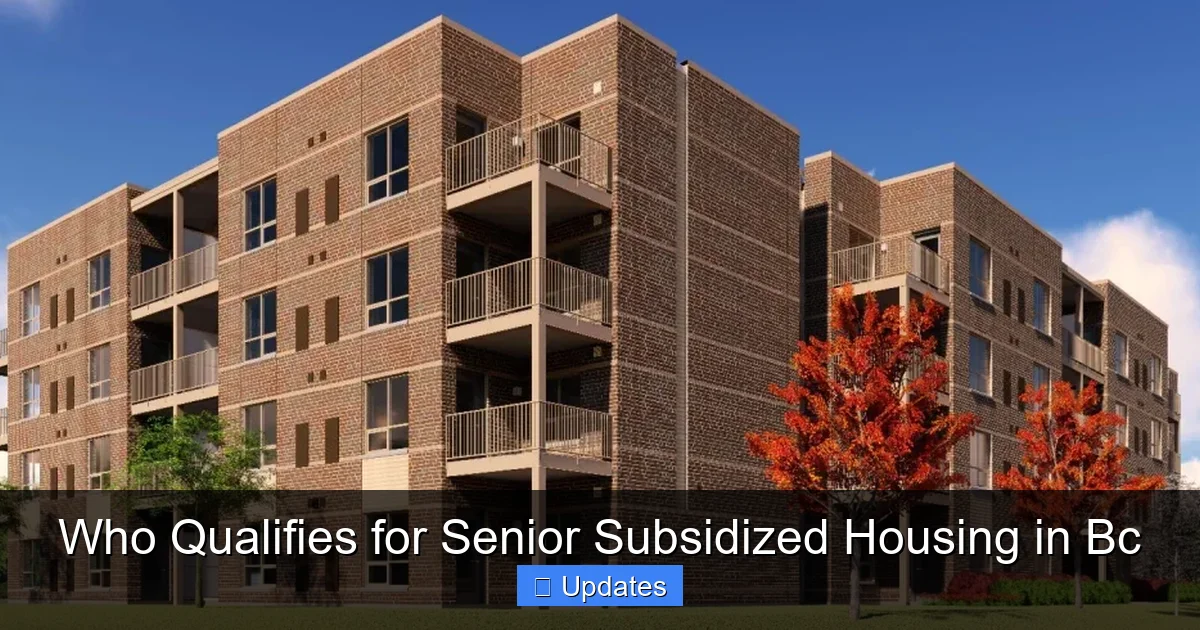
Visual guide about Who Qualifies for Senior Subsidized Housing in Bc
Image source: immigly.com
If age gets you in the door, income determines whether you can actually stay. Income limits are strict and regularly updated based on Statistics Canada data and regional cost-of-living differences.
For most senior subsidized housing in BC, your gross annual household income must be below a certain threshold. This includes:
– Old Age Security (OAS)
– Canada Pension Plan (CPP)
– Employment Insurance (EI)
– Private pensions
– Investment income
– Any other regular payments
As of 2024, for a one-person household in Metro Vancouver, the limit is often around $38,000. In smaller communities like Prince George or Kelowna, it might be closer to $32,000. Larger families or couples living together have slightly higher thresholds—but remember, even if you’re a couple, both incomes count toward the total.
Here’s a quick rule of thumb: You should expect to pay roughly 25–30% of your monthly income as rent. So if you make $2,800/month, your rent would likely be capped at $700 or less.
Keep in mind: non-taxable benefits don’t always count toward income. For instance, GST/HST credits, child tax benefits, or disability supplements may be excluded. Always check with the housing provider—they’ll do the math for you during intake.
Example: Does Sarah Qualify?
Let’s say Sarah is 68, lives alone, and receives $2,100/month from OAS, CPP, and a small private pension totaling $25,200/year. She has $5,000 in savings and owns her car. In Surrey, the income limit for a single person is $36,500. Since $25,200 < $36,500, she passes the income test—assuming her assets also fall within limits (more on that next).
Asset Limits and Net Worth Considerations
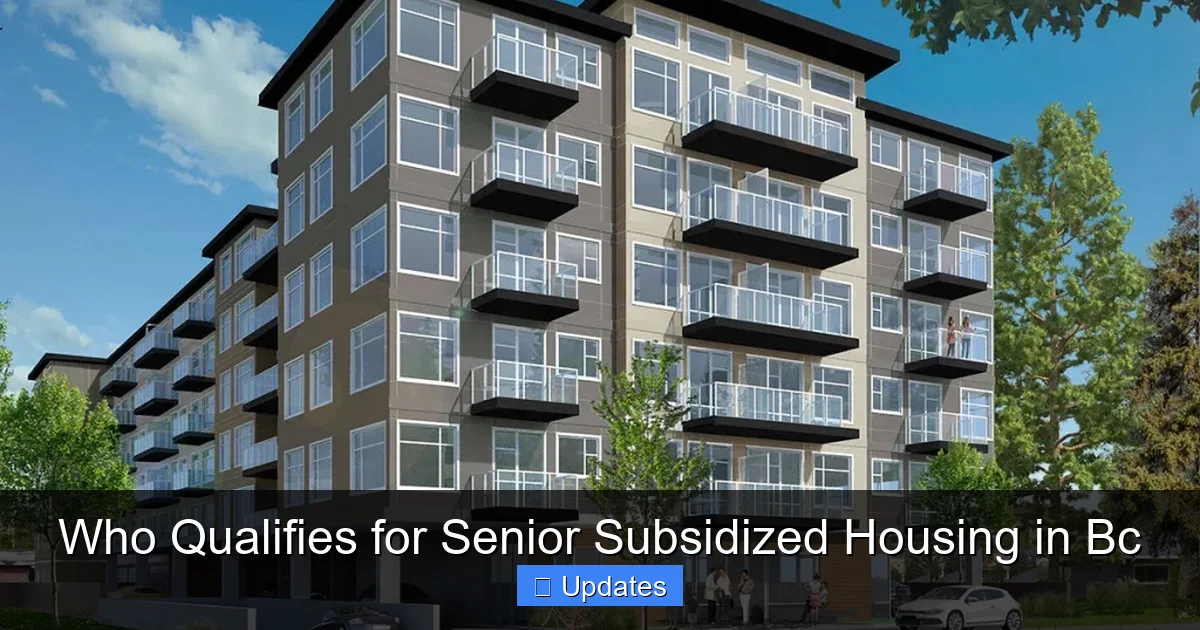
Visual guide about Who Qualifies for Senior Subsidized Housing in Bc
Image source: immigly.com
Unlike income, asset limits aren’t universal—they vary by program and operator. But many subsidized housing providers do check your total net worth, including:
– Bank savings and RRSPs
– GICs or bonds
– Stocks or mutual funds
– Second properties or rental units
– Life insurance policies (cash value)
Typically, single seniors are allowed up to $50,000 in assets, while couples may have a combined cap of $100,000. Again, these numbers change yearly and differ by region. Some newer developments have eliminated asset tests altogether, focusing only on income—so it pays to shop around.
Important note: your primary residence is almost always exempt. Owning a home doesn’t disqualify you unless you plan to sell it and move into subsidized housing permanently.
If your assets exceed the limit, you might still qualify for “phased” or “graduated” entry—meaning you can apply now and move in once you dip back under the threshold (e.g., by using savings for medical bills or downsizing).
Medical Needs and Specialized Senior Housing Programs
Now, here’s where things get really meaningful: some senior subsidized housing in BC prioritizes applicants with care needs. These aren’t just about affordability—they’re about dignity, safety, and quality of life.
Programs like Seniors’ Supports & Services (SSS)—funded jointly by BC Housing and the Ministry of Social Development and Poverty Reduction—provide tailored housing for seniors who need assistance with daily tasks but don’t require 24/7 nursing care. Examples include:
– Help with bathing or dressing
– Medication reminders
– Light housekeeping
– Meal delivery or group dining
– Transportation to doctor visits
To qualify, you usually need to be assessed by a Community Living BC (CLBC) worker or a licensed care coordinator. They’ll determine your level of functional ability using standardized tools like the Resident Assessment Instrument for Long-Term Care (RAI-LTC).
Another option is assisted living residences, such as those run by Coast Mental Health or Fraser Health Authority. These blend independent living with on-site nursing, therapy, and social programming. Eligibility hinges on having a diagnosed condition (e.g., Parkinson’s, stroke recovery, or severe arthritis) that impacts mobility or self-care.
Indigenous-Specific Housing Initiatives
For First Nations, Métis, and Inuit elders, there are culturally appropriate housing programs funded by Indigenous Services Canada and band councils. These often include traditional healing spaces, elder-led activities, and family visitation support. Priority goes to members registered under the Indian Act or recognized by their First Nation.
How the Application Process Works
So you think you qualify—now what? The application journey varies slightly depending on whether you’re applying through BC Housing directly or a local housing society.
Step 1: Find a suitable building. Use BC Housing’s online search tool (bchousing.org/search) or contact local agencies like Victoria Affordable Housing Authority (VCHA) or Abbotsford Housing Society. Filter by “senior,” “subsidized,” and your city.
Step 2: Gather documents. Expect to submit:
– Proof of age (birth certificate or passport)
– ID (driver’s license, SIN card)
– Recent pay stubs or benefit statements
– Bank statements (last 3 months)
– Asset declarations (if required)
– Medical forms (for care-based programs)
Step 3: Submit your application. Some places use online portals; others take paper forms in person. Be honest—don’t hide assets or inflate expenses. Fraudulent applications get rejected permanently.
Step 4: Wait for screening. It can take weeks to months to hear back. During this time, housing staff may call for interviews or request additional info.
Step 5: Placement offer. If approved, you’ll be placed on a waitlist ranked by urgency (income level, health status, family situation). When a unit opens, they’ll contact you first.
Pro tip: Apply to multiple buildings. Don’t put all your eggs in one basket. Even if one waitlist takes years, another might open sooner.
Tips for Navigating Waitlists
– Stay proactive: Call every 6 months to confirm your status.
– Update changes immediately: Income shifts, new medical diagnoses, or relocation plans can affect priority.
– Volunteer or participate in programs: Some buildings reward engagement with faster moves.
– Consider co-op housing: Member-owned buildings sometimes have shorter waits and lower fees.
Common Myths About Senior Subsidized Housing in BC
Let’s clear up some misconceptions before you panic:
❌ Myth: Only destitute seniors qualify.
✅ Truth: Many middle-class retirees use these programs—especially after selling their homes or maxing out pensions.
❌ Myth: You lose your belongings if you move in.
✅ Truth: Your personal property stays yours. Storage space is provided, but you decide what to bring.
❌ Myth: All buildings look like hospitals.
✅ Truth: Modern subsidized housing looks like real neighborhoods—with gardens, lounges, and kitchens.
❌ Myth: You can’t have pets.
✅ Truth: Most allow small dogs or cats with approval. Service animals are always permitted.
Resources to Help You Apply
Feeling lost? You’re not alone. Here are trusted resources:
– BC Housing Website: bchousing.org – Search listings, download forms, read FAQs.
– 211 British Columbia: Dial 211 or visit 211.ca for free referrals to local housing counselors.
– Local Housing Societies: Each city has at least one—search “[City] Housing Society” online.
– Seniors’ Resource Centre: Offers workshops on housing applications and rights advocacy.
Remember: you deserve a safe, affordable home. These programs exist because communities recognize that aging well starts with stable housing.
Conclusion: Your Path Forward
Navigating who qualifies for senior subsidized housing in BC can feel overwhelming—but it doesn’t have to be. By understanding the basics of income limits, age rules, asset caps, and care-based priorities, you’re already ahead of the curve. Whether you’re seeking independence, companionship, or hands-on support, there’s likely a program waiting for you.
Start today: pull out your birth certificate, grab last month’s bank statement, and visit bchousing.org/search. Talk to neighbors, call 211, or email your local housing society. Knowledge is power—and in this case, it could lead to your next chapter.
Affordable housing isn’t charity; it’s investment. Every senior deserves a place to rest easy, know help is nearby, and wake up each day feeling secure. If you’ve got questions we didn’t cover, reach out—we’re rooting for you.
Frequently Asked Questions
What is the minimum age to qualify for senior subsidized housing in BC?
Most programs require applicants to be at least 55 years old. Some specialized care-focused buildings accept younger seniors with significant medical needs. Always check individual building guidelines, as exceptions exist for those with disabilities or dependent family members.
Can I still qualify if I own a home?
Yes, owning your primary residence doesn’t disqualify you—most asset tests exclude your home. However, if you plan to sell it and move permanently into subsidized housing, you’ll need to report the proceeds. Secondary properties or rental units may count toward asset limits.
Do I need a referral from my doctor to apply?
Only for certain care-based programs like Seniors’ Supports & Services (SSS) or assisted living residences. General independent senior housing doesn’t require medical referrals—just proof of income, age, and residency.
How long are the waitlists for subsidized senior housing in BC?
Wait times vary widely—from several months to over five years—depending on location and demand. Metro Vancouver tends to have longer lists than rural areas. Applying to multiple buildings increases your chances of faster placement.
Are pets allowed in senior subsidized housing?
Most buildings permit small pets like cats or dogs with landlord approval. Emotional support animals and service animals are always allowed under accessibility laws. Check individual building policies before applying.
What happens if my income increases after moving in?
Rent adjustments are rare but possible if your income rises significantly. Providers monitor finances annually. If you exceed income limits, you’ll be given time to find alternative housing—but sudden spikes (like inheritance or windfalls) may trigger reassessment.