
Walker vs Cane for Seniors: Which Is Right?


Puzzle Book for Seniors

Shiatsu Neck Massager

Emergency SOS Phone
Walker vs Cane is an important choice for seniors who need extra support while walking. The two aids work in different ways. A cane gives support mainly on one side, while a walker provides a wider base of support.
The right choice depends on how much help a person needs with balance, stability, weight bearing, and everyday movement. A healthcare professional can also help determine which device fits the person’s needs and how to use it safely.
Quick Comparison
A walker is generally better for seniors who need more stability or support while walking. A cane may be more suitable for someone who needs mild balance assistance or limited support.
A cane is easier to carry and usually takes up less space. A walker gives more contact with the ground and can provide greater stability, but it can require more space and practice to use correctly.
Walker vs Cane At a Glance
Here is a simple look at the main differences.
| Feature | Walker | Cane |
|---|---|---|
| Support | Higher | Lower |
| Balance assistance | Strong | Moderate |
| Weight bearing | More support | Limited |
| Portability | Less convenient | Very convenient |
| Storage | Needs more space | Easy to store |
| Tight spaces | Can be harder | Easier |
| Best suited to | Greater instability | Mild instability |
Walker Review: Stronger Support for Seniors
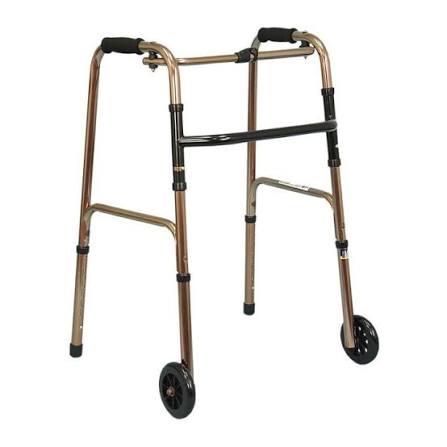
A walker surrounds the user with a larger support base. This can make it useful for people who need more help staying steady while moving.
Walkers come in different designs. Standard walkers have four rubber-tipped legs. Two-wheel walkers have wheels at the front. Four-wheel walkers provide continuous support while moving and may include a seat for rest breaks.
Ease of Use
A walker can provide useful support, but it takes some practice.
The user needs to keep the walker at the right height and move it correctly. A standard walker must usually be lifted and moved forward. A wheeled walker can be pushed forward instead.
The handles should be adjusted so the arms stay slightly bent and the shoulders remain relaxed.
Key Strengths
- Provides a broad support base
- Useful for balance problems
- Can help with weight bearing
- Different styles suit different mobility needs
- Some models offer seats or storage accessories
- Can be useful during recovery from injury or surgery
Potential Drawbacks
- Takes more space than a cane
- Can be harder to maneuver in tight areas
- Standard models require lifting
- Incorrect use can increase fall risk
- Wheels and brakes need regular checking on wheeled models
Cane Review: Simple Support for Daily Walking
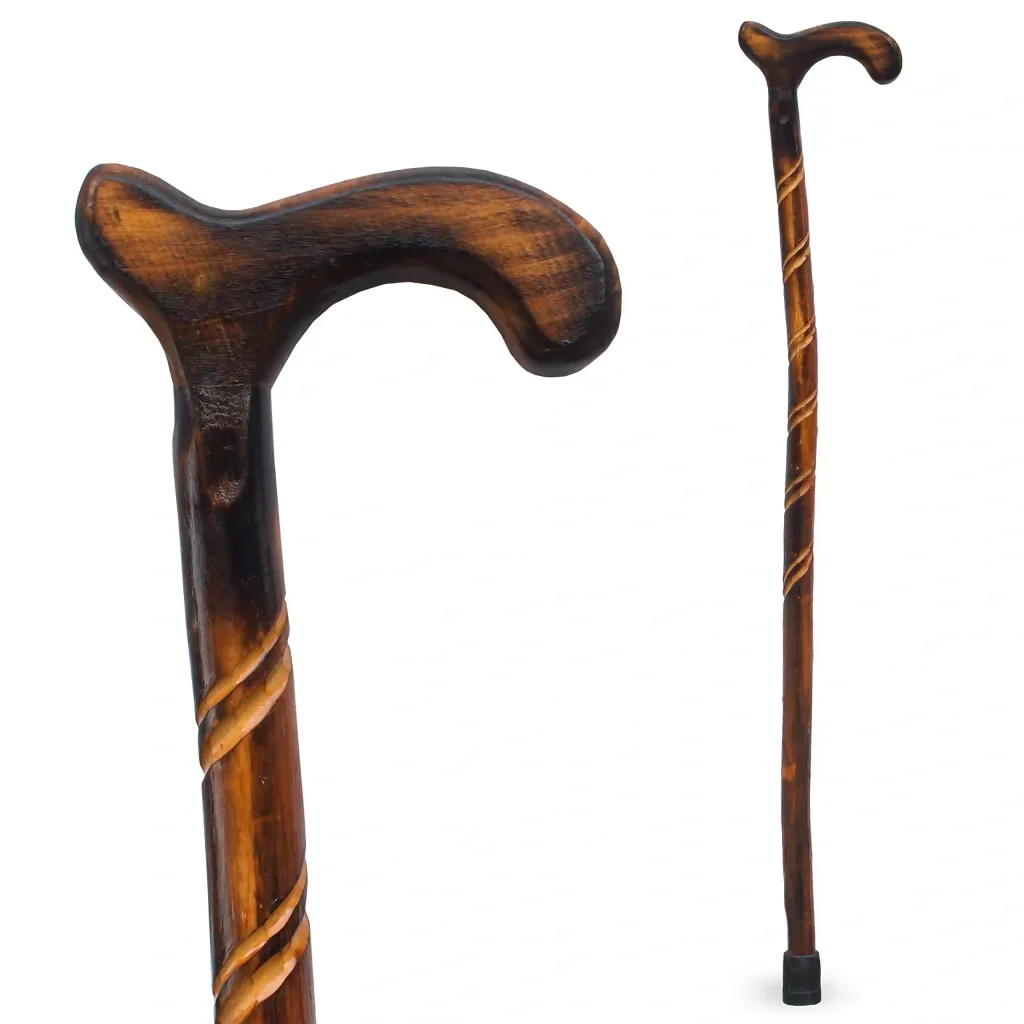
A cane is a smaller mobility aid that offers an additional point of balance. It may work well for someone who is only mildly unsteady or needs some assistance with walking.
Cane designs include single-point and multi-point options. A quad cane has a wider base but can also be heavier and harder to handle.
Ease of Use
A cane is compact and easy to carry. It can also be easier to use in narrow hallways, shops, and other areas where a larger walker may feel awkward.
Proper fit matters. Mayo Clinic recommends that the cane handle should line up around the wrist crease when the arm hangs naturally, with a comfortable elbow bend when holding it.
Key Strengths
- Lightweight and portable
- Easy to store
- Takes little space
- Useful for mild balance problems
- Easier to carry when not needed
- Many grip styles are available
Potential Drawbacks
- Provides less support than a walker
- Requires good enough balance to use safely
- Places support mainly on one side
- May not be suitable when substantial weight bearing is needed
Cleveland Clinic notes that a cane provides less support than a walker because it is a one-sided walking aid.
Which Is Easier for Seniors to Use?
The answer depends on the person’s mobility needs.
A cane may be easier for seniors who have relatively good balance but want an extra point of support. Its small size also makes it convenient for everyday travel.
A walker may be easier for seniors who need more stability while standing and walking. It can provide support from both sides and a larger base.
However, a walker is not automatically easier. A person must learn how to move it correctly, avoid pushing it too far ahead, and maintain an upright posture.
The simplest mobility aid is not always the safest one. The important question is how much support the person actually needs.
Performance Comparison
Both devices can improve mobility, but they are designed for different levels of support.
A walker can be useful when balance is poor, the legs are weak, or more weight needs to be supported during movement. Different walker types can also change how easy the device is to move.
A cane is better suited to situations where only limited support is required. It can help with balance and may reduce stress on a leg during walking.
| Performance Area | Walker | Cane |
|---|---|---|
| Stability | Higher | Lower |
| Weight support | Better suited | More limited |
| Maneuverability | Moderate | High |
| Indoor tight spaces | Less convenient | Convenient |
| Outdoor portability | Moderate | High |
Comfort, Accessibility, and Senior-Friendly Design
Comfort depends heavily on correct sizing and grip.
Walkers should be adjusted so the handles are at a comfortable height. Foam or larger grips may help some users who have difficulty grasping standard handles.
Canes also come with different grip designs. A larger or shaped grip may be more comfortable for someone who has difficulty gripping a narrow handle.
For either device, the person’s actual strength, balance, hand function, and environment should be considered.
Features Comparison
The most useful features depend on the user’s daily routine.
| Feature | Walker | Cane |
|---|---|---|
| Foldable design | Available on some models | Common |
| Seat | Available on some walkers | No |
| Storage pouch/basket | Available | Limited |
| Multiple support points | Yes | Usually no |
| Compact storage | Moderate | Excellent |
Walker accessories can include seats, trays, pouches, baskets, and hand brakes.
Price, Maintenance, and Long-Term Value
Price varies widely by design and model, so a fixed price comparison would be misleading.
Instead, consider the total ownership needs. A walker with wheels may have brakes, wheels, grips, and rubber components that need inspection. A cane is simpler, but its rubber tip still needs checking.
Mayo Clinic recommends replacing a worn cane tip because the tip helps provide traction. Walker users should also check worn rubber caps, grips, wheels, and brakes.
Who Should Choose a Walker?
A walker may make more sense when:
- Balance support is a major concern.
- More weight needs to be supported while walking.
- Leg weakness affects stability.
- The person is recovering from an injury or surgery.
- Continuous support is useful during walking.
- A seat could be helpful during longer walks.
A healthcare professional can help determine the appropriate walker type and fit.
Who Should Choose a Cane?
A cane may make more sense when:
- Only mild balance assistance is needed.
- The person can walk fairly well without major support.
- Portability is important.
- The device will be used in narrow spaces.
- A compact aid is preferred.
A cane may not be appropriate when a person needs substantial weight support or cannot maintain an upright walking position.
Walker vs Cane: Final Verdict
For seniors who need more stability and support, a walker is generally the more appropriate type of mobility aid. A cane can be a better fit when only limited balance assistance is needed and the person can safely manage a one-sided support device.
The biggest difference is not simply size. It is the amount and type of support each device provides.
Best for greater stability: Walker
Best for mild balance support: Cane
Best for portability: Cane
Best for greater weight support: Walker
Best for tight spaces: Cane
These are general comparisons, not a substitute for an individual mobility assessment.
Scoring Summary
The scores below are broad editorial comparisons based on the functional differences between the two device types, not laboratory measurements.
| Category | Walker | Cane |
|---|---|---|
| Ease of Use | 8/10 | 9/10 |
| Senior-Friendly Design | 9/10 | 9/10 |
| Stability | 10/10 | 7/10 |
| Portability | 6/10 | 10/10 |
| Versatility | 9/10 | 8/10 |
The scores should not be treated as medical recommendations. Individual fit and walking ability matter more than a general rating.
How We Evaluate Mobility Aids
This comparison focuses on practical factors that matter during everyday senior use.
We consider:
- Stability
- Ease of handling
- Physical effort
- Grip and fit
- Portability
- Maneuverability
- Maintenance
- Storage
- Safety
- Long-term practicality
No hands-on testing or laboratory testing was performed for this comparison. The evaluation is based on the documented characteristics and safe-use guidance for canes and walkers.
Senior-Specific Buying Considerations
Before choosing a mobility aid, look beyond appearance.
Physical Effort
Consider whether the user can comfortably lift, push, or control the device.
A standard walker requires lifting, while a wheeled walker reduces that requirement.
Grip
Check whether the handle is comfortable and secure. A larger or softer grip may help some users with hand discomfort or reduced grip ability.
Fit
Correct height is important for both devices. A poorly fitted aid can make walking less comfortable and may affect balance.
Storage
A cane is easier to store in a small home. A walker needs more floor space.
Safety
The device should match the user’s actual mobility needs. The National Institute on Aging recommends getting professional help with selecting, sizing, and learning to use a cane or walker when needed.
Common Buying Mistakes
Avoid these mistakes when choosing between a walker and cane:
- Choosing the smaller device simply because it is easier to carry
- Ignoring proper height adjustment
- Buying a walker without considering its size
- Forgetting to check cane tips or walker components
- Assuming one device works for every mobility problem
- Skipping professional guidance when balance or fall risk is significant
Safety
Correct technique matters with both devices.
Keep the walking path clear of loose rugs, cords, spills, and other obstacles. Wear shoes with good traction. Walker users should keep the device properly positioned and avoid leaning heavily forward.
Cane users should make sure the rubber tip has good tread and use the cane correctly. Mayo Clinic recommends holding the cane on the side opposite the affected leg when the cane is being used to support that leg.
If someone is unsure whether they need a cane or walker, a doctor, physical therapist, or occupational therapist can help assess the appropriate device and teach safe use.
Conclusion
Walker vs Cane is mainly a question of how much support is needed. A walker offers a broader base and can provide more stability and weight support. A cane is smaller, easier to carry, and may be enough for someone who needs only limited assistance.
For a senior with significant balance or stability needs, the additional support of a walker may be important. For someone who walks fairly well but wants an extra point of balance, a properly fitted cane may be more practical. The safest choice is the one that matches the person’s mobility needs and can be used correctly.