
Walker vs Rollator for Seniors: Which?


Lap Desk for Reading

Large Button TV Remote

Smart Health Watch for Seniors
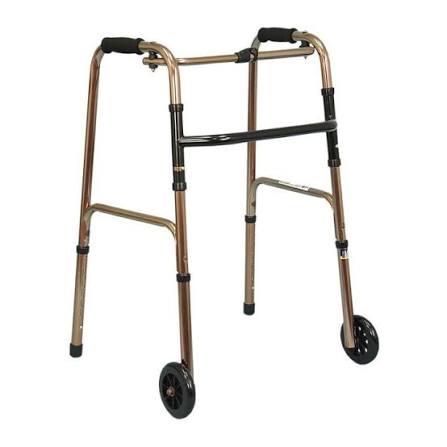
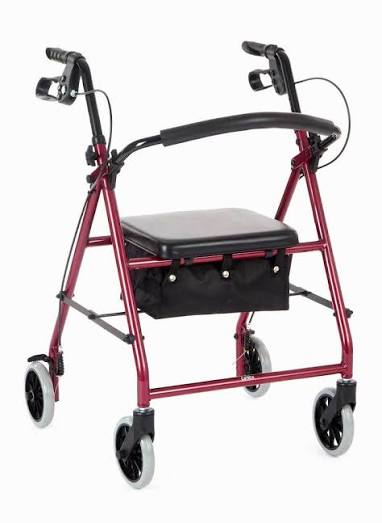
A Walker vs Rollator comparison comes down to how much support, control, and freedom of movement a person needs. A standard walker usually has fixed legs or two front wheels, while a rollator has three or four wheels and hand brakes.
For seniors, the choice is not simply about which design has more features. A walker may provide a more stable feel for someone who needs strong support. A rollator may be easier for someone who wants to move farther, go outdoors, or take regular rest breaks. Cleveland Clinic describes a rollator as an all-wheeled walker commonly used outdoors and for activities such as shopping.
Quick Comparison
A standard walker is generally the better fit when stability and controlled movement are the main goals. A rollator can make walking smoother and more convenient when the user can safely manage wheels and hand brakes.
The key difference is simple: a walker emphasizes support and control, while a rollator emphasizes mobility and movement.
Walker vs Rollator At a Glance
The table below highlights the main differences that matter in everyday senior use.
| Feature | Walker | Rollator |
|---|---|---|
| Stability | Very strong | Good, but more mobile |
| Wheels | None or two | Usually three or four |
| Brakes | Usually not needed | Hand brakes |
| Seat | Usually no | Often included |
| Storage | Limited | Often has basket or pouch |
| Outdoor use | Good with suitable model | Often convenient |
| Movement | Slower and controlled | Smoother and faster |
| Best suited for | Maximum support | Mobility and longer walks |
Standard Walker for Seniors: Key Benefits
A standard walker is designed to give the user a stable frame to hold while walking. It may have four fixed rubber feet or two wheels at the front with rubber tips at the back.
For someone who needs substantial support, the fixed four-point design can provide a strong sense of stability. It can also be useful indoors where movement is controlled and floors are relatively even.
Ease of Use
A basic walker does not require the user to operate hand brakes. With a fixed walker, the user lifts the frame, places it ahead, and steps forward. A two-wheeled walker can be pushed or slid forward instead.
Proper height adjustment matters. Cleveland Clinic recommends positioning the handles around wrist level when the arms are slightly bent.
Key Strengths
- Strong support during walking
- Simple design
- No brake system to learn
- Useful for controlled indoor movement
- Four-point models provide substantial stability
- Many models are height adjustable
Potential Drawbacks
- A fixed walker must be lifted with each step
- Movement can be slower
- Carrying or transporting it may be less convenient
- It may be less practical for longer outdoor walks
- Most models do not provide a built-in seat
Rollator for Seniors: Key Benefits
A rollator is a wheeled mobility aid with three or four wheels. Many models also include hand brakes, a seat, and storage.
This design can make everyday movement feel more natural because the user pushes the rollator rather than repeatedly lifting a frame.
Ease of Use
A rollator can be easier to move over longer distances because its wheels roll continuously. The user can also use the brakes to control or stop the device.
However, that extra mobility means the user needs to understand how the brakes work and how to control the rolling frame. A rollator is not automatically safer simply because it has more wheels.
Key Strengths
- Smooth rolling movement
- Often easier for longer walks
- Useful for outdoor activities
- Hand brakes provide speed and stopping control
- Many models include a seat
- Storage can make shopping or errands easier
Potential Drawbacks
- Requires proper brake use
- Rolling wheels may feel less stable to some users
- More features can mean a larger learning curve
- Seats and baskets can add size and weight
- Not every rollator is suitable for every user’s balance needs
Which Is Easier for Seniors to Use?
Ease of use depends heavily on the person’s strength, balance, walking ability, and environment.
A walker may be easier for someone who wants a simple frame and does not want to manage brakes. A rollator may be easier for someone who has enough control to steer and brake but finds lifting a walker tiring.
Research reviewed by the Canadian Agency for Drugs and Technologies in Health found limited-quality evidence suggesting that people using wheeled walkers could cover longer distances and use less energy than those using fixed-frame walkers. The evidence was limited, so it should not be treated as proof that a rollator is better for every person.
The right mobility aid depends on the person’s needs, not simply the number of wheels.
Performance Comparison
The biggest performance difference is how each device moves with the user.
A fixed walker requires the user to lift and place the frame. A two-wheeled walker reduces this effort because the front wheels allow the frame to slide forward. A rollator goes further by placing wheels on all legs and adding steering and braking.
| Performance Area | Walker | Rollator |
|---|---|---|
| Short indoor movement | Excellent fit | Good |
| Longer walking | More effort | Often easier |
| Outdoor errands | Less convenient | Often more convenient |
| Controlled movement | Strong | Moderate to strong |
| Rest breaks | Usually requires separate seat | Many models include a seat |
| Steering | Limited | More flexible |
For users who can safely manage a wheeled device, the rollator may make longer walking sessions less tiring. For users who need maximum control, a standard walker may be more appropriate.
Comfort, Accessibility, and Senior-Friendly Design
Comfort is about more than padding or a seat. The device should fit the user’s height and be practical in the places where it will be used.
A walker can be appealing because its controls are simple. A rollator can offer more convenience through brakes, storage, and a seat, but those features require additional handling.
The National Institute on Aging recommends making sure a walker is the right size and notes that a physical or occupational therapist can help determine which device is appropriate and teach safe use.
Features Comparison
The useful features are quite different between these two mobility aids.
| Feature | Walker | Rollator |
|---|---|---|
| Fixed support | Strong | Less fixed |
| Hand brakes | Usually no | Yes |
| Seat | Rare | Common |
| Storage | Limited | Common |
| Steering | Basic | Better |
| Folding | Common on many models | Common on many models |
| Outdoor mobility | Model dependent | Often a major advantage |
A rollator’s extra features can improve convenience, but they should not replace the need for proper fit and safe handling.
Price, Maintenance, and Long-Term Value
Price varies widely by model, materials, weight capacity, wheel design, and added features. Because prices change by retailer and model, it is better to compare the total ownership package rather than rely on one temporary price.
| Cost Factor | Walker | Rollator |
|---|---|---|
| Basic design | Usually simpler | More components |
| Replacement parts | Feet or wheels may need replacement | Wheels, brakes, and other parts may need service |
| Accessories | Usually fewer | Often more |
| Maintenance | Generally simple | Brake and wheel checks matter |
| Long-term value | Strong for basic support | Strong when mobility features are useful |
A cheaper device is not necessarily the better value. If a rollator’s seat, storage, and wheels are used regularly, those features may justify its added complexity.
Who Should Choose a Walker?
Choose a walker if:
- Stability is the main priority.
- The user prefers a simple design.
- Hand brakes may be difficult to manage.
- Most walking happens indoors.
- The user benefits from a controlled walking pace.
- A healthcare professional has recommended a walker for the person’s needs.
Who Should Choose a Rollator?
Choose a rollator if:
- The user can safely control wheels and hand brakes.
- Longer walks are part of daily life.
- Outdoor mobility matters.
- A built-in seat would be useful.
- Storage for small personal items is helpful.
- The user wants smoother movement without repeatedly lifting a frame.
Walker vs Rollator — Final Verdict
There is no universal winner in the Walker vs Rollator comparison. The two devices solve slightly different problems.
Best for maximum stability: Walker
Best for longer, smoother walking: Rollator
Best for built-in rest seating: Rollator
Best for simple operation: Walker
Best for outdoor mobility and errands: Rollator
The most important factor is whether the user can safely control the device. More wheels and more features do not automatically make a mobility aid suitable.
Scoring Summary
Because walkers and rollators are designed for somewhat different needs, scores are most useful as a practical comparison rather than a universal ranking.
| Category | Walker | Rollator |
|---|---|---|
| Stability | 9/10 | 7/10 |
| Ease of basic operation | 9/10 | 8/10 |
| Outdoor mobility | 6/10 | 9/10 |
| Convenience | 7/10 | 9/10 |
| Long-distance walking | 6/10 | 9/10 |
| Feature flexibility | 6/10 | 9/10 |
These scores reflect the design differences discussed above, not clinical testing or a medical recommendation.
How We Evaluate Products
For mobility aids, the comparison focuses on practical factors that can affect everyday use:
- Stability
- Ease of movement
- Controls
- Physical effort
- Comfort
- Outdoor usability
- Storage
- Maintenance
- Safety
- Overall practicality
No hands-on testing is claimed here. The comparison is based on product-type characteristics and available evidence.
Senior-Specific Buying Considerations
Before choosing between a walker and rollator, consider these points.
Physical Effort
Think about whether the user can comfortably lift, push, steer, and stop the device.
Controls
A rollator requires the user to understand and operate its brakes. Make sure the controls are easy to reach and use.
Storage
Check whether the device will fit through doors, in a vehicle, and in the home’s normal storage space.
Setup
Make sure the height can be adjusted correctly. Poor fit can affect how the device supports the user.
Safety
The device should match the user’s walking ability and environment. If the correct choice is unclear, a healthcare professional or physical or occupational therapist can help assess the appropriate mobility aid.
Common Buying Mistakes
Avoid these common mistakes when choosing between a walker and rollator:
- Choosing based only on price
- Ignoring correct height adjustment
- Buying a rollator without considering brake control
- Choosing a walker without considering where it will be used
- Ignoring the device’s size and storage needs
- Assuming more wheels always mean better support
Safety
A mobility aid should improve safe movement, not create another obstacle.
Keep pathways clear of loose rugs, cords, puddles, and other hazards. Cleveland Clinic also advises users not to pull themselves up from a chair using the walker.
The National Institute on Aging recommends using the correct-size assistive device and having a healthcare professional check borrowed equipment to make sure it is appropriate and safe.
If a person has significant balance problems, recent falls, weakness, or uncertainty about which mobility aid to use, professional guidance is appropriate.
Conclusion
The main difference between a walker and rollator is the balance between stability and mobility. A standard walker offers a simple, controlled frame, while a rollator provides smoother rolling movement plus features such as brakes, seating, and storage.
For seniors, the right choice depends on how the device will be used and whether the person can control it safely. When in doubt, proper fitting and professional guidance matter more than simply choosing the device with the most features.