
Trivia Questions for Senior Citizens


Adjustable Bed Frame

Reacher Grabber Tool

Upright Walker
Trivia questions for senior citizens are more than just a game—they’re a way to celebrate life, preserve memory, and bring people together. These thoughtfully designed quizzes tap into rich personal histories, cultural touchstones, and historical milestones, making them ideal for social engagement, cognitive stimulation, and emotional connection. Whether used in community centers, retirement homes, or at home with family, trivia offers a joyful, low-pressure activity that honors the wisdom and experiences of older adults.
Key Takeaways
- Memory and cognition: Trivia games help maintain mental agility by encouraging recall, pattern recognition, and information processing.
- Social connection: Playing trivia fosters interaction, reduces isolation, and strengthens bonds among peers and family members.
- Nostalgia-driven design: Questions are crafted around familiar eras, music, movies, and events that resonate with seniors’ lived experiences.
- Adaptable difficulty: Trivia can be tailored to individual abilities, ensuring inclusivity for those with varying cognitive levels.
- Accessibility: Simple formats—like printable cards or digital apps—make it easy to host at home, in clubs, or care facilities.
- Emotional well-being: Successfully answering questions boosts confidence and provides a sense of accomplishment and purpose.
- Educational value: Beyond fun, trivia serves as a gentle refresher on history, pop culture, and general knowledge.
📑 Table of Contents
- Why Trivia Matters for Senior Citizens
- Crafting the Perfect Trivia Game
- Top Categories for Senior-Friendly Trivia
- Hosting Trivia Night Like a Pro
- Benefits Beyond the Fun
- Sample Round: Trivia Questions for Senior Citizens
- Resources & Tools to Get Started
- Conclusion: Celebrating Life One Question at a Time
Why Trivia Matters for Senior Citizens
Have you ever noticed how a simple question like “What was your favorite song in 1957?” can instantly light up a room full of seniors? That’s the magic of trivia—it doesn’t just test memory; it unlocks stories, laughter, and shared joy. For senior citizens, who have lived through transformative decades, trivia isn’t just entertainment—it’s a celebration of life, history, and identity.
As we age, staying mentally active becomes even more important. Cognitive health is closely linked to emotional well-being, and activities like trivia offer both. When seniors engage with questions about their youth, wartime experiences, or beloved television shows, they’re not just remembering facts—they’re revisiting meaningful moments. This kind of reminiscence therapy has been shown to reduce anxiety, improve mood, and even slow cognitive decline.
Moreover, trivia brings people together. Whether it’s a weekly game night at a senior center or a family gathering where grandkids join in, these moments create lasting connections. The best part? Trivia is inclusive. It doesn’t require speed or physical ability—just curiosity and a willingness to participate. With the right mix of topics and difficulty levels, anyone can enjoy a round of trivia questions for senior citizens.
Crafting the Perfect Trivia Game
Visual guide about Trivia Questions for Senior Citizens
Image source: worksheets.clipart-library.com
Creating effective trivia for seniors means more than just picking random facts. It requires thoughtfulness, sensitivity, and an understanding of what truly engages older adults. Let’s break down the key elements that make trivia enjoyable and meaningful.
Choose Topics That Resonate
The heart of any great trivia game lies in its content. Seniors connect most deeply with subjects tied to their personal history. Think about major life stages: childhood, career years, marriage, parenthood, and retirement. Include themes like:
– Classic films and TV shows from the 1940s–1980s
– Music from different decades (jazz, rock ‘n’ roll, Motown)
– Historical events (World War II, civil rights movement, moon landing)
– Food trends and recipes from past eras
– Local landmarks and hometown memories
For example, instead of asking “Who invented the telephone?” try “When was the first time you heard a record player in your house?” The latter invites storytelling and personal reflection.
Adjust Difficulty Levels
Not all seniors have the same level of recall or interest in specific topics. A well-designed trivia set includes questions across three tiers:
– **Easy**: “What year did World War II end?” (1945)
– **Medium**: “Which president was in office during the Cuban Missile Crisis?” (John F. Kennedy)
– **Challenging**: “Name three songs played on the radio the day JFK was assassinated.”
This structure ensures everyone can participate without feeling overwhelmed or excluded. You can even let players choose their own difficulty level before each round.
Use Visual and Audio Clues
Visual aids like old photos, movie stills, or album covers go a long way. Showing a black-and-white photo of soldiers returning home might prompt someone to say, “That’s exactly how my uncle looked when he came back from Europe.” Audio clips—like a snippet of Frank Sinatra singing “My Way”—can trigger instant recognition and discussion.
Top Categories for Senior-Friendly Trivia
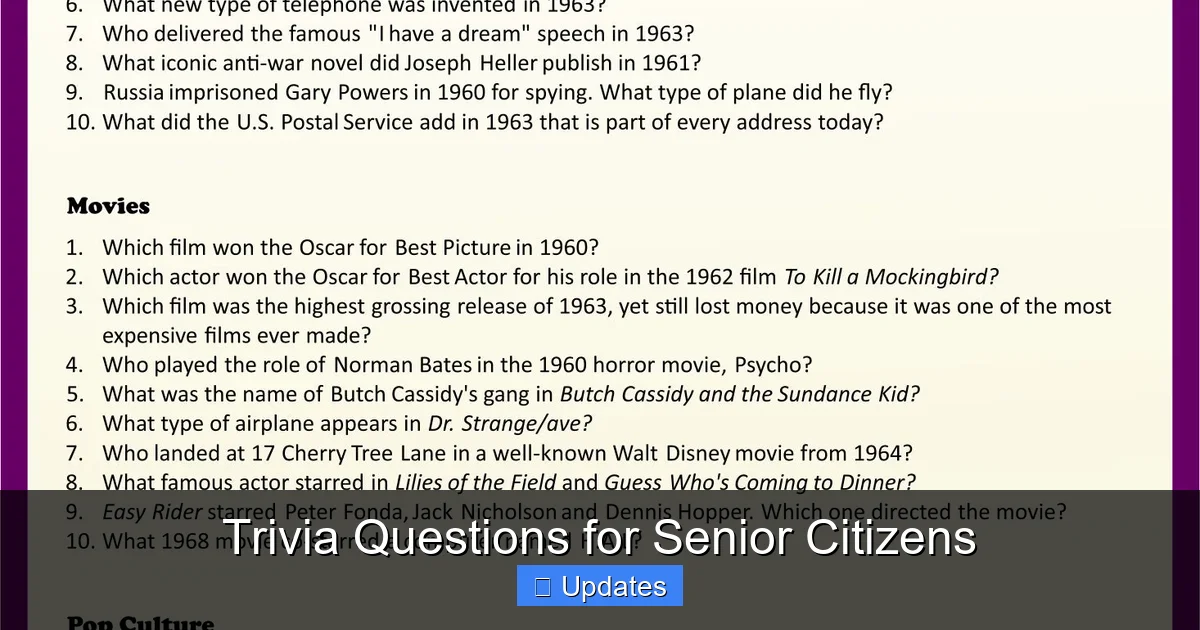
Visual guide about Trivia Questions for Senior Citizens
Image source: printable-questions.com
To keep things fresh and engaging, organize your trivia into themed rounds. Here are six popular categories that consistently delight seniors:
Classic Hollywood & Television
Older adults grew up watching iconic actors and shows. Questions in this category might include:
– “Which actress played Mary Poppins?” (Julie Andrews)
– “What was the name of the dog on ‘Lassie’?” (Butch)
– “In what year did ‘I Love Lucy’ first air?” (1951)
Bonus tip: Pair questions with clips from famous scenes or play background music from the era. This immersive approach deepens engagement.
Music Through the Decades
Music is a powerful emotional trigger. Create playlists alongside your questions. For instance:
– 1940s–50s: Glenn Miller, Ella Fitzgerald, Elvis Presley
– 1960s: The Beatles, Aretha Franklin, Bob Dylan
– 1970s: Fleetwood Mac, ABBA, James Taylor
Ask: “What was your first dance song?” or “Which band did you listen to on your transistor radio?”
World Events & History
History isn’t just dates and names—it’s lived experience. Frame questions to reflect real-life impact:
– “How did rationing affect your family during WWII?”
– “Did you vote in the first televised presidential debate? Who was running?” (Kennedy vs. Nixon, 1960)
These prompts encourage dialogue beyond right or wrong answers.
Food & Family Traditions
Food brings families together. Ask about holiday meals, favorite dishes, or cooking techniques from the past:
– “What dessert did your mother always make for Thanksgiving?”
– “Did you grow up eating canned peaches every Sunday? Why?”
This category often leads to recipe exchanges and kitchen stories.
Sports & Leisure Activities
From backyard baseball to bowling leagues, sports shaped many seniors’ free time. Try:
– “Who won the Super Bowl in your birth year?”
– “What was the most popular arcade game in 1985?” (Pac-Man)
Include local team trivia too—like “Which city hosted the 1968 Olympics?” if that’s where your group is from.
Geography & Travel Memories
Travel has changed dramatically over the decades. Ask:
– “Where did you go on your honeymoon?”
– “What was the first airplane you ever rode in like?”
For groups near national parks or historic sites, add regional landmarks.
Hosting Trivia Night Like a Pro
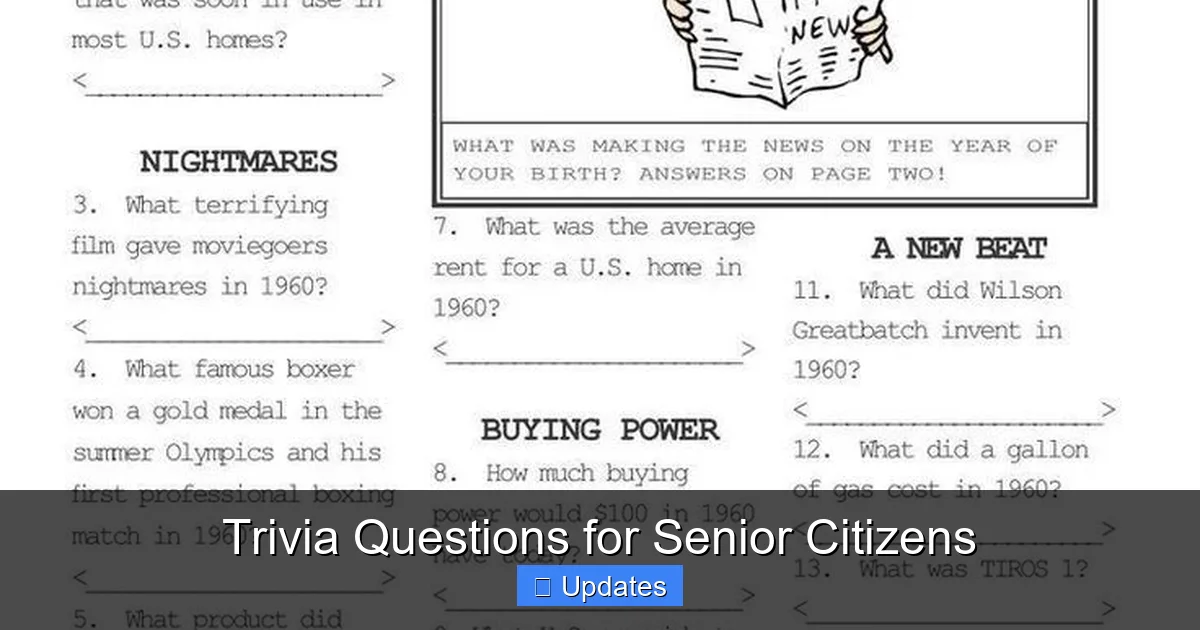
Visual guide about Trivia Questions for Senior Citizens
Image source: triviaquestions-answers.com
Running a successful trivia event takes planning, but it doesn’t have to be complicated. Follow these practical tips to ensure smooth sailing:
Pick the Right Setting
You don’t need a big hall—just a quiet space with good lighting and comfortable seating. Community centers, libraries, churches, or even living rooms work perfectly. Make sure chairs are supportive and tables are stable for writing or placing phones.
If hosting remotely, use Zoom or Google Meet with screen sharing for images and audio.
Keep It Social, Not Competitive
Avoid turning trivia into a contest unless everyone agrees. Instead, focus on teamwork and camaraderie. Divide players into small groups of 3–5 so quieter individuals aren’t left out. Award participation prizes—not just winners—to keep morale high.
Consider offering non-food rewards like commemorative pins or certificates.
Time It Well
Seniors may tire easily, so limit sessions to 60–90 minutes max. Schedule breaks every 20–30 minutes for stretching, hydration, or casual chat. End on a high note—maybe with a favorite song or group cheer.
Prepare Ahead
Print out question cards, prepare audio files, and test tech setups beforehand. Have backup questions ready in case someone finishes early. And don’t forget snacks! Light refreshments like tea, coffee, cookies, or fruit trays enhance the experience.
Benefits Beyond the Fun
While trivia is undeniably entertaining, its advantages extend far beyond recreation. Research supports what caregivers and families already know: regular mental stimulation improves quality of life.
Cognitive Health Benefits
Engaging in trivia activates multiple areas of the brain—memory, attention, language, and reasoning. A study published in *Neurology* found that people who engaged in mentally stimulating activities had a 38% lower risk of developing dementia. Even if someone already has early cognitive changes, structured games like trivia can help maintain function longer.
Emotional and Psychological Impact
Positive social interactions reduce feelings of loneliness and depression—a growing concern among older adults. Trivia provides a safe, low-stakes environment to share stories, laugh, and feel valued. When someone says, “Oh yes! I remember that concert!” it reinforces their sense of self-worth.
Lifelong Learning
Trivia encourages curiosity. After playing a round about the Great Depression, a participant might ask, “How did people afford school lunches back then?” This sparks further learning and keeps minds active.
Family Bonding
Grandchildren love hearing about “the old days.” Involving younger generations in trivia creates intergenerational bridges. You could even create a “Junior Trivia” version for kids using simpler questions—like “What color were your toys in the 1970s?”
Sample Round: Trivia Questions for Senior Citizens
Here’s a sample trivia set you can use immediately. Mix and match based on your audience’s interests.
Round 1: Classic Movies & TV
- Which actor played Tony in “West Side Story”? (Richard Beymer)
- What was the name of the ship in “Titanic”? (RMS Titanic)
- In what year did “The Tonight Show” first air with Jack Paar? (1957)
Round 2: Music & Dance
- Who sang “Unchained Melody” in the movie “Ghost”? (Jim Henson’s puppets, but originally performed by The Righteous Brothers)
- What dance craze took over in 1964? (The Twist)
- Which instrument did Duke Ellington famously play? (Piano)
Round 3: Historical Milestones
- What year did the Berlin Wall fall? (1989)
- Who was the first African American to win the Nobel Prize in Literature? (Toni Morrison, 1993)
- What invention revolutionized communication in the 1920s? (The telephone became widely available)
Round 4: Food & Home Life
- What brand of peanut butter was advertised with the slogan “Peanut Butter Fights Fatigue”? (Skippy)
- Before microwaves, how did people reheat leftovers? (Oven or stovetop)
- What was the name of the fictional town in “Leave It to Beaver”? (Mayfield)
Round 5: Sports & Recreation
- Which team won the first Super Bowl? (Green Bay Packers)
- What sport did Babe Ruth play professionally? (Baseball)
- Who was the first woman to run a sub-four-minute mile? (Wilma Rudolph, 1960)
Remember: the goal isn’t perfection—it’s connection. If someone guesses wrong, applaud anyway. Laughter builds community.
Resources & Tools to Get Started
You don’t have to build everything from scratch. Several excellent resources exist to help you launch your trivia program:
Online Platforms
Websites like TriviaFever.com and QuizMaster.org offer printable senior-focused sets. Many are free or low-cost and include answer keys.
Books & Workshops
Look for books titled “Trivia for the Over 60s” or attend workshops at local senior centers. Some community colleges even offer “Brain Fitness” classes that incorporate trivia.
Community Partnerships
Collaborate with libraries, retirement communities, or nonprofit organizations that serve seniors. They often have funding, venues, and audiences ready to participate.
If you’re looking for additional ways to support active aging, check out our guide on fun games for senior citizens—many overlap with trivia themes and can be played together.
Conclusion: Celebrating Life One Question at a Time
Trivia questions for senior citizens are much more than a game—they’re a tribute to a lifetime of experiences. Each correct answer is a thread connecting past and present, individual and community. In a world that sometimes moves too fast, trivia offers a pause button for reflection, remembrance, and reunion.
Whether you’re organizing a monthly game night, training volunteers at a care facility, or simply spending quality time with loved ones, trivia brings joy, purpose, and belonging. It reminds us that no matter how many candles are on the cake, there’s always something new to learn, someone to teach, and stories waiting to be told.
So grab a deck of cards, queue up some classic tunes, and start asking those questions. Because every answer is a window into a life well-lived—and that’s worth celebrating.
Frequently Asked Questions
Are trivia games good for seniors’ mental health?
Yes, trivia stimulates memory, attention, and language skills, which helps maintain cognitive function. It also promotes social interaction, reducing loneliness and boosting mood through shared experiences.
How often should seniors play trivia?
Once or twice a week is ideal for cognitive benefits. Shorter, frequent sessions are better than long, infrequent ones, especially if attention spans vary.
Can trivia be adapted for people with mild cognitive impairment?
Absolutely. Use simpler language, larger fonts, visual cues, and allow more time to answer. Focus on positive reinforcement rather than accuracy.
Do I need special equipment to host trivia?
No. All you really need is paper, pens, and a list of questions. Optional extras include timers, score sheets, music players, and printed images for visual prompts.
Where can I find free trivia questions for seniors?
Many websites like TriviaFever.com, QuizMaster.org, and senior center newsletters offer downloadable sets. Libraries and Alzheimer’s associations also distribute resources.
How do I involve grandchildren in senior trivia?
Create a “family edition” with mixed-age questions. Grandkids can help research answers or act as scorekeepers. Emphasize teamwork over competition.