
TENS vs EMS for Seniors: Which Is Better?


Back Massager with Heat

Leg Massager for Circulation

Fall Detection Smart Watch
TENS vs EMS can be confusing because both use small electrical pulses and sticky electrode pads. But they are designed for different jobs. TENS mainly targets nerves and is commonly used for temporary pain relief. EMS targets muscles and is used to create muscle contractions.
For seniors, the better choice depends less on age and more on the reason for using electrical stimulation. If pain relief is the main goal, TENS may make more sense. If the goal involves activating or strengthening a weak muscle during rehabilitation, EMS may be more suitable.
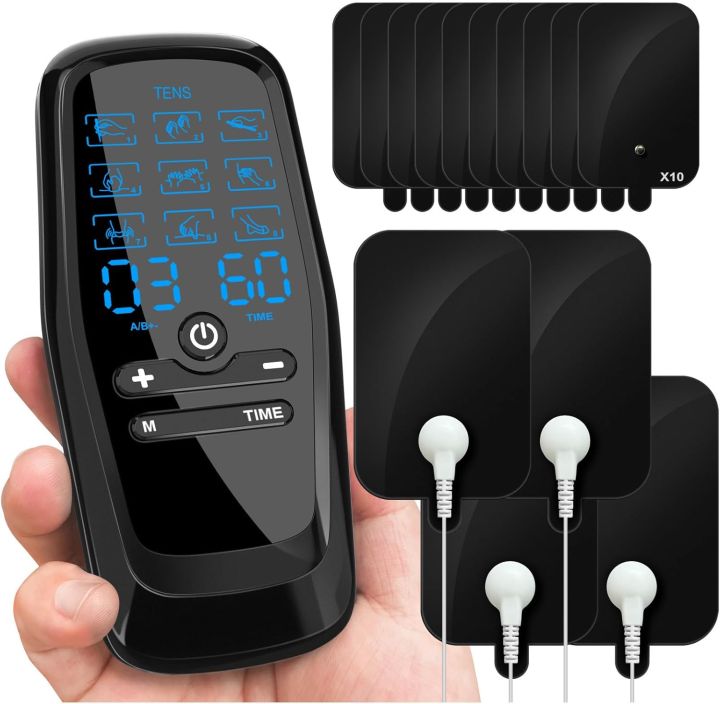
Quick Comparison
For most people looking for pain relief, TENS is the more relevant option. It sends mild electrical impulses through the skin to stimulate nerves and may reduce the perception of pain.
EMS is different. It is designed to stimulate muscles and produce contractions. It is often used in rehabilitation when a muscle is weak or has been underused.
So there is no universal winner. TENS is better for pain-focused use, while EMS is better for muscle-focused stimulation.
TENS vs EMS At a Glance
The biggest difference is what each device is trying to stimulate.
| Feature | TENS | EMS |
|---|---|---|
| Main target | Nerves | Muscles |
| Main purpose | Pain management | Muscle activation |
| Muscle contraction | Usually not the goal | Yes |
| Typical sensation | Tingling | Muscle twitch or contraction |
| Senior use | Pain-focused needs | Rehabilitation-focused needs |
| Portability | Usually portable | Usually portable |
| Electrode pads | Yes | Yes |
TENS Review: A Pain-Focused Option
TENS is a small, battery-powered electrical stimulation device that uses electrodes placed on the skin. Its electrical pulses stimulate nerves and may help reduce pain signals or change how pain is perceived.
For a senior comparing the two options, TENS is the simpler concept to understand if the main concern is pain rather than muscle weakness.
Ease of Use
TENS units are generally compact and use a control unit, wires, and adhesive pads. The pads are placed on clean skin near the painful area, and the intensity is increased gradually until the stimulation feels strong but comfortable.
That setup may be manageable for many people. However, placing small adhesive pads correctly can require some hand control. Someone with limited dexterity may find this easier with assistance.
Key Strengths
- Designed primarily for pain relief
- Small and portable
- Battery powered on many models
- Adjustable stimulation
- Does not normally aim to create strong muscle contractions
- Can be used at home when appropriate
Potential Drawbacks
- It does not work equally well for everyone.
- Electrode placement matters.
- Adhesive pads can irritate sensitive skin.
- The tingling sensation may feel unpleasant to some users.
- It is not appropriate for everyone with a medical condition.
EMS Review: A Muscle-Focused Option
EMS uses electrical impulses to stimulate muscles. Unlike TENS, the purpose is to create a muscle response rather than primarily change the perception of pain. Clinical guidance describes EMS as a tool used to stimulate muscles, including during rehabilitation after nerve injury or periods of reduced muscle use.
Ease of Use
EMS can look very similar to TENS because both may use a small control unit and adhesive electrodes. The difference is in the settings, electrode placement, and intended response.
EMS settings can control factors such as pulse frequency, pulse width, and amplitude. Stronger stimulation can produce a stronger muscle contraction.
That makes EMS more specialized. For someone simply looking for a basic pain-relief device, the extra muscle-focused settings may not offer much benefit.
Key Strengths
- Designed to stimulate muscles
- Can support certain rehabilitation programs
- Useful when muscle activation is the main goal
- Can produce controlled muscle contractions
- May help with muscle strength or bulk in appropriate rehabilitation settings
Potential Drawbacks
- Muscle contractions may feel unusual or uncomfortable.
- Correct electrode placement is important.
- The settings can be more complicated than a basic pain-relief routine.
- It may not be the right choice when pain relief is the only goal.
- Medical or rehabilitation guidance may be appropriate for certain users.
Which Is Easier for Seniors to Use?
Neither device is automatically easier for every senior. The answer depends on the user’s goal, dexterity, comfort, and familiarity with electrical stimulation.
TENS may feel simpler when the goal is pain management. The user generally adjusts the intensity until a comfortable tingling sensation is reached.
EMS can require more attention to the target muscle and stimulation settings. That may make it better suited to someone who has been shown how to use it as part of a rehabilitation plan.
The easiest device is usually the one that matches the user’s actual goal.
For anyone with limited hand strength or dexterity, the size of the controls, clarity of the display, electrode handling, and pad placement may matter more than the TENS or EMS label itself.
Performance Comparison
The two devices should be judged by different performance standards.
TENS is intended to provide electrical stimulation to nerves. Its success is mainly about whether the user gets useful pain relief without an uncomfortable sensation. TENS does not work for everyone, and pain relief can vary from person to person.
EMS is judged more by its ability to create an appropriate muscle response. Clinical EMS guidance describes adjustable frequency, pulse width, and amplitude, with settings affecting the strength and comfort of the resulting contraction.
| Performance Area | TENS | EMS |
|---|---|---|
| Pain-focused use | Stronger fit | Not the main purpose |
| Nerve stimulation | Yes | Not the primary goal |
| Muscle contraction | Usually not the goal | Main function |
| Rehabilitation | Sometimes relevant | Stronger fit |
| Personal comfort | Tingling should be tolerable | Contraction should remain tolerable |
Comfort, Accessibility, and Senior-Friendly Design
Comfort matters with both options because electrodes sit directly on the skin.
TENS usually produces a tingling sensation. NHS guidance recommends increasing the current gradually and keeping it at a level that is not painful.
EMS can create visible or noticeable muscle contractions. For someone unfamiliar with electrical stimulation, that sensation may take some getting used to.
Seniors who have sensitive skin should also consider the adhesive electrodes. Skin irritation can occur, and damaged or irritated skin should not be used for TENS.
Accessibility also includes the controller. Large, clear buttons and an easy-to-read display can make either type easier to manage.
Features Comparison
The most useful features depend on what the device is supposed to accomplish.
| Feature | TENS | EMS |
|---|---|---|
| Adjustable intensity | Common | Common |
| Electrode pads | Yes | Yes |
| Multiple stimulation settings | Often | Often |
| Nerve-focused stimulation | Yes | No |
| Muscle-focused stimulation | No | Yes |
| Portable design | Common | Common |
More settings are not automatically better. For a senior, a simple control layout may be more useful than a device packed with advanced modes.
Price, Maintenance, and Long-Term Value
The price of TENS and EMS devices varies widely by model, brand, number of channels, included accessories, and controls. Because prices change, it is better to compare the total ownership cost rather than rely on a single price.
Check the cost and availability of replacement electrode pads. Also look at battery requirements and whether the controller is easy to store.
The best value is not necessarily the cheaper device. If someone needs pain-focused stimulation, an inexpensive EMS unit may still be poor value because it does not match the intended purpose.
Likewise, someone following a rehabilitation plan may get more practical value from EMS than from a TENS device, even if TENS costs less.
Who Should Choose TENS?
- Choose TENS when pain relief is the main reason for using electrical stimulation.
- Choose TENS if a simple, portable pain-management device fits your needs.
- Consider TENS when you prefer a tingling sensation rather than deliberate muscle contractions.
- Ask a healthcare professional for guidance if you have a medical condition that could affect safe use.
Who Should Choose EMS?
- Choose EMS when muscle stimulation is the main goal.
- Consider EMS when it is being used as part of an appropriate rehabilitation plan.
- Choose EMS when controlled muscle contractions are desired.
- Get professional guidance when muscle weakness or nerve injury is involved.
TENS vs EMS — Final Verdict
Best for pain-focused use: TENS
Best for muscle stimulation: EMS
Best for rehabilitation-focused muscle activation: EMS
Best for a pain-management goal: TENS
There is no meaningful overall winner because TENS and EMS are designed for different purposes. TENS focuses on nerves and pain perception, while EMS focuses on muscles and muscle contraction.
Scoring Summary
A simple score can be misleading here because the devices are not designed for exactly the same job. Still, their relative fit for common senior needs can be summarized this way.
| Category | TENS | EMS |
|---|---|---|
| Pain-focused use | 9/10 | 4/10 |
| Muscle stimulation | 4/10 | 9/10 |
| Simple pain-management fit | 9/10 | 5/10 |
| Rehabilitation fit | 6/10 | 9/10 |
| General senior practicality | 8/10 | 7/10 |
These are editorial comparison scores, not clinical ratings. They reflect how closely each type of stimulation matches the stated use.
How We Evaluate Products
This comparison focuses on the practical factors that matter when choosing between two electrical stimulation types.
The main criteria are intended use, ease of operation, comfort, accessibility, safety, performance, maintenance, and long-term practicality.
No hands-on testing or laboratory testing is being claimed here. The comparison is based on the described functions and current clinical guidance.
Senior-Specific Buying Considerations
Before choosing either type, consider the reason for using it.
Physical Effort
TENS and EMS both require handling electrode pads and connecting leads. Consider whether the user can manage these tasks comfortably.
Controls
Look for controls that are easy to read and adjust. A complicated interface can make an otherwise useful device frustrating.
Maintenance
Check whether electrode pads need regular replacement and whether the device is easy to keep clean and organized.
Setup
Electrode placement matters. If the correct placement is difficult to understand, professional instruction may be useful.
Safety
Electrical stimulation is not appropriate for everyone. For example, NHS guidance advises against TENS for people with pacemakers, epilepsy, and pregnancy unless a healthcare professional specifically advises otherwise.
EMS also has important precautions. Clinical guidance lists situations such as pacemakers, heart problems, pregnancy, unstable fractures, local infection, and certain skin or implant concerns as reasons to avoid or seek professional advice before use.
Common Buying Mistakes
- Choosing EMS simply because it sounds more powerful.
- Choosing TENS when the actual goal is muscle rehabilitation.
- Ignoring electrode placement instructions.
- Focusing only on the number of stimulation modes.
- Overlooking replacement electrode costs.
- Using electrical stimulation without checking whether it is appropriate for an existing medical condition.
Safety
Electrical stimulation should be treated as a health-related product, not simply another electronic gadget.
Do not use TENS on irritated, broken, infected, or numb skin, and avoid areas such as the neck, mouth, and eyes. NHS guidance also advises against using TENS while sleeping, bathing, or driving.
EMS has its own precautions and should be used according to the device instructions and, when appropriate, professional guidance.
If you have a pacemaker, heart condition, epilepsy, pregnancy, significant skin problems, an implanted device, or another medical concern, check with an appropriate healthcare professional before using either type.
Frequently Asked Questions
Is TENS or EMS better for pain?
TENS is generally the better match when the primary goal is pain relief. TENS is specifically designed to stimulate nerves and may help reduce the perception of pain.
Does EMS relieve pain like TENS?
EMS is primarily designed to stimulate muscles rather than provide the same pain-focused function as TENS. The two should not be treated as interchangeable devices.
Does TENS build muscle?
Building muscle is not the primary purpose of TENS. TENS focuses mainly on nerve stimulation and pain management.
Does EMS make muscles contract?
Yes. EMS is designed to stimulate muscles and can produce muscle contractions.
Can one device provide both TENS and EMS?
Some electrical stimulation devices combine multiple modes, but the exact functions vary by model. Check the manufacturer’s specifications rather than assuming that a device labeled TENS also provides EMS.
Which one should a senior buy?
Choose based on the goal. TENS is the more relevant choice for pain-focused use, while EMS is more relevant when muscle stimulation or rehabilitation is the goal.
Conclusion
TENS vs EMS is really a comparison between two different purposes. TENS is mainly aimed at nerve stimulation and pain management, while EMS is designed to stimulate muscles and create contractions.
For seniors, the smartest choice is to start with the actual need rather than the device’s features. If pain relief is the priority, TENS may be the better fit. If muscle activation is the goal, EMS may make more sense. When a medical condition or rehabilitation need is involved, professional guidance is the safest way to decide.
