
Portable Nebulizer vs Inhaler for Seniors Guide


Bed Exit Alarm Sensor

Smart Plug with Alexa

Indoor Security Camera
Portable Nebulizer vs Inhaler can be a useful comparison when an older adult needs inhaled medicine. The two devices deliver medicine in different ways. An inhaler is small and fast. A nebulizer turns liquid medicine into a mist that is breathed in through a mouthpiece or mask.
For seniors, the main choice is not simply about size. Breathing technique, hand control, setup, treatment time, cleaning, and portability can all matter. The right option also depends on the medicine prescribed and the device your healthcare professional recommends.
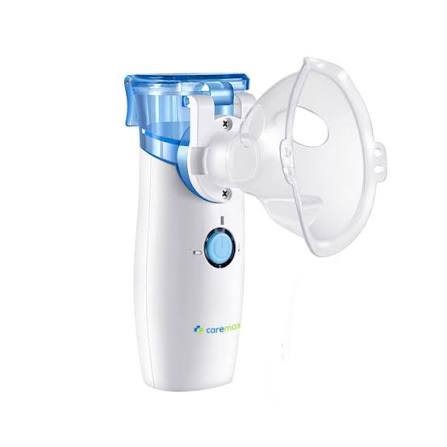
Quick Comparison
For many seniors, a handheld inhaler may be easier for travel and quick use. It is small and can deliver a measured dose in a short time. A portable nebulizer may be easier for someone who has trouble coordinating an inhaler with a breath, since the user can normally breathe the mist through a mouthpiece or mask.
Neither option is automatically better for every senior. Some inhalers can also be used with a spacer, which may make an MDI easier to use correctly.

Portable Nebulizer vs Inhaler At a Glance
These devices can fit different routines. The table below focuses on practical daily use.
| Feature | Portable Nebulizer | Inhaler |
|---|---|---|
| Ease of breathing | Usually normal breathing | Technique may matter |
| Portability | Good, but varies by model | Excellent |
| Treatment time | Often several minutes | Usually very short |
| Setup | More steps | Few steps |
| Cleaning | More regular cleaning | Usually less cleaning |
| Dexterity needs | Often lower during breathing | Can be higher |
| Travel | Less convenient | Very convenient |
| Dose delivery | Depends on prescribed solution/device | Designed for measured doses |
Portable Nebulizer Review for Seniors
A portable nebulizer can appeal to seniors who find inhaler timing hard. It changes liquid medicine into a mist. The user then breathes the mist through a mouthpiece or mask.
Ease of Use
The basic breathing action can be simple. You place the mouthpiece in your mouth or use the mask, turn on the device, and breathe as directed. MedlinePlus notes that nebulizer treatments can take about 5 to 20 minutes, depending on the medicine and device.
That can help a person who struggles with the timing needed for some inhalers. It does, however, mean more setup and cleanup.
Key Strengths
- Can be easier when inhaler timing is difficult.
- Works through a mouthpiece or face mask.
- May suit people who can breathe normally but struggle with device coordination.
- Portable versions can be used away from a fixed home setup.
Potential Drawbacks
- Treatment can take several minutes.
- There are more parts to handle.
- The medicine cup and mouthpiece or mask need regular cleaning.
- It can be less convenient when quick treatment is important.
Inhaler Review for Seniors: Portability and Speed
An inhaler is designed for quick, portable medicine delivery. Many inhalers provide a measured dose and are small enough to carry easily.
Ease of Use
Ease depends on the inhaler type. A metered-dose inhaler may require the user to coordinate breathing with the dose. Incorrect technique can reduce how much medicine reaches the lungs. A spacer can make an MDI easier for some people by giving the medicine more time to be inhaled.
Key Strengths
- Small and easy to carry.
- Quick to use.
- Measured doses are built into many inhaler designs.
- Less equipment is needed during use.
- A spacer may help with MDI technique.
Potential Drawbacks
- Some inhalers require good breathing coordination.
- Different inhaler types have different techniques.
- Poor technique can reduce effective medicine delivery.
- Users need to know when the inhaler needs replacement.
Which Is Easier for Seniors to Use?
The answer depends on what part of use is difficult.
A nebulizer may be easier for a senior who finds it hard to coordinate pressing an inhaler and breathing at the same time. The American Lung Association notes that nebulizers are often used by people who have difficulty with inhalers or cannot inhale deeply enough for some other devices.
An inhaler may be easier for someone who has good technique and wants a fast, simple routine. A spacer may also help some MDI users.
The easiest device is often the one the user can operate correctly and consistently.
Performance Comparison
Both devices can deliver inhaled medicine, but the experience is different.
An inhaler is built for fast delivery and portability. A nebulizer creates a mist from liquid medicine and is used over a longer treatment period. MedlinePlus describes inhalers as smaller and more portable, while nebulizers can be easier to use because the user mainly needs to breathe normally.
The key point is that device type alone does not decide treatment effectiveness. The medicine, device, prescribed dose, and correct technique all matter.
Comfort, Accessibility, and Senior-Friendly Design
Comfort is about more than weight.
An inhaler takes less space and is easier to carry. That can matter for appointments, shopping, or travel. A nebulizer may require a stable place to sit during treatment, even when the unit is portable.
For a senior with limited finger control, an inhaler that requires several precise actions may be harder to manage. For another senior, holding and cleaning a nebulizer may be the more difficult part.
A spacer can be worth discussing with a healthcare professional when MDI coordination is a concern.
Features Comparison
The useful features are different because the devices serve different routines.
| Feature | Portable Nebulizer | Inhaler |
|---|---|---|
| Breathing method | Mist through mouthpiece or mask | Inhaled dose through mouthpiece |
| Coordination | Often less demanding | Can be more demanding |
| Portability | Good | Excellent |
| Treatment routine | Longer | Shorter |
| Cleaning | More involved | Usually simpler |
| Spacer option | Not applicable | Available for many MDIs |
Not every inhaler is the same. Dry powder inhalers and other designs have different instructions, so seniors should follow the exact technique for their prescribed device.
Price, Maintenance, and Long-Term Value
Cost varies by device, medicine, and local coverage, so an exact price comparison would be misleading.
A portable nebulizer can involve the device itself plus medicine cups, masks or mouthpieces, tubing, and filters depending on the model. Cleaning is also part of ownership. MedlinePlus recommends cleaning the medicine cup and mouthpiece after use and following the manufacturer’s instructions for deeper cleaning and filter changes.
An inhaler usually needs less equipment. However, the medicine canister or device still needs to be replaced, and some inhalers require careful cleaning or dose tracking.
Value should be judged by the full routine, not just the purchase price.
Who Should Choose a Portable Nebulizer?
- Choose a portable nebulizer if inhaler timing is difficult.
- Consider it if breathing through a mist feels easier than coordinating a dose.
- It may be useful when a healthcare professional has prescribed a nebulized medicine.
- Consider it when a caregiver can help with setup and cleaning.
- Look for a portable design when home treatments also need to happen away from a fixed location.
Who Should Choose an Inhaler?
- Choose an inhaler when quick and portable use is important.
- Consider it if the user can learn and perform the required technique.
- An inhaler may fit better for seniors who do not want a longer treatment setup.
- Ask about a spacer if using an MDI is difficult.
- Follow the exact instructions for the prescribed inhaler type.
Portable Nebulizer vs Inhaler — Final Verdict
Best for portability: Inhaler
Best for quick use: Inhaler
Best for seniors who struggle with inhaler coordination: Portable nebulizer may be easier
Best for a simpler cleaning routine: Inhaler
Best for normal-breathing delivery: Portable nebulizer may be easier
There is no universal winner. An inhaler often makes more sense for a senior who values speed, small size, and easy carrying. A portable nebulizer may make more sense when inhaler technique is difficult or when a prescribed nebulized medicine is preferred.
Scoring Summary
A fixed 10-point score is not appropriate for this comparison because these are two different delivery methods, and the right choice depends on the prescribed medicine, device type, and user’s ability to use it correctly.
| Category | Portable Nebulizer | Inhaler |
|---|---|---|
| Ease of use | Strong for some users | Strong with correct technique |
| Portability | Good | Excellent |
| Treatment speed | Lower | Higher |
| Cleaning | More work | Usually less work |
| Coordination needs | Often lower | Can be higher |
| Long-term practicality | Depends on routine | Often convenient |
How We Evaluate Products
This comparison focuses on practical senior needs rather than marketing claims.
We look at ease of use, accessibility, physical effort, portability, setup, cleaning, treatment time, and long-term practicality. We also consider whether a feature could help or hinder a senior with limited dexterity or difficulty using a device correctly.
This is a general device comparison, not a hands-on product test. Actual use can vary by medicine, device model, and prescription.
Senior-Specific Buying Considerations
The device should fit the user’s daily routine.
Physical Effort
Think about whether the user can hold the device, position the mouthpiece or mask, and complete the treatment without strain.
Controls
Simple controls can help. Small buttons or complicated steps may be harder for some users.
Maintenance
Nebulizers need regular cleaning. A device that looks convenient may become less convenient if cleaning feels difficult.
Storage
An inhaler is easy to keep in a small bag. A portable nebulizer needs more space for the device and its accessories.
Setup
Check how many steps are required before each use. Fewer steps may be helpful for daily routines.
Safety
Use only the medicine and dose prescribed for the user. Do not assume that medicine prescribed for an inhaler can simply be moved to a nebulizer, or the other way around. Different medicines and devices have different instructions. Ask a doctor or pharmacist before changing the delivery method.
Common Buying Mistakes
- Choosing a device before confirming which medicine it must deliver.
- Focusing only on the device price.
- Ignoring cleaning and storage needs.
- Assuming every inhaler works the same way.
- Choosing a portable nebulizer without considering treatment time.
- Ignoring whether the user can perform the required breathing technique.
Safety
Both devices should be used exactly as directed.
Nebulizers need regular cleaning because dirty parts can allow germs to grow. Tubing and other parts should be cleaned only as directed by the manufacturer or healthcare professional.
For inhalers, correct technique matters. A healthcare professional can check technique and help decide whether a spacer or another device would be appropriate.
A change from an inhaler to a nebulizer should not be treated as a simple device swap. The prescribed medicine and delivery system need to match the treatment plan.
Conclusion
Portable Nebulizer vs Inhaler is really a comparison between two different ways of delivering inhaled medicine. An inhaler is usually smaller, faster, and easier to carry. A portable nebulizer can be easier for seniors who have trouble with inhaler technique and can breathe the mist through a mouthpiece or mask.
The most important choice is not the device that looks simplest on paper. It is the one that matches the prescribed medicine and the user’s ability to use it safely and correctly.
