
Electric Nebulizer vs Manual Inhaler for Seniors

Robot Vacuum Cleaner

Weekly Pill Organizer

Large Print Keyboard
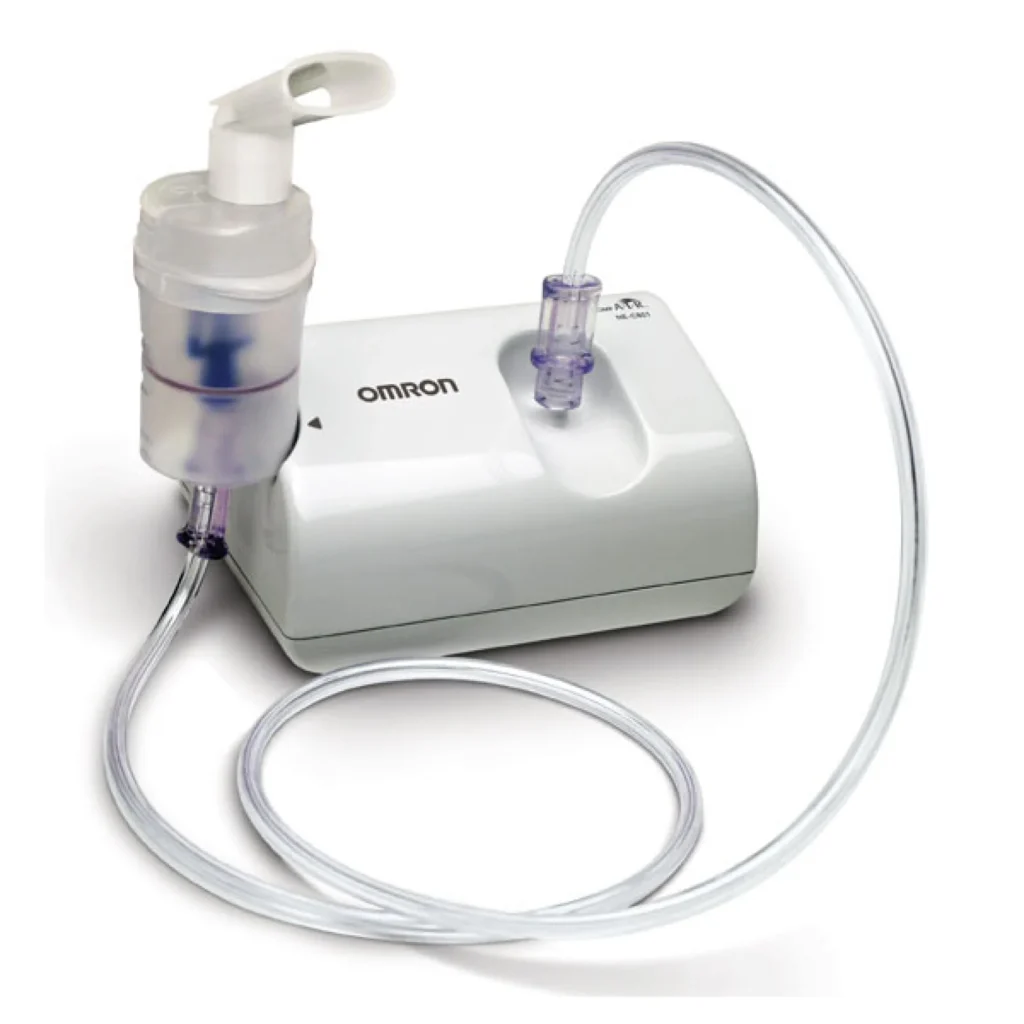
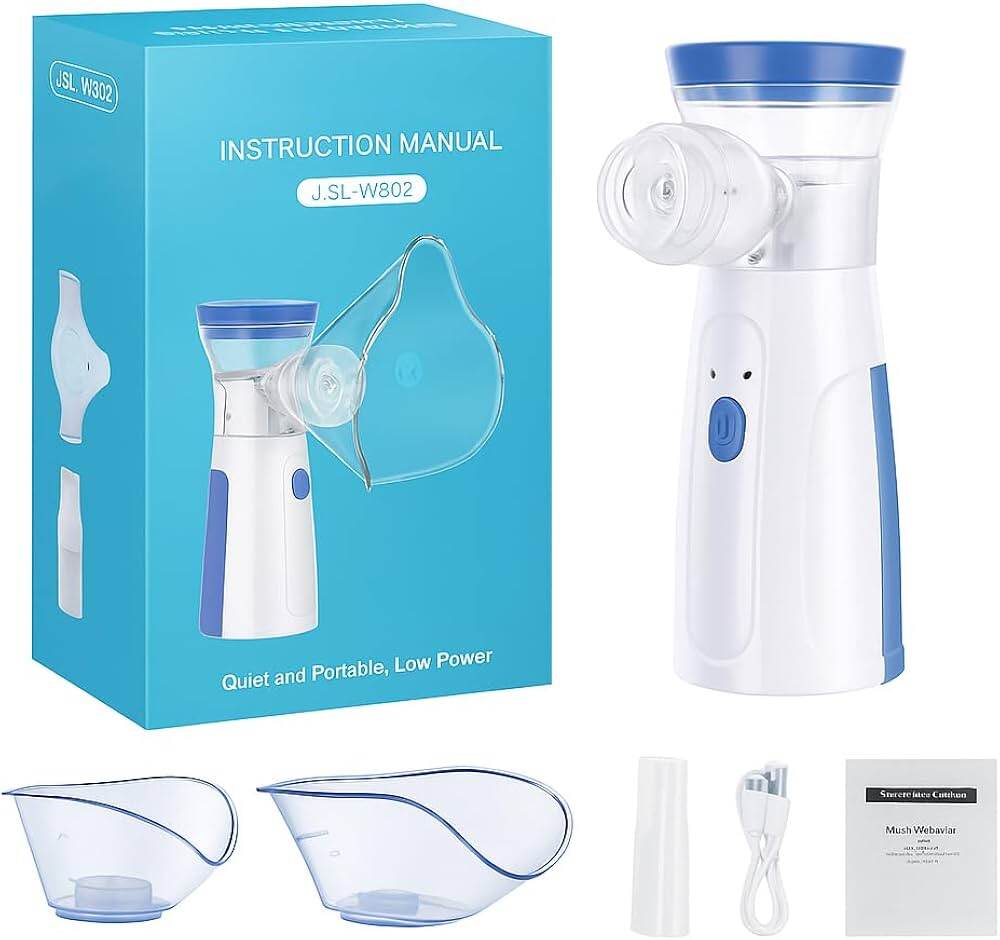
Electric Nebulizer vs Manual Inhaler can be a useful comparison when a senior needs an inhaled medicine device. The two devices deliver medicine in different ways. A nebulizer turns liquid medicine into a mist, while a handheld inhaler delivers a measured dose through the mouth.
The better choice depends on the prescribed medicine, the user’s ability to use the device, and daily needs. An inhaler is small and quick. A nebulizer may be easier for someone who has trouble with inhaler technique or cannot breathe in well enough for some inhalers.
Quick Comparison
There is no single winner for every senior.
A manual inhaler may be the better fit for a senior who wants a small, fast, portable device and can use the required technique. An electric nebulizer may suit someone who finds inhaler technique difficult and can spend more time on each treatment.
The biggest difference is simple: an inhaler usually delivers a dose in a few breaths, while a nebulizer requires sitting with the device and breathing the mist until the treatment is complete.
Electric Nebulizer vs Manual Inhaler At a Glance
These are broad device differences. Exact operation can vary by inhaler and nebulizer model.
| Feature | Electric Nebulizer | Manual Inhaler |
|---|---|---|
| Operation | Machine creates a medicine mist | User activates or loads a dose |
| Treatment style | Breathe through mouthpiece or mask | Inhale through mouthpiece |
| Portability | Usually less convenient | Usually very portable |
| Setup | More parts to assemble | Usually simple |
| Treatment time | Often several minutes | Usually much shorter |
| Cleaning | More cleaning is needed | Usually less cleaning |
| Technique | Normal breathing may be easier | Correct inhalation technique matters |
| Storage | Needs room for device and parts | Small and easy to carry |
A nebulizer can be easier for some people because the user can breathe normally through the mist. A handheld inhaler is smaller and faster but can require practice to use correctly.
Electric Nebulizer Review for Seniors
An electric nebulizer uses a machine to turn liquid medicine into a fine mist. The mist travels through tubing to a mouthpiece or mask. The user then breathes it into the lungs.
Ease of Use
The main advantage is that the breathing process can be simple. After the medicine cup and mouthpiece or mask are set up, the user can sit upright and breathe through the device.
This can help seniors who struggle with the timing or breathing steps required by some handheld inhalers.
However, setup is not completely hands-free. The medicine cup, tubing, mouthpiece or mask, and machine must be connected correctly.
Key Strengths
- Can be easier for some users who struggle with inhaler technique.
- Allows the user to breathe through a steady mist.
- A mouthpiece or mask can be used, depending on the device.
- Useful when a longer seated treatment is acceptable.
- May be suitable for people who cannot inhale deeply enough for some inhaler devices.
Potential Drawbacks
- Takes more time than a handheld inhaler.
- Has more parts to handle.
- Requires regular cleaning.
- Is less convenient to carry around.
- Requires a power source for many electric models.
The cleaning step matters. The medicine cup and mouthpiece need proper care after use, and the manufacturer’s instructions should be followed.
Manual Inhaler Review for Older Adults
A manual inhaler is a small handheld device used to deliver inhaled medicine. Here, the term refers broadly to a user-operated inhaler, such as a metered-dose inhaler. Different inhaler types have different techniques.
Ease of Use
The biggest benefit is speed and portability. A handheld inhaler can fit in a pocket or small bag and does not require a compressor or long tubing.
The challenge is technique.
For a metered-dose inhaler, the user generally needs to breathe out, start a slow breath in, activate the inhaler, keep breathing in, and then hold the breath when instructed. Correct technique helps the medicine reach the lungs.
Key Strengths
- Small and easy to carry.
- Quick to use.
- Usually requires fewer setup steps.
- No compressor is needed.
- Convenient for daily routines and travel.
- Dose counters are available on many inhalers.
Potential Drawbacks
- Technique can be harder for some users.
- Hand and breathing coordination may matter with some inhalers.
- Different inhaler types require different techniques.
- The device still needs proper cleaning and storage.
A small device is not always the easiest device. The easiest option is the one the user can operate correctly and consistently.
Which Is Easier for Seniors to Use?
This depends more on the user’s abilities than on age alone.
A nebulizer may be easier for a senior who has trouble coordinating inhalation with an inhaler. It may also help someone who cannot inhale deeply enough for certain inhaler devices.
A manual inhaler may be easier for a senior who has good hand control, understands the required breathing technique, and values speed.
Consider these questions:
- Can the user coordinate the inhaler steps?
- Can the user hold the device correctly?
- Is sitting for several minutes practical?
- Can the user clean a nebulizer after treatment?
- Is portability important?
- Would a caregiver need to help?
If inhaler technique is difficult, a healthcare professional can check the user’s technique and discuss whether another device or a spacer is appropriate.
Performance Comparison
The main performance question is not simply which device produces more mist or feels stronger. The important issue is whether the prescribed medicine can be delivered correctly with the chosen device.
A nebulizer changes liquid medicine into an inhaled mist. A metered-dose inhaler provides a preset dose.
| Performance Area | Electric Nebulizer | Manual Inhaler |
|---|---|---|
| Delivery method | Fine mist | Measured inhaled dose |
| User breathing | Usually normal breathing | Specific technique may be needed |
| Speed | Slower | Faster |
| Portability | Lower | Higher |
| Technique demand | Generally lower | Can be higher |
| Treatment setting | Better suited to seated use | Better suited to mobile use |
Neither device should be judged only by convenience. The medicine prescribed and the device selected by the healthcare professional are important.
Comfort, Accessibility, and Senior-Friendly Design
Comfort can be very different between these devices.
A nebulizer lets the user sit during treatment. This may be useful for someone who prefers a slower, more relaxed routine. A mask may also be available with some nebulizer systems.
The trade-off is equipment. Tubing, the medicine cup, and the machine take up more space.
An inhaler has the opposite design. It is compact and easy to store. But some users may find the breathing steps harder to manage.
For seniors with limited hand strength or dexterity, the exact inhaler design matters. A healthcare professional or pharmacist can demonstrate the device before regular use.
Features Comparison
The useful features are different because these are different types of devices.
| Feature | Electric Nebulizer | Manual Inhaler |
|---|---|---|
| Mouthpiece | Common | Common |
| Mask option | Available on some models | Usually not the standard setup |
| Power | Usually required | Usually not required |
| Dose counter | Not typical | Available on many inhalers |
| Tubing | Usually required | No |
| Cleaning | More involved | Usually simpler |
| Travel | Less convenient | Very convenient |
Do not assume that every nebulizer or inhaler has the same features. Device design varies by model and medicine.
Price, Maintenance, and Long-Term Value
Price varies widely by device, medicine, brand, and insurance or health-plan coverage. It is better to compare total ownership needs than to focus only on the device’s purchase price.
A nebulizer can involve several parts, including a medicine cup, tubing, mouthpiece or mask, and filters on some machines. Regular cleaning is important.
An inhaler usually has fewer physical parts to maintain. However, the medication itself must be replaced when the prescribed doses are used.
| Cost Factor | Electric Nebulizer | Manual Inhaler |
|---|---|---|
| Device | Separate machine | Handheld device |
| Consumables | Medicine and replacement parts as needed | Medicine inhaler |
| Cleaning | More frequent attention | Usually simpler |
| Storage | More space | Minimal space |
| Long-term convenience | Better for regular seated treatments | Better for portability |
Value depends on which device the user can use correctly and keep up with.
Who Should Choose an Electric Nebulizer?
Consider a nebulizer if:
- The user has trouble with certain inhaler techniques.
- Normal breathing through a mist feels easier.
- Sitting for several minutes is practical.
- A caregiver can help with setup and cleaning when needed.
- The prescribed treatment is intended for nebulizer use.
The device should be selected based on the prescribed medicine and professional guidance, not simply because it seems easier.
Who Should Choose a Manual Inhaler?
A handheld inhaler may suit someone who:
- Wants a compact device.
- Needs a fast treatment routine.
- Travels often.
- Can learn and perform the required technique.
- Wants a device that does not need a compressor.
A spacer may also be useful with some metered-dose inhalers. Whether one is appropriate depends on the specific inhaler and treatment plan.
Electric Nebulizer vs Manual Inhaler — Final Verdict
Best for portability: Manual inhaler
Best for a quick treatment routine: Manual inhaler
Best for users who struggle with some inhaler techniques: Electric nebulizer
Best for seated treatment: Electric nebulizer
Best for simple storage: Manual inhaler
There is no universal winner. A manual inhaler makes sense when portability and speed matter and the user can use the device correctly. A nebulizer may be more practical when inhaler technique is difficult or a longer seated treatment is acceptable.
Scoring Summary
A numerical score is not useful for this comparison because these are different delivery systems, and the appropriate choice depends heavily on the prescribed medicine and the user’s ability to use the device.
| Category | Electric Nebulizer | Manual Inhaler |
|---|---|---|
| Ease of use | Depends on user | Depends on technique |
| Portability | Lower | Higher |
| Treatment speed | Lower | Higher |
| Setup | More involved | Usually simpler |
| Maintenance | Higher | Usually lower |
| Senior suitability | User-dependent | User-dependent |
This avoids giving an artificial score where the underlying medical situation matters more than a simple number.
How We Evaluate Products
For this comparison, the main factors are practical senior needs:
- Ease of operation
- Breathing technique
- Physical effort
- Setup
- Cleaning
- Portability
- Comfort
- Storage
- Long-term practicality
- Safety
The comparison does not assume hands-on testing. Device specifications and instructions can vary, so the manufacturer’s directions and professional guidance should take priority.
Senior-Specific Buying Considerations
Physical Effort
Think about whether the user can hold the device, connect parts, load medicine, and complete the treatment without excessive effort.
Controls
Check whether buttons and controls are easy to understand. A caregiver may need to help with setup if the controls or connections are difficult.
Maintenance
Nebulizers need more cleaning attention. Poor cleaning can allow bacteria to grow, so the device should be cleaned according to its instructions.
Storage
A handheld inhaler needs very little space. A nebulizer needs room for the machine and its accessories.
Setup
An inhaler usually has fewer physical setup steps. A nebulizer needs the medicine cup, tubing, mouthpiece or mask, and machine connected correctly.
Safety
Use only the medicine and device prescribed or recommended for the user. Do not mix medicines in a nebulizer unless a healthcare professional specifically says it is safe to do so.
Common Buying Mistakes
- Choosing a device only because it looks easier.
- Ignoring the prescribed medicine.
- Forgetting the cleaning requirements of a nebulizer.
- Buying an inhaler without learning its correct technique.
- Focusing only on the device price.
- Overlooking portability and storage needs.
Safety
These devices are used to deliver medicine, so the device should match the treatment plan.
Do not switch from one delivery method to another simply because one appears more convenient. Different medicines and inhaler types can have different instructions.
If a senior has ongoing or serious breathing problems, such as significant shortness of breath, wheezing, chest tightness, or an ongoing cough, professional medical guidance is appropriate.
Frequently Asked Questions
Is a nebulizer easier than an inhaler for seniors?
It can be easier for seniors who have difficulty with certain inhaler techniques. A nebulizer allows the user to breathe through a mist rather than coordinate every step of some handheld inhaler techniques.
Is an inhaler faster than a nebulizer?
Usually, yes. Handheld inhalers are designed to deliver a dose in a small number of breaths, while nebulizer treatments generally take several minutes.
Which is easier to carry?
A manual inhaler is much easier to carry. A nebulizer requires the machine and related parts, although portable nebulizers are available.
Does a nebulizer require cleaning?
Yes. The medicine cup and mouthpiece or mask need regular cleaning according to the manufacturer’s instructions.
Can a senior use a nebulizer instead of an inhaler?
Not automatically. The appropriate device depends on the prescribed medicine, treatment plan, and user’s needs. A healthcare professional should guide any change.
Can an inhaler be used with a spacer?
Some metered-dose inhalers can be used with a spacer. The specific inhaler and instructions should be checked first.
Conclusion
The key difference between an electric nebulizer and a manual inhaler is how the medicine is delivered. A nebulizer creates a mist and can be easier for some users who struggle with inhaler technique. A manual inhaler is smaller, faster, and much easier to carry.
For seniors, the best choice is the device that matches the prescribed treatment and can be used correctly and consistently. When there is uncertainty, a doctor or pharmacist can demonstrate the device and help determine which delivery method fits the user’s needs.
