
Jet Nebulizer vs Mesh Nebulizer: A Senior Guide


Weighted Blanket

Smart Plug with Alexa
Bed Rail for Seniors
Jet Nebulizer vs Mesh Nebulizer is a useful comparison for seniors who need a simple way to take prescribed liquid medicine as a mist. The two types work in different ways and can feel very different during daily use.
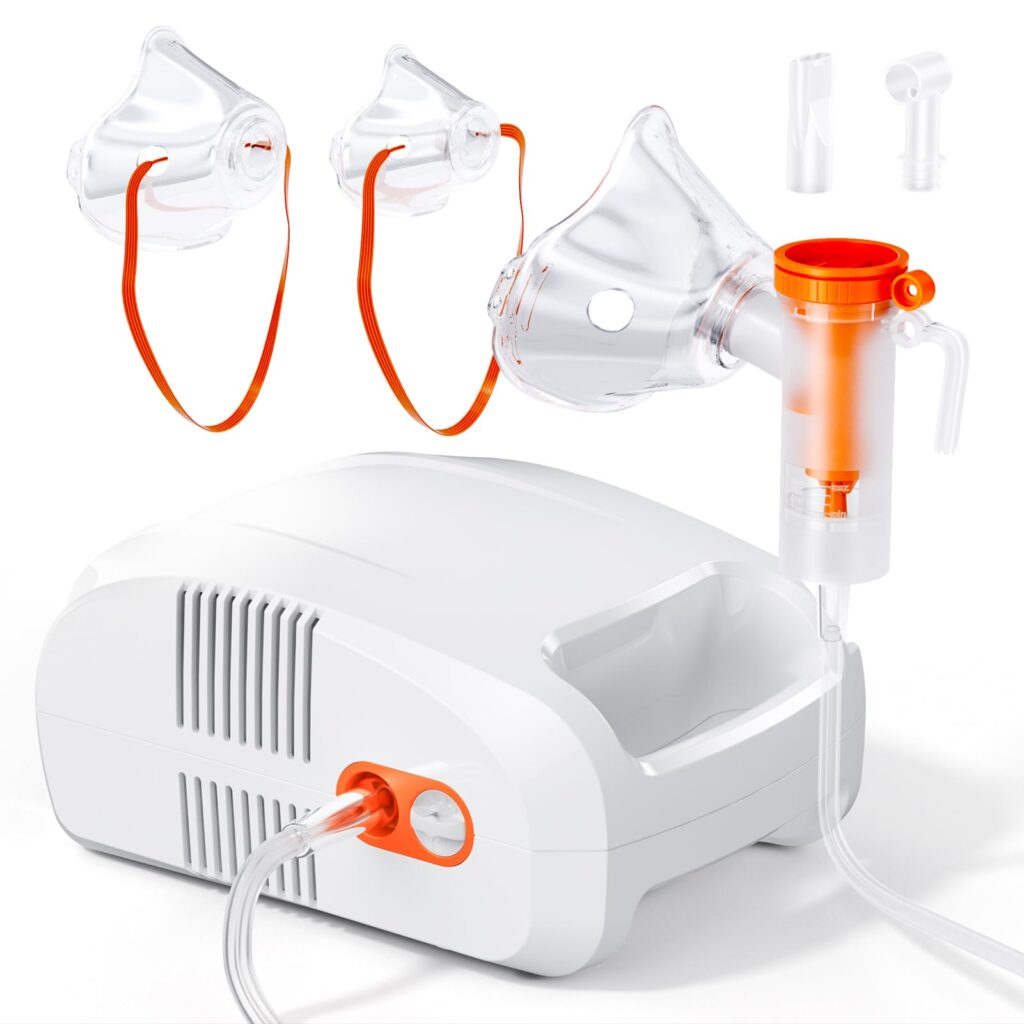
A jet nebulizer uses compressed air from a compressor. A mesh nebulizer uses a fine mesh to create the mist. Mesh models are often smaller and quieter, while jet systems can be simpler and less costly.
Quick Comparison
For many seniors, a mesh nebulizer may be easier for daily use when quiet operation, portability, and less equipment matter most. It can be a good fit for someone who dislikes compressor noise or wants a compact device.
A jet nebulizer may be a better practical choice when lower purchase cost, a familiar setup, and straightforward construction matter more. The right choice also depends on the medicine being used and the device recommended by a healthcare professional. Nebulizer output can differ between device types.
For seniors, the best nebulizer is often the one that fits the prescribed treatment and is easy to use correctly every time.
Jet Nebulizer vs Mesh Nebulizer At a Glance
The biggest difference is how each device makes the mist. That difference affects noise, size, portability, maintenance, and everyday comfort.
| Feature | Jet Nebulizer | Mesh Nebulizer |
|---|---|---|
| Mist method | Compressed air | Vibrating mesh |
| Compressor | Usually required | Usually not required |
| Noise | More noticeable | Very quiet |
| Portability | Lower | Higher |
| Setup | Tubing and compressor | Often simpler |
| Power | Usually AC power | Battery or power, depending on model |
| Cost | Usually lower | Usually higher |
| Maintenance | Straightforward but more parts | Needs careful mesh cleaning |
Jet Nebulizer Review for Older Adults
Jet nebulizers have been used for many years and are common in home respiratory care. They use a compressor to push air through the medicine cup and turn liquid medicine into a mist.
Ease of Use
A jet system is not hard to understand, but it has more pieces to handle. The user usually needs the medicine cup, tubing, mouthpiece or mask, and compressor.
For a senior with good hand control, this may be easy enough. For someone who struggles with cords, tubing, or moving equipment, the setup can feel less convenient.
Key Strengths
- Familiar and widely used design
- Often lower purchase cost
- Simple operating principle
- Compressor provides a steady air source
- Replacement parts are commonly available
Potential Drawbacks
- Compressor noise can be distracting
- Tubing adds more setup work
- Less convenient for travel
- Takes more space than many portable mesh models
Mesh Nebulizer Review for Older Adults
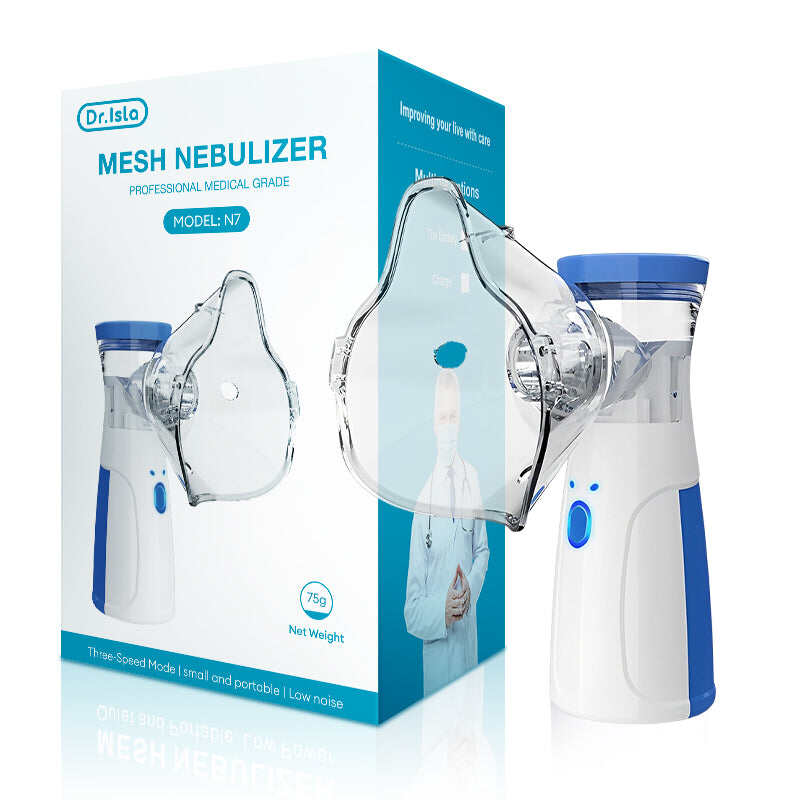
A vibrating mesh nebulizer creates aerosol by moving liquid through a fine mesh. Modern mesh units can be compact, quiet, and battery powered, making them attractive for home and travel use.
Ease of Use
The main appeal is the simpler physical setup. Many models do not need a separate compressor or long air tube.
That can make a mesh unit easier to carry and faster to set up. A small handheld design may also help seniors who prefer to keep medical equipment close at hand.
Key Strengths
- Very quiet operation
- Compact and lightweight in many models
- Easy to carry
- No separate compressor on many models
- Convenient for travel
Potential Drawbacks
- Often costs more
- Mesh openings can clog
- Cleaning must be done carefully
- Device compatibility can vary by medication
Which Is Easier for Seniors to Use?
For basic handling, mesh nebulizers often have the advantage because they can remove the compressor and reduce the number of parts.
A jet nebulizer can still be easy to use at home. Its main issue is not the medicine cup itself. It is the extra equipment around it. A compressor, tubing, and power cord can add clutter.
For seniors with limited hand strength or dexterity, reducing setup steps may matter more than having the smallest possible device. For others, a standard jet system may be perfectly manageable.
Cleaning also matters. Nebulizer parts need regular cleaning to help prevent germs and keep the device working properly.
Performance Comparison
Both devices are designed to create an inhaled mist, but their aerosol delivery can differ. Research comparing vibrating mesh and jet nebulizers has found differences in aerosol output and drug delivery, while clinical outcomes do not always show a simple winner.
| Performance Area | Jet Nebulizer | Mesh Nebulizer |
|---|---|---|
| Aerosol generation | Reliable compressor-based system | Efficient mesh-based system |
| Noise | Higher | Very low |
| Portability | Limited by compressor | Strong |
| Residual medication | Can be higher | Often lower |
| Treatment efficiency | Depends on model and setup | Often efficient |
| Drug compatibility | Broad, but check instructions | Must be checked carefully |
This is why it is not wise to switch device types simply because one looks more modern. The device should match the prescribed medicine and instructions.
Comfort, Accessibility, and Senior-Friendly Design
Comfort is where the difference becomes easy to notice. A mesh nebulizer may be more comfortable for someone who wants quiet treatment or needs to move around the home.
A jet unit may work well for a senior who usually takes treatments in one place and does not mind compressor noise.
For either type, look for controls that are easy to see and press. A stable medicine cup, clear assembly instructions, and an easy-to-hold mouthpiece or mask can also help.
Features Comparison
Do not focus only on the mist technology. Small design details can have a bigger effect on daily use.
| Feature | Jet Nebulizer | Mesh Nebulizer |
|---|---|---|
| Compressor | Yes, usually | No, on many models |
| Battery use | Less common | Common on portable models |
| Tubing | Usually needed | Often not needed |
| Noise | Noticeable | Very quiet |
| Size | Larger | Smaller |
| Travel use | Less convenient | More convenient |
Price, Maintenance, and Long-Term Value
Jet nebulizers generally have a lower entry cost, while mesh devices often cost more because the technology is smaller and more portable. A 2024 review also identified higher cost and cleaning difficulty as important drawbacks of vibrating mesh systems.
| Cost Factor | Jet Nebulizer | Mesh Nebulizer |
|---|---|---|
| Purchase cost | Usually lower | Usually higher |
| Compressor | Extra hardware | Often not needed |
| Tubing | Replacement may be needed | Often no tubing |
| Cleaning | Routine cleaning required | Careful mesh cleaning needed |
| Long-term value | Strong for home use | Strong for portability |
Cleaning should never be treated as an optional task. The American Lung Association recommends cleaning nebulizer parts after each use and following the device instructions for deeper cleaning.
Who Should Choose Jet Nebulizers?
- Choose a jet nebulizer if lower initial cost matters.
- Choose it if treatment is usually done at home.
- Choose it if compressor-based equipment is acceptable.
- Choose it if you prefer a familiar and established design.
- Choose it when the prescribed medication is specifically suited to the system.
Who Should Choose Mesh Nebulizers?
- Choose a mesh nebulizer if quiet use is important.
- Choose it if portability is a major need.
- Choose it if you want to avoid a separate compressor.
- Choose it if a compact device is easier to handle.
- Choose it when the prescribed medication is compatible with the model.
Jet Nebulizer vs Mesh Nebulizer — Final Verdict
For many seniors, a mesh nebulizer is the more convenient option because it is quiet, compact, and easier to carry. It can be especially useful when treatment is not always done beside a power outlet.
A jet nebulizer remains a practical choice for seniors who value lower cost, home use, and a familiar compressor-based system. The better option depends on the medicine, treatment plan, comfort, and setup that the user can manage consistently.
Scoring Summary
These are practical usability scores, not medical effectiveness ratings. Actual performance varies by model.
| Category | Jet Nebulizer | Mesh Nebulizer |
|---|---|---|
| Ease of Use | 7/10 | 9/10 |
| Senior-Friendly Design | 7/10 | 9/10 |
| Portability | 5/10 | 10/10 |
| Maintenance | 8/10 | 7/10 |
| Value | 9/10 | 7/10 |
The mesh option scores higher for portability and quiet operation. The jet option scores well for value and familiar maintenance.
How We Evaluate Products
We compare nebulizers using practical factors that matter in everyday senior use.
These include ease of setup, controls, noise, portability, comfort, cleaning, maintenance, value, and long-term practicality. We do not treat a device as medically superior simply because it has newer technology.
For health-related equipment, the prescribed medication and device instructions always come first.
Senior-Specific Buying Considerations
Physical Effort
Check how much lifting, gripping, tubing setup, and handling the device requires.
Controls
Look for clear controls that are easy to see and use without fine finger movements.
Maintenance
Make sure the user can clean the medicine cup and other required parts correctly. Poor cleaning can lead to contamination or reduced device performance.
Storage
A compact mesh model may be easier to store in a bedroom, travel bag, or small cabinet.
Setup
Count the number of pieces that must be connected before every treatment. Fewer steps may be useful for some users.
Safety
Use only the medication and device combination recommended by the healthcare professional or manufacturer. Do not change medication doses or assume that two nebulizer types deliver medicine in exactly the same way.
Common Buying Mistakes
- Choosing only by purchase price
- Ignoring compressor noise
- Forgetting about portability
- Assuming every mesh unit works with every medication
- Underestimating cleaning needs
- Buying a small device without checking its instructions
- Ignoring replacement parts and long-term care
Safety
A nebulizer is part of a medical treatment routine. Follow the prescribed medication, dose, cleaning method, and device instructions.
Keep the equipment clean and dry. Do not use damaged parts. Never assume that a different nebulizer type can replace the prescribed system without professional guidance.
When changing device types, ask a healthcare professional or pharmacist whether the medication and delivery method are compatible. This matters because aerosol output can differ between jet and mesh systems.
Conclusion
Jet and mesh nebulizers can both be useful, but they suit different daily needs. Jet models tend to offer lower cost and familiar compressor-based operation. Mesh models stand out for quiet use, smaller size, and portability.
For seniors, the most important choice is not simply which technology looks newer. It is which compatible device is easy to set up, clean, carry, and use correctly as part of the prescribed treatment plan.
