
Is Fishing a Good Hobby for Seniors? Benefits, Safety, and How to Start


Leg Massager for Circulation

Automatic Jar Opener

Adjustable Bed Frame
Quick Answer
Yes, fishing can be an excellent hobby for seniors because it combines time outdoors, gentle movement, mental focus, relaxation, and optional social interaction. It can also be adapted for different mobility levels, which fits the broader healthy-aging benefits of enjoyable activities.
Why fishing works well for many older adults
- Low-impact activity: You can fish without running, jumping, or performing strenuous exercise.
- Mental relaxation: Quiet water, patient waiting, and focused attention can create a calming routine.
- Flexible pace: A fishing trip can last 30 minutes or several hours depending on your energy.
- Social choice: You can fish alone, with a spouse, with friends, or as part of a local group.
- Easy to adapt: Accessible piers, lightweight equipment, chairs, and simple tackle can reduce physical strain.
The main caution
- Choose stable, accessible locations and take water safety, weather, medications, balance, and mobility limitations seriously.
I think fishing deserves more attention when people discuss hobbies for seniors. It offers something many retirement activities miss: you can be active without feeling rushed.
You can also make fishing as simple or challenging as you want. This guide covers the benefits, physical demands, safety concerns, accessibility options, equipment, and easiest ways to begin in 2026.
In This Guide
- Why is fishing a good hobby for seniors?
- What are the mental and emotional benefits of fishing?
- Is fishing good physical activity for older adults?
- Is fishing safe for seniors?
- Can seniors with limited mobility still enjoy fishing?
- How can a senior start fishing?
- Is fishing a good social retirement hobby?
- Frequently asked questions
- Final takeaway
Why Is Fishing a Good Hobby for Seniors?
Fishing suits many seniors because it is flexible, purposeful, and easy to enjoy at your own pace. You do not have to compete with anyone or meet a performance target.
Recreational fishing for seniors is leisure fishing adapted to an older adult’s interests, stamina, balance, mobility, and preferred level of social interaction.
Fishing rewards patience more than speed
This is one of the qualities I like most about fishing as a retirement hobby. Success often depends more on observation and patience than strength or speed.
You can sit beside a pond and watch a bobber. You can also walk a shoreline, practice casting, or take a boat onto deeper water.
- Quiet fishing: Sit on an accessible pier or bank with a simple rod and bobber.
- Active fishing: Walk short sections of shoreline while casting artificial lures.
- Social fishing: Meet a friend and spend a morning talking between casts.
- Skill-focused fishing: Learn knots, species behavior, lure selection, and casting techniques.
You control the length of the outing
A hobby becomes difficult to maintain when every session demands a full day. Fishing does not need that commitment.
A local pond session might last 45 minutes. A comfortable pier trip could last two hours, while an experienced angler may choose a longer outing.
That flexibility matters when energy levels change from one day to another.
What Are the Mental and Emotional Benefits of Fishing?
Fishing may support well-being by providing relaxation, autonomy, skill development, and social connection. Those qualities are especially useful when retirement has changed a person’s daily routine.
A 2026 study involving 364 older recreational anglers found a positive association between recreational angling and subjective well-being. The researchers identified autonomy, competence, and belonging as important parts of that relationship.
You can review the research through the National Library of Medicine’s PubMed record.
Fishing gives your mind one simple job
Modern life can feel noisy even after retirement. Fishing narrows your attention to the water, line, weather, movement, and possibility of a bite.
That does not make fishing a medical treatment for stress, anxiety, or depression. It simply means the activity can create a naturally focused environment that many people find pleasant.
- Observation: You watch water movement, wildlife, weather, and fish activity.
- Problem-solving: You decide where to cast and when to change bait or technique.
- Learning: New species, knots, tackle, and locations provide ongoing challenges.
- Anticipation: Each cast gives you a small reason to remain engaged.
It can add structure after retirement
Retirement can remove familiar routines. A weekly fishing morning gives the calendar a simple point of interest.
The National Institute on Aging notes that meaningful hobbies and social activities can support healthy aging. The activity should still be something you genuinely enjoy, not another obligation.
Health note: A hobby can support well-being, but it does not replace professional care for persistent anxiety, depression, memory concerns, or other health problems.
Is Fishing Good Physical Activity for Older Adults?
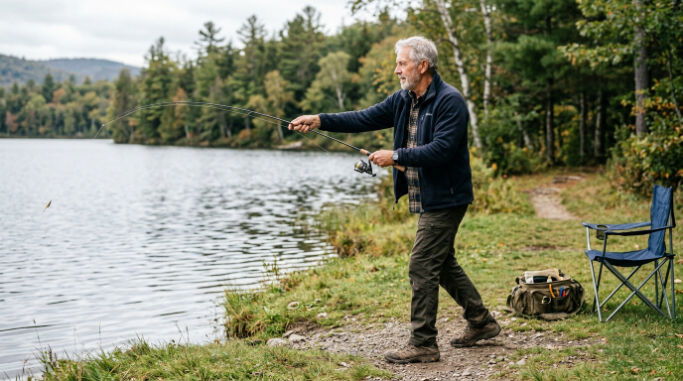
Fishing can involve useful light movement, but its physical demands vary greatly. A seated bank angler may move very little, while someone walking a shoreline may stay on their feet for hours.
Common movements include casting, reeling, carrying light gear, standing, walking, bending, and getting into or out of a chair.
Fishing can complement an active lifestyle
The CDC’s activity guidance for adults 65 and older recommends aerobic activity, muscle-strengthening work, and balance activities each week.
Fishing alone may not provide all three. It can, however, encourage someone to leave the house and move more than they would during a completely sedentary morning.
- Walking: A short route from the parking area to a fishing spot adds movement.
- Casting: Repeated casts use the shoulders, arms, hands, and trunk.
- Standing: Short standing periods can break up long periods of sitting.
- Gear handling: Light tackle requires hand control and coordination.
I would not treat fishing as a substitute for a balanced exercise plan. Think of it as an enjoyable outdoor activity that can include movement.
Health note: If you have heart disease, severe arthritis, poor balance, breathing problems, or another condition affecting activity, ask your healthcare professional what level of exertion is appropriate.
Is Fishing Safe for Seniors?
Fishing can be safe for older adults when the location, weather, equipment, and activity level match the person’s abilities. Water, slippery surfaces, heat, hooks, and unstable terrain deserve serious attention.
Choose the location before choosing the fish
I would rather have a comfortable fishing spot with fewer fish than a productive spot reached by a steep, slippery trail. Accessibility becomes part of good fishing as mobility changes.
Look for these features:
- Flat paths from parking to the water
- Stable railings where available
- Benches or space for a supportive chair
- Good mobile phone reception when possible
- Nearby restrooms
- Shade or shelter
- Minimal loose rocks, mud, or steep banks
Take water safety seriously
The CDC’s drowning-prevention guidance recommends appropriate life-jacket use around boating and other higher-risk water activities. Natural water can include currents, slippery edges, changing depths, and limited visibility.
A properly fitted personal flotation device is especially important when fishing from a boat or where an unexpected fall could place you in deep water.
Watch heat, sun, and medications
Hot weather can make a relaxing trip exhausting. Start with cooler morning or evening periods during warm months.
- Bring drinking water.
- Use sunscreen and a brimmed hat.
- Take regular shade breaks.
- Keep essential medication accessible.
- Avoid unfamiliar remote locations alone.
- Tell someone where you plan to fish.
Some medications can also affect alertness, balance, or heat tolerance. Check your medication guidance or ask a pharmacist when unsure.
Health note: Stop the outing and seek appropriate medical help for chest pain, fainting, severe dizziness, unusual shortness of breath, confusion, or sudden weakness.
Can Seniors With Limited Mobility Still Enjoy Fishing?
Yes. Fishing is one of the easier outdoor hobbies to adapt because much of the activity can be done while seated.
The biggest factor is choosing the right style and location.
| Fishing style | Physical demand | Accessibility | Good fit for | Main concern |
|---|---|---|---|---|
| Accessible pier | Low | Often excellent | Seated fishing | Water-edge safety |
| Flat pond bank | Low | Good if firm and level | Beginners | Mud or uneven ground |
| Shoreline walking | Moderate | Variable | Active seniors | Falls and fatigue |
| Boat fishing | Low to moderate | Depends on boat | Experienced anglers | Boarding and water safety |
| Guided fishing trip | Variable | Can be customized | Beginners needing help | Confirm accessibility first |
Small equipment changes can help
Lightweight rods reduce arm fatigue. A stable chair with a back and armrests can also make longer sessions more comfortable.
- Use a lightweight rod and simple reel.
- Carry a small tackle box instead of a large bag.
- Use hook-removal pliers to keep fingers farther from hooks.
- Choose larger tackle components if fine hand movements are difficult.
- Keep frequently used items within easy reach.
- Use a rolling cart when the path is flat and suitable.
Do not judge accessibility from a photograph alone. Call the park, marina, or fishing area and ask about surfaces, railings, seating, parking, and restroom access.
How Can a Senior Start Fishing?
Start with simple freshwater fishing at an easy-to-reach location. You do not need expensive equipment or advanced skills for your first few outings.
The U.S. Fish and Wildlife Service’s Learn to Fish resources cover beginner equipment, fishing locations, licenses, regulations, and basic techniques.
Use a simple beginner setup
A basic rod-and-reel combination is enough for many ponds and small lakes. Complicated tackle can wait until you know which type of fishing you enjoy.
- Rod and reel: Choose something lightweight and comfortable to hold.
- Line: Ask a local tackle shop for a general-purpose line suitable for local fish.
- Hooks: Carry a small selection appropriate for your bait and target species.
- Bobbers: These make bites easier to notice during relaxed fishing.
- Small weights: Use them when needed to position bait.
- Pliers: Keep them available for safer hook removal.
- Chair: Pick a stable model if you expect to sit.
Make the first trip easy
- Find a nearby pond, pier, lake, or accessible fishing area.
- Check local license and fishing regulations.
- Choose mild weather and daylight hours.
- Bring only basic equipment.
- Fish for about 45 to 90 minutes.
- Notice your comfort, energy, balance, and enjoyment.
- Adjust the next trip before buying more equipment.
That last step saves money. It also prevents fishing from becoming a garage full of equipment before it becomes a hobby.
Is Fishing a Good Social Retirement Hobby?
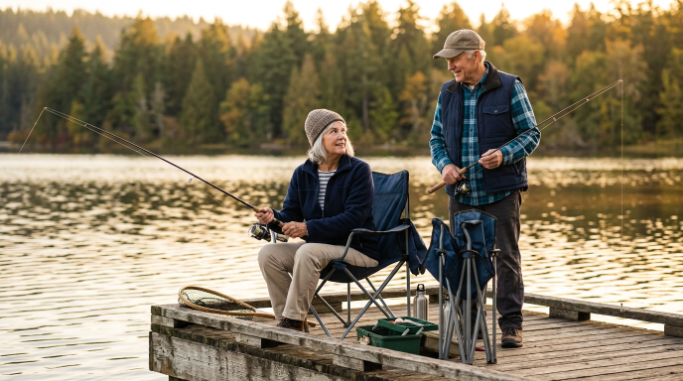
Fishing works well as either a social or solitary activity. That flexibility is another reason it suits retirement.
Two people can fish together without needing constant conversation. That makes it easier to spend time with someone while still enjoying quiet periods.
Ways to make fishing more social
- Invite a spouse or longtime friend.
- Take an adult child or grandchild.
- Join a local fishing club.
- Attend a beginner fishing event.
- Book an accessible guided trip.
- Volunteer with fishing or conservation programs.
Social fishing also provides a practical advantage. A companion can help carry gear, handle a difficult fish, or respond during an emergency.
Fishing alone can still be rewarding
Some seniors prefer solitude. Fishing can offer a reason to leave the house without requiring organized group participation.
If you fish alone, choose familiar locations and keep someone informed of your plans. Carry a charged phone and avoid unnecessary risks near deep or fast-moving water.
Frequently Asked Questions
Is fishing too physically demanding for seniors?
Not necessarily. Seated pier or bank fishing can be low impact, while shoreline walking and boat fishing demand more mobility. Choose a location and style that match your stamina, balance, grip strength, and comfort.
Is fishing good for a 70-year-old?
Fishing can be a good hobby at 70 if the person enjoys outdoor activities and can participate safely. Accessible locations, a supportive chair, lightweight equipment, shorter trips, and a fishing companion can make the hobby easier.
Can an 80-year-old go fishing?
Age alone does not decide whether someone can fish. Health, mobility, balance, weather, access to the water, and required assistance matter more. A flat accessible pier may be much more practical than a rocky shoreline or small boat.
Is fishing good for mental health in older adults?
Fishing may provide relaxation, concentration, autonomy, social interaction, and time outdoors. Research has found an association between recreational angling and better subjective well-being among older anglers, but fishing should not be presented as treatment for a mental health condition.
What type of fishing is easiest for seniors?
For many beginners, seated freshwater fishing from a stable pier or flat bank is the easiest option. It requires limited walking, allows frequent breaks, and works with simple rods, bobbers, bait, and basic tackle.
What should a senior bring on a fishing trip?
Bring a suitable fishing license, lightweight rod, basic tackle, pliers, stable chair, drinking water, sun protection, phone, necessary medication, and appropriate clothing. Add a properly fitted life jacket when boating or when the fishing environment makes falling into deep water possible.
How long should a senior fish for the first time?
A first session of roughly 45 to 90 minutes is usually enough to test the hobby without making the day unnecessarily tiring. Future trips can become longer or shorter based on comfort, weather, stamina, and personal preference.
Is Fishing Worth Trying After Retirement?
For many seniors, yes. Fishing combines outdoor time, gentle activity, learning, patience, and social connection without requiring intense physical performance.
The hobby is also easy to scale. You can spend an hour beside a neighborhood pond or develop years of interest in new species, locations, and techniques.
I would start small rather than buying a complete fishing setup. Find one comfortable location, borrow or buy basic gear, and see whether you look forward to going back.
If you do, you may have found exactly what a good retirement hobby should provide: something enjoyable enough to make tomorrow’s free time feel valuable.
