
What Are Good Hobbies for Seniors Interested in History?


Shower Chair for Elderly

Automatic Can Opener

Adjustable Walker with Wheels
Quick Answer
Good hobbies for seniors interested in history include genealogy, local history research, museum visits, historical reading, oral-history projects, collecting historical items, historic-site travel, and studying old photographs or newspapers. These activities can turn an interest in the past into an enjoyable routine, and the National Institute on Aging also encourages older adults to take part in meaningful activities they enjoy.
History hobbies worth trying
- Family genealogy: Build a family tree and research census, immigration, military, and local records.
- Local history: Explore how your town, neighborhood, or county changed over time.
- Museum visits: Turn exhibitions and historic sites into regular learning trips.
- Historical reading: Follow a favorite period through biographies, books, diaries, and old newspapers.
- Oral history: Record family stories and preserve memories from relatives or community members.
- History collecting: Study postcards, coins, maps, photographs, stamps, or other objects with a story.
Simple way to begin
- Choose one historical subject you already enjoy and spend 20 to 30 minutes exploring it before buying supplies or joining a program.
I think history makes an unusually flexible retirement hobby because it can be quiet, social, creative, or adventurous. You can investigate your own family from a kitchen table or spend an afternoon walking through a historic district.
You also don’t need to be an expert. Curiosity is enough, and this guide will help you turn that curiosity into a hobby you can enjoy regularly.
In This Guide
- What Are the Best History Hobbies for Seniors?
- Is Genealogy a Good Hobby for Seniors?
- How Can Seniors Explore Local History?
- Can Museums and Archives Become a Regular Hobby?
- What Are Good At-Home History Hobbies?
- What Hands-On History Hobbies Can Seniors Try?
- How Do You Choose the Right History Hobby?
- How Can You Start a History Hobby?
- Frequently Asked Questions
What Are the Best History Hobbies for Seniors?
The best history hobbies combine a subject you already enjoy with a comfortable activity you can repeat. Genealogy, local research, museums, historical reading, oral history, collecting, photography, and historic travel are strong starting points.
Definition: A history hobby is a leisure activity that involves discovering, studying, preserving, discussing, visiting, or collecting information about the past.
History hobby ideas at a glance
| Hobby | Good First Session | Social Level | Best For |
|---|---|---|---|
| Genealogy | 30–45 minutes | Solo or family | Family history |
| Local history | 30–60 minutes | Solo or group | Community stories |
| Museum visits | 60–120 minutes | Usually social | Visual learning |
| Historical reading | 20–30 minutes | Mostly solo | Home-based learning |
| Oral history | 30–60 minutes | Social | Preserving memories |
| Historical collecting | 20–45 minutes | Usually solo | Hands-on research |
Don’t choose only by popularity. A hobby works better when its pace, setting, and subject match your daily life.
Start with a historical subject, not equipment
Pick the part of history that naturally makes you curious. That might be World War II, ancient civilizations, transportation, fashion, military history, immigration, architecture, or your hometown.
- Family stories: Try genealogy or oral history.
- Old places: Try local history walks or historic-site visits.
- Documents: Explore newspapers, maps, letters, and archives.
- Objects: Try coins, postcards, stamps, photographs, or memorabilia.
- Books: Build a historical reading project or book group.
Section Takeaway: Start with the part of history you already find fascinating. The activity can grow around that interest instead of forcing yourself into a hobby simply because it appears on a retirement list.
Is Genealogy a Good Hobby for Seniors?
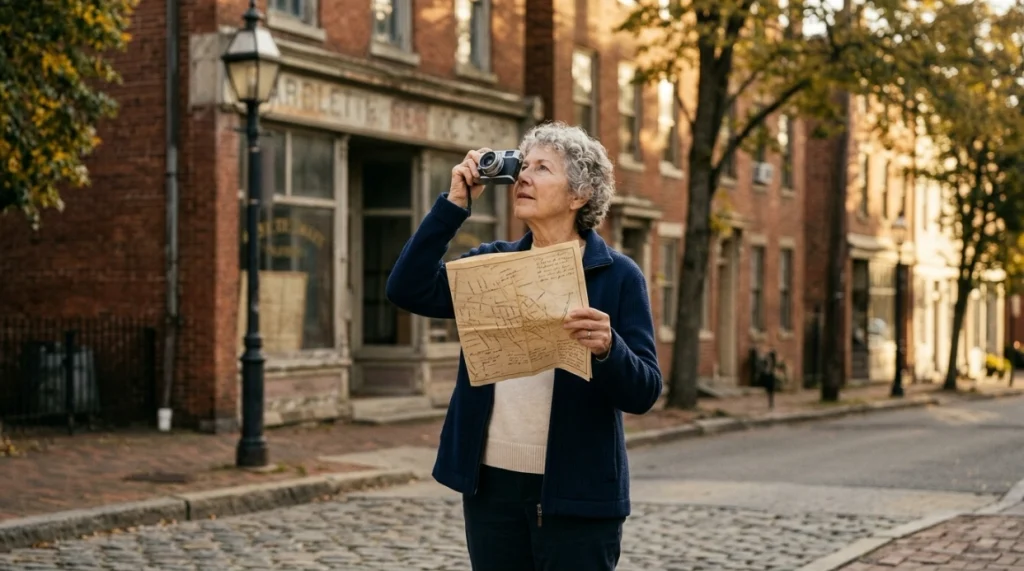
Yes. Genealogy can be an excellent history hobby because it turns broad historical events into personal stories involving real relatives, communities, occupations, migrations, and records.
You can start with information you already know. Write down your parents’ and grandparents’ names, birthplaces, approximate dates, and major life events.
What can you research?
- Birth, marriage, and death records
- Census records
- Immigration and naturalization files
- Military service
- Historic newspapers
- Church and cemetery records
- Old photographs and letters
- City directories and maps
The National Archives genealogy resources are a useful starting point for U.S. census, military, immigration, naturalization, and other federal records.
Turn family research into a manageable project
Don’t try to build hundreds of years of family history in one weekend. Choose one person or one family branch first.
- Write down what you already know.
- Ask relatives what they remember.
- Collect copies of photographs and documents.
- Check names, dates, and places against reliable records.
- Keep a note showing where every important fact came from.
I especially like the last step because family stories can change as they’re retold. Recording sources helps separate a treasured family story from a fact confirmed by a historical document.
How Can Seniors Explore Local History?
Local history is one of the easiest ways to make the past feel real. Instead of studying distant events alone, you investigate streets, buildings, families, businesses, schools, churches, factories, and neighborhoods you can still see.
The Library of Congress local history guide defines local history around geographically bounded places and provides research resources for exploring communities.
Try a neighborhood history walk
Pick a familiar street and look at it differently. Notice building dates, architectural styles, old commercial signs, monuments, cemeteries, former railway routes, or street names.
Then compare what you see with older maps or photographs.
- Photograph interesting buildings.
- Write down addresses.
- Look for historic maps at your library.
- Check local newspaper archives.
- Ask a historical society about former uses of buildings.
Create a small local-history project
A focused project makes research more satisfying. You might document one old school, one downtown block, a historic business, or how your neighborhood changed between two decades.
Your final result doesn’t need to be a formal book. A folder containing photographs, maps, notes, and a two-page timeline can become a meaningful record.
Can Museums and Archives Become a Regular Hobby?
Absolutely. Museums, historic houses, libraries, archives, battlefields, and heritage centers can turn history into an ongoing hobby rather than an occasional vacation activity.
As of 2026, large institutions also provide extensive digital collections, so limited travel doesn’t have to end your exploration.
Give each visit a purpose
A museum can feel overwhelming when you try to see everything. I prefer a narrower goal for each visit.
- Study one exhibition carefully.
- Choose five objects and read their full descriptions.
- Photograph permitted items that raise questions.
- Write down three subjects to research afterward.
- Return later for a different gallery.
The Smithsonian collections offer another option when you want to explore historical objects and records online from home.
Keep a history notebook
Use a simple notebook or digital document to record what you discover. Note the place, date, object, question, and anything you want to investigate later.
After several months, that notebook becomes a personal map of your historical interests. It can also suggest your next museum visit or research project.
What Are Good At-Home History Hobbies?
Historical reading, documentary study, online archives, old-map research, and history discussion groups work well at home. They’re especially useful when transportation, weather, or mobility makes frequent outings difficult.
Build a themed reading project
Instead of reading random history books, choose one theme for four to eight weeks. This gives separate books and documents a sense of connection.
- Read a biography of one historical figure.
- Add a broader book about the same period.
- Look at photographs or maps from that era.
- Read a diary, speech, letter, or newspaper if available.
- Finish with a documentary or recorded lecture.
This method lets you see the same period from several angles. It can also reveal where historians or historical witnesses disagree.
Start a small history book club
A history group doesn’t require ten members. Two or three friends can choose one book or subject each month and meet at home, at a library, or online.
Use a few simple questions to guide each discussion.
- What surprised you most?
- Which source seemed most convincing?
- What changed your understanding?
- What would you like to research next?
The National Institute on Aging notes that learning and meaningful social activities can be part of staying engaged as we grow older. Its cognitive health guidance for older adults also discusses keeping the mind engaged while avoiding exaggerated promises about preventing cognitive decline.
What Hands-On History Hobbies Can Seniors Try?
History doesn’t have to mean sitting with a textbook. Collecting, oral history, photography, scrapbooking, model building, historical cooking, and preserving family documents can make the subject more hands-on.
Record oral histories
Ask a relative, friend, veteran, longtime resident, or former coworker about events they personally remember. A phone or simple audio recorder may be enough.
Prepare open questions rather than questions that suggest an answer.
- What was your neighborhood like when you were young?
- What kind of work did people in your family do?
- Which local businesses do you remember?
- What major event do you remember most clearly?
- Which traditions have disappeared or changed?
Always ask permission before recording or publicly sharing another person’s story.
Study historical objects
You don’t need expensive antiques. Old family postcards, photographs, recipes, coins, newspapers, tools, or household objects can become research subjects.
For each object, try to identify its approximate date, maker, owner, original use, location, and historical context.
Create a family history scrapbook
Combine copies of photographs with captions, maps, dates, short biographies, recipes, and family stories. Use copies rather than permanently gluing irreplaceable original documents into a scrapbook.
A project like this creates something younger relatives can understand without needing access to all your research files.
How Do You Choose the Right History Hobby?
Choose a hobby based on your interests, physical comfort, budget, transportation, preferred social level, and how much research you enjoy. The best option is one you want to return to.
Match the hobby to your preferred style
- Quiet and independent: Reading, genealogy, old maps, photographs, collecting.
- Social: History clubs, genealogy groups, museum tours, volunteering.
- Outdoors: Historic walks, cemeteries, architecture, battlefields.
- Creative: Scrapbooking, memoir writing, oral history, photography.
- Research-heavy: Archives, newspapers, genealogy, local history.
- Low-mobility: Digital archives, audiobooks, documentaries, online classes.
Consider accessibility before spending money
Small changes can make a hobby more comfortable. Large-print books, audiobooks, a tablet with adjustable text, lightweight folders, magnification, and shorter museum visits can all reduce unnecessary strain.
If standing for long periods is difficult, check museum accessibility options before visiting. A focused 45-minute visit can be more enjoyable than forcing yourself through a three-hour tour.
A hobby should fit your current life. It shouldn’t become another obligation you feel guilty about avoiding.
How Can You Start a History Hobby?

Start with one subject, one small activity, and one month of experimentation. You don’t need a large collection, expensive subscription, or formal history course to begin.
A simple four-week history hobby plan
- Week 1 — Choose: Pick one topic such as family history, your hometown, World War II, ancient Rome, railroads, or historic architecture.
- Week 2 — Explore: Read one book chapter, visit one museum, or search one reliable archive.
- Week 3 — Create: Make a timeline, family tree, photo folder, notebook, map, or short written summary.
- Week 4 — Connect: Discuss what you found with a relative, friend, library group, historical society, or online community.
At the end of the month, ask yourself one question: Am I curious enough to keep going?
If the answer is yes, deepen the same hobby. If not, switch to another branch of history without treating the first attempt as a failure.
Keep the project small enough to finish
A completed project creates momentum. Researching one grandparent is usually more manageable than trying to trace an entire family tree at once.
The same rule works elsewhere. Study one building before a whole city, one battle before an entire war, or one decade before a century.
History has no shortage of subjects. Your hobby only needs a manageable doorway into them.
Frequently Asked Questions
What is the easiest history hobby for a senior to start?
Historical reading is probably the easiest starting point because it requires little setup. Choose a biography, local-history book, audiobook, or documentary about a subject you already enjoy, then use it to decide whether you want to explore genealogy, museums, collecting, or deeper research.
Is genealogy expensive to start?
It doesn’t have to be. Begin with family documents, conversations with relatives, public libraries, government archives, cemeteries, and free online resources. Paid genealogy subscriptions can be useful later, but you can learn a surprising amount before paying for specialized databases.
What history hobbies are good for seniors with limited mobility?
Genealogy, audiobooks, historical reading, online museum collections, digital archives, oral-history interviews, documentaries, old-photo research, and virtual lectures can all be done largely from home. Choose tools with adjustable text, audio, or other accessibility features when needed.
Can studying history be a social hobby?
Yes. Try museum tours, historical societies, genealogy clubs, book groups, library programs, reenactment events, volunteer projects, or oral-history interviews. Even a mostly solitary research hobby can become social when you share discoveries with relatives or other enthusiasts.
What can seniors collect if they enjoy history?
Possible collections include postcards, coins, stamps, maps, photographs, books, newspapers, political memorabilia, transportation items, military objects, or local ephemera. Start with an inexpensive, narrow theme and research each object’s background instead of buying items simply to build a large collection.
How can I preserve family history for younger generations?
Organize photographs, label people and dates, record interviews, scan important documents, create a basic family tree, and write short explanations of important events. Keep digital backups where possible and avoid permanently altering irreplaceable original documents.
Do I need formal history education to enjoy these hobbies?
No. A history hobby starts with curiosity, not credentials. Learn how to compare sources, record where information came from, and separate evidence from family stories or assumptions. Your skills will improve naturally as your project becomes more detailed.
A History Hobby Can Make the Past Personal
A good history hobby gives you more than facts and dates. It creates a reason to investigate people, places, objects, and stories that might otherwise disappear from view.
Start small. Choose one person, place, period, object, or question that genuinely interests you and follow it for a few weeks.
If you find yourself wanting to know what happened next, you’ve probably found a hobby worth keeping.