
Gel Cane Grip Explained: Benefits, Comfort & Fit


Voice Assistant Smart Speaker
Electric Heating Pad

Smart Digital Photo Frame
Quick Answer
A gel cane grip is a soft, cushioned handle or handle covering made with gel or a gel-like material. It is designed to make holding a walking cane more comfortable and may help reduce pressure and vibration felt through the hand. Its actual comfort and grip depend on the design, fit, and user’s needs; it does not replace correct cane sizing or safe walking technique.
A walking cane handle affects how comfortably you can hold and control your mobility aid. A hard, narrow handle may feel uncomfortable during longer walks, especially when you need to maintain a steady grip. A gel grip offers a softer contact surface that can make the cane more pleasant to hold.
However, not every gel grip has the same shape, thickness, or material. Some canes come with a gel-covered handle, while other products are flexible gel sleeves that fit over an existing handle. Understanding this distinction helps you decide whether a gel grip addresses your particular comfort problem.
What Is a Gel Cane Grip?
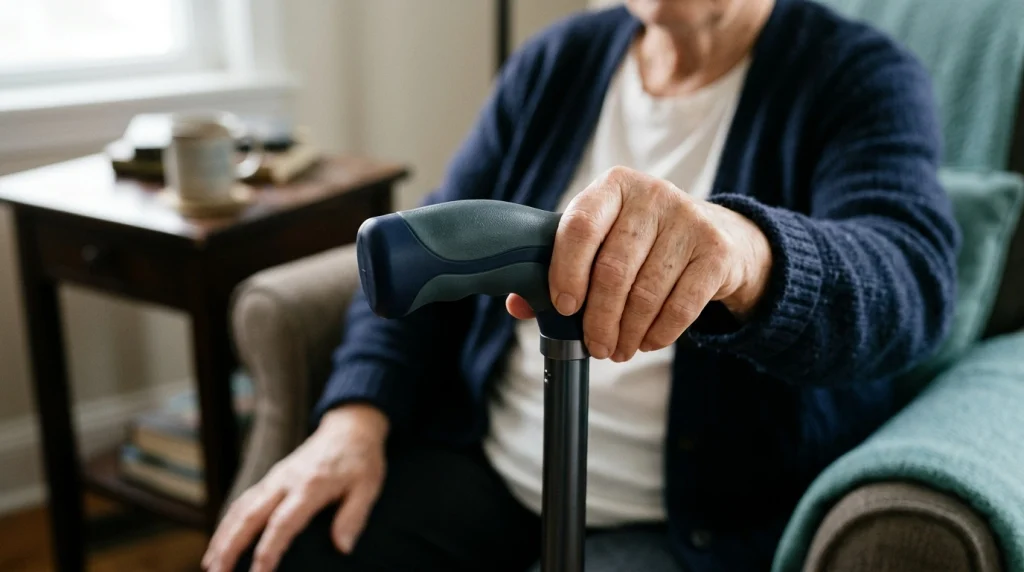
A gel cane grip is a cushioned hand-contact surface designed to make holding a walking cane more comfortable. Depending on the product, the gel material may form the handle’s outer layer or come as a separate cover fitted over a compatible handle.
Unlike a traditional hard plastic handle, a gel-covered grip can feel softer under the palm and fingers. The material may deform slightly under pressure, helping distribute contact across the hand rather than making the entire grip feel rigid.
Gel grips are available on different cane designs, including some offset-handle models. The handle shape and the grip material are separate features: an offset cane describes the shaft and handle arrangement, while gel describes the cushioning material.
Gel handle versus gel handle cover
- Integrated gel grip: The cane is manufactured with a gel-cushioned handle. The grip is part of the original design.
- Gel handle cover: A separate sleeve fits over a compatible existing handle. It may be useful when the original grip feels too hard or uncomfortable.
These options are not automatically interchangeable. A replacement cover must fit the handle securely and should not twist, slide, or interfere with the cane’s intended grip shape.
How Does a Gel Cane Grip Work?
A gel grip works mainly by providing a cushioned surface between your hand and the cane. When you hold the handle, the material can compress slightly under pressure. Depending on its construction, this may soften the sensation of contact and reduce some vibration transmitted through the handle.
That cushioning can be useful when a rigid grip feels uncomfortable during ordinary walking. The practical benefit, however, varies with the material, the handle’s shape, the force applied, and how well the grip fits your hand.
There are three main features to understand:
- Cushioning: The softer surface may feel less harsh than hard plastic or wood.
- Contact area: The handle’s shape and width influence how pressure is distributed across the palm and fingers.
- Surface traction: The outer texture and material affect how securely the hand stays in position. Softness alone does not guarantee a nonslip grip.
A useful distinction is that cushioning and stability are not the same thing. A handle may feel soft but still be difficult to hold if it is too thick, slippery, or poorly shaped for the user.
What Are the Benefits of a Gel Cane Grip?
The main potential benefit is improved hand comfort. A gel grip may suit someone who finds a hard cane handle uncomfortable, particularly during repeated or extended use. Whether it actually helps depends on the reason for the discomfort and the grip’s fit.
1. A softer surface for the palm
A cushioned handle can feel more forgiving than a rigid one. This may be helpful when a hard surface creates uncomfortable pressure against the palm during routine walking.
Nevertheless, cushioning is not a treatment for every source of hand pain. Persistent pain, numbness, tingling, or weakness may have causes that changing the handle alone will not address.
2. Potentially less vibration
Some cushioned grip designs are intended to dampen vibration. The degree of reduction depends on the specific material and construction, so it is not accurate to assume that every gel handle absorbs the same amount of vibration.
A softer handle also does not eliminate the forces transmitted through the arm when you lean on a cane. Proper technique, appropriate cane selection, and correct fit remain important.
3. More comfortable everyday handling
For someone who finds a conventional handle unpleasant to hold, a suitable gel grip may make routine cane use more comfortable. That can be valuable when walking around the home, shopping, or taking short outdoor walks.
The handle should still allow your fingers to wrap around it securely without excessive squeezing. A thick, padded grip that forces your hand into an awkward position may be less comfortable than a firmer, appropriately shaped alternative.
What Are the Limitations of a Gel Cane Grip?
A gel grip improves the hand-contact surface, but it does not automatically make a cane safer, stronger, or more supportive. Those properties depend on the complete device, including its shaft, adjustment mechanism, base, and rubber tip.
- It may not suit every hand: A thick grip can be difficult to hold for someone with small hands or limited finger movement.
- It can wear out: Depending on the material, a grip may develop tears, cracks, stickiness, or loss of its original shape.
- It may become slippery: Sweat, moisture, surface contamination, or material deterioration can affect handling.
- It cannot correct poor cane fit: An incorrectly sized cane may still cause awkward posture and uncomfortable arm positioning.
- It does not guarantee fall prevention: Cushioning cannot compensate for inadequate balance support or unsafe walking technique.
For more context on the device as a whole, see this guide to what a walking cane is and how it provides support. The type of handle is only one part of choosing a suitable mobility aid.
Gel Cane Grip vs. Foam, Rubber, and Hard Handles
Different handle materials create different sensations and tradeoffs. The best option is the one that provides a comfortable, secure hold for your hand rather than the one that feels softest in a product description.
| Handle type | Typical feel | Main consideration |
|---|---|---|
| Gel | Soft and cushioned | Check thickness, texture, and secure fit. |
| Foam | Lightweight and padded | Check for compression, tearing, or wear. |
| Rubber | Firm to moderately flexible | Texture and shape affect traction and comfort. |
| Hard plastic or wood | Firm and relatively rigid | Shape and size matter because cushioning is limited. |
These descriptions are general, not guarantees about every product. Rubber can be soft or firm, foam can vary in density, and gel compounds differ in flexibility. The Drive Medical gel-grip cane specifications provide an example of a commercially available cane designed with a soft gel grip.
If the main problem is pressure across the palm, compare the handle’s shape as well as its material. An appropriately contoured handle may be more useful than a round, thick grip in some situations.
How Do You Choose the Right Gel Cane Grip?
Choose a gel grip by checking comfort, grip security, compatibility, and the cane’s overall fit. Do not select one solely because it is described as extra-soft or ergonomic.
- Check the handle size. Your fingers should be able to wrap around the grip without excessive effort or an awkward stretch.
- Assess the surface. Look for a finish that allows you to hold the cane securely without slipping.
- Consider handle shape. A straight, offset, or contoured handle may feel different even when two models use similar gel material.
- Verify cover compatibility. If buying a sleeve, confirm that its dimensions and shape match the original handle.
- Check the whole cane. The handle should be secure, the shaft undamaged, the adjustment lock engaged, and the rubber tip in good condition.
- Test the grip safely. If possible, try it while standing on a level surface with suitable support nearby. Stop if it twists, slides, or causes discomfort.
The handle should also work with the correct cane height. According to MedlinePlus guidance on using a cane, the handle should be around wrist level when the arm hangs at the side, with the elbow slightly bent when holding it.
Practical Tip
If you are considering a gel cover for an existing cane, check whether the cover stays firmly in place during normal handling. A sleeve that rotates or slides can make the handle harder to control, even if its cushioning feels comfortable.
How Do You Maintain a Gel Cane Grip?
Inspect the grip regularly and follow the cleaning instructions supplied by the cane or cover manufacturer. A clean, undamaged handle is easier to assess for secure handling than one coated with dirt or residue.
- Wipe the grip using a cleaning method compatible with its material.
- Allow it to dry before use if the surface becomes wet.
- Check for cracks, tears, sticky patches, loose sections, or changes in shape.
- Confirm that a removable cover has not shifted or loosened.
- Inspect the shaft, adjustment mechanism, and rubber tip as well as the handle.
Do not assume that a gel cover is suitable for every cleaning chemical or that it can be used indefinitely. If the grip becomes difficult to hold securely, replace it with a compatible part or follow the manufacturer’s advice.
Also, stop using a cane that has a loose handle, a damaged shaft, or an unreliable adjustment lock. A comfortable grip cannot compensate for structural damage.
When Is a Gel Grip Not Enough?

A different grip may help when the problem is simply an uncomfortable handle. However, persistent hand pain, numbness, tingling, weakness, or difficulty keeping hold of the cane calls for more than a material change.
A healthcare professional or physical therapist can assess whether the handle shape, cane height, walking technique, or type of mobility aid needs to change. People who need substantial weight support or have significant balance problems may require a different device rather than a more padded handle.
Do not use a gel grip to conceal a damaged handle or to compensate for a cane that is unstable. If the cane feels unreliable, stop relying on it until the problem has been addressed.
Related Product
Gel Cane Handle Cover
A compatible gel sleeve may add cushioning to an existing cane handle. Check the dimensions, shape, and fit before choosing one.
As an Amazon Associate, we earn from qualifying purchases.
Frequently Asked Questions
1. Is a gel cane grip better than a regular handle?
A gel grip may feel more comfortable than a hard handle for some users because it provides cushioning. It is not automatically better for everyone; handle shape, hand size, surface traction, and individual comfort also matter.
2. Does a gel cane grip help with hand pain?
It may reduce discomfort caused by pressure against a hard handle, but it cannot treat every cause of hand pain. Persistent pain, numbness, or weakness should be assessed rather than managed only by changing the grip.
3. Can you put a gel cover on any walking cane?
No. A cover must be compatible with the handle’s dimensions and shape. It should fit securely without twisting or sliding during normal use.
4. Does a gel grip prevent falls?
No gel grip can guarantee fall prevention. A comfortable, secure handle may help with control, but safe cane use also depends on correct sizing, suitable support, good technique, and a serviceable rubber tip.
5. How do you clean a gel cane handle?
Follow the manufacturer’s cleaning instructions and use only a method compatible with the grip material. Let the handle dry before use and check that it remains secure and comfortable to hold.
6. When should a gel cane grip be replaced?
Replace a worn or damaged grip when it becomes loose, cracked, torn, sticky, misshapen, or difficult to hold securely. If the handle itself is loose or damaged, have the cane repaired or replaced as appropriate.
Conclusion
A gel cane grip is a cushioned handle or cover designed to make holding a walking cane more comfortable. It may soften pressure against the palm and reduce some vibration, but the benefits depend on the material, handle shape, and individual needs.
Before choosing one, check that it fits your hand, provides a secure hold, and is compatible with your cane. Keep the handle clean and inspect the rest of the device regularly. If discomfort persists or you feel unstable while walking, reassess the cane’s fit and suitability rather than relying on extra cushioning alone.