
Electric Flosser vs Water Flosser for Seniors


Adult Coloring Book

Fall Detection Smart Watch

Handheld Shower Head
Electric Flosser vs Water Flosser is a useful comparison for anyone who wants an easier way to clean between their teeth. The two devices work in very different ways. An electric flosser uses vibrating dental floss, while a water flosser uses a pulsing stream of water.
For seniors, the better choice often comes down to hand control, comfort, cleanup, and how easy the device is to use every day. A person who dislikes putting fingers near the mouth may prefer an electric flosser, while someone who finds string floss difficult may appreciate the broader reach of a water flosser.
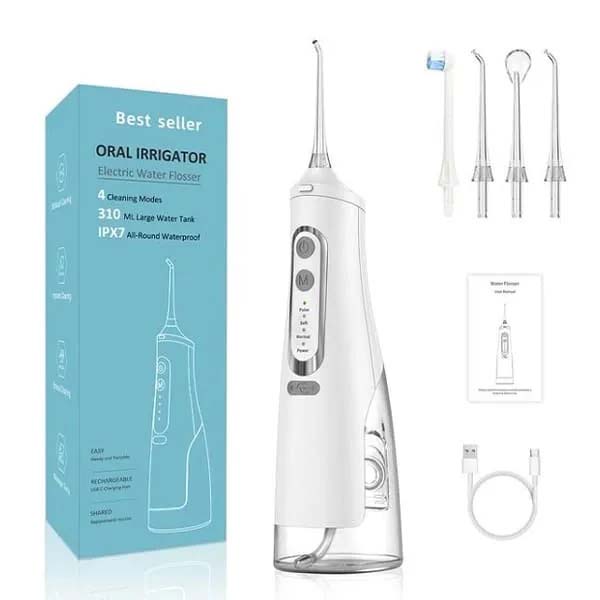
Quick Comparison
For most seniors who want less hand manipulation and a compact device, an electric flosser may be easier. It keeps the fingers away from the mouth and uses vibration to assist the flossing motion.
A water flosser may be the better choice for people with braces, bridges, implants, or other dental work where directing water around these areas is useful. The ADA notes that water flossers can be an option for people who have trouble flossing by hand.
The key difference is simple: an electric flosser still uses physical floss, while a water flosser uses water instead of string.
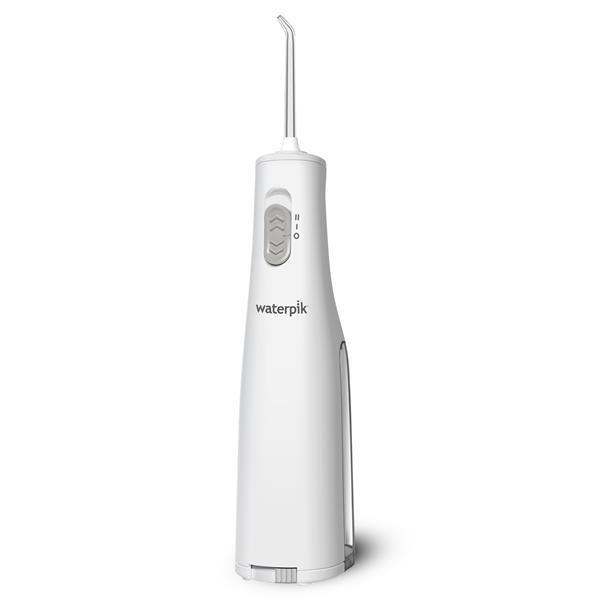
Electric Flosser vs Water Flosser At a Glance
Both can make interdental cleaning easier, but their daily routines feel quite different.
| Feature | Electric Flosser | Water Flosser |
|---|---|---|
| Cleaning method | Vibrating dental floss | Pulsing water |
| Hand movement | Low | Low to moderate |
| Fingers near mouth | No | No |
| Water needed | No | Yes |
| Tight spaces | Very useful | Useful |
| Dental work | May help | Often useful |
| Cleanup | Simple | Requires rinsing and drying |
| Portability | Usually easier | Depends on model |
| Fine-motor demand | Low | Low |
| Storage | Compact | Usually needs more space |
Electric Flosser Review
An electric flosser is essentially a powered version of string flossing. Current devices such as Flaus use sonic vibration to move a floss head between the teeth. The manufacturer lists three vibration modes, an ergonomic handle, waterproof construction, and rechargeable operation.
For seniors who already understand how to floss but dislike the finger work, this design can be appealing.
Ease of Use
The main advantage is the handle.
Instead of wrapping floss around your fingers and working both hands around your mouth, you hold the device much like an electric toothbrush. The vibrating head helps move the floss between teeth.
This may be helpful for seniors who have reduced finger flexibility or simply find traditional floss awkward.
The user still needs to guide the floss correctly. So it is not completely automatic.
Key Strengths
- Keeps fingers away from the mouth
- Uses real dental floss
- Compact and easy to store
- No water tank to fill
- Good option for tight spaces
- Simple one-handed operation
- Rechargeable models reduce disposable battery use
Potential Drawbacks
- Requires replacement floss heads
- Still involves positioning floss between teeth
- Rechargeable models need charging
- May cost more than ordinary string floss
- Not every senior will find vibrating floss comfortable
Water Flosser Review
A water flosser, also called an oral irrigator, sends a controlled stream of water around and between the teeth. The ADA recognizes water flossers as an option for cleaning between teeth and notes that ADA-Accepted models have been evaluated for safety and effectiveness.
Water flossers can be particularly useful when ordinary floss is difficult to handle.
Ease of Use
The basic process is straightforward.
Fill the reservoir, select an appropriate setting, place the tip in the mouth, and direct the water around the teeth and gumline.
There is no need to thread floss between every tooth.
The trade-off is that water flossers require more preparation and cleanup than a compact electric flosser.
Key Strengths
- No string needs to pass between the teeth
- Helpful for people who struggle with manual flossing
- Useful around some dental work
- Can flush away food debris
- Many models offer adjustable pressure
- Good option for people who prefer water-based cleaning
Potential Drawbacks
- Requires water
- Reservoir needs regular cleaning
- Can create splashing
- Countertop models take more space
- Cordless models still require charging
- Technique is needed to direct the water properly
Which Is Easier for Seniors to Use?
This is where the comparison becomes more personal.
An electric flosser may have the advantage for someone who wants a small, simple, one-handed tool. There is no reservoir to fill and no water around the sink.
A water flosser may be easier for someone who dislikes manipulating floss between individual teeth. The water stream does much of the cleaning work.
The easiest device is often the one that fits naturally into the user’s daily routine.
For seniors with limited dexterity, both options can be easier than traditional floss. Research has also found water flossers can be useful for people with limited manual dexterity.
Ease-of-use winner: Electric flosser for simplicity; water flosser for avoiding physical floss manipulation.
Performance Comparison
The two devices should not be judged as though they perform exactly the same task.
An electric flosser mechanically moves floss between the teeth. A water flosser uses pulsating water to dislodge debris and disrupt plaque.
Evidence for water flossers is reasonably supportive, although research quality varies. A systematic review found that most included studies favored water flossers over dental floss for plaque reduction, while also noting limitations in study size and design.
The ADA also states that water flossers can remove food and plaque and may help reduce gingivitis when used as directed.
For the electric category, evidence depends heavily on the specific device. Claims from individual manufacturers should not automatically be treated as evidence for every electric flosser.
Performance winner: Water flosser when versatility around dental work and debris removal matter most; electric flosser when the user prefers physical flossing with powered assistance.
Comfort, Accessibility, and Senior-Friendly Design
Comfort can be more important than having the most advanced feature set.
An electric flosser generally feels familiar because it has a handle similar to other powered oral-care devices. A lightweight model may be easier to hold and maneuver around the back teeth.
A water flosser removes the need to push floss through tight contacts, which may appeal to someone who finds that movement uncomfortable or difficult.
However, the water flosser introduces another task: controlling the water stream while keeping the mouth positioned correctly over the sink.
Neither design is automatically better for every senior.
Features Comparison
The useful features are the ones that reduce effort without making the routine confusing.
| Feature | Electric Flosser | Water Flosser |
|---|---|---|
| Powered assistance | Sonic vibration | Pulsing water |
| Pressure control | Usually vibration settings | Common on many models |
| Consumables | Floss heads | Water |
| Charging | Rechargeable models | Cordless models need charging |
| Cleanup | Low | Moderate |
| Travel | Usually convenient | Depends on size |
| Dental-work versatility | Good | Often excellent |
Price, Maintenance, and Long-Term Value
Price varies greatly by model, so it is better to compare ownership costs than rely on one temporary retail price.
An electric flosser requires replacement floss heads. A water flosser avoids floss-head refills but requires regular reservoir and tip cleaning.
Water flossers may also require more storage space. A systematic review specifically identified cost and storage requirements as potential disadvantages of water flossers.
For long-term value, consider:
- Replacement floss heads
- Replacement water-flosser tips
- Battery life
- Charging requirements
- Cleaning time
- Warranty
- Storage space
- Availability of replacement parts
Best for simple maintenance: Electric flosser.
Best for avoiding disposable floss heads: Water flosser.
Who Should Choose an Electric Flosser?
Choose an electric flosser if:
- You want a compact device.
- You dislike putting your fingers near your mouth.
- You prefer actual floss between the teeth.
- You want to avoid filling a water reservoir.
- You have limited space around the bathroom sink.
- You want something that feels similar to using an electric toothbrush.
- You prefer a one-handed design.
Who Should Choose a Water Flosser?
Choose a water flosser if:
- Traditional floss is difficult to handle.
- You prefer water-based cleaning.
- You have dental work that makes conventional flossing harder.
- You want adjustable water pressure.
- You often need to remove food debris from between teeth.
- You do not mind filling and cleaning a water reservoir.
- Bathroom counter space is not a major concern.
Electric Flosser vs Water Flosser — Final Verdict
Best for most seniors: Electric flosser if compactness, simple handling, and minimal cleanup are the priorities.
Best for dental-work flexibility: Water flosser.
Best for simple daily operation: Electric flosser.
Best for water-based interdental cleaning: Water flosser.
There is no universal winner. The better device is the one a person can use correctly and consistently. If a dental condition or significant dental work affects the choice, it is sensible to ask a dentist which interdental method fits the individual situation.
Scoring Summary
These scores are practical editorial ratings based on the features and trade-offs discussed above, not laboratory test results.
| Category | Electric Flosser | Water Flosser |
|---|---|---|
| Ease of Use | 9/10 | 8/10 |
| Senior-Friendly Design | 9/10 | 8/10 |
| Performance Versatility | 8/10 | 9/10 |
| Maintenance | 9/10 | 7/10 |
| Portability | 9/10 | 7/10 |
| Value | 8/10 | 8/10 |
How We Evaluate Products
This comparison focuses on practical factors that can affect everyday use.
We consider:
- Ease of use
- Dexterity requirements
- Comfort
- Accessibility
- Cleaning and maintenance
- Storage
- Performance
- Portability
- Replacement costs
- Long-term practicality
No hands-on testing or laboratory testing is claimed here.
Senior-Specific Buying Considerations
A few details deserve extra attention before choosing either device.
Physical Effort
Consider how much hand movement is needed. An electric flosser may reduce the finger work involved in conventional flossing.
Controls
Look for controls that are easy to understand and operate without complicated settings.
Maintenance
Think beyond the initial setup. A water flosser needs its reservoir and components cleaned. An electric flosser needs replacement floss heads.
Storage
Check where the device will live between uses. A compact electric flosser usually needs less space.
Setup
An electric flosser can be ready without filling a tank. A water flosser requires water before use.
Safety
Follow the manufacturer’s instructions, especially for electrical components, charging, cleaning, and water exposure.
Common Buying Mistakes
Avoid these mistakes when choosing between the two.
- Choosing based only on the purchase price
- Ignoring replacement costs
- Buying a device that is awkward to hold
- Overlooking bathroom storage space
- Choosing too many settings when simplicity is preferred
- Forgetting to check replacement-part availability
Safety
Both products are electrical oral-care devices, so basic care matters.
Keep charging equipment and electrical connections in accordance with the manufacturer’s instructions. Clean reusable components as directed.
A water flosser should also be used by one person rather than shared between household members.
If cleaning between the teeth causes persistent bleeding, significant pain, or another concerning symptom, speak with a dental professional rather than assuming the device is the cause.
Frequently Asked Questions
Is an electric flosser better than a water flosser?
Not for everyone. An electric flosser may be easier for compact, floss-based cleaning, while a water flosser may be better for people who prefer water irrigation or have dental work that makes traditional flossing difficult.
Is a water flosser good for seniors?
Yes. Water flossers can be useful for people who have difficulty flossing by hand, including some people with limited manual dexterity.
Which is easier to maintain?
An electric flosser generally requires less cleanup. A water flosser needs its reservoir and reusable components cleaned regularly.
Which is better for braces or dental work?
A water flosser can be particularly useful around braces, bridges, and other dental work that can make conventional flossing difficult.
Can an electric flosser replace a water flosser?
They perform interdental cleaning differently. One uses vibrating floss, while the other uses water. Neither should be assumed to be universally superior.
Should I ask my dentist before choosing one?
If you have implants, bridges, braces, gum problems, significant sensitivity, or another dental concern, discussing the choice with your dentist is a sensible step.
Conclusion
Electric Flosser vs Water Flosser is less about finding one universal winner and more about finding the right daily routine. An electric flosser is appealing when compactness, powered flossing, and simple handling matter most.
