
Colorado Income Qualified Senior Housing Credit


Bed Exit Alarm Sensor

Kitchen Timer with Large Display

Handheld Shower Head
The Colorado Income Qualified Senior Housing Credit is a state-level incentive designed to support affordable housing for seniors. It offers significant property tax reductions to developers who build or rehabilitate housing units for low- to moderate-income older adults. This program not only lowers operating costs but also encourages long-term sustainability of senior housing projects across Colorado.
Key Takeaways
- Tax Reduction Incentive: The credit allows qualifying properties to receive a substantial reduction in property taxes, making senior housing more financially viable.
- Eligibility Based on Income: Only housing designated for income-qualified seniors—typically those at or below 80% of area median income—qualifies for the credit.
- Long-Term Commitment Required: Developers must agree to maintain affordability and income restrictions for at least 15 years to retain the tax benefits.
- State and Local Collaboration: The program is administered jointly by the Colorado Housing and Finance Authority (CHFA) and local governments.
- Encourages New Development: By lowering costs, the credit stimulates investment in new senior housing, especially in underserved rural and suburban areas.
- Application Process Is Competitive: Due to limited funding, developers must submit detailed proposals demonstrating community need and financial feasibility.
- Benefits Beyond Tax Savings: Recipients often see improved occupancy rates, better maintenance, and stronger relationships with local communities.
Key Takeaways
- Understanding colorado income qualified senior housing credit: Provides essential knowledge
📑 Table of Contents
- What Is the Colorado Income Qualified Senior Housing Credit?
- Who Can Benefit from the Colorado Income Qualified Senior Housing Credit?
- Eligibility Requirements for the Credit
- How to Apply for the Colorado Income Qualified Senior Housing Credit
- Real-World Impact: Success Stories from Across Colorado
- Future Outlook and Policy Trends
- Tips for Prospective Applicants
- Conclusion: Why This Credit Matters Now More Than Ever
What Is the Colorado Income Qualified Senior Housing Credit?
If you’re involved in senior housing development or managing affordable housing in Colorado, you’ve likely heard about the Colorado Income Qualified Senior Housing Credit. But what does it really mean, and why should it matter to you? Simply put, this state-sponsored tax credit is designed to help make affordable senior housing more sustainable by significantly reducing property tax burdens on qualifying properties.
This program targets housing developments that serve low- to moderate-income older adults—typically those earning at or below 80% of the Area Median Income (AMI). By offering a direct offset against property taxes, the credit helps bridge the gap between operating costs and rental income, which can be tight in affordable housing. As a result, more developers are willing to invest in senior living communities, especially in areas where demand is high but profitability is low.
The credit isn’t just a one-time perk—it’s a long-term incentive. Developers who qualify must commit to keeping rents affordable and residents income-qualified for at least 15 years. This ensures that the benefit continues to support vulnerable seniors over time, rather than being used as a short-term financial shortcut.
How Does It Compare to Other Affordable Housing Credits?
While the federal Low-Income Housing Tax Credit (LIHTC) is the most well-known tool for developing affordable housing across the U.S., the Colorado Income Qualified Senior Housing Credit serves a more specialized purpose. LIHTC covers a broad range of income levels and tenant populations, while this state-specific credit zeroes in on seniors specifically.
Additionally, unlike many federal credits that offer tax equity investors a dollar-for-dollar reduction in their federal tax liability, the Colorado credit directly reduces property taxes, not income taxes. That makes it particularly valuable in states like Colorado, where rising property values have led to skyrocketing tax bills for nonprofit and for-profit operators alike.
For example, a senior housing complex in Denver might pay $200,000 annually in property taxes without the credit. With the Income Qualified Senior Housing Credit, that bill could drop to under $50,000—freeing up hundreds of thousands of dollars over a decade that can go toward resident services, facility upgrades, or staffing.
Who Can Benefit from the Colorado Income Qualified Senior Housing Credit?
The primary beneficiaries are twofold: developers looking to build or renovate affordable senior housing, and older adults seeking safe, stable, and affordable places to live. But let’s break it down further.
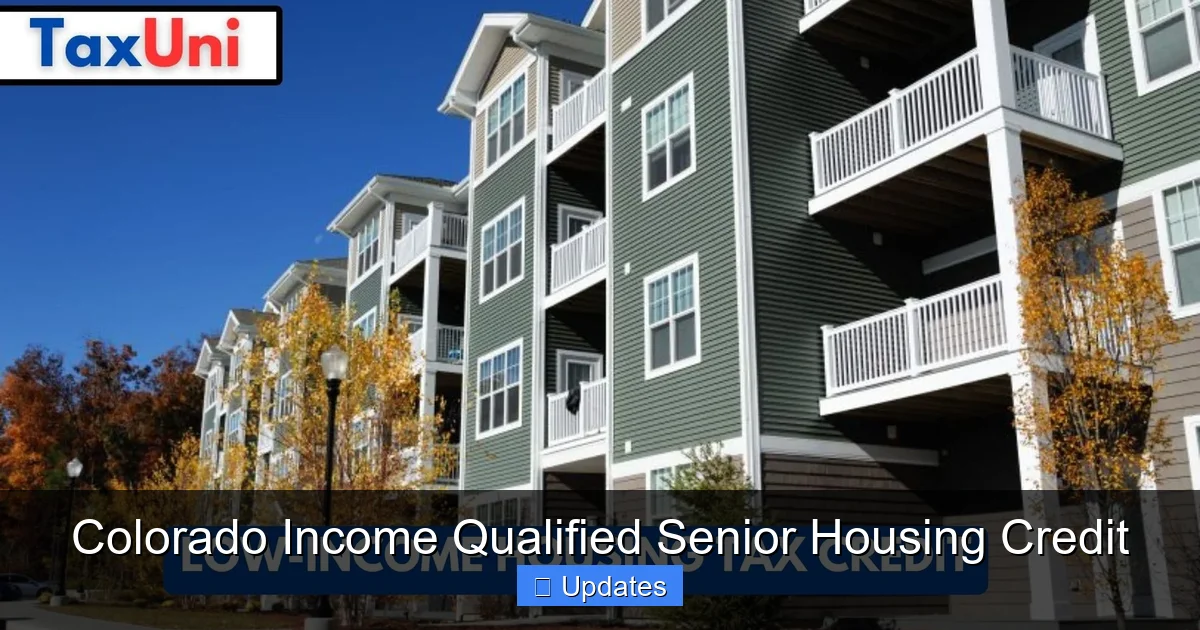
Visual guide about Colorado Income Qualified Senior Housing Credit
Image source: taxuni.com
Developers and Property Managers
For anyone considering a new project in Colorado—especially in high-cost urban areas like Boulder, Fort Collins, or Colorado Springs—the financial hurdles can be daunting. Zoning laws, construction costs, and ongoing maintenance all eat into potential profits. The Income Qualified Senior Housing Credit helps level the playing field.
Imagine a developer planning a 60-unit senior apartment building in Aurora. Without subsidies or credits, the monthly rent needed to cover expenses might be out of reach for most low-income seniors. But thanks to the credit, the effective cost of ownership drops dramatically. That allows the developer to charge lower rents while still maintaining financial stability.
Moreover, because the credit is tied to long-term affordability covenants, it signals to lenders and investors that the project has enduring value. Banks are more likely to offer favorable loan terms when they know the property will remain affordable for years to come.
Seniors and Their Families
On the flip side, seniors benefit directly through increased access to quality housing. According to AARP, nearly one in four adults aged 65+ in Colorado lives on less than $25,000 per year. For these individuals, even modest increases in housing costs can force difficult trade-offs—like skipping medications or cutting back on groceries.
Properties that qualify for the credit often include supportive services such as meal programs, transportation assistance, and wellness checks—amenities that might otherwise be unaffordable. And because the units are permanently income-restricted, residents don’t face surprise rent hikes down the road.
Families caring for aging parents also gain peace of mind knowing there’s a reliable option nearby. Instead of worrying about whether Mom or Dad can stay in their home due to rising property taxes or caregiving needs, they can rest easy knowing subsidized housing is available.
Eligibility Requirements for the Credit
Not every senior housing project qualifies for the Colorado Income Qualified Senior Housing Credit. There are specific criteria that must be met—both during construction and after occupancy begins.
Visual guide about Colorado Income Qualified Senior Housing Credit
Image source: seniorsprotalk.com
Income Restrictions
The cornerstone of eligibility is income targeting. At least 80% of the units in the development must be rented to households earning no more than 80% of the AMI for the county where the property is located. The remaining 20% may serve households earning up to 120% of AMI, but they still count toward the overall affordability requirement.
For instance, in Denver County in 2024, 80% of AMI for a household of four is approximately $74,000. So, if your project includes four-bedroom units, each renter would need to earn $74,000 or less to qualify. Single occupants or smaller households would have higher limits based on family size.
Unit Type and Occupancy Limits
Only permanent supportive housing for seniors counts toward the credit. Transitional housing, emergency shelters, or facilities primarily serving people with disabilities (unless co-located with seniors) are generally excluded.
Additionally, at least 90% of the units must be occupied by seniors (age 62+) at the time of application and throughout the compliance period. This ensures the credit stays focused on its intended population.
Compliance Period
Once approved, the property must adhere to affordability restrictions for a minimum of 15 years. During this time, rents cannot exceed the HUD-established Fair Market Rent (FMR) adjusted for bedroom size, and tenants must re-certify their income annually.
Violating these terms—for example, by raising rents beyond allowable levels or renting to non-seniors—can trigger repayment of previously claimed credits plus penalties. That’s why many developers partner with experienced property managers who specialize in compliance monitoring.
How to Apply for the Colorado Income Qualified Senior Housing Credit
The application process is competitive and requires careful planning. Here’s a step-by-step overview:
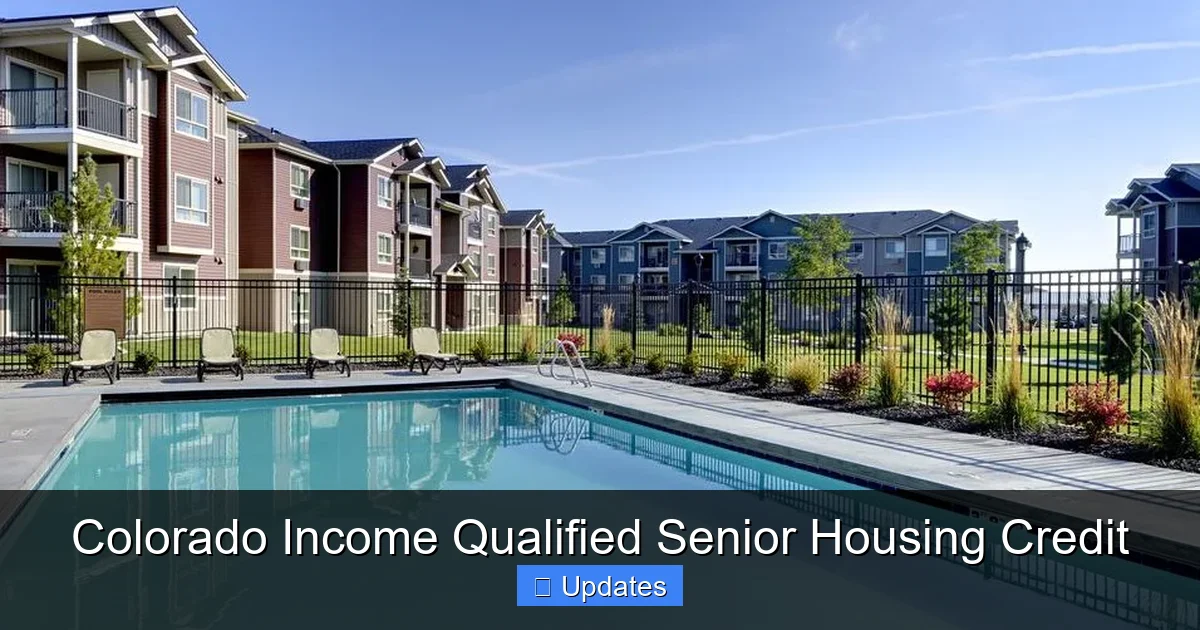
Visual guide about Colorado Income Qualified Senior Housing Credit
Image source: lowincomehousing.us
- Gather Preliminary Data: Determine your target market, site location, and projected construction budget. Use CHFA’s online mapping tools to identify areas with high senior poverty rates or limited existing supply.
- Submit an Expression of Interest (EOI): Most cycles begin with an EOI, where you outline your project vision, target population, and anticipated use of funds. This helps CHFA prioritize applications based on community need.
- Prepare a Full Application: If selected, you’ll need to provide detailed financial models, architectural plans, lease agreements, and evidence of community support (e.g., letters from local agencies).
- Undergo Underwriting Review: CHFA evaluates each proposal for feasibility, sustainability, and alignment with statewide housing goals.
- Close Financing & Begin Construction: Once awarded, you’ll finalize loans and begin work within a set timeframe—usually 12–18 months.
Pro tip: Start early! Application windows typically open twice a year, and preparation can take several months. Partnering with a consultant experienced in Colorado housing policy can dramatically improve your chances.
Common Pitfalls to Avoid
- Underestimating Soft Costs: Don’t overlook fees related to environmental reviews, legal counsel, or consultant retainers—they add up quickly.
- Ignoring Local Zoning Laws: Even if your project meets state requirements, it must comply with municipal codes. Check with your city planning department before purchasing land.
- Overlooking Operating Expenses: The credit reduces property taxes, but utilities, insurance, and staffing still consume a large portion of revenue. Build realistic budgets that account for inflation and unexpected repairs.
Real-World Impact: Success Stories from Across Colorado
To understand how the credit works in practice, consider these examples:
Project: The Gardens at Riverwalk (Lafayette, CO)
This 50-unit senior community opened in 2021 with 100% of units reserved for households earning ≤60% of AMI. Thanks to the credit, annual property taxes fell from $180,000 to $45,000—a savings of $1.35 million over 15 years. The developer reinvested the difference into energy-efficient appliances and a free shuttle service to downtown Lafayette.
Project: Sunset Commons (Grand Junction, CO)
Located in a rural mountain town, this project struggled to attract investors until the credit was introduced. Today, all 32 units serve seniors making less than $30,000 annually. Resident satisfaction surveys show 98% report being “very satisfied” with their living conditions—a marked improvement from similar developments without tax relief.
These cases illustrate how targeted incentives can transform not just individual buildings, but entire neighborhoods. When more seniors can age in place safely and affordably, everyone wins.
Future Outlook and Policy Trends
The Colorado Income Qualified Senior Housing Credit is part of a growing national movement to address the affordable housing crisis among older Americans. As baby boomers continue retiring en masse, demand for accessible, low-cost senior housing is expected to surge. Without intervention, many communities will struggle to keep pace.
State legislatures nationwide are experimenting with similar credits, including California’s Veterans and Seniors Housing Credit and Texas’s Elderly Housing Tax Exemption. However, Colorado’s approach stands out for its focus on income qualification rather than just senior status alone.
Recent legislative updates have expanded the credit’s reach to include adaptive reuse projects—meaning developers can renovate existing structures (like old hotels or schools) into senior housing, not just build from scratch. This flexibility opens doors in historic districts or downtown cores where new construction is prohibited.
Looking ahead, advocates hope to see increased funding allocations and streamlined application processes. Some proposals even suggest pairing the credit with Medicaid waivers to fund on-site health services—further enhancing the value proposition for residents and operators.
Tips for Prospective Applicants
If you’re thinking about applying for the Colorado Income Qualified Senior Housing Credit, here are five practical tips to maximize your odds:
- Start Early: Begin gathering data and forming partnerships 6–9 months before the application window opens.
- Engage Stakeholders Early: Talk to local nonprofits, faith groups, and city officials. Their buy-in can strengthen your proposal and uncover hidden resources.
- Work with Experts: Hire architects familiar with universal design, accountants who understand tax credits, and legal advisors experienced in affordability covenants.
- Budget for Compliance: Set aside funds annually for income recertifications, unit inspections, and potential audits.
- Think Long-Term: Design buildings that are durable, energy-efficient, and adaptable to changing resident needs—this improves both operational efficiency and resident retention.
Remember: the goal isn’t just to secure funding—it’s to create lasting value for seniors and communities alike.
Conclusion: Why This Credit Matters Now More Than Ever
The Colorado Income Qualified Senior Housing Credit represents more than just a tax break—it’s a lifeline for thousands of older adults facing housing insecurity. In a state known for its natural beauty and outdoor recreation, it’s easy to forget that economic realities affect everyday life. Rising property values, stagnant wages, and shrinking public budgets have created a perfect storm for low-income seniors.
But thanks to programs like this, progress is possible. Every unit built under the credit brings us closer to a Colorado where no senior has to choose between heat and medicine, or stability and dignity. And for developers, it’s proof that doing good and doing well aren’t mutually exclusive.
If you’ve been hesitant to pursue affordable senior housing—or if you’re already managing such a property—consider exploring how the credit could benefit your project. Reach out to CHFA, attend informational webinars, or connect with other operators in the network. Together, we can build a future where aging in place is truly affordable for all.
Frequently Asked Questions
What is the Colorado Income Qualified Senior Housing Credit?
The Colorado Income Qualified Senior Housing Credit is a state tax incentive that reduces property taxes for affordable senior housing developments serving low- to moderate-income older adults. It helps make such housing financially sustainable by lowering annual tax burdens.
Who qualifies for this credit?
Developers of permanent senior housing where at least 80% of units are rented to households earning ≤80% of area median income (AMI) and 90% of residents are seniors (62+) can apply. Properties must agree to maintain affordability for 15 years.
How much tax savings can I expect?
Savings vary by location and assessed value, but typical properties see their annual property tax bill reduced by 60–80%. For example, a $200,000 tax bill might drop to $50,000 or less—potentially saving over $2 million in taxes over 15 years.
Is there a waiting list to apply?
No formal waiting list exists, but applications are competitive due to limited funding. Starting your planning early and submitting a strong Expression of Interest gives you the best chance of success.
Can I use this credit alongside other funding sources?
Yes! Many successful projects combine the Colorado credit with federal LIHTC, private grants, and low-interest loans. Be sure to consult with a tax advisor or housing specialist to avoid conflicts.
Where can I learn more or get help applying?
Visit the Colorado Housing and Finance Authority (CHFA) website or contact their development team directly. They offer technical assistance, webinars, and one-on-one consultations for prospective applicants.