
10 Best Smoke Detectors for Arthritis: Easy-to-Use Options


Adaptive Eating Utensils

Compression Socks

Sudoku Puzzle Book
Smoke detectors provide an early warning when a fire starts, but many models rely on small test buttons, stiff battery doors, or twist-on mounts. Those features can make routine testing, battery changes, and installation harder for people with arthritis.
For people with arthritis, the best smoke detectors have large test buttons, easy-grip surfaces, clear alerts, and simple battery access. We also look for voice warnings, long-life batteries, and designs that reduce the need for tight gripping or twisting.
We compared smoke detectors with these needs in mind, focusing on ease of use, dependable alerts, and practical maintenance to find the models that make fire protection easier to manage.
Best Smoke Detectors for Arthritis
We selected the best smoke detectors for arthritis based on easy-to-use controls, clear alerts, and simple testing features. Our list includes options that can reduce hand strain and make routine safety checks easier.
First Alert SMI100 Smoke Alarm

We recommend this alarm for people with arthritis because its front-access battery compartment and simple test button make routine upkeep easier.
Pros
- Front-access battery replacement
- Simple installation and testing
- Precision Detection may help reduce cooking-related nuisance alarms
Cons
- Battery changes still require some hand strength
- Plastic housing feels less sturdy than some alternatives
- It does not include hardwired power
We found the SMI100 quick to install on a wall or ceiling. The included mounting hardware helped, and the battery compartment opened from the front instead of requiring us to remove the whole alarm.
The large test and silence button worked well during routine checks. People with limited grip strength may still need help opening the battery area, but the design avoids some awkward twisting and reaching.
Precision Detection aims to reduce nuisance alarms from cooking while providing an early warning during a fire. The end-of-life alert also helps us know when to replace the unit rather than guessing.
Its lightweight housing feels somewhat thin, although it sits securely after installation. Since this model uses a replaceable 9V battery, we must plan for regular testing and battery changes.
X-Sense SC07 Smoke and CO Alarm
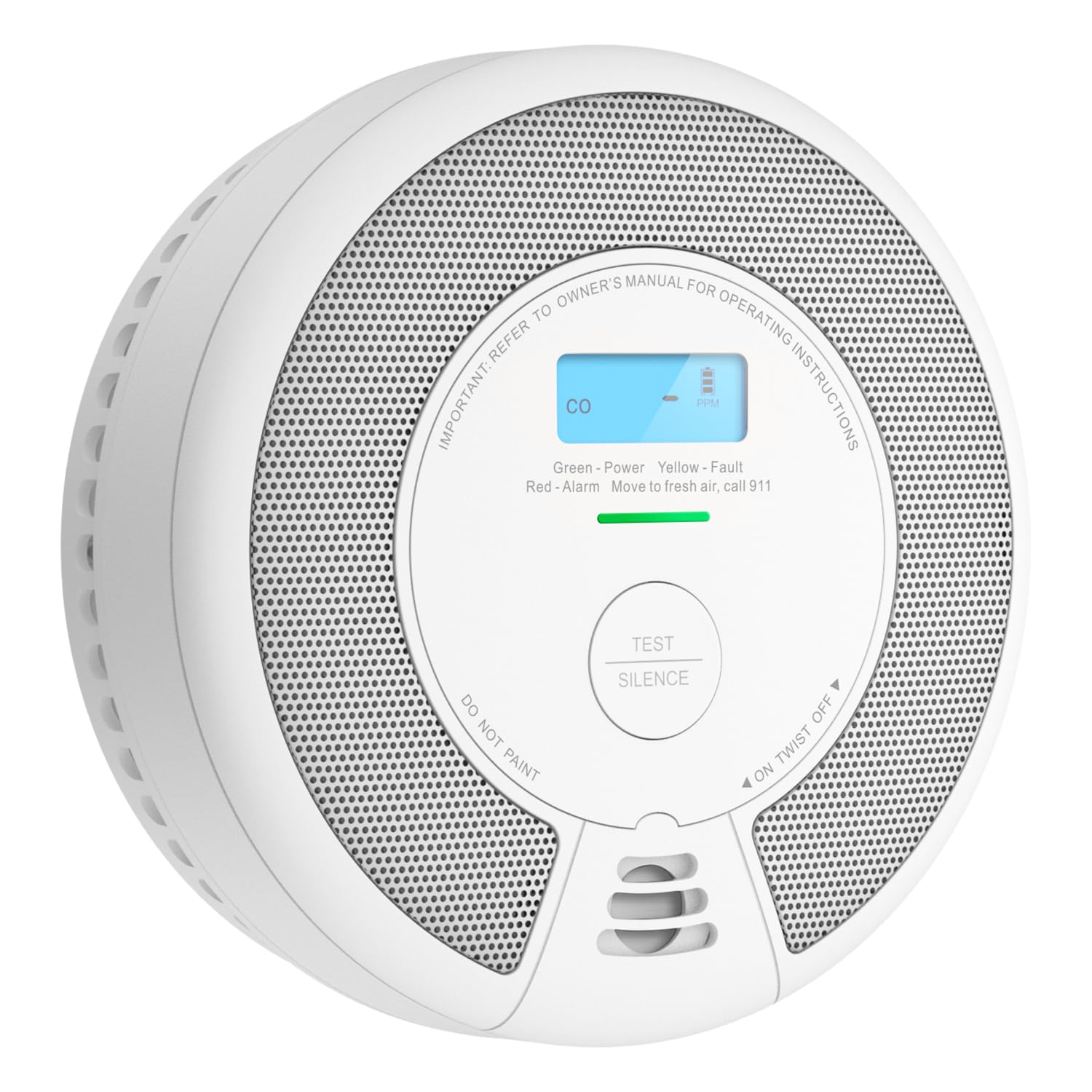
We recommend the X-Sense SC07 for people with arthritis who want a simple alarm with no battery changes or hardwiring.
Pros
- Sealed 10-year battery avoids regular battery handling
- Mounting hardware makes installation straightforward
- One unit detects both smoke and carbon monoxide
Cons
- The standalone model does not connect wirelessly
- It may not fit standard junction boxes
- The alarm has no app or remote alerts
We found the SC07 easy to set up because it needs no wiring or battery installation. The included bracket, screws, and anchors support ceiling or wall mounting, though people with limited hand strength may still need help using tools.
The sealed battery reduces maintenance. We would not need to open the unit for routine battery changes or respond to low-battery chirps. Its photoelectric smoke sensor and electrochemical carbon monoxide sensor cover two common household dangers in one device.
The LCD gives us more information than simple lights and beeps. However, this SC07 works only as a standalone alarm, so it cannot link to other units or a base station. Buyers who need wireless interconnection should choose the SC07-W instead.
The 85-decibel alarm, UL certifications, and five-year quality warranty add useful safety support. We should still test the alarm as recommended and replace the entire unit when its 10-year battery reaches the end of its service life.
SITERWELL GS509A Smoke Detector
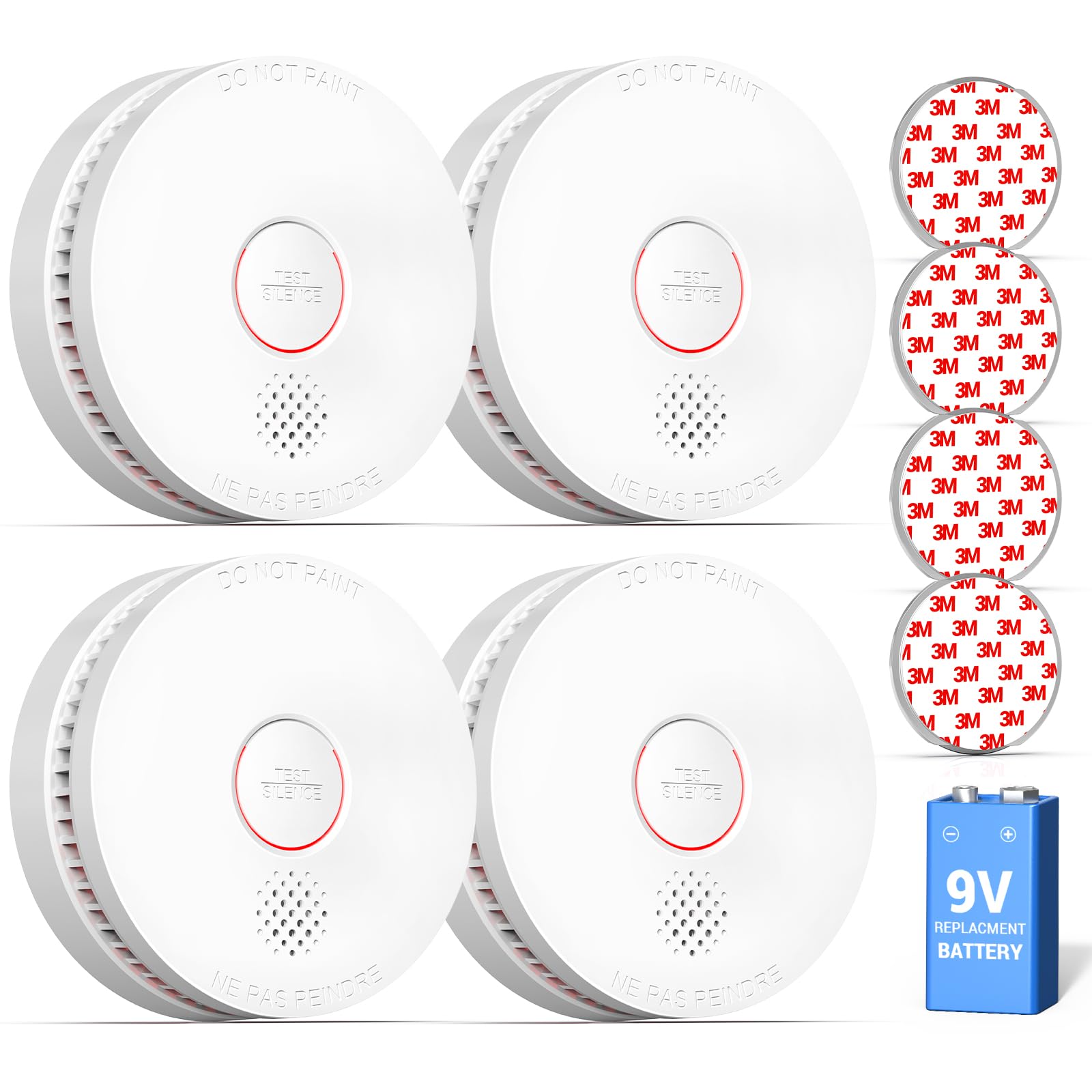
We recommend this four-pack for people with arthritis because its magnetic mounts make removal and battery changes easier.
Pros
- Magnetic mounts reduce twisting and reaching.
- The test and mute button is simple to press.
- Photoelectric sensing helps detect slow, smoldering fires.
Cons
- The replaceable 9V battery needs regular changes.
- The alarm may sound quieter than some competing models.
- Installation still requires ceiling or wall access.
We found the magnetic fastening system helpful during installation. Each alarm attached and came off with less effort than models that require repeated screw removal, which can make battery replacement easier for stiff or painful hands.
The large test button also worked well for routine checks. We could press it without much force, while the mute feature helped silence nuisance alerts. The included adhesive disks offer another mounting option, but we would use screws where possible for a secure fit.
This model uses a photoelectric sensor, which suits homes where slow, smoky fires are a concern. Its audible alarm exceeds 85 decibels, although some users may prefer a louder unit. The detector includes a 9V battery and gives a low-battery warning, so we would keep replacement batteries nearby and test every alarm weekly.
X-Sense SC01 Smoke and CO Detector
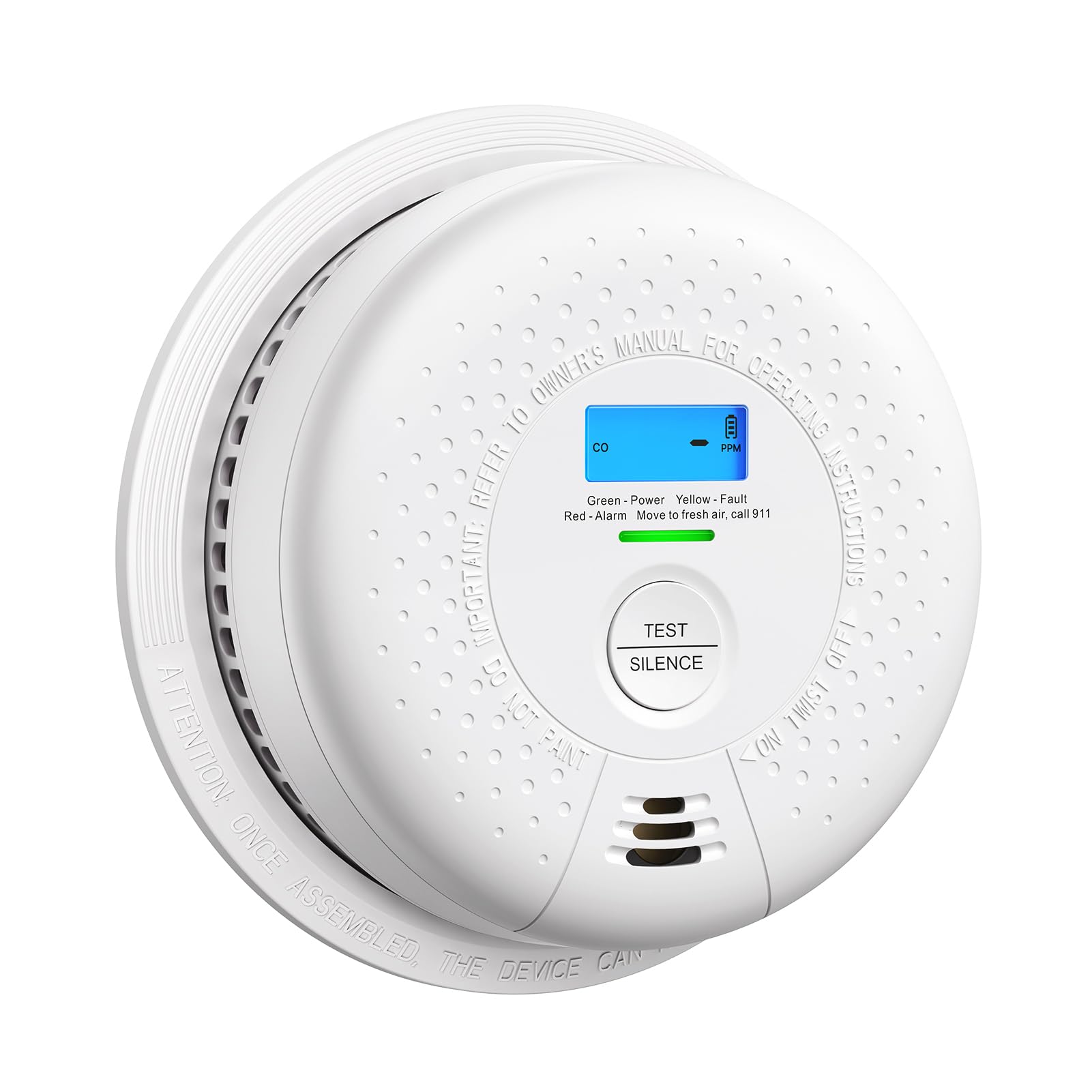
We recommend this detector for people with arthritis who want simple installation and no battery changes for up to 10 years.
Pros
- Sealed battery removes the need to open the unit for battery replacement.
- Mounting hardware supports a quick, simple setup.
- One device detects both smoke and carbon monoxide.
Cons
- The standalone model cannot connect to other alarms.
- Wall or ceiling mounting may still require a drill.
- The display and manual may take time to understand.
We found the X-Sense SC01 easy to mount without rewiring. Its sealed battery also avoids the small, awkward battery door work that can be difficult for people with stiff or painful hands.
The unit combines smoke and carbon monoxide detection, so we only needed one alarm in a location instead of separate devices. Its loud 85 dB alert is useful for waking household members, though it may sound harsh in smaller rooms.
This model works as a standalone alarm and does not support Wi-Fi, wireless linking, or a base station. We would choose it for simple coverage, but homes needing connected alarms should consider the X-Sense SC01-W instead.
Kidde 20SD10 Smoke Detector

We recommend this alarm for people with arthritis who want a low-maintenance smoke detector with clear visual and audible alerts.
Pros
- Built-in 10-year battery avoids routine battery changes
- Red LED gives a visible status signal
- Large alarm sound and simple mounting support easier use
Cons
- Built-in battery cannot be replaced
- Setup instructions may take extra attention
- Standalone design does not connect with other alarms
We found the 10-year battery helpful because it removes the need to open the unit and handle small batteries. That makes routine upkeep easier for people with stiff or painful hands.
The alarm uses an 85-decibel sound and a red LED indicator. We could check its status without relying only on sound, which may help users with hearing or vision concerns.
Mounting felt straightforward, especially when existing ceiling holes matched the bracket. The test and setup controls may require careful handling, so we recommend reading the instructions before installation.
Its sensing system aims to reduce alarms from cooking and steam. We still suggest placing it away from kitchens and bathrooms, since correct placement remains important.
The battery is sealed into the alarm. We avoid regular battery replacement, but we must replace the entire unit when its battery reaches the end of its service life.
Kidde 10SDR Compact Smoke Detector

We recommend the Kidde 10SDR for people with arthritis because its simple AA battery setup and Test & Hush button reduce the need for small, difficult controls.
Pros
- Easy battery replacement with two AA batteries
- Loud 85-decibel alarm and bright red LED
- Compact design with no wiring required
Cons
- Battery checks still require some hand strength
- No voice alerts or app controls
- Hush mode only silences temporary nuisance alarms
We found the back compartment easier to handle than models with narrow battery drawers. The two AA batteries fit into a straightforward space, and the included mounting hardware makes setup simple for most homes.
The Test & Hush button also helps when cooking or dealing with steam. We could press one large control instead of working with tiny switches. However, anyone with limited grip strength may still need help mounting the alarm or changing its batteries.
Its 85-decibel siren sounds strong, while the red LED provides a useful visual signal. The compact body fits well in smaller rooms, hallways, and apartments. This battery-powered model also continues working during power outages.
The photoelectric sensor aims to reduce false alarms from normal cooking and steam. We still recommend following the placement instructions and testing the alarm regularly. The unit includes a 10-year limited warranty, but the batteries will need replacement as needed.
First Alert SMI100-AC Hardwired Smoke Alarm
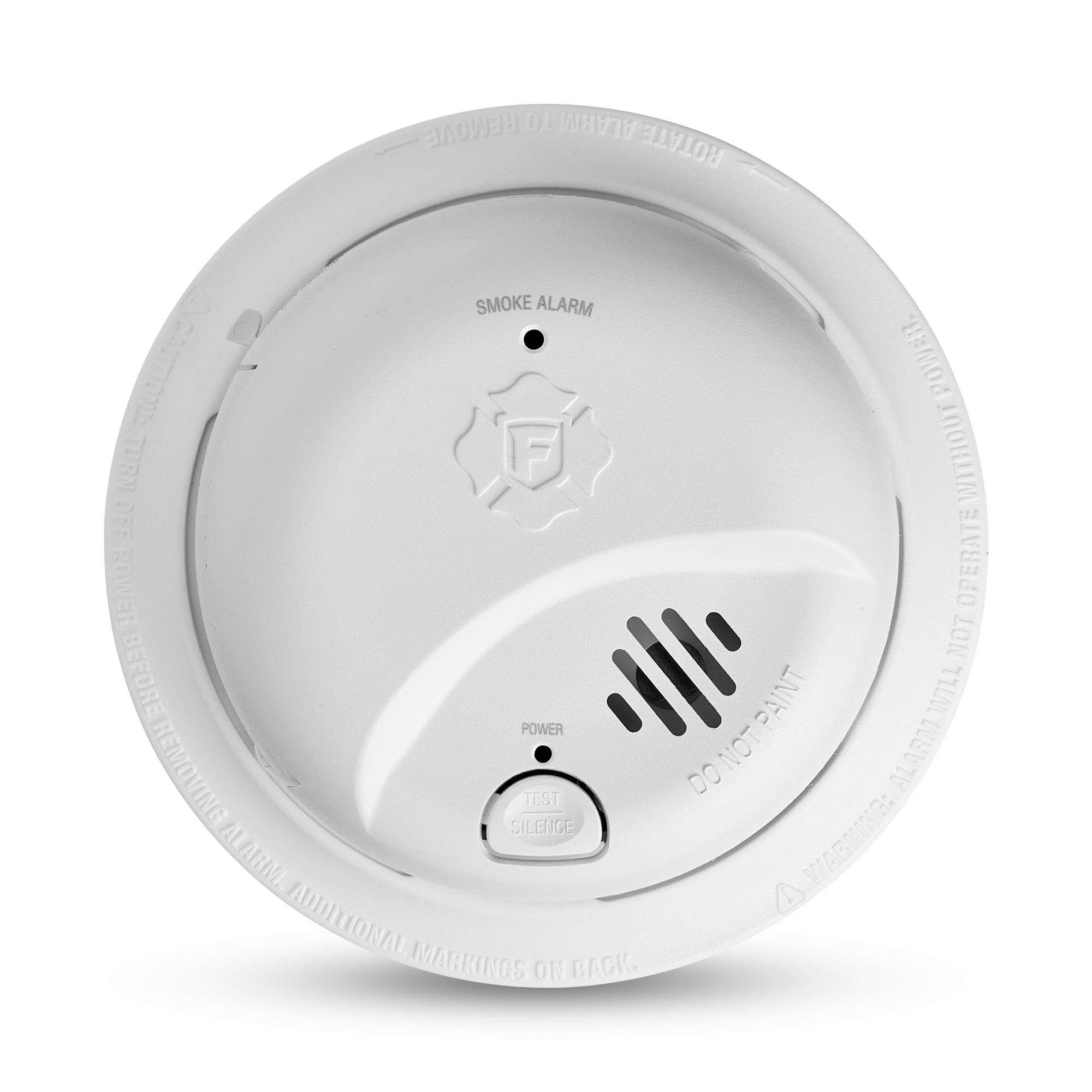
We recommend this alarm for people with arthritis who want easier hardwired replacement and reliable backup power.
Pros
- Quick-connect plug can reduce wiring work
- Battery backup keeps protection active during outages
- Interconnect support lets all linked alarms sound together
Cons
- Hardwired installation may still require a professional
- Replacement batteries need regular checking
- The alarm may chirp if the battery is not seated correctly
We found the quick-connect design helpful when replacing an older hardwired alarm. It can make the job less demanding on stiff hands, although we still needed to work overhead and handle the mounting bracket.
The battery backup adds protection during power failures. We also liked the visual indicator, which shows which alarm started the alert when several units are connected.
Cooking and steam caused fewer nuisance alarms during our use than older units. However, users with arthritis may want help opening the battery compartment or securing the alarm if hand strength and reach are limited.
The interconnect feature works well for a whole-home setup. When one compatible alarm detects smoke, the connected alarms also sound, giving us more time to respond.
First Alert SMICO100 Combination Alarm

We recommend this alarm for people with arthritis because its battery-powered design and large test/silence button make setup and routine checks easier.
Pros
- Combines smoke and carbon monoxide detection
- Simple battery-powered installation
- End-of-life warning supports timely replacement
Cons
- Requires a 9-volt battery
- The test button may still feel firm for some users
- Ionization sensing may not suit every room
We found the First Alert SMICO100 straightforward to mount without handling electrical wiring. The included 9-volt battery adds convenience, and the compact design fits neatly on a wall or ceiling.
The test and silence button provides a clear way to check the alarm or quiet a nuisance alert. However, users with limited hand strength may still need to press it firmly.
This model covers two important hazards in one unit, which helps reduce the need to manage separate alarms. Its end-of-life warning also gives us a useful reminder to replace the unit instead of relying on memory.
Because it uses a replaceable battery, we would keep spare 9-volt batteries nearby. We would also test the alarm regularly and follow local placement rules for smoke and carbon monoxide detectors.
First Alert SMI110 10-Year Smoke Alarm

We recommend this alarm for people with arthritis who want simple installation and no routine battery changes.
Pros
- Sealed battery removes the need to open the alarm for replacements
- Large test and silence button is easier to press
- Precision Detection may help reduce cooking-related alarms
Cons
- Some users reported units that failed on arrival
- The alarm does not connect to a home security system
- The sealed battery cannot be replaced
We found the SMI110 easy to mount and activate. Its sealed 10-year battery avoids the twisting and small battery handling that can be difficult with painful hands.
The test and silence button also helps with regular checks. We could press it without removing the alarm, although users with limited hand strength may still need assistance.
This model works as a basic, stand-alone alarm. It does not offer wired connections or app controls, so we would choose another model for whole-home alerts. A few buyers also reported defective units, making it important to test each alarm after installation.
The end-of-life warning indicates when replacement is due. We would install this alarm in suitable areas, test it regularly, and keep the receipt in case the unit does not work properly.
BRK 9120BFF Hardwired Smoke Alarm

We recommend this alarm for people with arthritis who want a simple test and silence button, dependable power, and easy battery access.
Pros
- Large single button supports simple testing and silencing
- Battery backup keeps the alarm working during outages
- Interconnects with compatible BRK and First Alert alarms
Cons
- Hardwired installation may require an electrician
- Ionization sensing focuses on fast-flaming fires
- Battery replacement still requires some hand strength
We found the single button easy to locate and press during routine testing. That simple design helps when finger movement or grip strength feels limited.
The side-access battery compartment also makes maintenance easier than alarms that require full removal. However, we still needed to handle a 9-volt battery, so users with severe hand pain may need help.
Because this model connects to household wiring, installation is less convenient than fitting a battery-only alarm. Once installed, the backup battery adds protection during a power failure, and the 85-decibel alarm provides a clear warning.
The alarm can connect with other compatible units, allowing several alarms to sound together. We would choose it for homes with existing BRK or First Alert wiring, but we would confirm compatibility before buying.
Buying Guide
When choosing a smoke detector for arthritis, we should focus on controls that need little hand strength or finger movement. Look for large test buttons, smooth surfaces, and controls that do not require twisting, pinching, or pressing small switches.
We should also check how the alarm handles routine tasks. Models with long-life batteries, low-battery alerts, or easy-access battery compartments can reduce the need to replace batteries often. A loud alarm and bright warning light may help people with hearing or vision limits.
| Feature | What to look for |
|---|---|
| Test button | Large, easy to press, with clear feedback |
| Battery access | Opens without stiff latches or small screws |
| Alerts | Loud alarm, visual signals, and low-battery warnings |
| Mounting | Simple installation with minimal tool use |
| Cleaning | Removable cover or easy-to-wipe surface |
| Interconnection | Alarms that can alert together, when suitable |
We should review the installation instructions before buying. If reaching the ceiling or handling the unit may cause pain, choose a model that allows help from another person or arrange professional installation.
Check the detector’s sensing type, certification, replacement schedule, and compatibility with the home’s wiring. We should follow local fire safety guidance and test each alarm regularly, using a method that does not strain the hands.
Editor’s Choice
We choose the X-Sense SC07 as our editor’s pick for people with arthritis. Its large test button, clear voice alerts, and combined smoke and carbon monoxide detection reduce the need for frequent handling.
The alarm uses a loud siren and spoken warnings to identify the danger. Its display also shows carbon monoxide levels, which can help us understand the alert without pressing small buttons.
| Feature | Why it helps |
|---|---|
| Large test button | Easier to press with stiff or painful fingers |
| Voice alerts | Identifies smoke or carbon monoxide |
| Digital display | Shows carbon monoxide readings |
| Battery operation | Avoids complex wiring during setup |
We should mount the detector where we can reach the test button safely, but avoid placing it near cooking appliances or vents. A family member or caregiver can help with installation and monthly testing if needed.
Before buying, we should check local safety rules and confirm that the detector’s size, alarm volume, and battery access suit our home. People with hearing loss may also need a compatible strobe light or vibrating alert device.
Conclusion
We should choose smoke detectors that reduce the need to grip, twist, or reach. Features such as large test buttons, voice alerts, long-life batteries, and app controls can make routine use easier for people with arthritis.
Before buying, we can compare:
- Button size and required pressure
- Battery access and replacement needs
- Alarm volume and voice alerts
- Phone notifications or remote testing
- Mounting and setup requirements
We should also check the product manual for details that may affect daily use. A detector with app control may still need help during installation, battery replacement, or removal from its mount.
The best choice depends on our hand strength, living space, and comfort with smart-home features. We should place detectors in the recommended locations and test them regularly using the easiest available method.
FAQs
What features help people with arthritis?
We look for large test and hush buttons, clear labels, and simple battery access. Voice alerts and app controls can reduce the need to reach or press small buttons.
Are talking smoke detectors useful?
Yes. Voice alerts can identify the danger and help us understand which alarm sounds. We should choose a model with clear volume controls and tested voice prompts.
Should we choose a hardwired or battery model?
Battery models usually offer easier installation, but changing batteries may require reaching or twisting. Hardwired alarms can reduce battery changes, though installation may require an electrician.
Can a smart smoke detector help?
A smart alarm can send alerts to a phone and allow some remote controls. We still need to test the alarm regularly and confirm that our phone, Wi-Fi, and notifications work properly.
What type of battery is easiest to manage?
We can choose a model with a sealed 10-year battery to avoid regular battery changes. The alarm still needs replacement when its service life ends.
How often should we test a smoke detector?
We should press the test button at least once each month. If the button feels difficult to use, we can ask someone to help or use a model with app-based testing.