
10 Best Emergency Escape Ladders for Caregivers: Safe Evacuation Options


Mattress Topper Memory Foam

Voice Assistant Smart Speaker

LED Magnifying Glass
When a fire blocks the stairs, an emergency escape ladder can give caregivers another way out from an upper floor. These ladders attach to a window and let adults, children, or people with limited mobility descend when the main exit is unsafe. A caregiver may also need to guide another person down while carrying essential items or providing support.
For caregivers, the safest emergency escape ladders have a weight rating, length, window fit, and design that match the people and rooms they may serve. Look for sturdy steps or rungs, secure attachment points, clear setup instructions, and a ladder that can deploy quickly without tools. Practice using it with every household member, because an emergency is not the time to learn how it works.
We evaluated emergency escape ladders for stability, setup, storage, and ease of use to identify the options that can help caregivers leave an upper floor more safely.
Best Emergency Escape Ladders for Caregivers
We reviewed emergency escape ladders for their safety features, ease of use, and support for caregivers assisting children, older adults, or people with limited mobility. The products below offer reliable options for creating a safer escape route from upper floors.
Kidde 13-Foot Escape Ladder

We recommend this ladder for caregivers who need a compact, sturdy escape option for a second-story room.
Pros
- Wide, non-slip metal rungs offer steady footing
- Attaches to many standard and casement windows without tools
- Stores compactly and supports distributed loads up to 1,000 pounds
Cons
- Single-use design requires replacement after deployment
- Window opening must fit the listed size limits
- Nylon rails may feel less stable than a fixed ladder
We found the ladder easy to store under a bed or near a window. Its tangle-free design helps it unfold quickly after we attach the hooks and pull the release strap.
The one-foot-wide metal rungs give us better footing than a basic rope ladder. The red nylon rails also provide a useful handhold, which matters when we help a child, older adult, or person with limited mobility descend.
Before buying, we would measure the target window. This model fits many windows up to 16 inches wide and 11 inches deep, but a poor fit could delay deployment.
The ladder reaches 13 feet, making it suitable for most second-story rooms. We would practice the setup with household members using the instructions, but we would not fully deploy it unless necessary because Kidde lists it as single use only.
Hausse 13-Foot Escape Ladder

We recommend this ladder for caregivers who need a compact second-story escape option that deploys quickly without tools.
Pros
- Retractable hooks fit most window frames and sills.
- Slip-resistant aluminum rungs provide a steadier foothold.
- The red storage bag keeps it easy to find.
Cons
- The ladder feels bulky when carried.
- Caregivers must fully extend both hooks before use.
- The manufacturer recommends replacing it every three years.
We found the Hausse ladder simple to open and intuitive to place on a window. Its 13-foot length suits many second-story rooms, while the wide rungs give adults and older children a more secure step during a stressful exit.
The hooks need careful attention. We must extend both ends fully and check that they sit firmly on the window frame or sill. Caregivers should practice this setup with family members before an emergency, especially if someone needs physical help climbing.
The included red canvas bag stores neatly under a bed or near a window. It lacks built-in wall eyelets, so we would choose a fixed storage spot that everyone can reach quickly. The ladder supports up to 1,000 pounds, but we would still use it one person at a time unless trained safety guidance says otherwise.
At 4.6 stars from about 1,600 ratings, it has strong buyer feedback. We would treat it as emergency equipment, inspect it regularly, and follow the replacement guidance even if it remains unused.
Hausse 25-Foot Escape Ladder

We recommend this ladder for caregivers who need a compact, tool-free escape option from a second- or third-story window.
Pros
- Quick to deploy without assembly
- Slip-resistant aluminum rungs
- Stores in a compact red bag
Cons
- Heavy for some caregivers or children to handle
- Sharp edges may need careful inspection
- Requires full hook extension before use
We found the retractable hooks easy to attach to a suitable window frame or sill. The ladder extends to 25 feet, which gives it enough reach for many three-story rooms. Caregivers should practice placing it before an emergency so they know how the hooks work.
The rungs felt sturdy and offered a more secure foothold than smooth steps. However, the ladder’s weight can make it difficult for a child, older adult, or caregiver with limited strength to carry and position alone.
Storage also works well. The included canvas bag fits under a bed or near a window, keeping the ladder ready without taking much space. We would inspect the rung edges and bag for damage, then replace the ladder after three years as the manufacturer advises.
First Alert Two-Story Escape Ladder

We recommend this ladder for caregivers who need a sturdy, ready-to-store escape option for a second-story window.
Pros
- Steel rungs provide a firm, slip-resistant foothold.
- Stabilizers help keep the ladder away from the wall.
- It arrives assembled and stores easily under a bed or in a closet.
Cons
- Its weight may make deployment harder for some caregivers or children.
- It fits windowsills between 6 and 10 inches wide.
- The ladder requires practice before an emergency.
We found the ladder solid and straightforward to handle during setup. The steel rungs felt more secure than flexible ladder steps, while the nylon straps kept the unit compact when stored.
The wall stabilizers add useful space between the ladder and the building. That design can make climbing easier, especially for caregivers assisting a child or older adult.
Before relying on it, we would check the window fit and practice attaching it safely. At about 14 feet long, it suits many two-story homes, but its weight could be a concern for anyone with limited strength.
FKNGS 16.7-Foot Escape Ladder
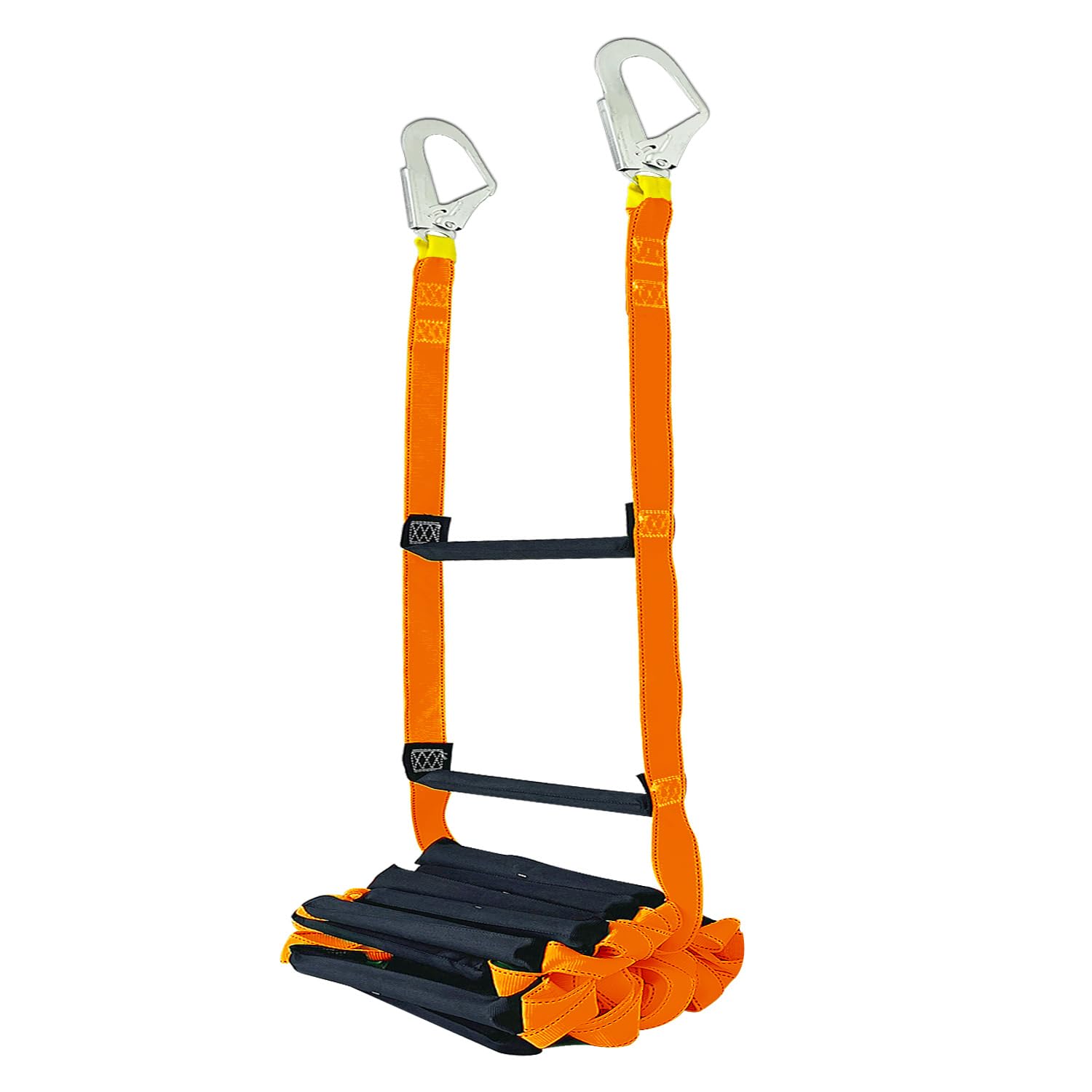
We recommend this ladder for caregivers who need a compact option for a second-story window or balcony with a secure anchor point.
Pros
- Sturdy webbing and solid wooden rungs
- Large hooks fit many railings
- Folds for easier storage
Cons
- Requires a strong, suitable railing or anchor
- The hooks may not feel fully locked in place
- Wooden rungs can take practice to use safely
We found the ladder easy to carry and store, despite its long reach. Its orange color also helps us spot it quickly in a closet or near an emergency window.
The solid rungs felt more stable than flexible rope steps during testing. They did not twist much, which can help caregivers guide a child or older adult while climbing.
The main concern involves setup. We need a sturdy railing or another approved anchor point before relying on this ladder. Some users also reported that the hooks did not click firmly into place, so we would test the fit and practice deployment before an emergency.
At 16.7 feet, it can suit many two-story escape routes and some higher locations, depending on the window height. We would keep it near the exit, inspect the webbing and hooks regularly, and teach every household member how to use it.
X-IT 2-Story Emergency Escape Ladder

We recommend this reusable ladder for caregivers who need a compact, simple escape option for an upper-floor room.
Pros
- Deploys quickly without tangling
- Lightweight and easy to store
- Reusable for practice and emergencies
Cons
- Narrow rungs may feel difficult for some adults
- Requires a suitable, secure window
- Practice is needed before an emergency
We found the X-IT easy to carry and store in its bright yellow bag. Its compact size makes it practical to keep near a bedroom window without taking up much space.
The ladder attaches to a window sill and unfolds quickly. We would still practice with the person who may need help, especially if they have limited balance, strength, or mobility.
Its narrow rungs provide less foot room than a standard staircase. Caregivers should check the window fit, follow the instructions, and make sure the person using it can climb safely.
PetGirl 15-Foot Fire Escape Ladder

We recommend this ladder for caregivers who need a compact second-story escape option with wide rungs and a strong window hook.
Pros
- Wide, anti-slip rungs feel stable during descent
- Folds for storage under a bed or in a closet
- V-shaped support and steel hooks help limit movement
Cons
- Its 10.8-pound weight may challenge some caregivers
- It is intended for one-time emergency use
- We must confirm that the window frame fits the hook
We found the PetGirl ladder easy to store and straightforward to attach to a suitable window frame. The wide steps gave us better footing than narrow rope-ladder rungs, which matters when helping a child, older adult, or person with limited balance.
Its folding design keeps it ready without taking much space. The ladder reaches 15 feet, so we would measure the window height and check the landing area before relying on it.
The ladder feels sturdy, but its weight can make setup harder for some caregivers. We would practice placing it with another adult, then store it beside the chosen window. Since PetGirl labels it for one-time use, we would replace it after deployment or any serious loading.
ISOP 3-Story Fire Escape Ladder

We recommend this ladder for caregivers who need a compact escape option from a second- or third-floor room and can practice using it with others.
Pros
- Stabilizers help keep the ladder away from the wall.
- Textured aluminum rungs provide a steadier foothold.
- Hooks and straps offer flexible setup options.
Cons
- Some buyers reported missing screws or loose stabilizers.
- Its long length may take time to arrange and store.
- Caregivers should not rely on it without practicing first.
We found the ladder light enough to handle without help, yet it still felt substantial once attached. The aluminum rungs had smooth edges, and the textured surfaces gave us better grip than plain metal.
The stabilizers helped the ladder hang away from the wall during a test setup. That spacing can make each step easier to reach, especially for a caregiver assisting a child or older adult. Still, the person descending must control their pace and hold the rungs firmly.
The included attachment choices add useful flexibility for windows and balconies. We would inspect every hook, strap, screw, and stabilizer before use because several customer reports mention loose or missing hardware.
This ladder folds for storage and suits homes with a high escape point. We would install it near the intended window, keep the route clear, and practice deployment in daylight. Its 4.4-star rating from 121 reviews suggests generally positive feedback, but setup checks remain important for emergency equipment.
SHAREWIN 15-Foot Emergency Escape Ladder
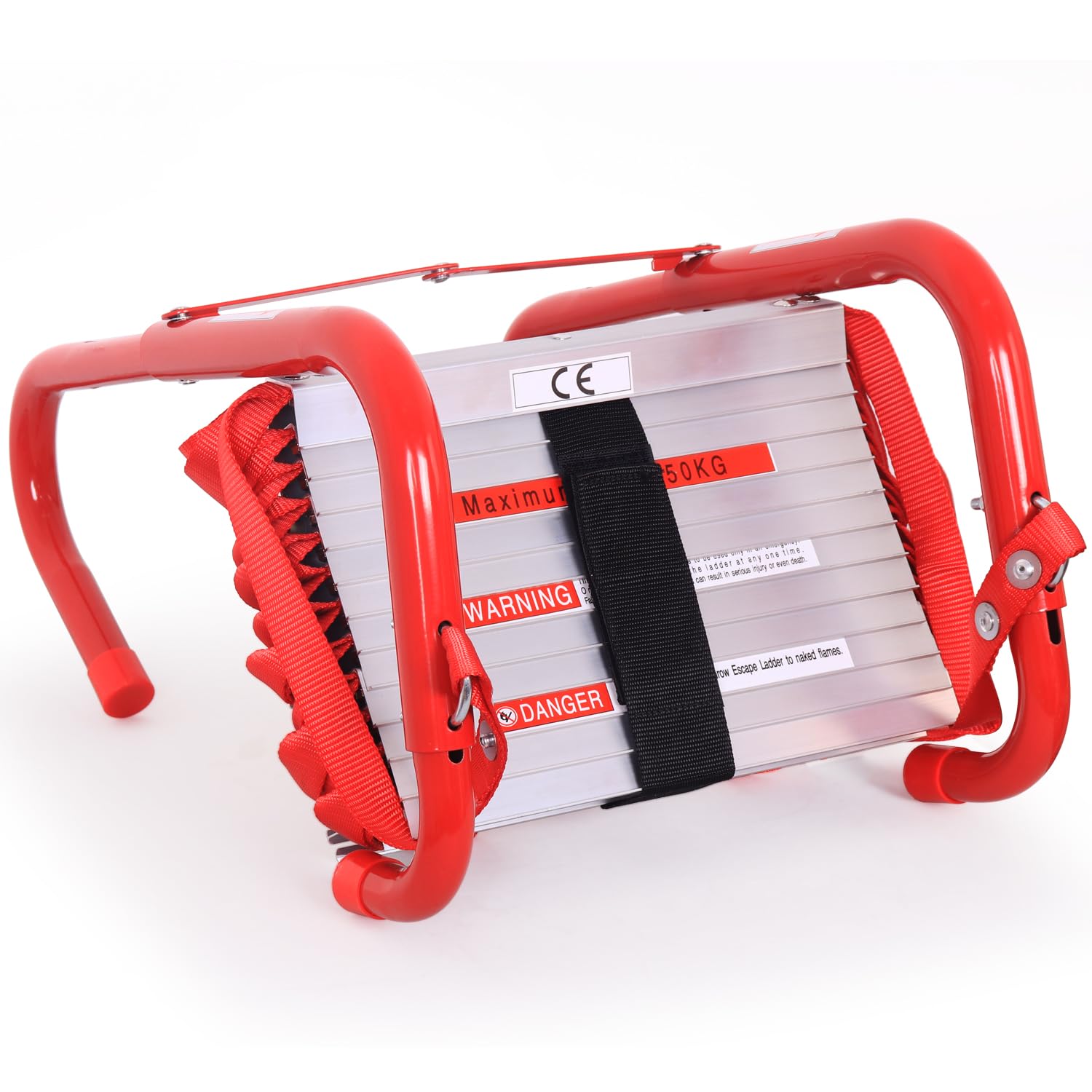
We recommend this ladder for caregivers who need a compact second-story escape option with wide steps and a stable window hook.
Pros
- Wide metal steps feel easier to place while helping someone climb.
- V-shaped support and steel hooks provide a secure window connection.
- Folds small enough for storage near an escape window.
Cons
- The fabric may fray after use or removal.
- We would want to test the window fit before relying on it.
- Caregivers may need to steady or guide the person climbing.
During our setup, the ladder hooked over the window frame without much effort. The wide steps gave us better footing than narrow rung designs, which matters when assisting someone who moves slowly or needs support.
Its 15-foot length suits many two-story windows. We would still measure the window height and check the frame before purchase, since window designs vary and a secure fit remains essential.
The ladder folds into a small package for storage under a bed or in a nearby closet. We suggest practicing with another adult first, especially if a caregiver may need to help a child, older adult, or person with limited mobility.
The ladder has a listed 990-pound capacity and an EN131 certification. However, one user reported fraying fabric after removal, so we would inspect it carefully after any practice deployment and replace it if we notice damage.
SHAREWIN 15-Foot Emergency Escape Ladder

We recommend this ladder for caregivers who need a compact backup exit for a second-story room, especially when wide rungs and a sturdy window connection matter.
Pros
- Wide, anti-slip rungs provide steady foot placement.
- The V-shaped support helps keep the ladder stable at the window.
- It folds for storage near a bedroom window.
Cons
- The metal rungs make noticeable noise during setup.
- Refolding it after use takes effort.
- It is intended for one-time emergency deployment.
We found the ladder solid and light enough to move into position without much strain. The wide rungs gave us more confidence than narrow rope-style steps, which can be harder for children, older adults, or anyone carrying limited mobility equipment.
The steel hook and center support fit securely on a typical window frame during setup. We recommend checking the fit in each room and practicing the deployment with a caregiver before an emergency. Avoid climbing during practice unless you can do so safely and follow the product instructions.
When stored, the folded ladder takes little space under a bed or in a nearby closet. However, the metal parts can be loud when they unfold, and putting the ladder back into its compact shape requires patience. Its 15-foot length suits many second-story windows, but we would still measure the drop before relying on it.
Buying Guide
When we choose an emergency escape ladder for caregivers, we should match its design to the building, window, and person who may need help. Measure the window opening, sill height, and distance to the ground before buying.
| Feature | What we should check |
|---|---|
| Weight rating | It should support the caregiver, child, and any needed equipment. |
| Length | It should reach the ground without excess slack or unsafe gaps. |
| Window fit | The hooks or brackets should fit the sill securely and allow the window to close when stored. |
| Rungs | Wide, slip-resistant rungs can provide better footing. |
| Stability | Look for strong attachment points and limited movement during use. |
| Storage | A compact bag or case should allow quick access near the exit window. |
We should select a ladder made from durable, flame-resistant materials and check its stated load limit. Flexible ladders may require more balance, while rigid designs can offer steadier footing but need more storage space.
Caregivers should consider the needs of the person being assisted. A design with comfortable handholds, stable rungs, and enough width may make controlled movement easier. We should also check whether the ladder can be deployed quickly by one person.
Before use, we should read the instructions, inspect the attachment points, and practice deployment with another adult. We should replace any ladder with damaged straps, loose hardware, bent rungs, or signs of wear.
Editor’s Choice
We choose the Hausse Retractable 13-Foot Fire Escape Ladder for caregivers who need a simple, ready-to-use option for upper-floor emergencies. Its compact design stores easily near a bedroom window, while its wide rungs and stabilizing hooks support more controlled movement during evacuation.
Caregivers should check that the ladder reaches the ground from the selected window and supports the combined needs of the people using it. We also recommend practicing deployment during the day so adults and older children understand each step before an emergency.
| Feature | Why it helps caregivers |
|---|---|
| 13-foot length | Fits many second-story windows |
| Wide, slip-resistant rungs | Supports steadier footing |
| Built-in stabilizing hooks | Helps keep the ladder positioned |
| Compact storage | Keeps it accessible without taking much space |
Before buying, we should measure the window height, check the manufacturer’s weight limit, and confirm that the window opens fully. We should also inspect the ladder regularly for damage, blocked storage, or loose parts.
Conclusion
We should choose an emergency escape ladder based on the caregiver’s needs, the window type, and the building’s height. A stable design, strong materials, clear instructions, and a weight rating that supports both people can improve evacuation safety.
We should also check whether the ladder fits the window and allows safe movement while carrying or guiding a child, older adult, or person with limited mobility. A short practice session can help us identify problems before an emergency.
Before storing the ladder, we should inspect its straps, rungs, hooks, and packaging. We should keep it near the intended exit, tell other household members where it is, and follow the manufacturer’s instructions for use and storage.
FAQs
What should we look for in an emergency escape ladder?
We should choose a ladder with a weight rating that supports the caregiver and the person they assist. We should also check its length, rung spacing, window fit, storage needs, and fire-resistant materials.
Can one caregiver carry a person down the ladder?
That depends on the person’s weight, mobility, and the caregiver’s strength. We should practice the planned exit and consider a two-person evacuation plan when safe handling may be difficult.
How do we use a ladder from a window?
We should open the window, secure the ladder as directed, and check that it hangs flat against the building. The caregiver should exit first when possible, then help the person from a safe position.
How often should we inspect an escape ladder?
We should inspect it at least twice a year and after every use. Look for damaged straps, loose rungs, rust, worn hooks, or other signs of weakness.
Where should we store the ladder?
We should keep it near the approved escape window, in an easy-to-reach location. We should not place heavy items on top of it or store it where children cannot reach it during an emergency.
Should we practice with the ladder?
Yes. We should practice without using real flames or smoke and follow the manufacturer’s instructions. A local fire department may also provide safety guidance.