
10 Best Emergency Escape Ladders for Home: Top Safety Picks


Fall Detection Smart Watch

Audiobook Player

Indoor Security Camera
A home fire can make stairs unsafe or block the usual way out. An emergency escape ladder gives people on upper floors another route through a window. These ladders fold away when not in use and can deploy quickly during an emergency.
The best emergency escape ladders have the right length, support enough weight, attach securely, and deploy without complex steps. We also look for wide, stable rungs and materials that can withstand heat and regular storage. Before buying, check your window size, the wall height, the ladder’s weight limit, and whether it works with your window type.
We evaluated emergency escape ladders for setup, stability, storage, and ease of use to identify the options that can help households prepare for a safer exit.
Best Emergency Escape Ladders for Home
We reviewed emergency escape ladders for their length, weight capacity, ease of use, and storage needs. Our list highlights reliable options for helping people exit upper-floor rooms during a fire or other emergency.
Hausse 13-Foot Escape Ladder

We recommend this ladder for second-story rooms because it deploys quickly, stores neatly, and offers secure footholds during an emergency.
Pros
- Fast setup without tools
- Slip-resistant aluminum rungs
- Compact storage bag
Cons
- The ladder feels somewhat bulky when packed
- It must be replaced every three years
- It needs a suitable window frame or sill
We found the ladder simple to unfold and attach during a practice setup. The retractable hooks need to extend fully before use, so we would check both ends carefully before storing it near a window.
The rungs felt firm underfoot and gave us a steady grip while climbing. Its 13-foot length suits many second-story windows, but we would measure the escape point first to confirm it reaches the ground.
After testing the setup, we folded the ladder back into its red canvas bag without much trouble. The bag stores well under a bed or in a closet, although wall-mounting would make it easier to reach quickly.
Hausse advises replacing the ladder every three years, even if nobody uses it. We would also include it in regular fire drills so everyone in the home knows how to deploy it.
Kidde 13-Foot Fire Escape Ladder

We recommend this ladder for second-story rooms because it stores easily, attaches without tools, and offers firm footing during an emergency.
Pros
- Wide, slip-resistant metal rungs
- Quick setup with no assembly
- Compact storage and a five-year warranty
Cons
- Designed for one-time use
- Window fit may vary by frame
- Strap rails may feel less stable than a rigid ladder
We found the ladder simple to handle and light enough to move quickly to a window. Its hooks fit common windows within the stated size limits, and the release strap lets the ladder unfold after placement.
The one-foot-wide metal rungs gave us more secure footing than a basic rope ladder. The red nylon rails also provided a useful handhold, although the flexible design requires more balance than a fixed ladder.
This model reaches 13 feet, making it suitable for many second-story bedrooms. We would measure each window before buying and store the ladder close by, since every second-floor room may need its own escape option.
Kidde states that the ladder supports up to 1,000 pounds when weight spreads across several rungs. We would still practice the setup without fully deploying it, because the ladder must be discarded after use.
Hausse 25-Foot Fire Escape Ladder

We recommend this ladder for upper-story bedrooms because it stores compactly, deploys without tools, and offers a sturdy escape option.
Pros
- Retractable hooks fit many window frames and sills.
- Slip-resistant aluminum rungs feel stable underfoot.
- The storage bag keeps it close to a window.
Cons
- The ladder feels heavy to carry and position.
- Some edges may feel sharp and could damage the bag.
- We must fully extend both hooks before use.
We found the Hausse ladder easy to hang from a suitable window. The hooks secured the frame well, and the ladder unfolded quickly without assembly. Its red bag also made it easy to identify and store near an escape window.
The aluminum rungs felt firm during handling, while the textured surfaces provided useful grip. However, the ladder’s weight could make setup harder for children or anyone with limited strength.
Before relying on it, we would inspect the hooks, rung edges, and storage bag. We would also practice deployment safely and follow the manufacturer’s advice to replace the ladder every three years.
First Alert Two-Story Escape Ladder

We recommend this sturdy 14-foot ladder for homes with suitable second-story windows and enough room for safe deployment.
Pros
- Steel rungs provide a firm, slip-resistant step
- Strong build supports up to 375 pounds
- Folds for storage and arrives fully assembled
Cons
- Its weight may make deployment harder for children
- It fits windowsills only 6 to 10 inches wide
- Users should practice setup before an emergency
When we inspected and tested this ladder, the steel rungs felt solid underfoot, while the nylon straps kept the ladder steady. The stabilizers also held it away from the wall, which made climbing feel more controlled.
Its 14-foot length suits many two-story homes and apartments. We liked that it folds compactly enough for storage under a bed or in a closet, but the ladder is heavier than some lightweight escape models.
Before storing it, we would check that the window meets the width requirement and that the sill can support the hooks. We also recommend a supervised practice session so every household member knows how to place it quickly.
SHAREWIN 15-Foot Emergency Escape Ladder
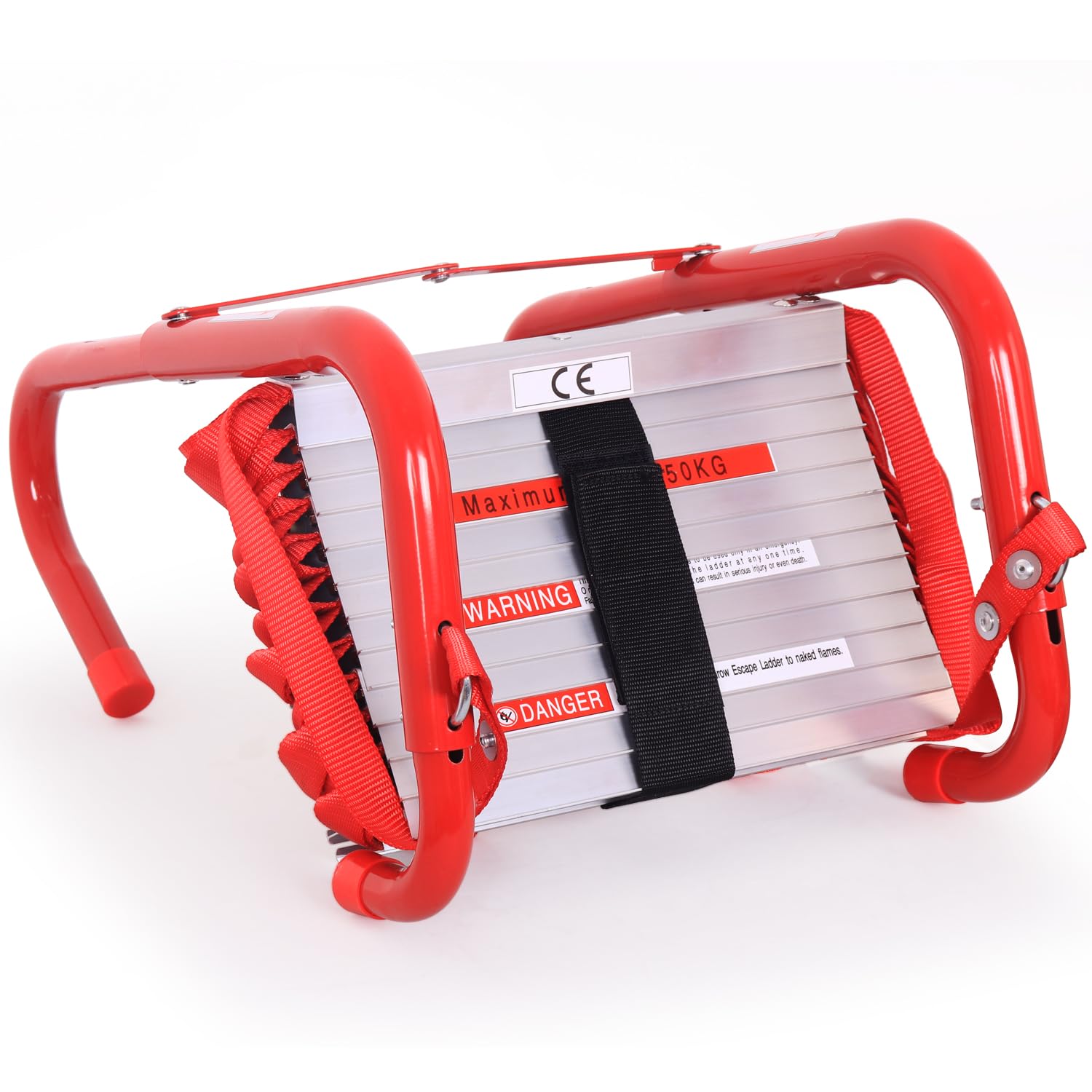
We recommend this ladder for two-story homes because it feels sturdy, stores easily, and has wide steps that make climbing more manageable.
Pros
- Wide metal steps provide steady footing
- Folds down for simple storage
- V-shaped support helps hold the ladder in place
Cons
- Fabric may fray after use
- Requires a suitable window frame
- Practice setup takes planning
We found the ladder easy to hook over a compatible window frame during a practice setup. The metal steps felt more secure than narrow rope-ladder rungs, and the ladder stayed steady while we climbed down.
Its folding design makes storage convenient. We could keep it near an upstairs window without taking up much room. The 15-foot length should work for many second-story windows, but we recommend measuring the escape point before buying.
The ladder has a high listed weight capacity and an EN131 safety certification. Still, we would inspect the fabric, hooks, and steps before each drill. One user reported fraying after removal, so we would treat this as emergency equipment that needs careful checking and possible replacement after deployment.
SHAREWIN 15-Foot Emergency Escape Ladder

We recommend this ladder for second-story rooms because its wide rungs, compact storage, and sturdy window support make emergency descent easier to prepare for.
Pros
- Wide, anti-slip rungs provide steady foot placement.
- The V-shaped support helps keep the ladder stable at the window.
- It folds for storage in a closet or under a bed.
Cons
- The metal rungs can make noise during use.
- Refolding it takes effort after deployment.
- It is intended for one-time emergency use.
We found the ladder lightweight enough to move into position without much trouble. Its steel hook and center support fit securely over a typical window frame, but we would still check the fit before storing it for an emergency.
The 15-foot length suits many two-story windows. The aluminum construction feels strong, while the wide rungs offer more confidence than narrow ladder steps during a fast descent.
Storage takes little room, which helps us keep it near an upstairs window. We would practice placing it without fully deploying it, since packing the ladder back up can be difficult and the metal parts may be loud.
This ladder should remain emergency equipment rather than a routine climbing tool. We would keep one near each suitable upstairs window and inspect the hook, straps, and rungs regularly.
ISOP 25-Foot Fire Escape Ladder

We recommend this ladder for families who need a portable escape option from a second- or third-floor window and want stabilizers for a steadier descent.
Pros
- Smooth, textured aluminum rungs feel secure underfoot.
- Stabilizers help keep the ladder away from the wall.
- Hooks and carabiners offer flexible attachment options.
Cons
- Some buyers reported missing screws or loose stabilizers.
- The ladder may take practice to fold and store neatly.
- We should confirm the included hardware before relying on it.
When we handled the ISOP ladder, its aluminum rungs felt lighter and more comfortable than many rigid metal ladders. The textured surfaces gave us a better grip, while the continuous webbing made the ladder easy to carry and position.
The stabilizers helped the ladder sit away from the wall during a test setup. That extra space made each step easier to place, especially when moving down from a higher window. The included attachment options also give us more flexibility for balconies and window frames.
We would practice deploying and repacking it before storing it for an emergency. We would also inspect every screw, hook, strap, and stabilizer after delivery. Some customer reports mention missing hardware or changes from the pictured design, so checking the package matters.
The ladder folds for storage and can serve other purposes, such as access to a treehouse or raised outdoor area. Still, we would treat those uses as secondary and follow the manufacturer’s instructions for securing it.
HYNAWIN 15-Foot Emergency Escape Ladder
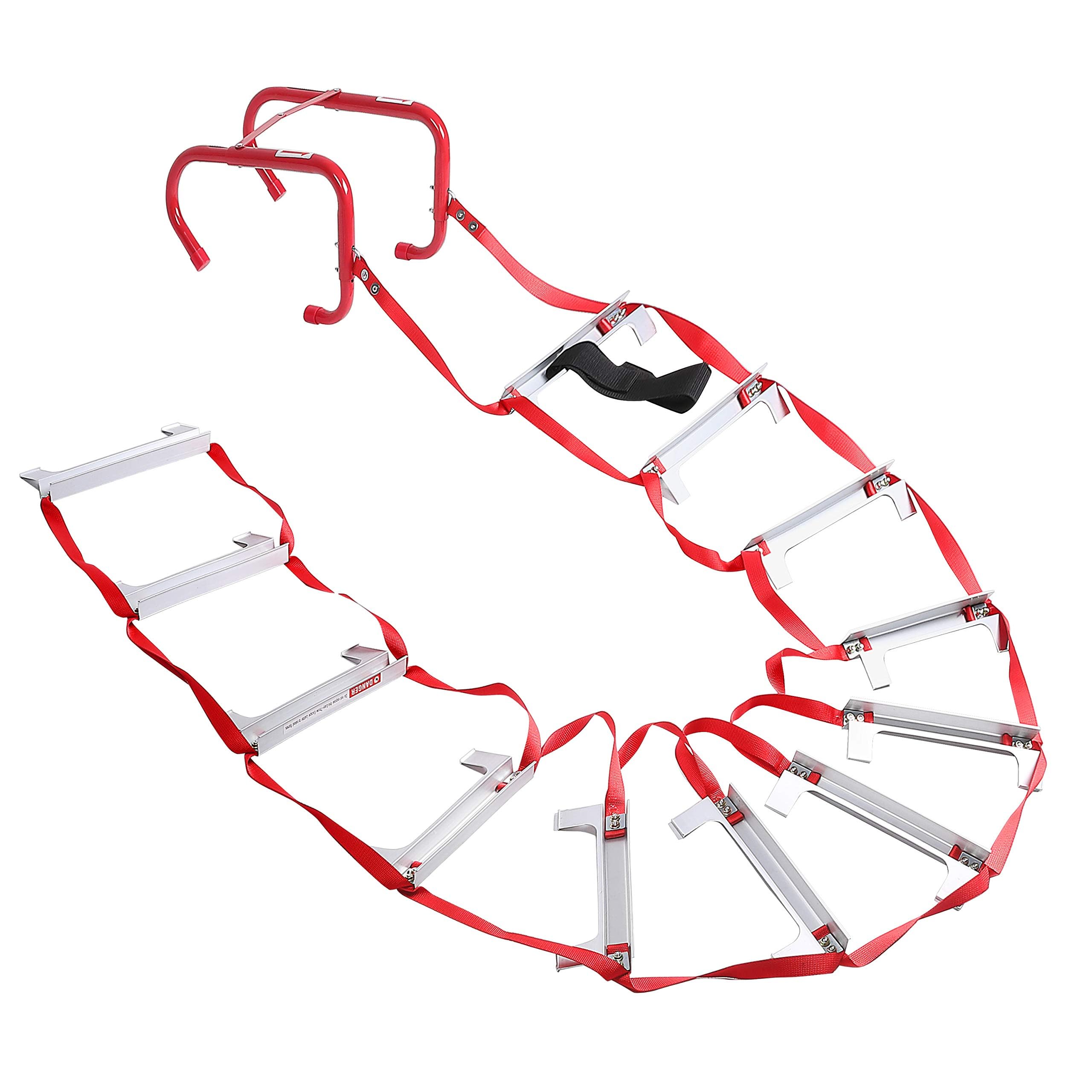
We recommend this compact ladder for two-story homes because it stores easily, deploys quickly, and provides wide, slip-resistant steps.
Pros
- Strong hook and V-shaped support help keep the ladder steady
- Folds into a small package for storage near a window
- Wide rungs feel easier to use during a controlled practice session
Cons
- We must use both hands while climbing
- The ladder may work only once after an emergency deployment
- We need to confirm that the hook fits the window sill before storing it
The aluminum ladder felt light enough to handle without much effort. Its red color also made it easy to spot in a closet or under a bed. The hook attached securely to a suitable window frame during our setup check.
Wide rungs gave us better footing than narrow rope-ladder steps. The flexible design folded away neatly, but it did not feel as rigid as a standard household ladder. We would place it beside a specific escape window rather than keep it in a distant storage area.
The ladder supports up to three climbers at once according to the product details, but we would still use it one person at a time when possible. Since climbing requires both hands, carrying a child, pet, or other item would be difficult.
Before an emergency, we would identify the correct window, read the instructions, and teach every household member how to climb down. Buyers should also check the hook fit carefully, since window designs and sill depths vary.
PetGirl 50-Foot Fire Escape Ladder

We recommend this ladder for homes with tall windows or balconies because its wide, anti-slip steps and strong hooks provide a stable escape option.
Pros
- Wide steps feel more secure underfoot
- Folds for storage under a bed or in a closet
- Strong steel hooks and a V-shaped center support
Cons
- Heavy at about 24 pounds
- Designed for one-time emergency use
- Requires practice before an actual emergency
We found the PetGirl ladder sturdy and easy to attach to a suitable window frame. The steel hooks held firmly during setup, while the wide steps made climbing feel more controlled than using a narrow rope ladder.
Its folded design saves space, but the ladder is heavier than many smaller emergency models. We would store it close to the intended window and check that the frame can support the hooks before relying on it.
The five-step version reaches about 50 inches, while the listing also offers a longer 50-foot model for taller escape points. We would practice deployment with every household member, especially children, and treat the ladder as a single-use emergency tool.
Winsense 15-Foot Fire Escape Ladder

We recommend this ladder for two-story homes because it stores easily, deploys without assembly, and offers wide, slip-resistant steps.
Pros
- Wide aluminum steps provide steady footing
- Retractable hooks fit many window sills
- Folds compactly for storage
Cons
- Requires practice to use confidently
- Hook fit depends on the window sill
- Ladder movement may feel less stable for some users
We found the ladder simple to unpack and prepare. Its attached design avoids loose parts, while the fabric belt folds beneath the steps for storage under a bed or in a nearby closet.
The wide aluminum rungs gave us more foot space than narrow emergency ladders. The anti-slip surface also helped us feel more secure while climbing. However, we would still practice with it before an emergency, since ladder movement can take some getting used to.
The steel hooks extend to fit many common window sills. We would check the sill width and fully extend both hooks before relying on the ladder. Winsense rates it for up to 1,000 pounds, but we recommend one person descend at a time unless household safety planning supports another approach.
At 15 feet, this model suits many second-story windows. We would store it close to the intended exit and inspect the hooks, straps, and steps regularly.
Buying Guide
We should choose an emergency escape ladder based on window height, weight capacity, and installation method. Measure the distance from each escape window to the ground, then select a ladder that reaches that height without excess slack.
| Feature | What we should check |
|---|---|
| Length | Matches the window’s height and reaches the ground |
| Weight rating | Supports every intended user, including clothing or small bags |
| Rungs | Wide, slip-resistant, and easy to use while descending |
| Hooks | Fit the window securely and suit its sill width |
| Storage | Folds or rolls for quick access near the window |
| Standards | Includes clear testing or safety information from the maker |
We should verify that the ladder fits the window opening before buying. Some models require a specific sill size, while others may not work with storm windows, screens, or security bars.
Durable materials such as strong metal rungs and heat-resistant rope can support regular inspection and emergency use. We should also look for a design that stays stable against the wall and limits twisting during descent.
Installation should not require permanent changes unless we can make them safely and legally. We should read the instructions, practice deployment from a safe height, and store the ladder where everyone can reach it quickly. Regular checks can reveal damage, corrosion, loose parts, or expired materials.
Editor’s Choice
We choose the Hausse Retractable 13-Foot Fire Escape Ladder for most two-story homes. Its steel rungs, wide steps, and stabilizing hooks provide a secure path from a standard second-story window.
The ladder supports up to 1,000 pounds and folds into a compact storage bag. We recommend installing it near an escape window and practicing how to open the window, attach the hooks, and climb down.
| Feature | Details |
|---|---|
| Length | 13 feet |
| Capacity | 1,000 pounds |
| Best for | Two-story homes |
| Storage | Compact bag |
| Key design | Wide, slip-resistant rungs |
We should check the ladder’s length against the window height before buying. The hooks must fit securely over the window sill, and the window must open wide enough for quick deployment.
For a three-story home, we would choose a 24-foot model instead. We should inspect any emergency ladder regularly for damage, loose parts, and signs of wear, and replace it according to the manufacturer’s instructions.
Conclusion
We should choose an emergency escape ladder based on window height, weight capacity, storage space, and ease of use. A ladder must fit the window securely and support every person who may need it.
We should keep the ladder near the selected window, where everyone in the home can reach it quickly. Check the packaging and manufacturer instructions before use.
Regular practice also matters. We can teach each household member how to open the window, attach the ladder, climb down safely, and move away from the building.
Inspect the ladder at least once a year for damage, rust, loose parts, or expired materials. Replace it after use or if it no longer meets the manufacturer’s safety guidance.
FAQS
How many escape ladders do we need?
We recommend one ladder for each usable upper-floor bedroom. This allows people to exit from the nearest safe window without moving through smoke or fire.
What length should we choose?
We should measure from the window opening to the ground, then choose a ladder that reaches the ground with some extra length. Most two-story homes need a ladder about 13 to 15 feet long, but measurements vary.
Are emergency ladders reusable?
Many portable ladders are designed for one-time emergency use, while some models can be stored and used again after inspection. We should follow the manufacturer’s instructions and replace any ladder with damaged rungs, hooks, or straps.
How much weight can they support?
We should check the product’s stated weight limit before buying. The limit must cover each user’s weight, clothing, and anything carried during the escape.
Where should we store an escape ladder?
We should keep each ladder near its intended window, in a clearly marked location that adults and older children can reach quickly. We should not store it in a locked container or under heavy items.
Should we practice using one?
Yes. We should read the instructions, inspect the window, and practice setup from a safe height. Children should practice with an adult and should never use the ladder without supervision.