
What Are the Best Crafts for Retired Adults?


Robot Vacuum Cleaner

Heated Blanket
Medication Reminder Alarm
Quick Answer
The best crafts for retired adults include watercolor painting, knitting or crochet, scrapbooking, card making, pottery, woodworking, and simple jewelry making. The best choice is comfortable, affordable, enjoyable, and easy to continue regularly. The National Institute on Aging also encourages older adults to stay involved in meaningful activities they enjoy.
Good Crafts to Try First
- Watercolor painting: Requires few supplies and works well for beginners who enjoy color and creativity.
- Knitting or crochet: Offers repetitive, hands-on projects ranging from simple squares to blankets and gifts.
- Scrapbooking: Combines photographs, family memories, writing, and decoration in one meaningful project.
- Card making: Creates useful finished projects without requiring weeks of work.
- Pottery or clay: Gives you a tactile creative experience and works especially well in beginner classes.
- Wood crafts: Can range from painting small wooden pieces to more involved woodworking projects.
Before Buying Supplies
- Start with one small project and basic materials before investing in specialized equipment.
Retirement creates something many of us spent decades wishing for: more control over our time. Crafts can turn some of those open hours into something creative, relaxing, social, and satisfying.
I prefer crafts that produce a small sense of progress without becoming another obligation. You don’t have to be artistic, and you certainly don’t need to make anything perfect.
In This Guide
- Why Are Crafts Good Hobbies After Retirement?
- What Are the Best Crafts for Retired Adults?
- What Are the Easiest Crafts for Beginners?
- Which Crafts Work Well With Limited Mobility?
- Which Crafts Are Best for Socializing?
- How Do You Choose the Right Retirement Craft?
- How Can You Start a New Craft Without Overspending?
- Frequently Asked Questions
- Final Takeaway
Why Are Crafts Good Hobbies After Retirement?
Crafts give retired adults a flexible activity that can combine creativity, learning, routine, and social connection. Most can also be adjusted to fit your energy, schedule, experience, and available space.
A retirement craft is a hands-on creative activity done for enjoyment, learning, personal expression, relaxation, or connection rather than employment.
Crafting gives the day some structure
One adjustment after retirement is losing the routine that work created automatically. A craft can provide a comfortable reason to sit down and focus on something each week.
- Paint for 30 minutes after breakfast.
- Attend a weekly quilting group.
- Work on a scrapbook every Sunday.
- Make greeting cards before birthdays and holidays.
This doesn’t mean filling every free hour. I think retirement hobbies work best when they create gentle structure without turning your calendar into another job.
Creative activities can offer more than entertainment
Research on arts and creativity in later life has found promising physical, psychological, and social benefits. A systematic review covering 93 studies reported positive findings across activities including visual arts, music, singing, dance, and other creative pursuits.
You can review the research through this PubMed systematic review of arts and creativity in later life.
The evidence shouldn’t be treated as proof that crafting prevents a specific disease. The more practical point is simpler: an enjoyable creative activity can be a meaningful part of an active retirement.
What Are the Best Crafts for Retired Adults?
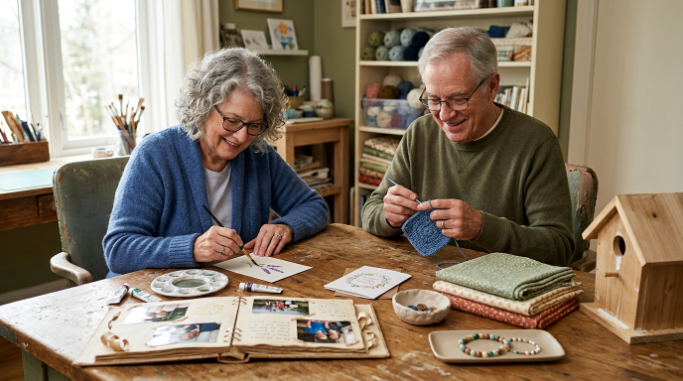
The best crafts are those you can comfortably repeat and gradually improve. For most retirees, I would start with activities that don’t require expensive equipment or a large dedicated workspace.
1. Watercolor painting
Watercolor is one of my favorite beginner recommendations because the setup can stay simple. A small paint set, two brushes, paper, water, and a comfortable table are enough.
Begin with leaves, flowers, sunsets, simple landscapes, or abstract color patterns. Small projects prevent the first session from becoming frustrating.
2. Knitting and crochet
Knitting and crochet work well for people who enjoy repetitive handwork and seeing gradual progress. Projects can be practical, decorative, or made as gifts.
- Dishcloths
- Scarves
- Blanket squares
- Simple hats
- Baby blankets
Don’t begin with a complicated sweater pattern. Learn one stitch first and make something small enough to finish.
3. Scrapbooking and memory books
Scrapbooking can be especially meaningful after retirement because you already have decades of photographs and memories to work with. The finished book can also become something your family values.
Try organizing one book around childhood, travel, family holidays, recipes, military service, a career, grandchildren, or favorite family traditions.
4. Handmade greeting cards
Card making is ideal if you enjoy crafts but don’t want a project sitting unfinished for months. One card can often be completed during a single session.
Basic supplies include cardstock, scissors, adhesive, colored pens, stamps, and decorative paper. You can add more tools only if the hobby sticks.
5. Pottery and air-dry clay
Clay offers a different experience because you’re shaping something directly with your hands. Beginners can make small bowls, ornaments, plant markers, decorative dishes, or simple sculptures.
A pottery studio class is helpful if you want access to a kiln. Air-dry clay is easier for experimenting at home.
6. Sewing and quilting
Sewing combines creativity with usefulness. You might begin with pillow covers, tote bags, simple repairs, table runners, or small quilted pieces.
Quilting can also have cultural and family meaning. Research on creativity and crafts in later life has explored how long-term craft practice can support learning, identity, social engagement, and the creation of meaningful legacy items.
That research is available through the National Library of Medicine’s discussion of creativity and crafts for older people.
7. Jewelry making
Simple bracelets, necklaces, and beaded pieces provide quick visual results. Larger beads and elastic cord can make beginner projects easier to handle.
A small divided storage box also keeps beads from turning your kitchen table into a treasure hunt.
8. Wood crafts
Wood crafting can mean much more than operating power tools. Painting wooden ornaments, assembling simple kits, wood burning, carving, and making birdhouses are all possibilities.
Match the tools to your experience and physical comfort. Don’t choose a complex workshop project simply because someone else calls it a retirement hobby.
What Are the Easiest Crafts for Beginners?
The easiest crafts have simple instructions, inexpensive starter materials, and a first project you can finish quickly. Early success matters more than choosing the most impressive craft.
| Craft | Typical Starter Cost | First Session | Learning Curve | Good For |
|---|---|---|---|---|
| Watercolor | $15-$30 | 20-30 minutes | Easy to begin | Quiet creativity |
| Card making | $10-$25 | 30-45 minutes | Easy | Quick finished projects |
| Scrapbooking | $15-$35 | 30-60 minutes | Easy | Family memories |
| Beading | $15-$30 | 20-40 minutes | Easy to moderate | Small gifts |
| Crochet | $10-$25 | 20-30 minutes | Moderate | Repeatable projects |
| Air-dry clay | $10-$20 | 30-45 minutes | Easy | Hands-on creativity |
These prices are practical starter estimates, not fixed retail prices. Supplies vary by brand, location, and how much you already have at home.
For a first attempt, I would choose watercolor, card making, or air-dry clay. Each lets you experiment without committing to an expensive setup.
Which Crafts Work Well With Limited Mobility?
Many crafts can be adapted for retired adults with reduced mobility, hand stiffness, fatigue, or vision changes. Comfort should determine the setup, not tradition.
Choose crafts you can do while seated
Painting, collage, scrapbooking, card making, clay work, knitting, and jewelry making can all be done at a stable table. Keep frequently used supplies within comfortable reach.
- Use a supportive chair.
- Improve overhead and task lighting.
- Choose larger-handled brushes or tools.
- Use larger beads instead of tiny ones.
- Try thicker crochet hooks or ergonomic grips.
- Work for 15-30 minutes before taking a break.
Adapt the project before abandoning the hobby
Sometimes the activity isn’t the problem. The tool, table height, lighting, or project size may be making it unnecessarily difficult.
The National Institute on Aging notes that meaningful activities should fit an individual’s limits and remain enjoyable rather than stressful. Its broader guidance on cognitive health and older adults also discusses continued engagement in meaningful activities.
If hand pain, tremors, poor vision, or another limitation makes a craft uncomfortable, consider asking an occupational therapist or healthcare professional about suitable adaptations.
Which Crafts Are Best for Socializing?
Quilting, knitting, pottery, painting, woodworking, and community craft classes are particularly good social options. The activity gives everyone something to do while conversation develops naturally.
Look for recurring groups
A one-time workshop is fun, but a weekly or monthly group gives relationships more time to develop. Libraries, senior centers, recreation departments, art studios, and community colleges are good places to check.
- Knitting and crochet circles
- Quilting groups
- Painting classes
- Pottery workshops
- Woodworking clubs
- Scrapbooking meetups
- Community art projects
I like group crafts because there’s no pressure to keep a conversation going continuously. You can talk, return to your project, then join the discussion again.
That matters after retirement, when daily workplace conversations may disappear. Creative groups can replace some of that routine interaction with something chosen rather than required.
How Do You Choose the Right Retirement Craft?
Choose according to enjoyment, comfort, budget, space, and the kind of experience you want. Don’t pick a craft merely because it’s popular with other retirees.
Ask yourself five questions
- Do I want quiet or company? Painting may suit quiet time, while a pottery class creates more social contact.
- How are my hands and vision? Large tools and larger projects may be easier than fine-detail work.
- How much space do I have? Card making needs less room than woodworking.
- What can I comfortably spend? Set a starter budget before visiting a craft store.
- Do I want useful results? Sewing, knitting, woodworking, and card making can produce practical items.
Think about what you enjoyed years ago
Retirement doesn’t always require finding a brand-new passion. An old interest can be easier to restart because some of the curiosity is already there.
You might return to drawing, model building, sewing, photography, woodworking, ceramics, or another hobby you abandoned when work and family responsibilities became busier.
AARP’s recent guide to ways to fill retirement days also emphasizes exploring enjoyable activities rather than assuming retirement has one correct routine.
How Can You Start a New Craft Without Overspending?
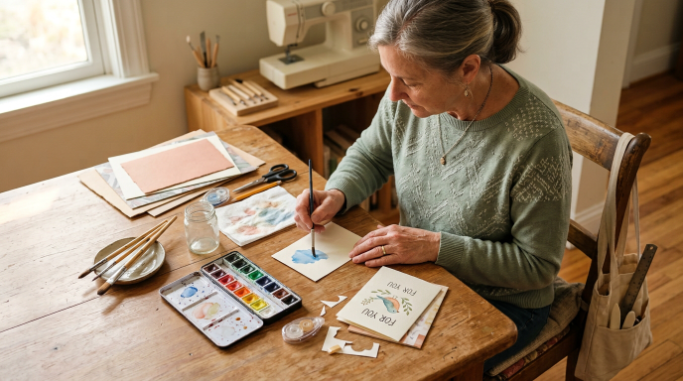
Start with the smallest workable set of supplies. Give the craft several sessions before buying specialty equipment.
Use a three-step beginner approach
- Pick one small project. Choose something you can realistically finish within one or two sessions.
- Buy only the essentials. Skip storage systems, premium tools, and bulk materials at first.
- Try it three times. Decide whether you enjoy the process before investing more money.
Libraries and community centers sometimes provide equipment, classes, or shared materials. Craft groups may also be a good source of advice about what you genuinely need.
Borrow before buying expensive equipment
A sewing machine, pottery wheel, power tool, or specialty cutter can make sense later. It doesn’t need to be part of your first week.
Beginner classes are useful for equipment-heavy crafts because the workshop often supplies the tools. You can discover whether you enjoy the activity before creating a home setup.
As of 2026, learning something new remains a recurring theme in healthy-retirement guidance. The goal isn’t to become an expert quickly; it’s to create an activity worth returning to.
Frequently Asked Questions About Crafts for Retired Adults
What is the easiest craft for a retired beginner?
Watercolor painting, card making, collage, and air-dry clay are among the easiest crafts to try. They require limited equipment and allow a beginner to complete a small project without learning many techniques first.
What crafts are good for seniors with arthritis?
Possible options include painting with larger brushes, collage, simple clay work, large-bead jewelry, and crafts using ergonomic tools. Comfort differs by person, so use larger grips, work in short sessions, and stop if repetitive movements increase pain.
What are inexpensive crafts for retired adults?
Drawing, paper crafts, card making, collage, simple crochet, recycled-material crafts, and basic watercolor can all be inexpensive. Start with supplies you already own and avoid buying large kits until you know you’ll continue.
What crafts can retired couples do together?
Retired couples might enjoy pottery classes, painting, photography projects, woodworking, seasonal decorations, scrapbooking, or making gifts for family members. Choose an activity where each person can work at a comfortable pace without needing identical skill levels.
Can crafting help retirees meet new people?
Yes. Quilting circles, pottery studios, art classes, knitting groups, maker spaces, senior centers, and community workshops create repeated contact around a shared interest. Regular groups usually provide more opportunity for connection than one-time classes.
Is it too late to learn a craft after age 70 or 80?
No fixed age makes someone too old to learn a craft. Choose a comfortable activity, simplify the first project, use suitable tools, and learn in short sessions. The goal can be enjoyment and curiosity rather than speed or technical perfection.
How many craft hobbies should a retired person have?
There is no ideal number. One satisfying craft may be plenty, while another person may enjoy several seasonal or social activities. Start with one craft and add another only when the first fits comfortably into your routine.
Final Takeaway: Pick a Craft You’ll Want to Do Again
The best crafts for retired adults aren’t necessarily the most complicated or impressive. They’re the ones that fit your hands, budget, interests, space, and preferred pace.
Watercolor, knitting, crochet, scrapbooking, card making, clay, sewing, jewelry making, and wood crafts are all strong starting points. You only need one that makes you curious enough to return tomorrow.
- Choose one small project.
- Buy basic supplies only.
- Work for 20-30 minutes.
- Notice whether you enjoy the process.
- Try it several times before investing more money.
