
10 Best Carbon Monoxide Detectors for Caregivers: Safe, Reliable Choices


Button Hook Dressing Aid

Gardening Kneeler Bench

Weekly Pill Organizer
Carbon monoxide (CO) is a colorless, odorless gas that can cause serious harm before anyone notices it. Caregivers may need extra protection for older adults, children, or people with health conditions, especially those who live alone or may not respond quickly to an alarm.
For caregivers, the best carbon monoxide detectors combine loud, clear alerts with reliable sensors, simple testing, and features that support remote monitoring. Look for detectors with battery backup, an end-of-life warning, a clear display or voice alert, and a design that makes routine testing easy. App alerts can also help caregivers check on a loved one from another location, but they should not replace an audible alarm in the home.
We compared detectors based on alert volume, sensor type, power options, smart features, and ease of use to find the models that offer dependable protection for caregivers and the people they support.
Best Carbon Monoxide Detectors for Caregivers
We reviewed carbon monoxide detectors with caregiver needs in mind, including clear alerts, simple controls, and reliable power options. Our list highlights the best models for helping protect older adults, children, and people who need extra support at home.
Kidde Portable CO Detector

We recommend this Kidde detector for caregivers who need a simple, portable alarm for home, travel, or backup use.
Pros
- Runs on included AA batteries, even during power outages
- Compact design works on a wall or tabletop
- Clear LEDs, event memory, and a loud alarm support quick checks
Cons
- Battery replacement adds ongoing maintenance
- It does not detect smoke
- The alarm may need a secure placement during travel
We found the setup straightforward because the unit needs no wiring or outlet. Its small size also makes it practical for caregivers who move between bedrooms, guest rooms, cabins, campers, or hotels.
The green light confirms that the detector has power, while the red light and 85-decibel alarm signal detected carbon monoxide. We also value the test-reset button, which lets us check operation and silence a low-battery chirp for a short time.
Caregivers may appreciate the event memory feature when checking a room after an absence. It records the last detected event or test, but we still recommend placing alarms near sleeping areas and on every home level.
The main drawback involves battery care. We need to check the AA batteries regularly and replace them when needed. Overall, this Kidde Carbon Monoxide Detector offers flexible placement and simple status checks without complicated installation.
Kidde Plug-In CO Detector

We recommend this detector for caregivers who want a simple plug-in alarm with a clear carbon monoxide reading and battery backup.
Pros
- Easy plug-in setup with an included 9-volt backup battery
- Digital display shows detected CO levels
- Peak memory helps us check whether CO was previously detected
Cons
- Uses a wall outlet, which may limit placement
- The display can be hard to read from across a room
- The unit needs replacement when it reaches the end of its service life
We found the setup quick because the alarm plugs into a standard outlet. The included extension cord also gives us more placement options when a nearby outlet is not at eye level. For caregivers, this flexibility can help place the alarm where an older adult can hear and see it.
The digital display showed a normal reading during testing and made the alarm’s status easy to check. Its peak memory also helped us see whether the unit had recorded a higher CO level since the last reset.
An 85-decibel alarm provides a strong alert, while the battery backup keeps the unit powered during an outage. The Smart-Hush button can silence an alarm for about eight minutes, but we would still investigate every alarm rather than assume it came from cooking or steam.
The main drawback involves placement. Since the detector depends on an outlet, we would check that furniture, cords, and mobility equipment do not block access. We would install alarms on each level and near sleeping areas, while following the manufacturer’s distance guidance for fuel-burning appliances.
Kidde Battery-Powered CO Alarm

We recommend this Kidde alarm for caregivers who want portable, battery-powered carbon monoxide protection with simple controls and clear status lights.
Pros
- Works during power outages
- Easy wall or tabletop placement
- Test button, low-battery alert, and peak-level memory
Cons
- Requires regular battery replacement
- Does not connect to a phone or monitoring system
- The included description lists conflicting battery information
We found the battery-powered design useful for bedrooms, guest rooms, and travel. Caregivers can place it near a loved one without hiring an electrician or running wires. Its green light shows normal power, while the red light and loud 85-decibel alarm signal a detected threat.
The test-reset button makes routine checks simple, and it can temporarily silence a low-battery chirp. Peak-level memory also helps us see whether the alarm recorded carbon monoxide since the last reset. That feature adds useful context when a caregiver checks the unit after an alert.
The alarm uses an electrochemical sensor and carries UL certification. We would still place alarms on each home level and near sleeping areas, then test them regularly. Because the unit depends on batteries, caregivers should keep replacements available and follow the label’s replacement guidance.
Kidde Plug-In CO Detector
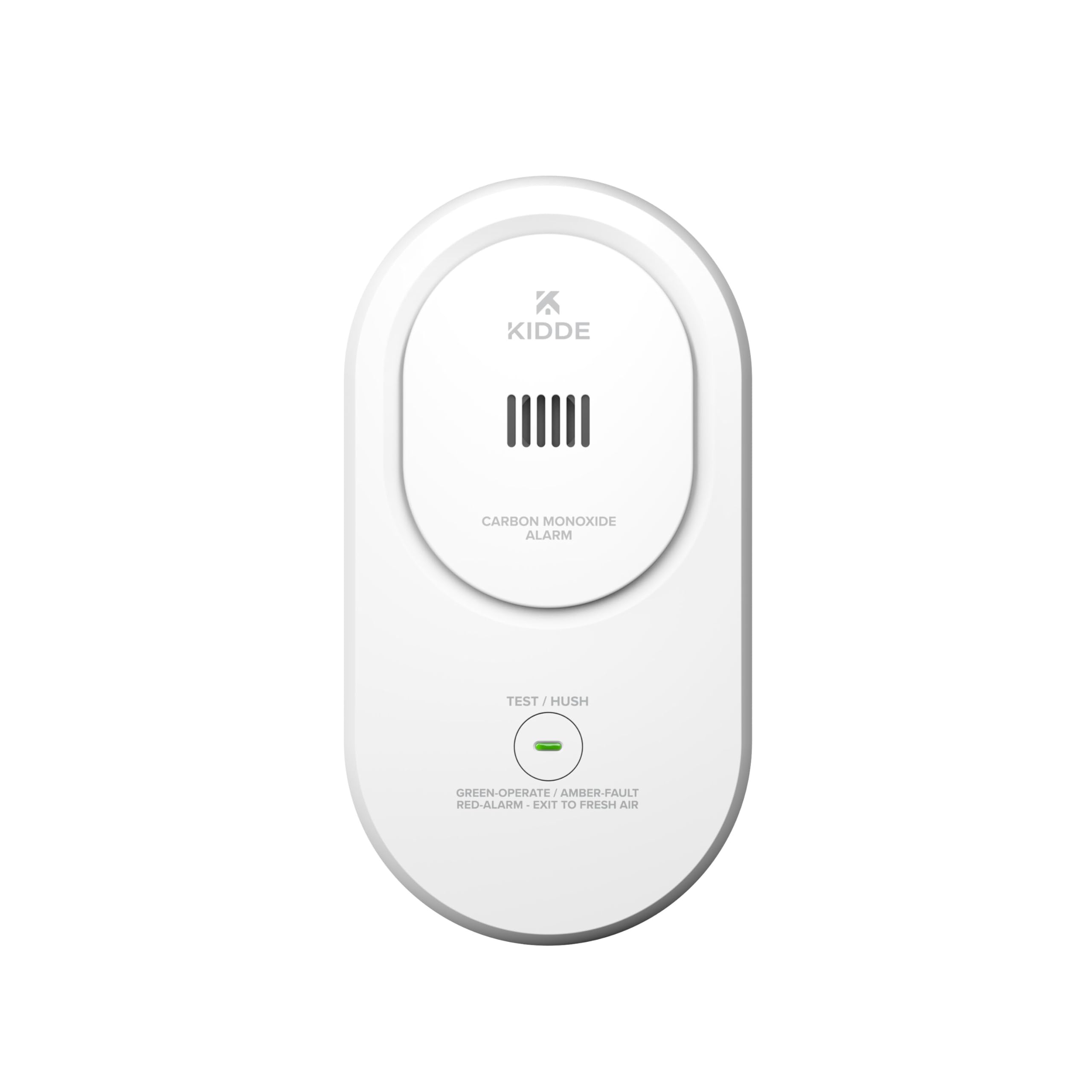
We recommend this detector for caregivers who want simple plug-in monitoring with battery backup and clear alerts.
Pros
- Easy setup with a rotating plug
- Battery backup helps during outages
- Bright status lights and an 85-decibel alarm
Cons
- Works only with 120V outlets
- Not approved for RV or boat use
- The alarm may not suit users who prefer a stronger sound
We found the Kidde COP easy to install. We plugged it into a nearby outlet, pressed the Test button, and confirmed that the alarm and lights worked. The rotating plug also made it easier to position on either a vertical or horizontal outlet without blocking the second socket.
Caregivers may value the backup power because the detector can continue monitoring during an outage. The changing LED colors provide a quick visual check, which helps when someone may not hear the alarm right away. Its compact design also works well in homes, apartments, and some travel settings.
The Test/Hush button allows quick checks and temporary silencing when appropriate. We also liked the 10-year limited warranty and its testing to UL 2034 5th Edition standards. Before buying, we would confirm that the outlet supplies 120 volts and remember that this model suits conditioned indoor spaces, not boats or RVs.
TOPTES CT-580 Portable CO Detector

We recommend this handheld detector for caregivers who need to check different rooms, vehicles, boats, or outdoor areas.
Pros
- Clear color display with adjustable brightness
- Audible, visual, and vibration alerts
- Rechargeable battery and protective case
Cons
- It does not replace fixed home alarms
- Readings may respond slowly when it is not near the CO source
- Some settings take time to learn
We found the CT-580 simple to carry and operate. Its large display makes readings easy to see, while the flashlight can help during checks in dim spaces. The included case also keeps the detector protected between uses.
The three alert types suit caregiving work well. We could rely on the sound and flashing indicator in quiet rooms, while vibration adds another warning when noise or distance might make an audible alarm easy to miss.
This model measures carbon monoxide from 0 to 1,000 ppm and responds quickly according to the manufacturer. We would use it to investigate a suspected source, such as a furnace, stove, vehicle, or boat—not as the only alarm protecting a home.
The CT-580 also stores alarm history and supports calibration settings, which may help caregivers track repeated concerns. Still, some users report that the detector needs to be close to a source before the reading changes, so we would check suspected areas carefully and follow standard CO safety guidance.
First Alert CO400 2-Pack

We recommend this pair for caregivers who want simple, battery-powered CO alarms for bedrooms or separate floors.
Pros
- Battery operation works during power outages
- Loud alarm and clear warning signals
- Simple test and silence button
Cons
- Requires regular 9-volt battery checks
- No digital display or remote alerts
- The sensor needs replacement after its service period
We found the CO400 easy to set up because it needs no outlet or electrician. The included batteries let us test both units right away, and the wall-mount option gave us flexible placement near sleeping areas.
The single button keeps testing and silencing straightforward. We also liked the end-of-life warning, which helps us track when to replace an alarm. Caregivers can check the status without learning a complicated control system.
Its 85-decibel alarm sounds forceful enough to get attention, but this model does not send phone alerts or show CO readings. We would place one near each bedroom and on every level, then add battery checks to the home safety routine.
This 2-pack works well for basic coverage, especially in homes where power outages are a concern. We would choose another model for caregivers who need remote monitoring or a digital carbon monoxide reading.
TOPTES CT-913 Portable CO Detector
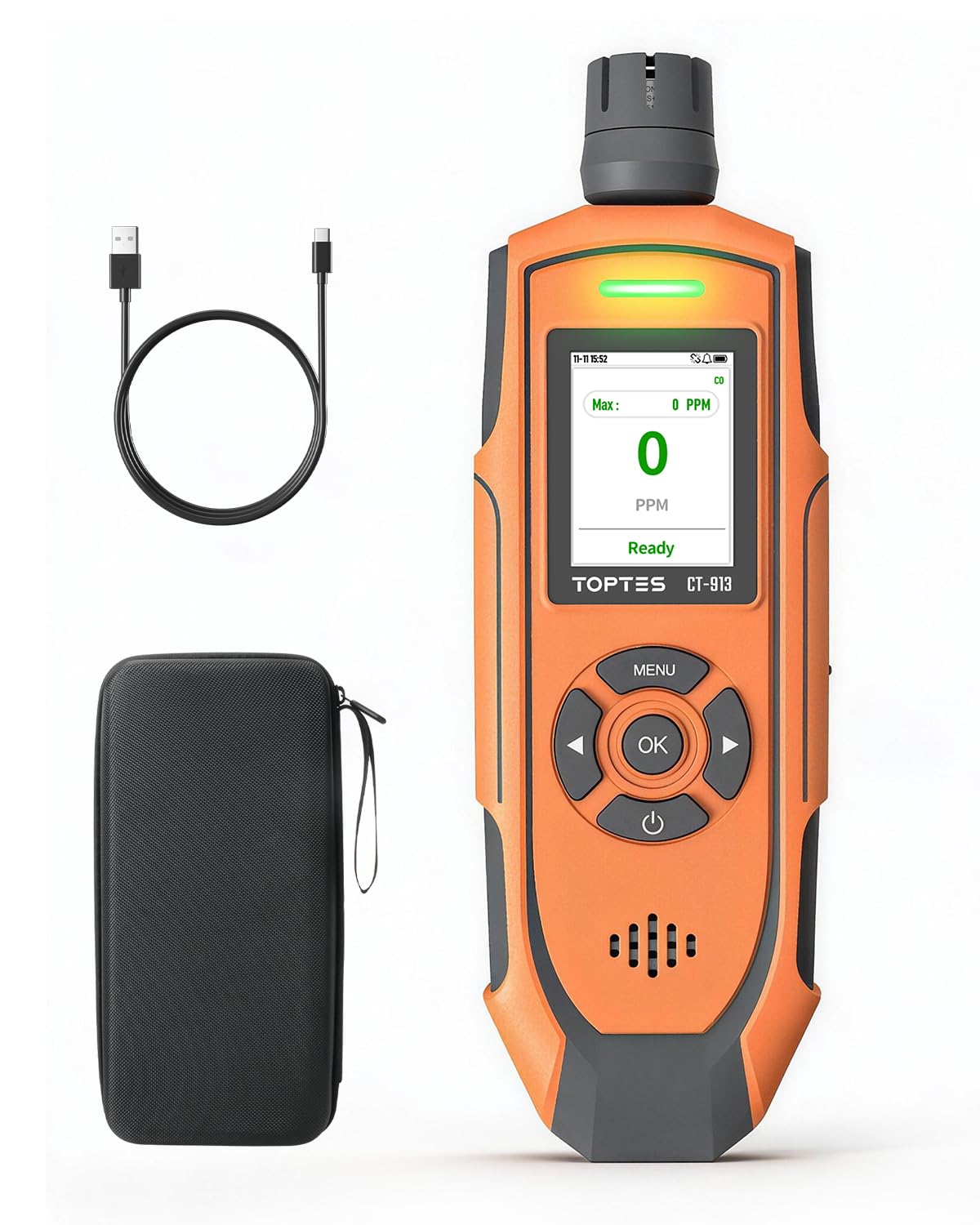
We recommend this portable detector for caregivers who need quick CO checks in homes, vehicles, garages, or travel settings.
Pros
- Clear color display with live readings and trend tracking
- Audible, visual, and vibration alerts
- Rechargeable battery rated for more than 60 hours
Cons
- Larger than a basic home alarm
- Requires regular charging
- Works best as a testing tool, not a replacement for installed alarms
We found the CT-913 simple to operate. After charging it through USB-C, we could turn it on, watch the live parts-per-million reading, and follow changes on the trend graph. The bright screen helped us read it in dim rooms.
The three alarm types suit caregiving well. Sound, flashing alerts, and vibration can draw attention when someone may not hear a standard alarm. We could also adjust alarm limits, which gives us more control during checks.
Its rechargeable battery reduces the need for disposable batteries during long visits or trips. The included case made it easier to protect and carry the detector between rooms, vehicles, and care settings.
The CT-913 feels sturdy without being difficult to carry. Still, its portable design does not replace listed smoke and carbon monoxide alarms placed throughout a home. We would use it for extra checks around heaters, stoves, garages, and other possible CO sources.
FORENSICS DETECTORS FD Portable CO Detector
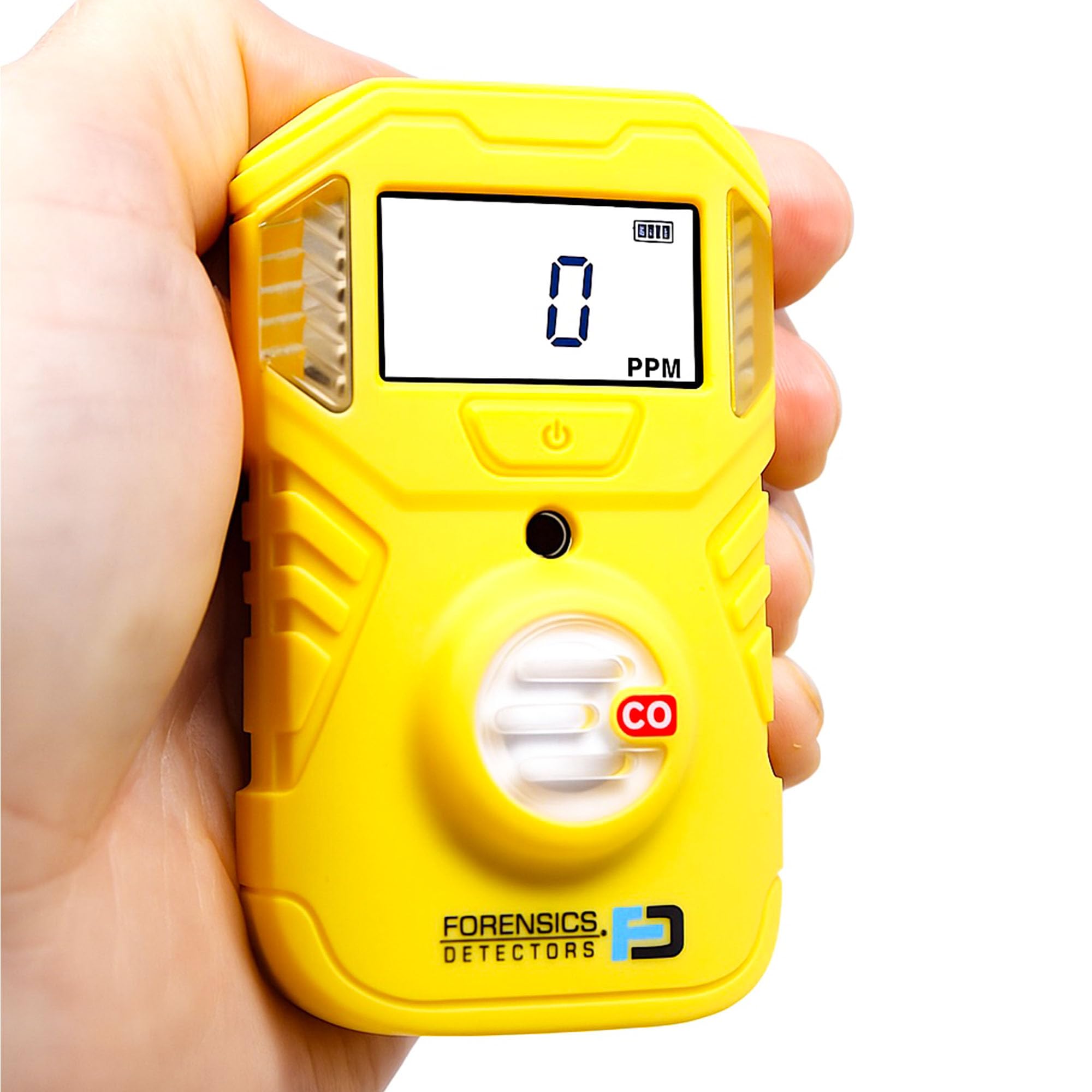
We recommend this portable detector for caregivers who need durable, personal CO monitoring in homes, garages, vehicles, or work areas.
Pros
- Two-year battery life with no outlet required
- Loud, visual, and vibration alerts
- Durable, waterproof housing with a belt clip
Cons
- The battery is not replaceable
- It offers no app or remote alerts
- A portable unit does not replace home alarms
We found the small, rubberized body easy to carry and attach to clothing or a bag. Its 10-foot drop rating and IP67 protection also make it a practical choice for busy caregivers who move between rooms or locations.
The alarm system gives us three warning methods: a buzzer, flashing LED, and vibration. That combination helps when we cannot hear an alarm clearly or need a discreet alert while assisting someone.
Its electrochemical sensor measures from 0 to 1,000 ppm and includes OSHA TWA and STEL alarm settings. The included NIST calibration certificate adds useful quality control for caregivers working around generators, furnaces, or other fuel-burning equipment.
The sealed two-year battery reduces maintenance, but we must replace the entire detector when the battery runs out. We would use it alongside fixed residential CO alarms, not as their only safety device.
Kidde CO + Gas Alarm

We recommend this alarm for caregivers who want clear readings, gas detection, and battery backup in one plug-in unit.
Pros
- Displays detected carbon monoxide levels
- Detects carbon monoxide, natural gas, propane, methane, and sewer gas
- Battery backup helps during power outages
Cons
- Larger than some plug-in alarms
- Requires a nearby outlet
- The display may need regular checks for full value
We found setup simple because the unit plugs into a standard outlet. The included 9-volt battery adds protection if the power fails, which can help caregivers monitor a loved one’s home during an outage.
The digital display shows the carbon monoxide level and updates it regularly. When the unit detects explosive gas, it displays “GAS.” This information gives us more detail than an alarm that only sounds.
Its 85-decibel alarm should be easy to hear throughout much of a home, while the peak memory records the last detected level or test. The Smart-Hush button can silence an alert for about eight minutes, but we would still treat every alarm as a possible emergency.
The main drawback is the unit’s size. It may take up more wall space than expected, and caregivers should place it where the display remains easy to see. For homes with fuel-burning appliances, this Kidde model offers useful coverage in a single device.
First Alert CO710

We recommend the First Alert CO710 for caregivers who want simple, long-term monitoring with a clear display and no routine battery changes.
Pros
- Built-in battery lasts up to 10 years
- Displays temperature and peak CO levels
- Loud alarm and simple test button
Cons
- Designed mainly for tabletop use
- Temperature readings may need time to settle
- The display does not stay fully lit
We found the CO710 easy to place near a sleeping area, on a dresser, or in a common room. Its compact design keeps it unobtrusive, while the backlit screen makes the temperature and carbon monoxide readings easy to check.
The sealed lithium battery helps caregivers avoid missed battery changes, which can matter when monitoring an older adult or someone who needs regular support. Battery power also keeps the alarm working during a power outage.
The 85-decibel alarm sounds clearly, and the test/silence button is straightforward to use. We also liked the peak-level reading because it can show whether the detector recorded a higher CO level while no one was watching.
This model can sit on a tabletop or mount to a wall, but it does not connect to a phone or send remote alerts. Caregivers who need notifications from another location may prefer a connected detector. The temperature display can also read high at first, so we would let the unit sit in place before judging its accuracy.
Buying Guide
When choosing a carbon monoxide detector for a caregiver, we should focus on clear alerts, simple controls, and dependable operation. The best choice should suit the person’s home, health needs, and ability to respond to alarms.
| Feature | What we should look for |
|---|---|
| Alarm type | A loud alarm, flashing light, and voice alert can support people with hearing or vision loss. |
| Display | A large, easy-to-read screen can show carbon monoxide levels and battery status. |
| Power source | Battery models work during power outages. Plug-in models may offer backup batteries. |
| Battery alerts | Choose a unit with a clear low-battery warning and easy battery access. |
| Placement | Check that the detector can mount near sleeping areas and on each floor, as recommended by safety authorities. |
| Testing | A large test button makes routine checks easier for caregivers and residents. |
| Maintenance | Look for simple cleaning instructions and a clear replacement date. |
We should check the detector’s certification from a recognized safety testing organization. We should also confirm that the alarm meets current local safety requirements and fits the home’s power outlets or mounting needs.
For a person who lives alone, remote alerts may help caregivers respond when they are away. If the detector connects to an app or monitoring service, we should review setup steps, subscription costs, privacy terms, and internet requirements before buying.
Editor’s Choice
We choose the Google Nest Protect as our top pick for caregivers who want clear alerts and connected features. It detects carbon monoxide and smoke, gives spoken warnings, and identifies the room where danger occurs.
The Nest Protect also sends alerts to a phone through the Nest app. This feature helps caregivers check on a loved one when they cannot be nearby. The app requires a Wi-Fi connection for remote notifications.
| Feature | Why it helps caregivers |
|---|---|
| Voice alerts | States the type and location of danger |
| Phone notifications | Supports remote monitoring |
| Self-testing | Checks key functions and reports problems |
| Battery and wired options | Fits different home setups |
We recommend placing one detector on each floor, near sleeping areas, and outside rooms with fuel-burning appliances. Follow the manufacturer’s placement and maintenance instructions, and test the alarm regularly.
The Nest Protect costs more than many basic detectors. We consider its location-based voice alerts and remote notifications useful for caregivers who need added awareness, but buyers should confirm app and Wi-Fi compatibility before purchasing.
Conclusion
We should choose a carbon monoxide detector that matches the caregiver’s needs and the person’s living space. A clear display, loud alarm, voice alerts, and a long-lasting battery can make warning signs easier to notice.
We should place detectors near sleeping areas and on each level of the home. We also need to test them regularly, replace batteries as directed, and follow the manufacturer’s replacement schedule.
For people with hearing loss or limited mobility, we should consider models with:
- Flashing lights or vibrating alerts
- Remote phone notifications
- Large, easy-to-read displays
- Simple test and mute buttons
- Battery or power-failure warnings
We should never rely on one device alone. Regular testing, proper placement, and a clear emergency plan help us respond quickly if the alarm sounds.
FAQs
Where should we place carbon monoxide detectors?
We should place one on each level of the home, outside sleeping areas, and near rooms with fuel-burning appliances. Keep detectors at least 15 feet from heating or cooking appliances when possible.
Which type works best for caregivers?
We should look for detectors with a digital display, loud alarm, battery backup, and a clear low-battery warning. Models with phone alerts can help us monitor older adults when we cannot visit.
How often should we test a detector?
We should press the test button once a month. A test confirms that the alarm and power source work, but it does not confirm that the sensor detects every level of carbon monoxide.
When should we replace a detector?
We should check the manufacturer’s instructions because many detectors last five to seven years. We should replace a unit sooner if it shows an error, fails a test, or has water or physical damage.
What should we do if the alarm sounds?
We should move everyone outside to fresh air immediately and call emergency services from outside. We should not reenter the home until responders say it is safe.
Can a carbon monoxide detector replace regular maintenance?
No. We should have fuel-burning appliances, chimneys, and vents inspected each year. We should also keep generators outside and away from doors, windows, and vents.