
Bath Lift vs Walk-In Shower: Which Is Better?


Digital Blood Pressure Monitor

Compression Socks

LED Clip Reading Light
Bath Lift vs Walk-In Shower is a useful comparison for seniors who find bathing harder than it used to be. The two options solve the problem in very different ways. A bath lift helps you continue using an existing bathtub, while a walk-in shower changes the bathing space to make shower access easier.
The right choice depends on how you use your bathroom. A bath lift can make sense if you still want a full bath and can safely transfer into the tub. A level-access or low-threshold shower may be more practical if stepping over a bath wall has become difficult. NHS guidance also lists powered bath lifts and level-access showers among options for people who have trouble getting in and out of a bath.
Quick Comparison
A bath lift is better for keeping your existing bathtub, especially if soaking in a bath is important to you. A walk-in shower is better for frequent showering and easier entry, particularly when stepping over a tub wall is the main problem.
The biggest difference is the transfer. A bath lift still requires getting into the bath. A level-access shower can reduce that barrier by allowing you to walk straight into the shower area.
Bath Lift vs Walk-In Shower At a Glance
Here is the basic difference between the two options.
| Feature | Bath Lift | Walk-In Shower |
|---|---|---|
| Main use | Bathing in an existing tub | Showering |
| Entry | Transfer over bath side | Low or level entry |
| Installation | Usually less extensive | Usually requires bathroom work |
| Bath retained | Yes | Usually no |
| Shower seat | Not the main feature | Easy to include |
| Physical effort | Moderate transfer still needed | Usually lower entry effort |
| Portability | Some models can be removed | Fixed adaptation |
| Best for | People who want baths | People who prefer showers |
| Long-term adaptation | Limited by existing tub | More permanent |
Bath Lift Review for Senior Bathing
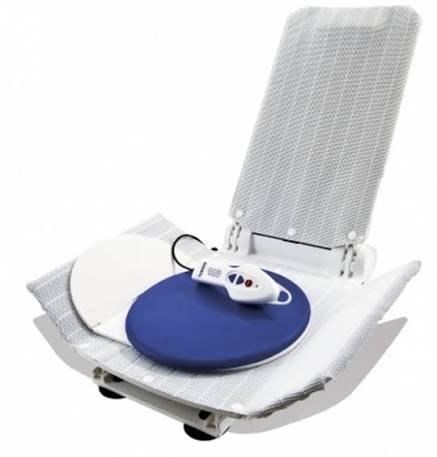
A bath lift is designed to lower and raise a person inside an existing bathtub. Some powered models can lower the user toward the bottom of the bath and raise them again when bathing is finished. Age UK specifically lists battery-powered bath lifts as an option for people who have difficulty getting in and out of a bath.
Ease of Use
The main benefit is simple. You do not need to replace the entire bathtub.
However, the lift does not remove every transfer problem. You still need to get into the tub and position yourself on the lift. Depending on the bathroom and the user’s abilities, this may require some assistance.
A powered bath lift can be useful when the main difficulty is lowering down into the bath or getting back up.
Key Strengths
- Keeps the existing bathtub
- Allows a seated bathing position
- Can reduce the effort of lowering and rising
- Useful for people who prefer baths
- May avoid a major bathroom renovation
- Some models can be removed when needed
Potential Drawbacks
- You still need to enter the bathtub
- The bath wall can remain a transfer barrier
- The device needs charging or battery management on some models
- Cleaning the equipment adds another task
- It may not suit someone who cannot safely transfer into the bath
A bath lift helps with movement inside the bath, but it does not automatically make the bath entrance accessible.
Walk-In Shower Review for Senior Bathing
A walk-in shower changes the bathing area rather than adding equipment to an existing tub. A level-access shower can provide a much easier route into the shower, and a seat can allow the user to shower while seated.
Research into bathing adaptations for older adults has specifically examined walk-in showers as a way to help people continue managing personal care at home.
Ease of Use
For someone who finds stepping over a bathtub difficult, a walk-in shower can remove one of the biggest obstacles.
The shower can also be designed around the user’s needs. Options may include a fixed seat, grab rails, suitable controls, and enough space for mobility equipment. NHS building guidance includes designs for assisted showers with fixed shower seats and space for wheelchair transfers.
Key Strengths
- Easier entry than a standard bathtub
- Works well for regular showering
- Can include a shower seat
- Can be designed around mobility needs
- Suitable for a more permanent bathroom adaptation
- May provide more room for assisted showering
Potential Drawbacks
- Usually requires bathroom alteration
- Installation can be disruptive
- Initial cost can be higher
- Less suitable if taking baths is important
- Floor drainage and bathroom layout need careful planning
Which Is Easier for Seniors to Use?
For many people, the answer depends on where the difficulty occurs.
If getting down into a bathtub and back up is the main issue, a bath lift can help. If stepping over the bathtub wall is the main issue, a walk-in shower may address the problem more directly.
A shower can also be fitted with a seat and grab rails. NHS guidance notes that shower stools, seats, grab rails, and other equipment can help people shower more comfortably and safely.
A bath lift may be easier for someone who wants to preserve bathing as an option. A walk-in shower may be easier for someone who wants simple daily access without climbing over a tub.
Performance Comparison
The two options should not really be judged by traditional performance measures. The important question is how well each one solves the bathing problem.
| Performance Area | Bath Lift | Walk-In Shower |
|---|---|---|
| Bathing | Excellent for baths | Not designed for baths |
| Showering | Depends on tub setup | Excellent |
| Entry access | Still requires tub transfer | Can provide level entry |
| Seated bathing | Strong | Strong with suitable seat |
| Long-term accessibility | Depends on the tub | Can be designed for changing needs |
| Mobility-aid access | Limited by bathroom layout | Can provide more usable space |
A well-designed accessible shower can also be adapted as needs change. Local authority guidance commonly considers level-access showers as bathroom adaptations for people with mobility needs.
Comfort, Accessibility, and Senior-Friendly Design
Comfort is where personal preference matters most.
A bath lift provides the experience of sitting in a bathtub. That can be valuable for someone who enjoys bathing and does not want to give it up.
A walk-in shower offers a different kind of comfort. A person can shower while seated and avoid climbing over a conventional bath. It can also provide more space for a caregiver when the room is designed for assisted bathing.
For wheelchair users or people who need more transfer space, the bathroom layout becomes especially important. Shower design guidance includes space for assisted wheelchair and hoist transfers.
Features Comparison
The useful features are different because these are different types of solutions.
| Feature | Bath Lift | Walk-In Shower |
|---|---|---|
| Powered movement | Often available | Not normally needed |
| Bath retention | Yes | Usually no |
| Shower seat | Separate or optional | Can be built in |
| Grab rails | Can be added | Can be added |
| Level entry | No | Possible |
| Bathroom redesign | Usually limited | Often required |
| Transfer space | Limited by tub | Can be designed into room |
Price, Maintenance, and Long-Term Value
There is no single meaningful price for either option. Bath lift costs depend on the model and equipment. Walk-in shower costs depend heavily on the bathroom layout, plumbing, flooring, drainage, fittings, and amount of renovation required.
Age UK notes that walk-in bath and shower prices vary according to the model and the work required to refit the bathroom.
A bath lift may offer better value when the existing bathtub is suitable and only limited adaptation is needed.
A walk-in shower may offer stronger long-term value when the bathtub itself has become the main obstacle. It is a larger investment, but it can address the underlying access problem rather than adding equipment to the existing bath.
Maintenance also differs. A bath lift needs regular cleaning and may require battery care. A shower needs normal bathroom cleaning, plus attention to the shower floor, seat, rails, seals, and drainage.
Who Should Choose a Bath Lift?
A bath lift may suit you if:
- You enjoy taking baths.
- Your existing bathtub is suitable.
- You can transfer into the bath safely.
- You mainly need help lowering and raising yourself.
- You want to avoid major bathroom remodeling.
- You want an option that may be removable.
Who Should Choose a Walk-In Shower?
A walk-in shower may suit you if:
- You mainly take showers.
- Stepping over a bath is difficult.
- You want easier entry.
- You want to shower while seated.
- You need more room for a caregiver or mobility aid.
- You are planning a long-term bathroom adaptation.
Bath Lift vs Walk-In Shower — Final Verdict
There is no single choice that fits every senior.
Choose a bath lift when keeping the bathtub matters and the main problem is lowering into or rising from the bath. Choose a walk-in shower when easy entry, regular showering, and long-term accessibility matter more.
If mobility is changing, an occupational therapist or other qualified professional can help assess the bathroom and the safest transfer method. Home adaptations should fit both the person and the physical space, rather than simply choosing the most expensive option.
Scoring Summary
A fixed 10-point score would suggest a level of precision that this category does not support. The two options solve different problems, so a direct score can be misleading.
Instead, the practical comparison is:
| Category | Bath Lift | Walk-In Shower |
|---|---|---|
| Keeping a bath | Strong fit | Poor fit |
| Easy shower entry | Limited | Strong fit |
| Limited bathroom remodeling | Stronger fit | Weaker fit |
| Seated showering | Depends on setup | Strong fit |
| Long-term accessibility | Moderate | Strong potential |
| Bathing preference | Strong fit | Weak fit |
How We Evaluate Products
This comparison focuses on practical factors that affect senior bathing.
We consider:
- Ease of entry
- Physical effort
- Transfer requirements
- Seating
- Bathroom accessibility
- Installation
- Maintenance
- Comfort
- Safety
- Long-term practicality
This is a product-category comparison, not a hands-on test. Product features can vary by model and installation.
Senior-Specific Buying Considerations
Before choosing, look beyond the equipment itself.
Physical Effort
Think about how much bending, lifting, standing, and transferring is required. The easiest solution is usually the one that removes the most difficult movement for the individual.
Controls
If choosing a powered bath lift, make sure the controls are easy to understand and operate.
Maintenance
Check how the equipment needs to be cleaned and maintained. A simple system may be easier for everyday use.
Storage
A removable bath lift needs somewhere safe to store it if it is taken out of the tub.
Setup
For a walk-in shower, consider the entire bathroom layout, not just the shower door or tray.
Safety
Wet bathroom floors can increase fall risk. Grab rails, suitable seating, good drainage, and appropriate non-slip surfaces can all be important parts of an accessible bathroom.
Common Buying Mistakes
Avoid these mistakes:
- Choosing a bath lift without considering bath entry
- Assuming every walk-in shower is fully accessible
- Ignoring bathroom space
- Forgetting about shower-seat height
- Focusing only on purchase price
- Failing to consider future mobility needs
A professional assessment can be particularly useful when mobility is limited or transfers are difficult.
Safety
Never assume that a bathing aid makes an unsafe transfer safe.
A bath lift still requires getting into the bath. A shower may still be unsafe if the entry, floor, seat, or grab rails are poorly suited to the user.
If someone has significant mobility problems or has recently had surgery or a fall, professional advice can help identify suitable bathing equipment. NHS guidance also recommends discussing bathing arrangements with an occupational therapist in situations such as recovery after hip surgery.
Frequently Asked Questions
Is a bath lift safer than a walk-in shower?
Neither is automatically safer for everyone. The safer option depends on the person’s ability to transfer, the bathroom layout, and the equipment used.
Can a bath lift be used with a shower?
Some bathroom setups can use a bath lift with an over-bath shower. However, the user still needs to transfer into the bathtub.
Is a walk-in shower better for limited mobility?
It can be. A level-access shower can remove the need to step over a bathtub and can be designed with seating and grab rails.
Does a bath lift require a new bathtub?
Usually, the purpose of a bath lift is to adapt an existing bathtub rather than replace it. Compatibility still needs to be checked before purchase.
Is a walk-in shower expensive to install?
It can cost more than adding a bath lift because it may involve bathroom alterations. The actual cost depends on the room and installation requirements.
Should I ask an occupational therapist?
If bathing or transfers have become difficult, an occupational therapist can help assess the person’s needs and the bathroom environment. Local adaptation programs commonly use professional assessments when determining suitable bathroom modifications.
Conclusion
The main difference in Bath Lift vs Walk-In Shower is simple: a bath lift helps you continue using a bathtub, while a walk-in shower can make shower access easier by reducing the need to climb over the bath.
If you love baths and can transfer into the tub, a bath lift may be a practical way to keep that option. If easy entry and everyday showering are the priorities, a properly designed walk-in shower may be the more suitable long-term adaptation.