
Best Raised Toilet Seats for Arthritis: Top-Rated, Comfortable Options for Easier Bathroom Use


Reacher Grabber Tool

Leg Massager for Circulation

Easy Grip Kitchen Utensils
Raised toilet seats make sitting and standing easier for people with arthritis by reducing how far they must bend or squat. They fit over a standard toilet bowl and come in padded, molded, or adjustable styles to add height and comfort. A good raised seat improves safety and reduces joint pain by offering the right height, stable attachment, and comfortable material.
When choosing one, pay attention to seat height, weight capacity, how it attaches to your toilet, and whether it has armrests or padding for extra support. We tested and compared popular models to find seats that balance stability, comfort, and easy cleaning to help readers pick the best fit for their needs.
Best Raised Toilet Seats for Arthritis
We tested and reviewed raised toilet seats that help people with arthritis sit and stand more easily. Below is our full list of the best options to improve comfort, safety, and independence.
Drive Medical Raised Toilet Seat (with Arms)

We recommend this if you need a sturdy, tool-free lift with arm support after surgery or for arthritis.
Pros
- Adds about 5 inches for easier sitting and standing
- Padded, removable armrests give steady support
- Locks securely without tools for quick setup
Cons
- Plastic surface can be hard to keep spotless
- Arms may feel tight for wider hips
- Not a perfect fit on every toilet rim
We used this seat after a knee procedure and found it made transfers much easier. The extra height kept our knees from bending so far, and the padded arms let us push up without straining wrists.
Installation took minutes; we loosened the old seat, set the riser, and turned the locking screw until it felt snug. The lock felt solid under weight and did not shift while sitting.
Cleaning required a soft cloth and mild cleaner. The plastic held up well, but splash stains needed more attention. Removing the arms for cleaning or to fit smaller toilets proved useful.
Overall, this Drive Medical riser felt reliable and helped us move safer in the bathroom, though people with very wide hips should check fit first.
HealthSmart 5″ Raised Toilet Seat

We recommend this if you need a simple, portable way to raise a round toilet for easier sitting and standing after surgery or with arthritis.
Pros
- Adds noticeable height without tools.
- Lightweight and easy to clean.
- Feels stable on most round bowls.
Cons
- Not made for elongated toilets.
- Can shift on some toilet surfaces.
- Hard plastic may feel firm for long sits.
We used this riser after knee and hip recovery and found it made getting up much easier. It slips onto the bowl under the existing seat and gives a solid five-inch boost that helped our knees and hips when standing.
Installation took seconds with no screws or assembly. The three slip-resistant pads usually keep it steady, though a few toilets with smooth or uneven rims let it shift a bit when people fidget.
The plastic feels durable and cleans fast, but it’s firm. We wished for a slightly softer top or optional cushion for longer use. Overall, it’s a handy, affordable solution if you have a round toilet and need extra height.
Carex Raised Toilet Seat

We recommend this if you want a sturdy, simple riser that makes sitting and standing easier after surgery or with arthritis.
Pros
- Adds comfortable height for easier transfers
- Feels solid and cleans up easily
- Fits under your existing elongated seat for a low-profile look
Cons
- Bolt-on installation can take longer than expected
- Not universal for every toilet shape or foreign standards
- Only raises 3.5 inches, might be too low for some needs
We installed this on an elongated bowl and noticed the extra height made standing up much easier. The plastic feels rigid and it didn’t wobble when we tested it, which builds confidence using it daily.
Putting it in place took patience. The bolts replace your current seat hardware, so lining up holes and tightening took longer than the package claim. Once secure, the seat stayed put and the lid could still close.
Cleaning proved simple since the molded plastic wipes down fast. People with limited reach or unusual toilet holes should check fit first, because not every toilet mates perfectly with the bolt pattern.
Lunderg Solva Raised Toilet Seat
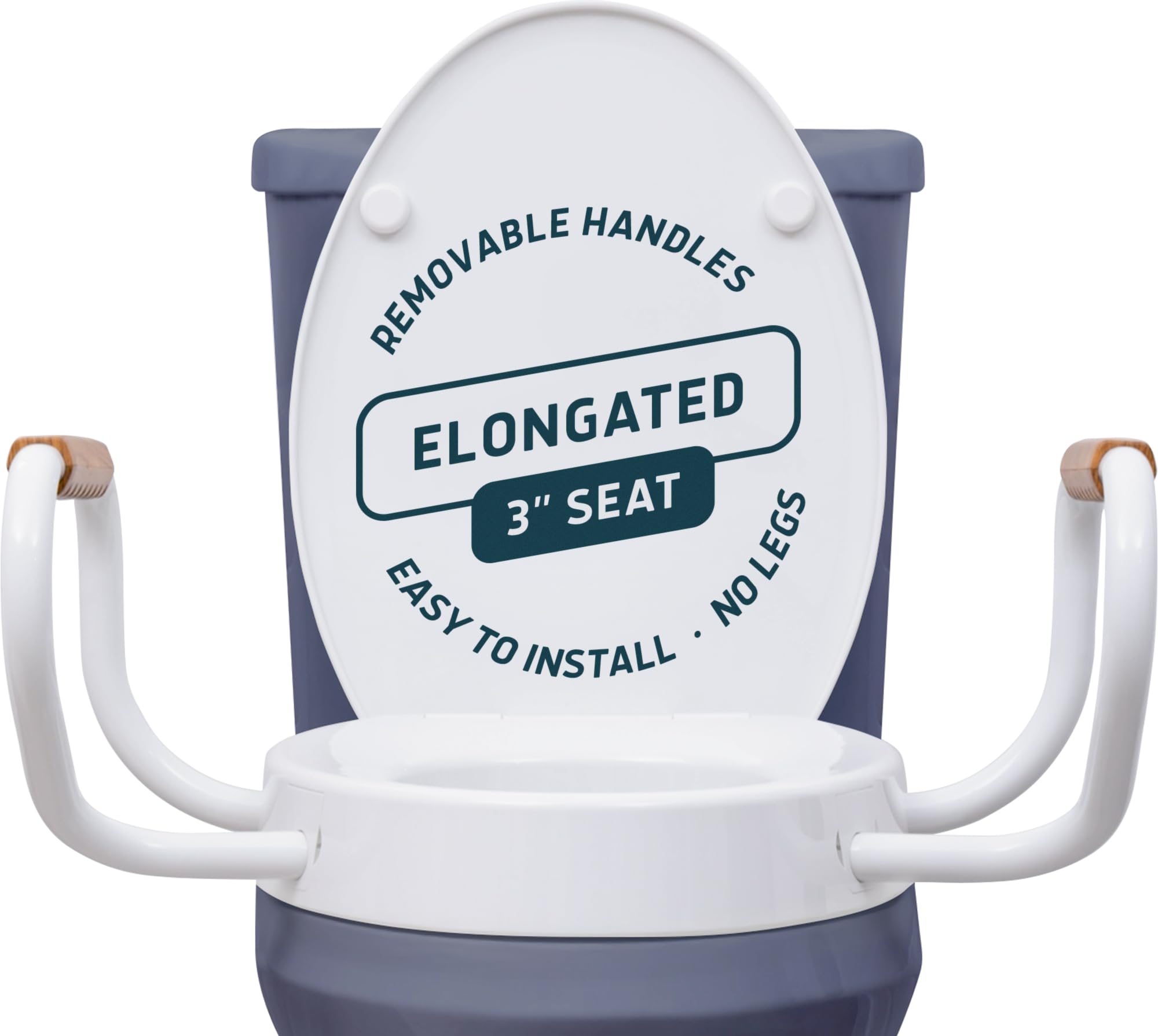
We recommend this seat if you want a stable, easy-to-clean raised toilet seat that looks like a normal toilet.
Pros
- Bolts to the bowl so it stays rock solid.
- Soft-close lid and full-seat hinge make cleaning easy.
- Clean, home-friendly look—no hospital feel.
Cons
- Fits elongated toilets only.
- Handles are removable but not adjustable for taller users.
- Only available in white.
We installed this on an elongated toilet and used it for a few weeks after a hip procedure. The seat adds three inches and felt natural when sitting and standing. It did not shift under side pressure like other risers we tried.
The bolt-on design gave us confidence getting up and down without worrying it would slip. The handles felt sturdy and the seat lid closes quietly. Removing the seat for deep cleaning was quick thanks to the release hinge.
Guests didn’t notice it as a medical device. The finish looks like a regular seat, so the bathroom kept a neat appearance. Just check your toilet shape first—this model only fits elongated bowls.
Kohler Hyten 3″ Elevated Seat
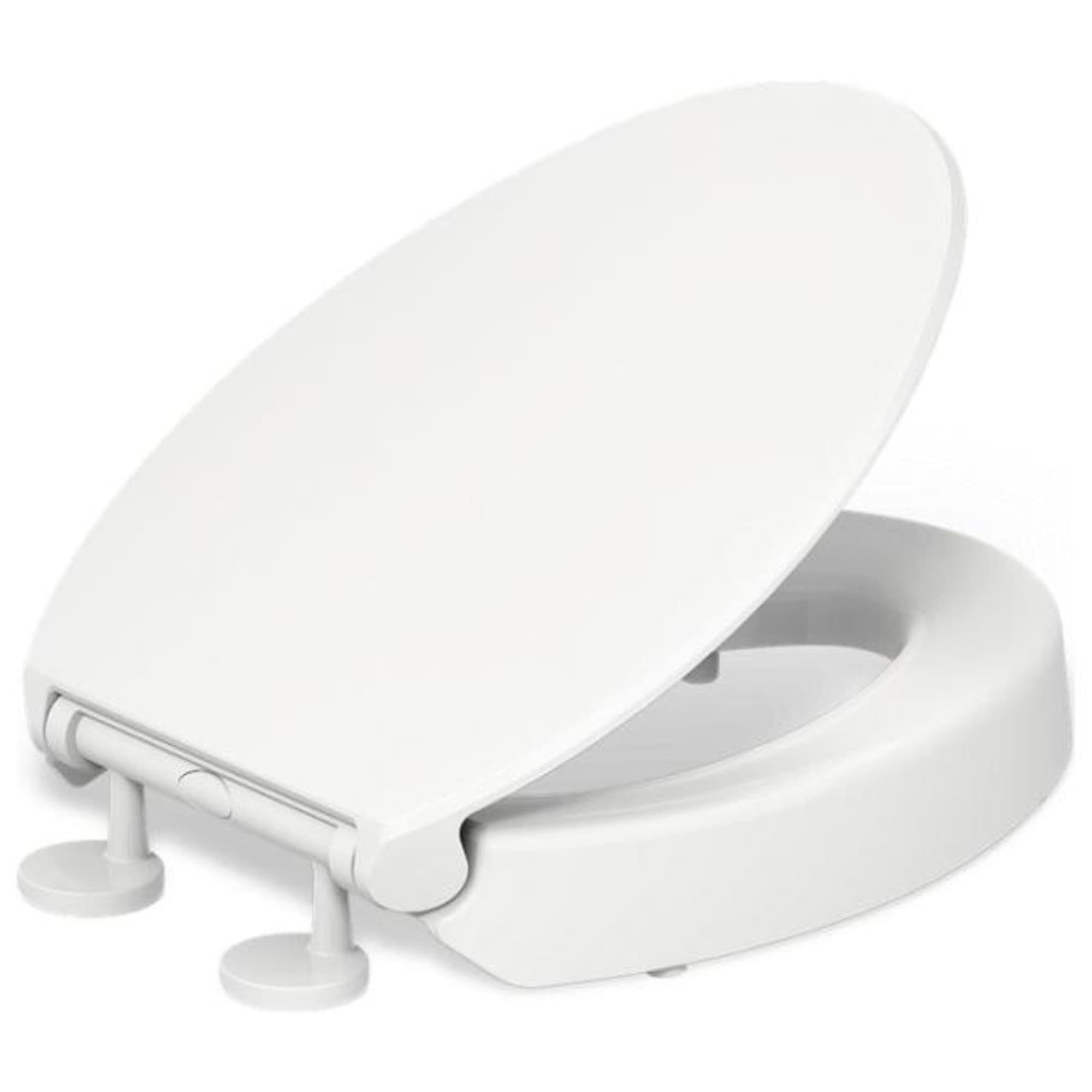
We recommend this seat if you want a sturdy, 3-inch boost that makes sitting and standing easier without replacing your toilet.
Pros
- Adds noticeable height and feels stable under weight.
- Soft-close lid and quick-release make daily use and cleaning simple.
- Installs from above with secure bumpers — no wobbles after tightening.
Cons
- Higher price than basic raised seats.
- Plastic finish can feel firm compared with padded models.
- Not returnable if opened, so check fit before unboxing.
We installed this on an elongated bowl and felt the extra three inches right away. Getting up from a seated position required less effort, and the seat did not shift when we leaned for balance.
The quiet-close lid saved us from loud slams late at night. Quick-release made cleaning fast; we popped the seat off and wiped around the hinges without fuss.
The Grip-Tight hardware held firm after several uses, so the seat stayed put even when we shifted. We noticed the plastic is solid but not cushioned, so it may feel hard to some users who want padding.
Overall, the Kohler Hyten blends into the bathroom like a regular seat while giving real help for arthritis or mobility issues. If you want reliable build and a cleaner look than add-on risers, this is a good choice.
Soundfuse Raised Toilet Seat
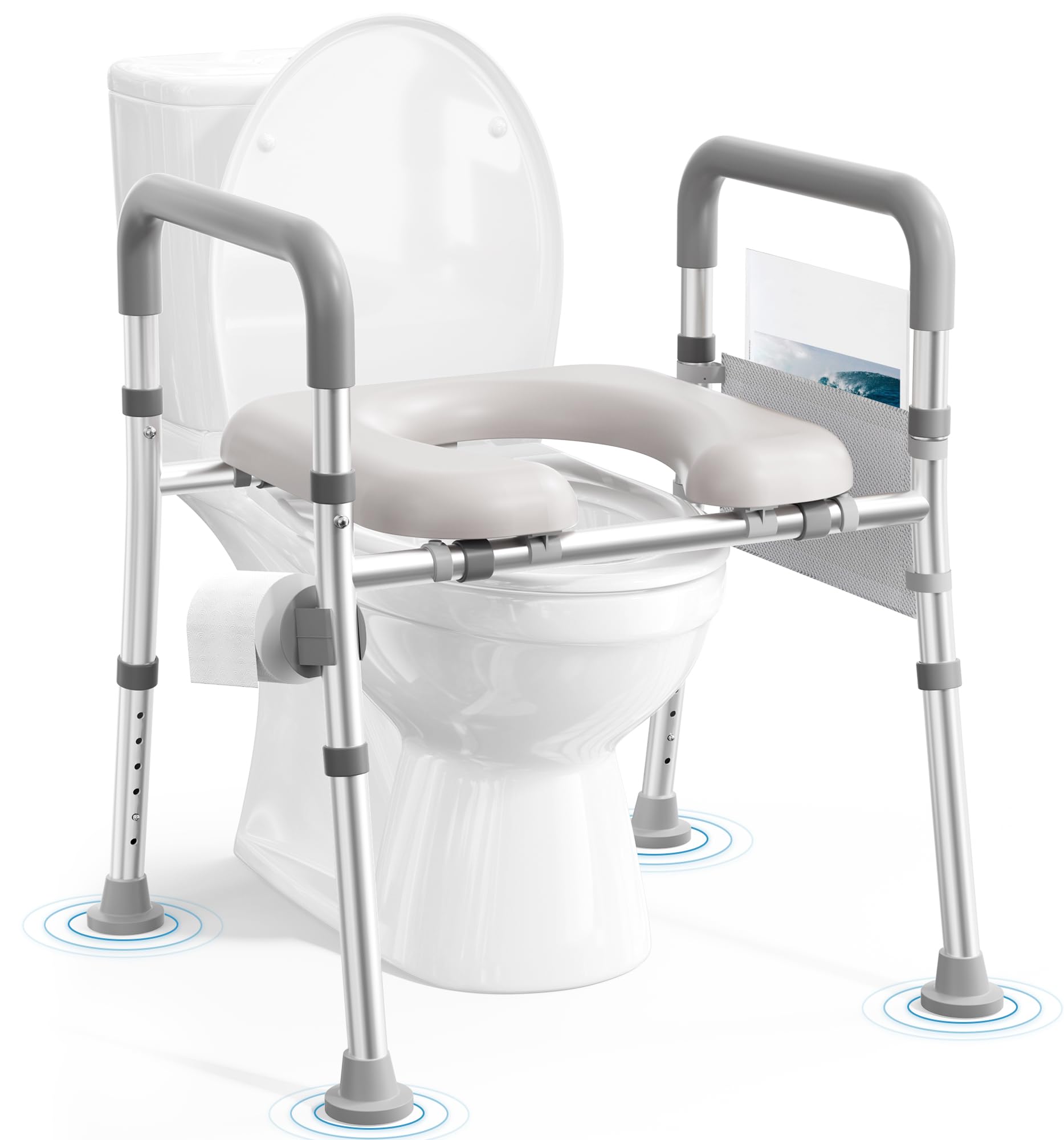
We recommend this seat when you need a sturdy, adjustable riser that helps people with arthritis sit and stand more easily.
Pros
- Very stable — aluminum frame and non-slip feet feel secure.
- Comfortable padded seat that stays dry and cleans easily.
- Adjustable height and width to fit different toilets and needs.
Cons
- Padding on handles may arrive damaged for some units.
- Takes a little care to assemble correctly.
- Bulky, so it can be awkward to move or store.
We used the Soundfuse riser for a few weeks and found the reinforced frame really steadied users who struggle to lower themselves. The handles gave confident support, and the non-slip leg caps held fast on tile without shifting.
The padded seat made sitting gentler on sore joints, and the waterproof cover wiped clean after use. We liked that the height and width adjustments matched different bowls, which saved us from hunting for a special model.
Assembly required close attention to the instructions, and one unit arrived with slight damage to the handle foam that the seller replaced. Overall, this felt like a premium, durable option for arthritis care that balances comfort, safety, and adjustability.
Medline 5″ Raised Toilet Seat with Removable Arms

We recommend this if you need a simple, sturdy lift that adds 5″ and gives reliable arm support after surgery or for arthritis.
Pros
- Feels solid and locks into place so you sit with confidence.
- Padded removable arms help push-to-stand and fold away for cleaning.
- Fast to install and remove without tools.
Cons
- Fit can be fiddly on some elongated bowls.
- No lid may bother users who prefer a closed toilet.
- Narrow seat may feel tight for larger users.
We used this riser after a knee surgery and found the height change made sitting and standing less painful. The clamp at the front held tight and the whole seat felt stable when we pushed up using the arms.
Cleaning went quickly because the plastic wipes down and the arms snap off. We liked moving it between homes because it’s light and comes off without tools.
On a tall or wide person the seat felt cramped and one toilet bowl needed extra adjusting to get a snug fit. Still, for mobility issues or short-term recovery, this model gave us the support we needed.
Vive Raised Toilet Seat Riser (with Handles)
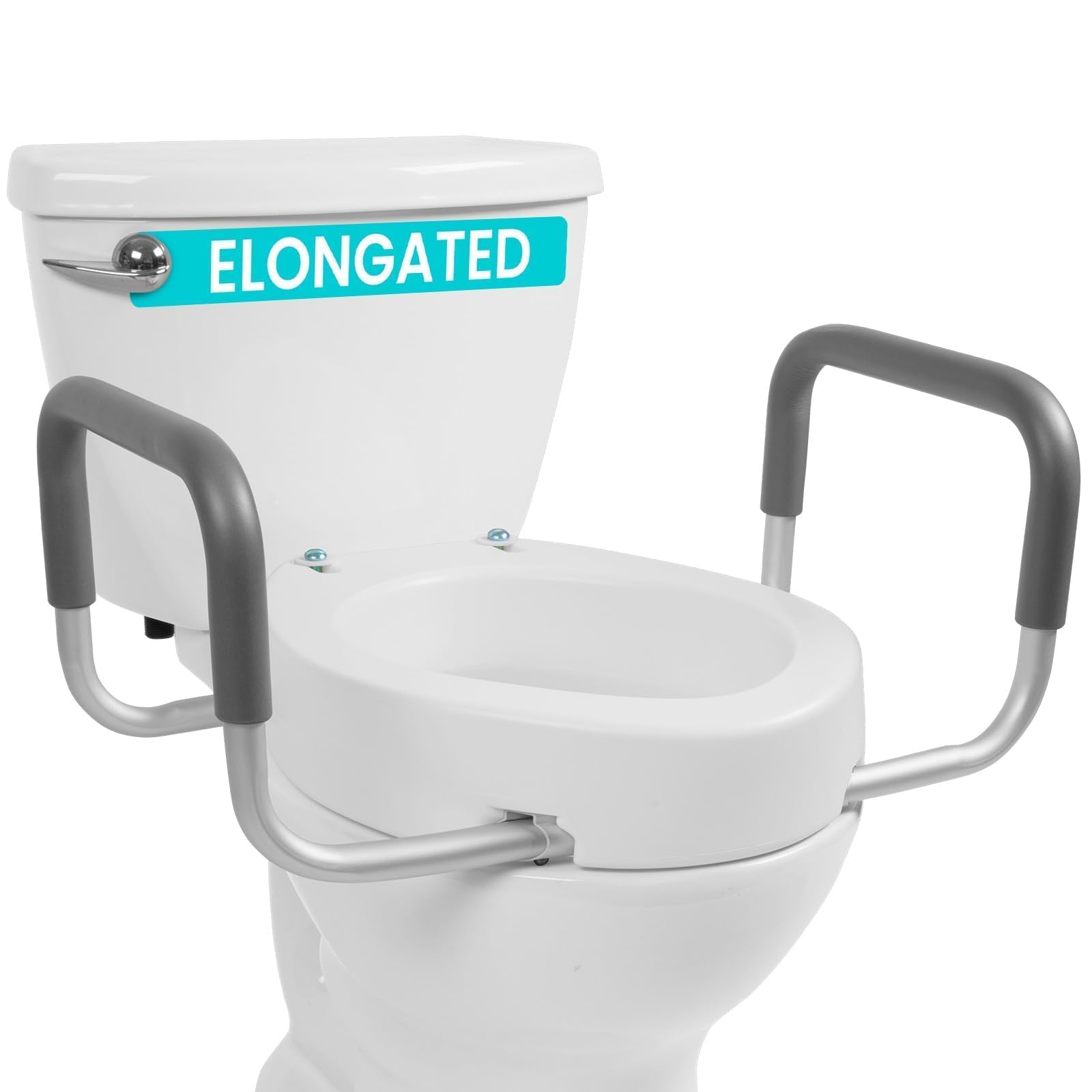
We recommend this if you need extra seat height and firm hand support for safer sitting and standing.
Pros
- Adds noticeable height without changing your existing toilet seat.
- Padded removable handles give good grip and speed up transfers.
- Sturdy feel — supported someone heavier without flexing.
Cons
- Cleaning under the riser requires unbolting, which is a hassle.
- Width can feel tight for larger users or wide hips.
- Some may find the 3.5″ rise too tall or too short depending on needs.
We installed this riser in our guest bathroom and used it for a few days. It slid under the existing elongated seat and felt solid right away. The foam on the handles made gripping easier during transfers, and we trusted it when helping someone stand.
We noticed the riser makes sitting and standing much less painful after knee or hip strain. The tool-free screws held it firmly, though you still need to remove fasteners to clean beneath. That extra step is annoying but not a deal breaker.
The width is something to watch. For one of us, the handle spacing felt snug, so wider users should check measurements. Overall, the build felt durable and gave reliable support during everyday use.
Buy the Vive Raised Toilet Seat Riser (with Handles)
Carex Hinged Elongated Toilet Seat Riser

We recommend this seat if you need a simple, sturdy lift that fits under your existing elongated toilet seat.
Pros
- Adds useful height without replacing your toilet seat.
- Hinged design makes cleaning easier.
- Installs mostly with existing seat holes for a solid fit.
Cons
- Plastic can feel lightweight compared with padded options.
- Hinges may need tightening or slight adjustment.
- Not ideal if you need more than 3.5 inches of lift.
We used this riser over several weeks and found the extra 3.5 inches made standing up easier after knee pain. It slipped under our current seat cleanly and did not change the look of the bathroom much.
Installation took a few minutes with a screwdriver. Sometimes the supplied bolts felt a bit tight for the holes, so we nudged them to fit. Once secured, the riser stayed put and handled regular use well.
Cleaning turned out to be simple because the hinge lifts like a normal seat. The plastic wiped down fast, though it shows scuffs more easily than a padded model. If you want a quick, no-fuss boost in height, this works well.
HOMLAND Raised Toilet Seat

We recommend this if you need a sturdy, adjustable riser that eases sitting and standing for arthritis or post-surgery use.
Pros
- Very stable with welded aluminum frame and wide legs.
- Padded seat and armrests make transfers gentler on sore joints.
- Height and width adjust to fit different toilets and users.
Cons
- Legs can be wide for compact toilets.
- Padded cover shows water spots if not wiped promptly.
- Heavier than simple plastic risers to move around.
We installed the HOMLAND seat in under 10 minutes and felt the frame hold firmly as we sat down. The handrails gave us real leverage getting up, which reduced knee and hip strain.
The padded seat stayed comfortable during longer sits, and the non-slip feet kept the unit from sliding on tile. Adjusting height and width was straightforward and let us match the riser to a taller toilet and a shorter one.
We noticed the legs stick out more than slim models, so measure your bowl area first. Cleaning was quick with a damp cloth, though water beaded on the padding and needed wiping to avoid marks.
Buying Guide
We focus on safety and comfort first. Raised seats should make sitting and standing easier while reducing strain on knees and hips.
We look for height options. Adjustable height helps fit different toilets and body sizes. Measure your toilet and account for the user’s leg length.
We check stability and material. Non-slip bases, secure clamps, and sturdy materials keep the seat from shifting. Hard plastics are common; padded tops add comfort.
We value support features. Armrests or handles help with balance. Choose designs that attach firmly and do not wobble.
We consider weight limit and user needs. Verify the seat’s weight capacity and match it to the user. Thicker padding may be helpful for pressure relief.
We inspect cleaning and maintenance. Smooth, removable seats and materials resistant to stains make cleaning easier. Look for models that let us remove the seat without tools.
We weigh installation and fit. Seats that fit most round and elongated bowls reduce returns. Quick-install clamps and clear instructions save time.
We note portability and storage. Lightweight, foldable, or easy-to-remove seats work well for travel or temporary use.
We compare warranty and customer support. A clear warranty and good support give us confidence. Read return policies before buying.
Editor’s Choice
We picked the Best Overall raised toilet seat for arthritis based on comfort, stability, and ease of use. It has a contoured seat, secure clamps, and a weight capacity that suits most users. Installation takes minutes and needs no tools.
We also chose a Best with Arms model for people who need extra support. The arms are padded and fold up when not in use. They add balance for sitting and standing without blocking space.
For tight bathrooms, we recommend the Compact Fit design. It raises height without extending far forward. That helps users feel secure without hitting knees or shins.
We tested each seat for slip resistance and cleaning. Surfaces wipe clean with mild soap and the materials resist stains. The clamps held firm under repeated use.
Quick comparison:
- Best Overall: Comfortable contour, tool-free install, wide weight limit
- Best with Arms: Padded support, foldable arms, strong grip
- Compact Fit: Minimal footprint, easy maneuvering, sturdy build
We chose these products to balance safety and daily comfort. Each one addresses common arthritis needs: less bending, better leverage, and steadier transfers.
Conclusion
We chose raised toilet seats to make daily bathroom use easier and safer for people with arthritis. The right seat reduces bending and strain, so getting on and off the toilet becomes less painful.
We recommend picking a seat that fits your toilet and supports your weight. Look for models with firm handholds and non-slip bases. Padded seats add comfort but check that padding won’t compress too much over time.
Weigh portability against stability. Lightweight seats travel well, but heavier models or those with clamps often feel steadier. Adjustable-height options give more flexibility for different needs.
We suggest testing the fit if possible before buying. Measure your toilet and compare the specs. If balance is a concern, choose a seat with strong armrests or pair the seat with a separate grab bar.
We care about durability and hygiene. Choose materials that clean easily and resist stains. Replace worn pads or parts to keep the seat safe and comfortable.
We can help narrow choices based on toilet type, user weight, and budget. Use features—height, handholds, material, and installation method—to guide your decision.
FAQS
What is a raised toilet seat and who needs one?
We use raised toilet seats to lift the seat height. They help people with arthritis, hip or knee pain, or limited strength to sit and stand more easily.
How high should a raised seat be?
Most raised seats add 2–6 inches. We choose a height that lets knees stay slightly lower than hips for the least strain.
Are raised seats safe and stable?
Yes, when they fit properly and are secured. We prefer models with non-slip bases and safety arms for extra support.
Can we install one without tools?
Many models snap on or clamp to the bowl and need no tools. Others require minor installation; we check the instructions first.
How do we clean and maintain them?
We use mild soap and warm water or disinfectant wipes. Removable seats make cleaning easier and reduce bacteria buildup.
Will a raised seat work with my toilet type?
Some fit standard round or elongated bowls; others are universal. We measure our toilet and check the product description before buying.
Are there features to look for?
We look for padded seats, armrests, quick-release mechanisms, and weight capacity. These features improve comfort and safety.
Do insurance or programs cover the cost?
Sometimes. We check with Medicare, Medicaid, or local community programs for possible coverage or reimbursement.