
Adaptive Utensils vs Regular Utensils: What to Choose


Kitchen Timer with Large Display

Talking Clock

Bed Exit Alarm Sensor
Choosing between adaptive utensils vs regular utensils can make a big difference at mealtime. Many older adults find that standard spoons and forks become hard to hold over time. Hand strength often fades as we get older. This makes eating soup or cutting meat very hard. Dropping food can cause stress and ruin a good meal.
Switching to specialized dining tools can help seniors keep their independence. Eating without help is important for pride and joy. Caregivers also benefit greatly when a senior can eat on their own. This guide will look at grip size, item weight, and daily comfort. We want to help you decide which option brings peace back to the dinner table.
Regular silverware works best for older adults with strong hands and no tremors. They are cheap, light, and easy to find. However, adaptive tools are the clear winner for seniors dealing with arthritis, Parkinson’s, or weak grips. The larger handles stop painful hand cramps. The weighted designs stop messy spills. These special tools make eating safe, calm, and stress-free.
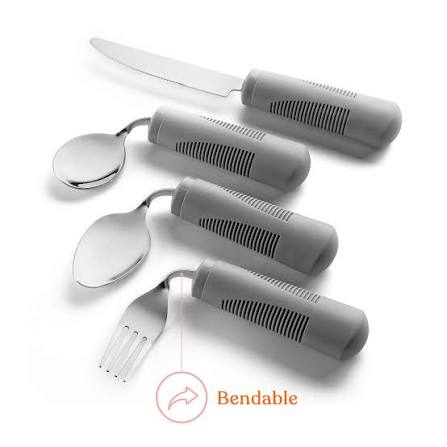
Adaptive Utensils vs Regular Utensils At A Glance
Here is a quick look at how these two options compare for daily meals.
| Feature | Adaptive Utensils | Regular Utensils |
| Handle Size | Thick and wide | Thin and narrow |
| Item Weight | Often weighted heavily | Light to medium weight |
| Grip Material | Soft rubber or silicone | Smooth metal or plastic |
Adaptive Tools: Independence at Meals
Adaptive dining tools are built to help people eat without needing help. They solve common physical problems right at the dinner table. Manufacturers design these items with wide bases and special shapes.
Ease of Use
These tools take the hard work out of eating a meal. Thick rubber grips stop fingers from cramping. Weighted handles help steady shaking hands. Some spoons can even bend to the left or right. This makes reaching the mouth much easier. Users do not have to twist their wrists as much. Some sets even include rocker knives. These let a person cut food safely with just one hand.
Key Strengths
- Thick handles prevent sharp hand cramps.
- Added weight stops messy food spills.
- Hand straps keep tools from dropping on the floor.
- Bendable necks reduce painful wrist twisting.
- Soft rubber stays warm and gentle to the touch.
Potential Drawbacks
- They cost much more than standard spoon sets.
- They can look bulky or medical to some people.
- Heavy models are too hard to lift for weak arms.
Regular Tools: Classic Dining Choices
Standard silverware is the traditional choice found in almost every home. It is simple, common, and very easy to replace if lost. You can find them in any local store.
Ease of Use
For seniors with good hand strength, normal forks and spoons work perfectly fine. They are light and simple to move around the plate. However, the thin, smooth metal handles slip very easily. If a senior has a weak grip, holding bare metal is very tough. The shiny surface offers no friction for the fingers to hold onto.
Key Strengths
- They blend in perfectly with family table settings.
- They are very cheap to buy or replace.
- They fit easily into any standard dishwasher rack.
- They weigh very little, preventing daily arm fatigue.
Potential Drawbacks
- Thin handles cause sharp finger pain for arthritis.
- Smooth metal is very slippery when wet or greasy.
- Light weight offers no help for hand tremors.
Which Is Easier for Seniors to Use?
For most older adults with hand pain, adaptive choices are much easier to use. The thick rubber handles need much less squeeze strength. A senior can hold them with a loose, relaxed palm. This stops hand fatigue during long meals. Eating a steak or a bowl of soup takes far less physical effort.
“The right handle size turns a frustrating meal into a relaxing and enjoyable event.”
Regular options require a tight pinch grip. This tight pinch causes sharp pain for those with joint issues. Seniors who drop things often will also find that slip-free rubber handles are far more forgiving than smooth metal. A dropped metal fork makes a loud, startling noise. A dropped rubber handle is much quieter and much easier to pick up.
Performance Comparison
Performance at the dining table means getting food to the mouth without drops. It also means cutting food safely. Here is how they stack up.
| Performance Area | Adaptive Utensils | Regular Utensils |
| Tremor Control | Excellent with heavy grips | Poor due to light weight |
| Grip Secureness | High with rubber coatings | Low with bare metal |
| Mouth Reach | Great with bendable heads | Average with straight necks |
Comfort, Accessibility, and Senior-Friendly Design
Comfort is the biggest difference in this comparison. A thick, ribbed handle fits naturally into a resting hand. This means a senior does not have to close their hand tightly to hold their fork. Less muscle work means more comfort. Soft silicone feels warm and inviting compared to cold steel.
Many adaptive options also include wide, deep spoon bowls. These hold soup and liquids much better. This reduces hot spills on the lap. Regular options prioritize a sleek look over hand comfort. Thin handles can limit accessibility for seniors with stiff joints. When hands swell in the morning, holding thin metal is very painful.
Features Comparison
Special features really set these two dining options apart. You can find many helpful designs today to solve specific problems. Check this simple feature breakdown below.
| Feature | Adaptive Utensils | Regular Utensils |
| Handle Type | Thick, ribbed, soft rubber | Thin, smooth, hard metal |
| Neck Design | Can be bent or angled | Straight and rigid only |
| Hand Straps | Available on many models | Not available |
Price, Maintenance, and Long-Term Value
Standard silverware is very cheap. You can buy a whole set for the price of one specialized spoon. You can replace a lost metal fork for mere pennies. But true value is about more than just the price tag. Safety, comfort, and pride matter the most.
If a special spoon helps a senior eat safely, the higher cost is a great value. Both types are usually safe to put in the dishwasher. However, rubber handles on special tools can wear down over years of hot washing. You must check rubber grips for cracks. Dirt and germs can hide inside broken rubber.
| Cost Factor | Adaptive Utensils | Regular Utensils |
| Initial Price | Moderate to high per piece | Very low per piece |
| Replacement | Can be costly to replace | Very cheap to replace |
| Cleaning | Usually dishwasher safe | Always dishwasher safe |
Who Should Choose Adaptive Utensils?
- Choose adaptive tools if the user has hand tremors or shaking.
- Choose them if arthritis makes tight pinching painful.
- Choose them if the senior often drops their fork or spoon.
- Choose them if the user needs to eat with only one hand.
- Choose them if eating takes a very long time due to drops.
Who Should Choose Regular Utensils?
- Choose regular tools if the senior has strong, pain-free hands.
- Choose them if the user prefers a matching family table setting.
- Choose them if thick, heavy items cause shoulder or arm fatigue.
- Choose them for budget-friendly dining.
- Choose them if the senior has no trouble scooping soup.
Adaptive Utensils vs Regular Utensils — Final Verdict
Both options serve a clear purpose depending on physical health. It is wise to test a few options first to see what feels best.
Best for most seniors: Adaptive Utensils
Best for strong hands: Regular Utensils
Best value: Regular Utensils
Best for ease of use: Adaptive Utensils
Scoring Summary
This table breaks down how the two compare across key categories. We base these scores on daily senior use.
| Category | Adaptive Utensils | Regular Utensils |
| Ease of Use | 9/10 | 6/10 |
| Senior-Friendly Design | 10/10 | 4/10 |
| Performance | 9/10 | 7/10 |
| Maintenance | 8/10 | 10/10 |
| Value | 8/10 | 9/10 |
How We Evaluate Products
We look closely at factors that truly matter to older adults. We focus heavily on ease of use, daily comfort, and safety. We compare how much physical effort is needed to hold and use the item. We also look at grip size and weight differences. Price, daily cleaning needs, and long-term practicality guide our choices. We aim to find tools that promote independence.
Senior-Specific Buying Considerations
- Physical Effort: Can the senior hold the item without hand cramps? Look for thick grips to reduce daily muscle strain.
- Weight Needs: Does the person have tremors? Weighted handles help stop shakes. Are their arms weak? Lightweight thick handles are much better.
- Maintenance Needs: Can the parts go in the dishwasher? Avoid items that need hand washing every single day.
- Storage Space: Thick handles take up more room in a kitchen drawer. Plan for extra storage space.
- Safety: Are the spoon edges smooth? Make sure deep spoons do not have sharp rims that could cut the mouth.
Common Buying Mistakes
- Buying heavy weighted items for someone with weak arms but no tremors.
- Ignoring the total size of the handle.
- Choosing based only on price instead of daily comfort.
- Forgetting to check if the new item is dishwasher safe.
- Buying standard metal items when hand pain is clearly present.
- Worrying too much about looks instead of simple daily function.
Safety
Eating should be a safe and calm event. Smooth, thin handles can slip easily. This slipping causes hot food to spill and burn the skin. Large, rubber grips help prevent these dangerous hot soup spills.
Always check special tools for wear and tear. If a rubber handle cracks, harmful germs can hide inside. Replace worn items quickly to ensure safe, clean eating. Do not force a senior to use heavy tools if their arms hurt. Heavy lifting can cause shoulder pain. Always pick tools that match the senior’s actual physical strength. Talk to an occupational therapist if you have serious health concerns.
Conclusion
The choice between these two options comes down to hand strength and personal comfort. Standard options work very well for those without physical limits. They are cheap, easy to find, and simple to clean. They blend right into any family dinner.
However, specialized dining tools bring dignity back to mealtime. They stop painful finger cramps. They reduce messy food spills. Most importantly, they let older adults eat with joy and pride. The right choice is always the tool that keeps the user safe, happy, and independent at the table.
