
Smartwatch vs Pedometer: Which Is Better for Seniors?

Bed Rail for Seniors

Kindle E-Reader

Big Button Mobile Phone
A Smartwatch vs Pedometer comparison comes down to how much you want to track. A simple pedometer focuses mainly on counting steps, while a smartwatch can track steps along with workouts and other health and activity data.
For seniors, the choice also depends on comfort, screen visibility, charging, controls, and how many features are actually useful. A simple device can be easier if step counting is the only goal.
Quick Comparison
A smartwatch is more useful for seniors who want several activity features in one device. A pedometer makes more sense when the main goal is simple step counting.
The key trade-off is features versus simplicity. A smartwatch can provide much more information, but a basic pedometer may require less setup and fewer daily interactions.
Smartwatch vs Pedometer At a Glance
Both devices can help track daily walking. The main difference is how much information and interaction they provide.
| Feature | Smartwatch | Pedometer |
|---|---|---|
| Step counting | Yes | Yes |
| Activity tracking | Extensive | Basic |
| Display | Usually larger | Usually simple |
| Controls | Touchscreen/buttons | Simple buttons or display |
| Setup | More involved | Usually simple |
| Extra features | Many | Few |
| Charging | Usually required | Varies by model |
| Ease of use | Moderate | Usually very simple |
Smartwatch Review for Seniors
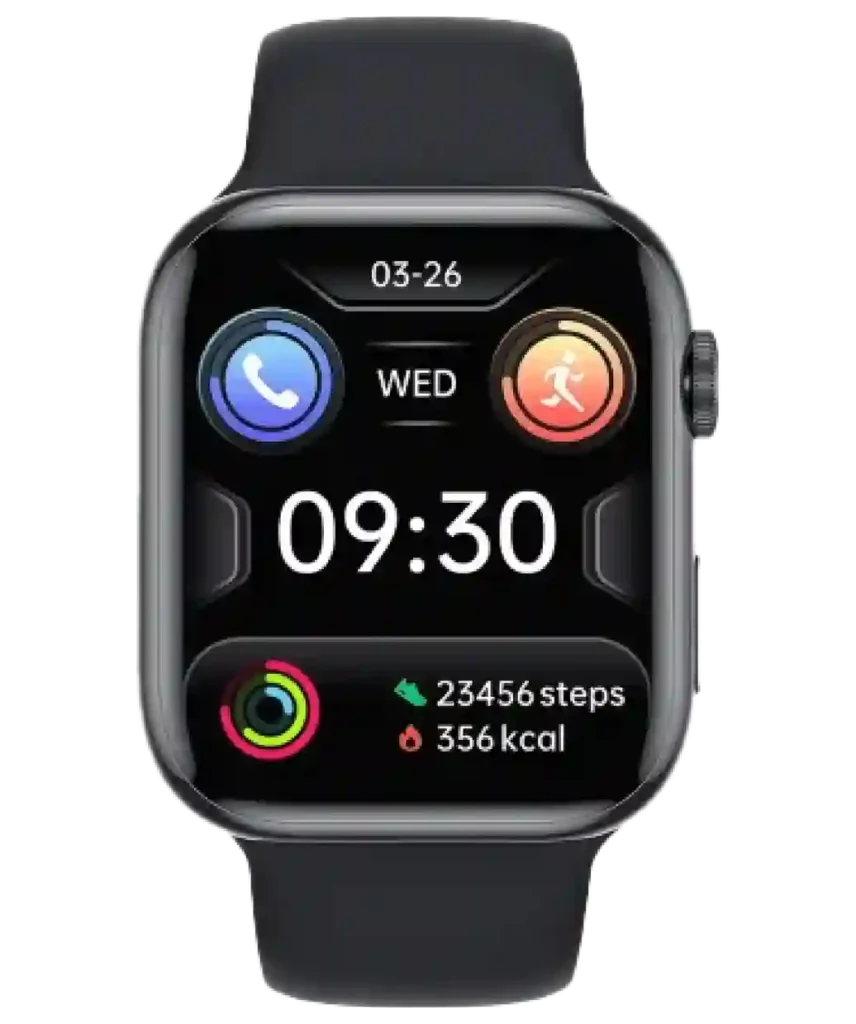
A smartwatch is essentially a small wearable computer. It can count steps while also providing other activity and health-related functions.
Modern smartwatches can show step totals directly on the watch. For example, Apple says its current Apple Watch Series 12 provides all-day step counting and lets users view their step count from the watch face.
Ease of Use
A smartwatch can be convenient because the information is always on the wrist.
However, the larger feature set also means more menus, settings, notifications, and charging requirements. Someone who only wants a step count may not need all of these functions.
Key strengths
- Counts steps throughout the day
- Can track several types of activity
- Large screen on many models
- Can provide reminders and notifications
- May combine several wearable functions
Potential drawbacks
- More features can mean a steeper learning curve
- Requires regular charging
- Touchscreen controls may not suit everyone
- Some features depend on a compatible phone
- Usually costs more than a basic pedometer
Pedometer Review for Seniors
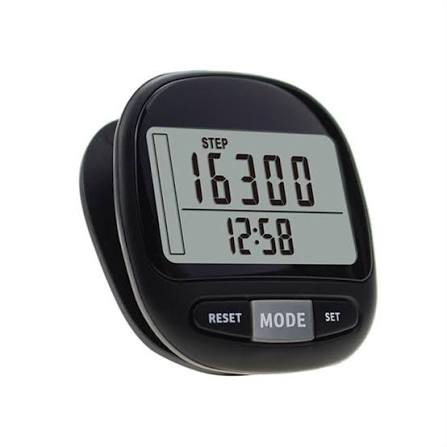
A pedometer is designed around one main task: counting steps.
That simplicity can be useful for someone who does not want notifications, apps, health dashboards, or complicated settings.
Ease of Use
A basic pedometer can be easier to understand because there are fewer functions to manage.
A senior who simply wants to see a daily step total may find this approach less distracting.
Key strengths
- Simple purpose
- Usually easy to understand
- Fewer settings to manage
- Often lightweight
- Good for basic walking goals
Potential drawbacks
- Fewer activity features
- Smaller displays are possible
- Some models may have limited tracking information
- May provide less useful information beyond step count
Which Is Easier for Seniors to Use?
For simplicity, a pedometer has a clear advantage because it focuses on step counting.
A smartwatch can be easier for someone who wants several functions in one device. Instead of carrying separate devices, the user can access activity information from the wrist.
The simplest device is not always the easiest device. It depends on how many features the person actually wants to use.
Large text, clear controls, and an easy-to-read display can matter more than the number of available features.
Performance Comparison
Both devices can track walking activity, but their capabilities differ.
A smartwatch generally offers more detailed activity tracking. Apple Watch, for example, tracks steps, distance, exercise, and other activity metrics.
A pedometer is more focused. If the main requirement is simply counting daily steps, its limited feature set may be enough.
For someone who wants exercise tracking, progress information, and additional wearable functions, a smartwatch provides a broader package.
Comfort, Accessibility, and Senior-Friendly Design
Comfort matters because the device may be worn for many hours each day.
A lightweight pedometer may be appealing to someone who does not want a feature-rich watch. A smartwatch may be preferable to someone who likes having information visible on the wrist.
Consider:
- Screen size and readability
- Button size
- Touchscreen sensitivity
- Wrist comfort
- Weight
- Charging routine
- Ease of removing the device
- Visibility in different lighting
There is no single design that works best for every older adult.
Features Comparison
The biggest difference is the amount of information available.
| Feature | Smartwatch | Pedometer |
|---|---|---|
| Steps | Yes | Yes |
| Distance | Usually | Often |
| Workouts | Yes | Usually limited |
| Notifications | Often | Rare |
| Health features | Many models | Usually limited |
| Smartphone connection | Common | Often unnecessary |
| Apps | Often | No or limited |
Current smartwatches can go far beyond basic activity tracking. For example, Apple’s latest models include additional health and fitness features alongside step tracking.
Price, Maintenance, and Long-Term Value
A pedometer generally makes more sense when the only requirement is basic step counting.
A smartwatch can offer greater value if the user will actually use its additional functions. Otherwise, paying for features that remain unused may not provide much practical benefit.
Think about:
- Initial purchase cost
- Charging frequency
- Battery replacement
- Smartphone compatibility
- Accessories
- Subscription requirements, if any
- Warranty and support
Do not judge value by purchase price alone. The better value is the device that provides the functions the user will actually use.
Who Should Choose a Smartwatch?
Choose a smartwatch if:
- You want more than step counting.
- You want workout tracking.
- You prefer viewing information on your wrist.
- You want several wearable functions in one device.
- You are comfortable using a touchscreen.
- You do not mind regular charging.
Who Should Choose a Pedometer?
Choose a pedometer if:
- You mainly want to count steps.
- You prefer a simple device.
- You do not need smartphone notifications.
- You want fewer settings to manage.
- You prefer a focused walking tool.
- You want to avoid unnecessary advanced features.
Smartwatch vs Pedometer — Final Verdict
A smartwatch is the more versatile choice for seniors who want step tracking plus workouts, notifications, and other wearable features. A pedometer is better suited to someone who wants a straightforward way to count daily steps.
For ease and simplicity, the pedometer has fewer functions to manage. For broader activity tracking, a smartwatch offers much more. The right choice depends on whether those additional features will genuinely be useful.
Scoring Summary
Scores can create false precision when comparing very different types of devices, so a simple qualitative summary is more useful here.
| Category | Smartwatch | Pedometer |
|---|---|---|
| Ease of use | Good | Excellent |
| Senior-friendly simplicity | Good | Excellent |
| Activity tracking | Excellent | Basic |
| Extra features | Excellent | Limited |
| Maintenance simplicity | Moderate | Good |
| Everyday versatility | Excellent | Good |
How We Evaluate Products
This comparison focuses on practical factors that matter when choosing a wearable for older adults.
We consider ease of use, accessibility, comfort, activity tracking, maintenance, setup, and long-term practicality. The comparison does not assume that every senior has the same physical abilities or technology preferences.
Senior-Specific Buying Considerations
Before choosing either device, check these areas.
Controls
Make sure the buttons or touchscreen are easy to operate. A simple interface may be helpful for anyone who does not want complicated menus.
Display
Look for a screen that is easy to read. A clear step count can be more useful than a display packed with information.
Charging
Check how often the device needs charging. A charging routine should fit naturally into daily life.
Setup
Consider whether the device needs a smartphone, app, account, or other configuration.
Physical Comfort
The device should feel comfortable enough for regular use. Weight, band design, and fit can all matter.
Common Buying Mistakes
Avoid these mistakes when comparing a smartwatch and pedometer:
- Choosing based only on the number of features
- Paying for features that will not be used
- Ignoring display readability
- Forgetting about charging
- Overlooking smartphone compatibility
- Choosing a complicated device when simple step counting is the real goal
Safety
Neither device should be treated as a replacement for professional medical advice or a medical assessment.
If a smartwatch includes health-related functions, remember that wearable readings can have limitations. Anyone making a health decision based on device data should discuss important concerns with an appropriate healthcare professional.
Frequently Asked Questions
Is a smartwatch better than a pedometer for seniors?
It depends on the user’s needs. A smartwatch offers more functions, while a pedometer provides a simpler step-counting experience.
Does a smartwatch count steps?
Yes. Modern smartwatches commonly track steps throughout the day. Apple Watch, for example, provides all-day step counting and step information on the watch.
Is a pedometer easier to use?
A basic pedometer is often easier because it has fewer functions and settings.
Which is better for someone who only wants step tracking?
A pedometer may be the more straightforward choice when step counting is the only important feature.
Can a smartwatch replace a pedometer?
Yes. A smartwatch can perform step-counting functions while also providing many additional features.
Do smartwatches need a phone?
Requirements vary by model and feature. Some functions may depend on a compatible smartphone, while cellular models can provide greater independence from a phone.
Conclusion
The main difference between a smartwatch and a pedometer is scope. A pedometer keeps things simple and focuses on steps, while a smartwatch combines step tracking with a much wider range of activity and wearable features.
For seniors who want straightforward step counting, simplicity may be the deciding factor. For those who want broader activity tracking and other functions from the same device, a smartwatch may be more practical.
