
Shower Chair vs Shower Bench: Which Is Better?


Kindle E-Reader

Rollator Walker with Seat

Reacher Grabber Tool
Shower Chair vs Shower Bench can look like a small distinction, but the shape of the seat can change how easy a shower feels. A chair usually has a back and four legs. A bench is often longer and may have a simpler, more open design.
For seniors, the right choice depends on bathroom space, balance, transfer needs, comfort, and how much support is needed while sitting or standing. Neither option is best for everyone.
Quick Comparison
A shower chair is usually the better fit for seniors who want back support and a familiar chair-like seat. It can feel more secure during longer showers.
A shower bench may work better when extra seating space or easier side-to-side movement matters. A bench can also fit well in some larger showers.
The best choice depends more on the user’s shower setup and mobility needs than on the name of the product.
Shower Chair vs Shower Bench At a Glance
Both options provide a place to sit while showering, but they serve slightly different needs.
| Feature | Shower Chair | Shower Bench |
|---|---|---|
| Back support | Usually included | Often open or limited |
| Seat shape | Chair-like | Longer, bench-like |
| Comfort | Good for upright sitting | Good for more seating room |
| Bathroom space | Usually compact | Often needs more room |
| Side transfer | Less suitable | Often easier |
| Stability | Usually four-leg support | Depends on design |
| Best for | Seated showering | Extra space and transfers |
Shower Chair for Seniors: What to Know
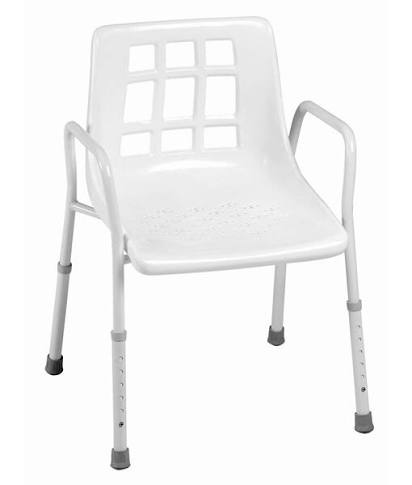
A shower chair is designed to give the user a dedicated seated position inside the shower. Many models have a backrest, armrests, or adjustable legs.
This makes the design familiar to someone who already uses a normal chair for support.
Ease of Use
A shower chair is generally simple to understand. The user sits down, showers while seated, and stands when finished.
Adjustable legs can help set a suitable seat height. Some models also include rubber feet designed to improve grip on the shower floor.
For seniors who prefer back support, the chair-style design can make the shower feel more comfortable.
Key Strengths
- Familiar chair-like design
- Back support on many models
- Often compact
- Suitable for seated showering
- Height adjustment is common
- Easy to understand and use
Potential Drawbacks
- May provide less room for side transfers
- Armrests can make transfers harder in some bathrooms
- A larger model may feel cramped in a small shower
- Backrests and extra parts can require more cleaning
Shower Bench for Seniors: What to Know
A shower bench usually has a longer, more open seat. Depending on the design, it may provide room to sit, shift position, or move from one side of the shower to another.
Some benches are freestanding, while others are designed to attach to the wall.
Ease of Use
The open design can be useful when a senior needs more room to change position.
For example, a person may sit on one end of the bench and move across it rather than stepping directly into the middle of the shower.
That can be useful for certain transfer situations, but the bathroom must have enough space for the bench and the user’s movement.
Key Strengths
- More seating area on many models
- Open design can help with transfers
- Useful in larger showers
- Some models can support two seating positions
- Can provide flexibility for caregivers
Potential Drawbacks
- May take up more bathroom space
- Some models have little or no back support
- Wall-mounted models require secure installation
- Long seats can be harder to move or store
Which Is Easier for Seniors to Use?
For straightforward seated showering, a shower chair is often easier to understand and use.
The backrest gives the user a clear sitting position. Armrests may also provide another point of contact when sitting down or standing up.
A shower bench can be easier when movement across the seat matters. Its longer surface may give the user more room to reposition.
The key difference is not simply comfort. It is how the person gets onto and off the seat.
A senior who can safely step into the shower and sit down may find a chair very practical. Someone who needs to sit first and then move across the seat may benefit more from a bench-style design.
Performance Comparison
These products do not have “performance” in the same way as an appliance or power tool. Their practical performance comes down to stability, usable seating space, drainage, adjustability, and how well they fit the shower.
A good option should allow the user to sit comfortably without making the bathroom harder to navigate.
| Performance Area | Shower Chair | Shower Bench |
|---|---|---|
| Seated showering | Excellent fit | Excellent fit |
| Back support | Usually better | Depends on model |
| Seating space | Moderate | Often greater |
| Small shower use | Often easier | Can be difficult |
| Position changes | More limited | Often easier |
| Transfer flexibility | Moderate | Often better |
A chair generally makes sense when the main goal is stable, seated showering. A bench becomes more useful when the user needs additional room to move.
Comfort, Accessibility, and Senior-Friendly Design
Comfort depends on more than the seat itself. Height, width, back support, armrests, drainage holes, and the texture of the seat can all affect everyday use.
A shower chair may be more comfortable for someone who likes back support while washing. A bench may feel less restrictive because it provides more open seating space.
Accessibility also depends on the shower entrance. A seat cannot solve a difficult shower threshold or poor bathroom layout by itself.
A comfortable shower seat is only helpful if the user can safely reach it, sit down, and stand up.
Features Comparison
The useful features are fairly simple in this category. Extra features are not always better if they make cleaning or transfers harder.
| Feature | Shower Chair | Shower Bench |
|---|---|---|
| Backrest | Common | Less common |
| Armrests | Available on many models | Less common |
| Adjustable height | Common | Common on freestanding models |
| Drainage holes | Common | Common |
| Portability | Usually good | Depends on size |
| Transfer space | Limited | Often better |
For many seniors, adjustability and stability matter more than decorative features.
Price, Maintenance, and Long-Term Value
Both shower chairs and shower benches are available in a wide range of prices. Cost depends on materials, size, adjustability, construction, and whether the seat is freestanding or permanently installed.
A basic chair may offer good value when the user simply needs a stable place to sit. A more advanced bench may justify its added cost when its larger seating area solves a specific transfer or accessibility problem.
Maintenance is usually straightforward. The seat should be cleaned regularly, especially around drainage openings, legs, joints, and rubber feet.
Check the feet and other contact points from time to time. If a component becomes worn or damaged, replace it rather than continuing to use a compromised seat.
Who Should Choose a Shower Chair?
A shower chair may be a good fit for seniors who:
- Want back support while showering.
- Prefer a familiar chair-style design.
- Have limited bathroom space.
- Mainly need a place to sit while washing.
- Want a seat that can be moved when needed.
- Prefer a simple setup.
- Do not need to move sideways across the seat.
Who Should Choose a Shower Bench?
A shower bench may make more sense for seniors who:
- Need more seating space.
- May benefit from repositioning while seated.
- Have a larger shower area.
- Need a longer surface for certain transfers.
- Want an open seating design.
- May need caregiver assistance during showering.
- Prefer more room to change position.
Shower Chair vs Shower Bench — Final Verdict
There is no universal winner between a shower chair and shower bench. A shower chair is generally more suitable for straightforward seated showering and back support. A shower bench can be more useful when seating space and transfer flexibility are higher priorities.
The most important question is how the user will enter, sit, move, shower, and leave the seat. Measure the shower first and consider the user’s actual movement needs before choosing.
Scoring Summary
The scores below are category-level comparisons based on the typical design of each option, not ratings of specific brands or models.
| Category | Shower Chair | Shower Bench |
|---|---|---|
| Ease of Use | 9/10 | 8/10 |
| Senior-Friendly Design | 9/10 | 8/10 |
| Seating Comfort | 9/10 | 9/10 |
| Transfer Flexibility | 7/10 | 9/10 |
| Space Efficiency | 9/10 | 7/10 |
| Maintenance | 9/10 | 8/10 |
| Overall Practicality | 9/10 | 8/10 |
These scores can change significantly with the specific design, dimensions, installation method, and bathroom layout.
How We Evaluate Products
For shower seating, the most useful comparison points are practical rather than flashy.
We consider:
- Ease of use
- Stability
- Seating comfort
- Transfer flexibility
- Adjustability
- Bathroom space
- Cleaning needs
- Installation
- Long-term practicality
- Value
The comparison focuses on typical product designs. Individual models can differ, so the exact specifications should always be checked before purchase.
Senior-Specific Buying Considerations
A few details deserve extra attention before choosing a shower seat.
Physical Effort
Think about how much stepping, bending, turning, and standing the user can comfortably manage. A seat should make the shower easier, not create another difficult movement.
Controls
The seat itself has few controls, but adjustable legs, locking mechanisms, or removable parts should be simple to understand and operate.
Maintenance
Look for surfaces that are easy to clean. Drainage holes can help water leave the seat instead of collecting underneath the user.
Storage
A freestanding chair can usually be moved when the shower is not being used. A larger bench may need a dedicated space.
Setup
Check the shower dimensions before buying. For a wall-mounted bench, secure installation is especially important.
Safety
The shower floor can be slippery. A shower seat should sit firmly and be used according to its weight limit and installation instructions.
Do not use a damaged seat or one with loose legs, worn feet, or insecure mounting.
Common Buying Mistakes
Avoid these common mistakes when comparing a shower chair with a shower bench:
- Buying without measuring the shower area.
- Choosing based only on the lowest price.
- Ignoring the seat height.
- Forgetting about transfer space.
- Assuming every model includes a backrest.
- Overlooking the weight capacity.
- Choosing a large bench for a small shower.
- Failing to check the condition of feet, joints, or mounting hardware.
Frequently Asked Questions
Is a shower chair or bench better for seniors?
It depends on the user’s needs. A chair may be better for back support and simple seated showering, while a bench may offer more space for repositioning.
Is a shower bench safer than a shower chair?
Neither design is automatically safer. Stability, correct installation, suitable height, weight capacity, and proper use all matter.
Does a shower chair need a backrest?
No. Some shower chairs have backrests, while others have open designs. A backrest can provide additional support for users who prefer it.
Can a shower bench be used in a small shower?
Sometimes, but size matters. A long bench may reduce usable shower space, so measurements are important before buying.
Should a shower chair have armrests?
Armrests can provide useful support for some users when sitting or standing. However, they can also affect how a person transfers onto the seat.
What should I check before buying a shower seat?
Check the seat height, width, weight capacity, dimensions, stability, drainage, installation method, and available shower space.
Conclusion
The main difference between a shower chair and shower bench is the balance between chair-like support and open seating space. A shower chair is a practical choice for seniors who want a familiar seat with back support, while a shower bench can provide more room for movement and certain transfers.
Before choosing, focus on the user’s actual shower routine. The right seat should fit the bathroom, support comfortable movement, and remain stable throughout everyday use.
