
ECG Watch vs Smartwatch for Seniors: Key Differences


Big Button Mobile Phone

Smart Plug with Alexa

Portable Wheelchair
An ECG Watch vs Smartwatch comparison can be confusing because an ECG watch is usually a type of smartwatch. The main difference is that an ECG watch has a feature that can record an electrocardiogram, while a basic smartwatch may not.
For seniors, the better fit depends on what the watch needs to do. An ECG watch can be useful for people who want extra heart-rhythm tools. A regular smartwatch may be enough for calls, messages, activity tracking, sleep data, and daily alerts.
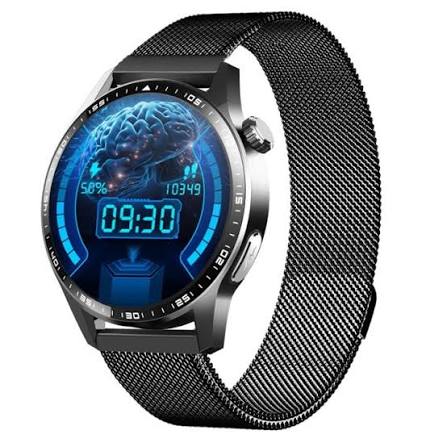
Quick Comparison
An ECG watch is the better fit when heart-rhythm checks are an important part of the buying decision. Some models can record a single-lead ECG and help flag patterns linked with atrial fibrillation.
A standard smartwatch may be the better match when health features are less important and the main goal is simple daily use. The key point is that these are not always two separate device classes. An ECG watch can still be a full smartwatch.
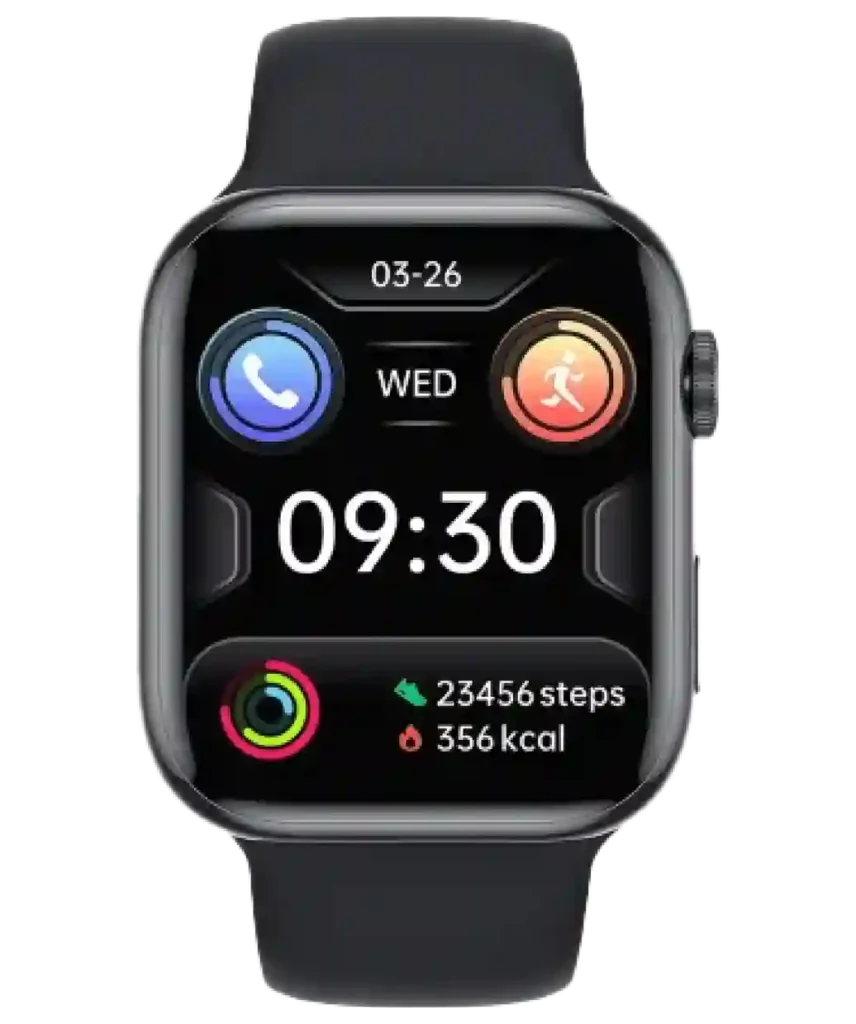
ECG Watch vs Smartwatch At a Glance
The table below keeps the comparison simple. Exact features vary by brand and model.
| Feature | ECG Watch | Smartwatch |
|---|---|---|
| ECG recording | Yes, on supported models | May not have it |
| Heart-rate tracking | Usually | Usually |
| Calls and alerts | Usually | Usually |
| Activity tracking | Usually | Usually |
| Sleep tracking | Often | Often |
| Health-focused tools | More advanced | Varies |
| Ease of use | Can be slightly more complex | Often simpler |
| Best for | Heart-rhythm features plus daily use | Everyday smart features |
ECG Watch Review for Senior-Friendly Use
An ECG watch adds a heart-focused tool to the usual smartwatch features. That can make it useful for seniors who want more health data from the wrist.
The ECG feature is usually not automatic. On supported devices, the user starts a reading and follows a short process. Apple Watch, for example, can create a single-lead ECG that can be saved and shared as a PDF.
Ease of Use
The main task is simple, but it takes a little care.
The user may need to:
- Sit still
- Keep the watch in a good position
- Touch a sensor or button with a finger
- Wait for the reading to finish
- Review the result on the watch or phone
Samsung’s ECG process, for example, asks the user to stay still and touch the watch button with a finger for about 30 seconds. The company also notes that poor skin contact or movement can affect the recording.
Key Strengths
- Adds an ECG feature to a daily smartwatch
- Can offer more heart-rhythm information
- May let users save or share results
- Useful for seniors who value health tracking
- Can combine health tools with calls, alerts, and activity data
Potential Drawbacks
- ECG use may require a few extra steps
- Some features depend on the phone and app
- ECG availability varies by country and model
- More health features can make the device feel more complex
Smartwatch Review for Senior-Friendly Use
A regular smartwatch focuses more broadly on daily digital and health tasks. It may track steps, heart rate, sleep, exercise, notifications, and other data without offering an ECG tool.
This can be a better fit for seniors who mainly want a watch that is easy to wear and useful during normal daily life.
Ease of Use
A smartwatch can be easier when the user does not need ECG readings.
There may be less to learn. The watch can focus on simple tasks such as checking the time, reading alerts, tracking steps, and seeing basic health data.
That said, a smartwatch can still become complex when it includes many apps, menus, settings, and phone features.
Key Strengths
- Good for everyday use
- Often supports many smart features
- Can track activity and basic health data
- May be easier for users who do not need ECG tools
- Can reduce the need for health-specific features that are not used
Potential Drawbacks
- Many models do not offer ECG
- Health tools can vary a lot by model
- Some watches have small text and busy menus
- Extra smart features may add complexity
Which Is Easier for Seniors to Use?
For simple daily tasks, a standard smartwatch may feel easier because there is less to manage. The screen, buttons, menus, and phone connection still matter more than the name of the device.
An ECG watch becomes more useful when the user is willing to learn one extra process for heart-rhythm readings.
The easiest watch is often the one with the features the user will actually use.
For a senior with reduced dexterity, look closely at screen size, button placement, touch controls, and how much finger pressure is needed. A good ECG feature does not help much if the recording process is hard to perform.
Performance Comparison
The most useful difference here is not speed. It is what the watch can measure and how the data can be used.
| Performance Area | ECG Watch | Smartwatch |
|---|---|---|
| ECG | Strong advantage | Not always available |
| Heart-rate tracking | Common | Common |
| Daily activity | Strong | Strong |
| Sleep tracking | Often available | Often available |
| General smart tasks | Strong | Strong |
| Heart-rhythm focus | Higher | Depends on model |
Some supported watches can also provide irregular heart-rhythm notifications. Samsung says its compatible Galaxy Watch devices can use optical heart-rate data to look for patterns that may suggest atrial fibrillation and then prompt an ECG recording.
Still, this should not be treated as a diagnosis. Wearable data can be useful information to discuss with a healthcare professional. The American Heart Association notes that wearable heart monitors can help find atrial fibrillation, while an EKG records the heart’s electrical activity.
Comfort, Accessibility, and Senior-Friendly Design
Both device types can work well for seniors. The better choice depends more on design than on the ECG label.
Check these points before buying:
- Is the screen easy to read?
- Are the buttons easy to press?
- Is touch control easy to use?
- Is the watch comfortable all day?
- Is charging simple?
- Is the phone app easy to understand?
- Can the user see health data without too many steps?
An ECG watch may also need the user to hold a steady position for a reading. That can be a small issue for someone who finds it hard to keep the hand still.
Features Comparison
The feature gap can be large, but it depends on the model.
| Feature | ECG Watch | Smartwatch |
|---|---|---|
| ECG | Usually the key feature | May be absent |
| Notifications | Common | Common |
| Calls | Many models | Many models |
| Fitness tracking | Common | Common |
| Sleep tracking | Common | Common |
| Heart-rhythm tools | More likely | Model dependent |
An important point is that ECG does not mean the watch is only for medical use. Apple Watch and Galaxy Watch models with ECG are still general smartwatches with apps and everyday functions.
Price, Maintenance, and Long-Term Value
There is no fixed price difference because both categories cover a wide range of devices.
An ECG model may cost more because it includes extra sensors, software, or health functions. But paying more only makes sense when those tools matter to the user.
Think about:
- Watch price
- Replacement bands
- Charging needs
- Phone compatibility
- App support
- Software support
- Warranty
- Any subscription cost
For a senior who wants only steps, sleep, messages, and calls, paying extra for ECG may not add much value.
For someone who wants heart-rhythm features, the extra cost may have a clearer purpose.
Who Should Choose an ECG Watch?
Choose an ECG watch if:
- Heart-rhythm tracking is an important goal
- The user wants an ECG option on the wrist
- The user is comfortable following a short reading process
- Health tools matter along with normal smartwatch features
- Sharing health data with a healthcare professional may be useful
Who Should Choose a Smartwatch?
Choose a regular smartwatch if:
- ECG is not a needed feature
- The main goal is daily smart use
- Simple activity and sleep tracking are enough
- The user wants calls, alerts, and basic health data
- Extra health features would add unwanted complexity
ECG Watch vs Smartwatch — Final Verdict
There is no single winner because an ECG watch is often a smartwatch with one important extra feature.
For seniors who want heart-rhythm tools, an ECG-capable watch offers more useful health functions. For seniors who mainly want everyday alerts, activity tracking, and simple smart features, a regular smartwatch may be enough.
The biggest question is not whether ECG is impressive. It is whether the user will actually use it.
Scoring Summary
A fixed 10-point score is not used here because ECG watch and smartwatch are broad categories, not two specific models. Giving exact scores without named products would create false precision.
How We Evaluate Products
This comparison focuses on practical senior use.
We look at:
- Ease of use
- Screen and control access
- Comfort
- Health features
- Everyday smart functions
- Setup
- Maintenance
- Safety
- Long-term value
No laboratory test or personal hands-on test is claimed here.
Senior-Specific Buying Considerations
Physical Effort
Check whether the watch is easy to put on, remove, charge, and operate.
Controls
Large buttons and clear menus can matter more than a long feature list.
Maintenance
Look at charging, band cleaning, software updates, and phone setup.
Storage and Charging
A watch that is simple to charge and easy to find may be more practical for daily use.
Setup
Check whether the watch needs a specific phone, app, account, or software version.
Safety
Do not treat an ECG reading as a medical diagnosis. Samsung states that its ECG tools are not intended to replace traditional diagnosis or treatment.
Common Buying Mistakes
- Choosing an ECG feature that will never be used
- Ignoring phone compatibility
- Buying a watch with menus that feel too busy
- Focusing on health features while overlooking screen size
- Forgetting charging and setup needs
- Assuming ECG works in every country or on every model
ECG availability can depend on the country and device. Samsung, for example, notes that ECG support can vary by region.
Safety
Wearable ECG features can provide useful information, but they should not be used to diagnose a heart problem on their own.
A poor or unusual reading may need a repeat reading or professional review. The American Heart Association recommends telling a healthcare professional about useful wearable heart data when discussing possible atrial fibrillation.
If the user has symptoms or a known heart condition, the watch should be viewed as a support tool, not a replacement for medical care.
Conclusion
The main difference in an ECG Watch vs Smartwatch comparison is the ECG feature. An ECG watch adds a heart-rhythm tool to the normal smartwatch experience.
For seniors who want that extra heart feature, an ECG-capable watch can make sense. For users who mainly want simple daily smart functions, a standard smartwatch may be the easier and more practical choice.
