
What Are Good Hobbies for Senior Couples?


Adjustable Bed Wedge Pillow

Sudoku Puzzle Book

Memory Foam Seat Cushion
Quick Answer
Good hobbies for senior couples include walking, gardening, cooking, dancing, photography, birdwatching, volunteering, card games, painting, travel, and learning new skills together. The best choices match both partners’ energy, mobility, budget, and interests while giving them something enjoyable to anticipate. The National Institute on Aging recommends meaningful and enjoyable activities as one way older adults can stay engaged.
Good Options to Start With
- For staying active: Try walking, gentle dancing, gardening, swimming, or beginner fitness classes.
- For creativity: Explore painting, photography, cooking, music, crafts, or woodworking.
- For social connection: Join clubs, volunteer, play cards, attend community events, or take group classes.
- For quiet evenings: Try puzzles, reading, genealogy, movies, indoor gardening, or board games.
- For adventure: Plan day trips, visit museums, go birdwatching, or explore nearby towns.
A Simple Starting Point
- Choose one easy activity and try it three or four times before deciding whether it suits you.
Finding a shared hobby can make ordinary weeks feel more interesting. It gives couples something to plan, learn, laugh about, and sometimes work toward together.
As of 2026, there are more options than ever, including inexpensive hobbies at home and accessible community activities. This guide covers active, creative, social, relaxing, and mobility-friendly choices.
In This Guide
- What makes a good hobby for a senior couple?
- What active hobbies can senior couples enjoy together?
- What creative hobbies are good for older couples?
- What social hobbies help senior couples meet people?
- What hobbies can senior couples do at home?
- What if partners have different mobility or energy levels?
- Which senior-couple hobbies fit different lifestyles?
- How do you choose a hobby you’ll both keep doing?
- Frequently Asked Questions
What Makes a Good Hobby for a Senior Couple?
A good couples’ hobby is an enjoyable activity that both people can repeat without excessive physical, financial, or scheduling pressure. It should add something positive to the relationship instead of becoming another obligation.
Simple definition: A good senior-couple hobby is a shared activity that suits both partners’ abilities, interests, available time, and preferred level of social interaction.
The two of you do not need identical interests. You only need enough overlap that both partners find the activity worthwhile.
Look for four basic qualities
- Enjoyment: You should look forward to doing it rather than feeling obligated.
- Accessibility: The activity should fit your mobility, transportation, vision, hearing, and energy needs.
- Affordability: Regular costs should comfortably fit your household budget.
- Flexibility: A good hobby can often be shortened, adapted, or moved indoors when circumstances change.
I usually favor hobbies that are easy to begin. A hobby requiring thousands of dollars in equipment can create pressure before the fun even starts.
A 20-minute walk or Saturday cooking project has almost no learning barrier. That makes it easier to discover whether you enjoy doing it together.
Shared hobbies do not have to fill every day
Couples sometimes assume retirement means doing everything together. That can turn a pleasant hobby into too much togetherness.
One or two shared activities each week may be plenty. You can still maintain separate interests and friendships.
Meaningful activities and social engagement are commonly encouraged as part of healthy aging. The CDC’s healthy aging guidance also emphasizes physical, mental, and social well-being.
What Active Hobbies Can Senior Couples Enjoy Together?
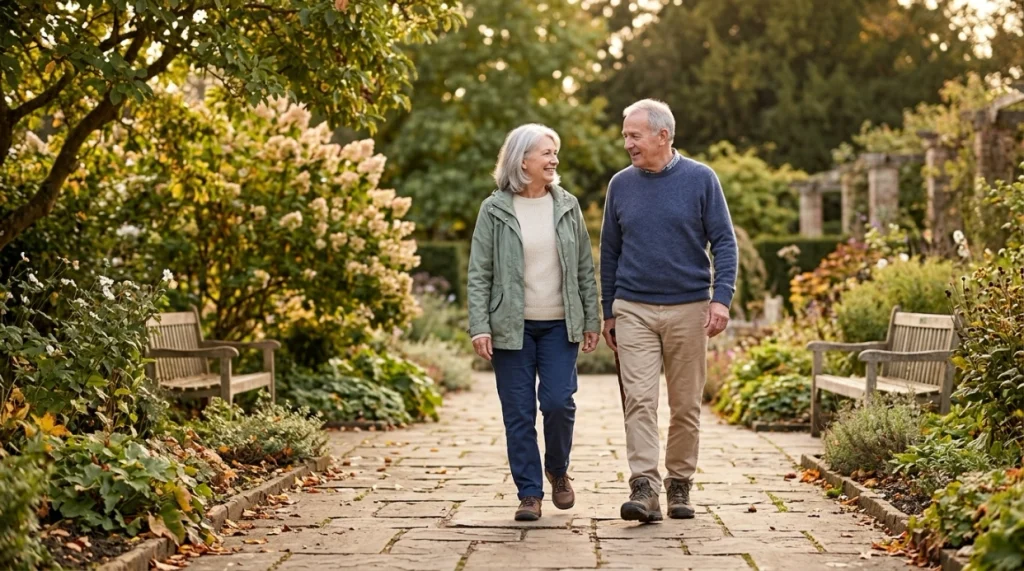
The best active hobbies combine movement with enjoyment. They do not need to feel like formal workouts.
Choose an activity you can adjust as your fitness or mobility changes. Comfort and consistency matter more than intensity.
Walking
Walking is one of the easiest shared hobbies to start. Pick a park, neighborhood, shopping mall, botanical garden, or waterfront route.
You can make each outing different by choosing a new destination. A 20-to-30-minute walk can also fit easily into a normal day.
Gardening
Gardening combines light movement with a visible result. Couples can grow vegetables, herbs, flowers, or container plants.
Dividing jobs makes it especially suitable for partners with different abilities. One person might plant while the other handles watering or planning.
Dancing
Ballroom, line dancing, and beginner social dance classes add music and movement to the week. Dancing can also provide regular contact with other people.
Start with beginner sessions and comfortable footwear. Seated dance programs are another option when standing for long periods is difficult.
Swimming or water exercise
Swimming and water-based classes appeal to couples who enjoy being active without choosing land-based exercise. Many community pools offer sessions designed for older adults.
Check the facility’s accessibility before joining. Look for handrails, gradual-entry pools, changing benches, and nearby parking.
Pickleball, golf, or bowling
These activities add friendly competition and a social element. They also give couples a regular reason to leave the house.
Choose the activity according to your current abilities rather than your past fitness. Modifications can make many recreational sports easier to enjoy.
Health note: If either partner has a medical condition, recent injury, balance problems, or major mobility limits, ask a qualified health professional what level of physical activity is appropriate.
What Creative Hobbies Are Good for Older Couples?
Creative hobbies give couples something tangible to make or improve. Skill level matters much less than enjoying the process.
The National Institute on Aging notes that meaningful creative and mentally engaging activities may support well-being, although researchers continue studying their long-term cognitive effects.
Cooking and baking
Choose one new recipe each week and prepare it together. One person can handle preparation while the other cooks or organizes ingredients.
You can also explore regional cuisines, family recipes, bread making, or healthier versions of favorite meals.
Photography
Modern phones make photography an inexpensive hobby. Try photographing flowers, architecture, birds, sunsets, family events, or interesting details around town.
Give yourselves a theme for each outing. “Five interesting doors” can make a familiar neighborhood surprisingly entertaining.
Painting and drawing
You do not need natural artistic ability to enjoy painting. Watercolor, colored pencils, sketching, and paint-by-number kits are easy entry points.
Working side by side also removes competition. Each partner can create something completely different.
Music
Learning an instrument together can create a long-term project. Ukulele, keyboard, hand percussion, and singing are approachable starting points.
Another option is simply exploring music together. Build playlists from different decades or attend local concerts.
Crafts and woodworking
- Knitting or crochet
- Quilting
- Model building
- Wood carving
- Scrapbooking
- Pottery
- Jewelry making
- Home decorating projects
Pick small first projects. Finishing something quickly creates more motivation than beginning with an ambitious project that takes months.
What Social Hobbies Help Senior Couples Meet People?
Social hobbies are useful when retirement or lifestyle changes have reduced regular contact with other people. A shared activity provides a natural conversation starter.
The CDC describes social connection as an important part of physical and emotional well-being. It can come through friends, family, community groups, or shared-interest activities.
Volunteer together
Choose a cause both of you care about. Libraries, food programs, museums, community gardens, schools, shelters, and neighborhood groups may need volunteers.
Regular volunteering also creates structure. A two-hour weekly commitment can become an enjoyable part of your routine.
Join a card or board-game group
Bridge, euchre, chess, dominoes, mahjong, and modern board games all encourage conversation. Many libraries and senior centers host regular gatherings.
Games work especially well because the activity fills natural pauses in conversation. You do not need to be naturally outgoing.
Take a class together
- Cooking
- Local history
- Painting
- Digital photography
- Foreign language
- Dance
- Computer skills
- Pottery
Community colleges, recreation centers, libraries, and adult education programs are good places to look. Some institutions offer discounts for older adults.
Explore clubs and community groups
A gardening club, walking group, book club, choir, faith community, or historical society can introduce you to people with similar interests.
You do not need a packed social calendar. One dependable group can provide regular contact without overwhelming your week.
What Hobbies Can Senior Couples Do at Home?
Home hobbies are ideal when transportation, weather, mobility, or budget makes frequent outings difficult. They can still provide learning, creativity, and shared enjoyment.
Puzzles and games
Jigsaw puzzles create a relaxed project that can remain on a table for several days. Crossword books, word games, chess, and cards offer shorter sessions.
Try rotating activities rather than playing the same game every evening. Variety helps keep the routine fresh.
Create a two-person book or movie club
Choose one book, documentary, or classic film each week. Discuss it over coffee or dinner afterward.
You can alternate who selects the next title. That gives both partners a chance to introduce their interests.
Research family history
Genealogy can become a long-running project involving photographs, documents, maps, and family stories. Older relatives may provide details that records cannot capture.
Organize the results into a digital archive or printed family book. The finished project can become meaningful for younger generations.
Grow an indoor garden
Herbs, houseplants, succulents, and small vegetables can make gardening possible without a large yard. Raised containers can also reduce bending.
Start with two or three plants. A small healthy collection is easier to enjoy than dozens of demanding pots.
Learn online together
Online courses can introduce history, art, languages, technology, cooking, and almost any other subject. Choose something that sparks genuine curiosity.
The goal does not need to be a certificate. Learning simply because you’re interested is reason enough.
What If Partners Have Different Mobility or Energy Levels?
A shared hobby can still work when one partner has less stamina or mobility. The key is choosing an activity with flexible roles.
Avoid assuming both partners need to perform exactly the same task. Participation can look different while the experience remains shared.
Choose hobbies with separate roles
- Gardening: One partner plants while the other plans, labels, or waters.
- Photography: One takes photos while the other chooses locations or edits images.
- Cooking: One prepares ingredients while the other manages the stove.
- Birdwatching: One uses binoculars while the other records sightings.
- Genealogy: One searches records while the other organizes family information.
Use seated versions when appropriate
Painting, music, cards, crafts, cooking preparation, container gardening, and many exercise classes can be done partly or completely seated.
Accessibility matters more than choosing a trendy hobby. An activity is useful only when both people can participate comfortably.
The CDC’s information for older adults also encourages adjusting activities to physical ability while paying attention to fall and injury prevention.
Reduce the length before abandoning the activity
A two-hour museum visit may become tiring, but a 45-minute visit could be ideal. The same principle works for gardening, shopping, travel, and social events.
Shorter sessions often make a favorite activity sustainable for longer.
Which Senior-Couple Hobbies Fit Different Lifestyles?
No single hobby works for every couple. This comparison can help you narrow the choices according to energy, social preference, and available time.
| Hobby | Typical Session | Physical Demand | Social Level | Best For |
|---|---|---|---|---|
| Walking | 20–45 minutes | Low to moderate | Low | Simple daily activity |
| Gardening | 30–60 minutes | Low to moderate | Low | Outdoor creativity |
| Dance class | 45–60 minutes | Moderate | High | Movement and socializing |
| Photography | 60–120 minutes | Low | Low to moderate | Creative outings |
| Cooking | 45–90 minutes | Low | Low | Home-based creativity |
| Cards or board games | 30–90 minutes | Very low | Moderate to high | Indoor social activity |
| Volunteering | 1–3 hours | Varies | High | Purpose and community |
| Birdwatching | 45–120 minutes | Low | Low to moderate | Nature lovers |
The session lengths above are practical starting ranges, not rules. Shorten or extend them according to your comfort and schedule.
Couples who like variety can choose one hobby from two categories. For example, combine a weekly walking group with a quiet evening photography project.
How Do You Choose a Hobby You’ll Both Keep Doing?
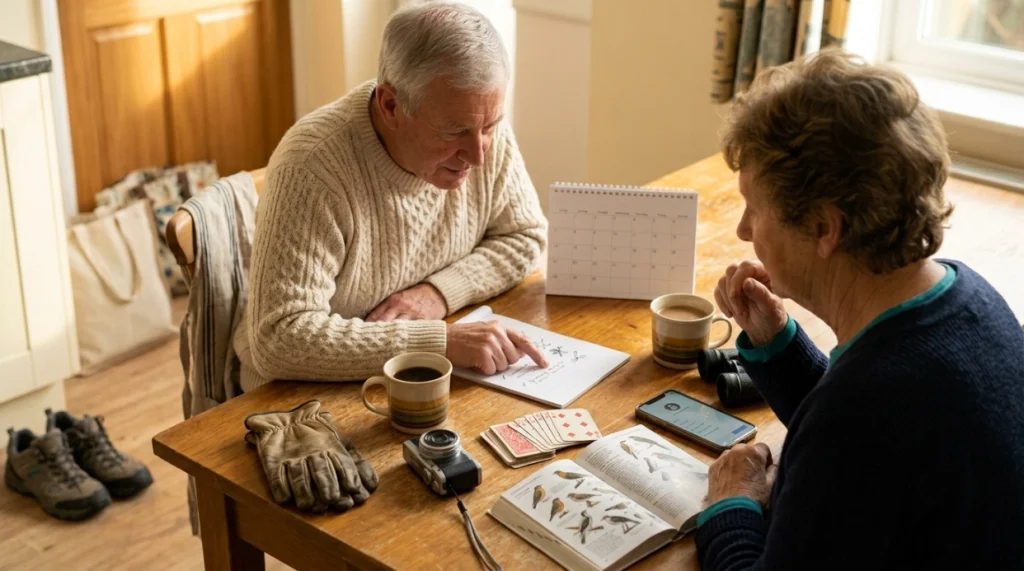
Start with compatibility rather than novelty. The most impressive hobby is useless if neither of you wants to repeat it.
Use the five-question test
- Would both of us willingly do this again next week?
- Does it fit our current energy and mobility?
- Can we afford the ongoing cost comfortably?
- Can we reach the location easily?
- Does it provide the amount of social interaction we want?
If most answers are yes, the hobby deserves a trial. If several answers are no, choose something easier.
Try it before buying lots of equipment
Rent, borrow, or buy inexpensive beginner supplies first. This is especially important for golf, photography, musical instruments, crafts, and outdoor activities.
A hobby sometimes sounds more appealing than it feels in practice. Testing it prevents an unused collection of equipment from filling the garage.
Give a new hobby more than one attempt
The first dance class, art lesson, or club meeting may feel awkward. That does not mean the activity is wrong for you.
Try it three or four times unless you clearly dislike it. Familiarity often changes the experience.
Mix shared hobbies with individual interests
Healthy couples do not need matching hobbies in every area. One person can enjoy woodworking while the other reads or gardens.
A few meaningful shared activities may be enough to create regular connection. The National Institute on Aging’s social connection guidance suggests pursuing enjoyable activities and connecting with people who share common interests.
Section Takeaway: Choose hobbies that are easy enough to repeat and enjoyable enough to anticipate. Test first, adapt when needed, and keep individual interests too.
Frequently Asked Questions
What is the best hobby for a retired couple?
There is no single best choice, but walking, gardening, cooking, volunteering, photography, and travel work well for many retired couples. Choose according to your health, interests, budget, and desired social contact rather than selecting an activity because it is popular.
What are inexpensive hobbies for senior couples?
Walking, reading, card games, puzzles, birdwatching, photography with a phone, genealogy, cooking, and container gardening can all be inexpensive. Libraries and community centers may also provide free or low-cost classes, clubs, and events.
What hobbies are good for senior couples with limited mobility?
Try card games, puzzles, genealogy, painting, music, cooking, indoor gardening, crafts, photography, online classes, and book discussions. Many activities can also be adapted with seated workstations, shorter sessions, or separate roles for each partner.
What are fun outdoor hobbies for older couples?
Walking, gardening, birdwatching, photography, fishing, golf, outdoor concerts, picnics, and short nature trips are popular options. Choose accessible routes and facilities, especially when balance, stamina, or joint discomfort affects either partner.
Can hobbies help senior couples stay socially connected?
Yes. Clubs, classes, volunteering, group exercise, games, faith communities, and community events create repeated opportunities to interact with others. Regular shared-interest activities can make social contact feel more natural than attending events solely to meet people.
How many hobbies should a retired couple have?
There is no required number. One shared hobby may be enough, while other couples enjoy several activities. A practical mix might include one active hobby, one quiet home activity, and one occasional social or community activity.
What can an older couple do when they are bored at home?
Start a puzzle, cook a new recipe, organize family photos, research genealogy, watch a documentary, play cards, grow herbs, learn a skill online, or plan a future day trip. Rotate activities so home routines do not become repetitive.
Final Takeaway
The best hobbies for senior couples are not necessarily expensive, adventurous, or complicated. They are activities both people can enjoy often enough to become part of everyday life.
Start small. Choose one idea that sounds enjoyable, try it several times, and adjust it until it works for both of you.
A simple walk, shared garden, weekly card game, cooking night, or volunteer shift can become something you genuinely look forward to together.