
Is Painting a Good Hobby for Seniors? Benefits, Tips, and Easy Ways to Start


Cane with LED Light

Lap Desk for Reading

Weighted Blanket
Quick Answer
Yes, painting is a good hobby for seniors because it is creative, flexible, inexpensive to start, and easy to adapt for different abilities. It can provide quiet personal time or become a social activity through classes and painting groups, and the National Institute on Aging encourages enjoyable and meaningful activities as part of staying engaged in later life.
Why painting works well for seniors
- Easy to begin: A small watercolor set, paper, and one or two brushes are enough for a first session.
- Flexible pace: You can paint for 15 minutes or spend an entire afternoon on one picture.
- Creative freedom: There is no need to paint perfectly or follow complicated rules.
- Adaptable setup: Larger brushes, table easels, good lighting, and seated work can make painting more comfortable.
- Social option: Community art classes can add conversation, encouragement, and regular contact with other people.
Painting can be one of the easiest creative hobbies to explore later in life. You don’t need previous art training, expensive equipment, or a large studio to enjoy it.
I like painting as a retirement hobby because beginners can make it as simple or challenging as they want. This guide explains the benefits, beginner-friendly paint types, supplies, adaptations, and practical ways to start in 2026.
In This Guide
- Is painting a good hobby for seniors?
- What benefits can painting offer older adults?
- Which type of painting is easiest for seniors?
- How can a senior start painting?
- How can painting be made more comfortable?
- Is painting better alone or in a class?
- How often should seniors paint?
- Frequently asked questions
- Final takeaway
Is Painting a Good Hobby for Seniors?
Yes. Painting is especially suitable for seniors because it combines creativity with a low physical barrier to entry, and almost every part of the activity can be adjusted.
A person can paint while seated, work at a kitchen table, use inexpensive supplies, and stop whenever they become tired. There is also no requirement to work quickly.
Definition: Painting as a senior hobby is a recreational creative activity in which an older adult uses color and painting tools for enjoyment, learning, self-expression, relaxation, or social connection rather than professional performance.
You don’t need artistic talent
One of the biggest barriers is the belief that painting is only for artistic people. In practice, a hobby doesn’t need to produce professional-looking results to be worthwhile.
A beginner can paint simple leaves, sunsets, flowers, color patterns, houses, or objects from around the home. Abstract painting can be even more forgiving because there is no single correct result.
- Paint from a photograph: Choose one simple object instead of copying a complicated scene.
- Use large shapes: Start with circles, leaves, clouds, trees, or blocks of color.
- Limit the palette: Three or four colors make decisions easier.
- Keep paintings small: A 5-by-7-inch or 8-by-10-inch surface feels manageable.
- Repeat subjects: Painting the same flower several times helps skills develop naturally.
Painting can grow with you
A watercolor set can remain a relaxing weekend activity for years. Someone who becomes more interested can later explore acrylics, landscapes, portraits, mixed media, or local art classes.
That flexibility is important. You don’t need to decide how serious you are before picking up your first brush.
What Benefits Can Painting Offer Older Adults?
Painting can provide creative engagement, a sense of accomplishment, enjoyable concentration, and opportunities for social connection. Research into arts participation and aging is promising, although painting should not be treated as medical therapy unless it is provided as part of professional treatment.
The National Institute on Aging’s discussion of arts and healthy aging notes ongoing research into how visual arts and other creative activities may support well-being and independence among older adults.
It gives the mind something interesting to work on
Painting involves choices about color, placement, shape, size, and composition. Even a small project gives you a series of manageable problems to solve.
That mental engagement is one reason I prefer creative hobbies that require active participation. You aren’t simply watching something happen; you’re deciding what happens next.
It creates visible progress
Creative progress is easy to see because every finished page becomes a record of what you tried. Looking back at your first five paintings after several weeks can be surprisingly satisfying.
Progress doesn’t need to mean technical perfection. Becoming more comfortable mixing colors or controlling a brush is progress too.
Painting can support social connection
Painting doesn’t have to be solitary. The CDC specifically includes painting and ceramics among activities older adults can enjoy with other people in its social connectedness guidance for older adults.
- Join a weekly senior-center art class.
- Paint with a friend at the kitchen table.
- Attend community education workshops.
- Visit museums with an art group.
- Share finished work with family.
- Join an online beginner painting group.
A systematic review of arts and creativity research in older adults also found promising evidence for social and well-being benefits from group-based arts participation. The evidence varies by art form and study design, so I would view these benefits as encouraging rather than guaranteed.
You can review that research through PubMed’s systematic review of arts, creativity, and later-life well-being.
Which Type of Painting Is Easiest for Seniors?
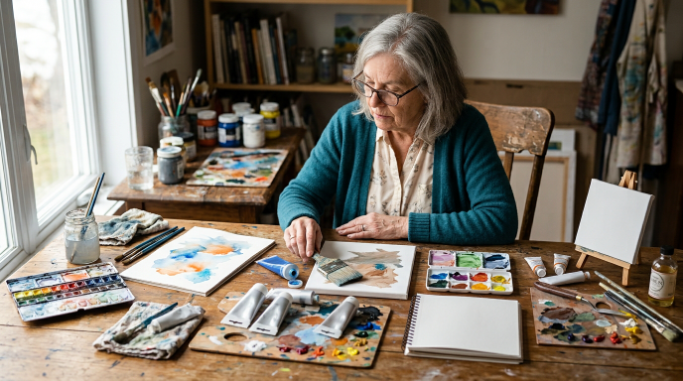
Watercolor and acrylic painting are usually the most practical beginner choices. Both use water for common beginner techniques and can be started with a small collection of supplies.
I would choose watercolor when easy cleanup and compact storage matter most. Acrylic is often easier when a beginner wants stronger colors and the ability to cover earlier mistakes.
| Medium | Useful Starter Surface | Cleanup | Drying Behavior | Best For |
|---|---|---|---|---|
| Watercolor | 140 lb / 300 gsm watercolor paper | Water | Thin washes usually dry within minutes | Low-mess painting and small spaces |
| Acrylic | Acrylic paper or primed canvas board | Soap and water before paint dries | Thin layers often dry within 10–30 minutes | Bold colors and easier corrections |
| Gouache | Watercolor or mixed-media paper | Water | Dries quickly with a matte surface | Opaque color on paper |
| Traditional Oil | Primed canvas or painting panel | Depends on paints and mediums used | Often hours or days between layers | Painters who want slow blending |
Watercolor is simple to store
A compact watercolor palette, two brushes, paper, a cup of water, and paper towels can fit inside a small box. That makes it useful in apartments, senior living communities, or shared spaces.
Acrylic is forgiving in a different way
Acrylic paint is more opaque than transparent watercolor, so mistakes can often be painted over after the layer dries. Beginners who enjoy bright landscapes, flowers, and decorative paintings may prefer it.
Traditional oils can also be rewarding, but I wouldn’t make them my default recommendation for a first experiment. The slower drying process and possible use of additional mediums can make the setup less convenient.
How Can a Senior Start Painting?
Start with one small project and the fewest supplies necessary. Buying a large professional art kit before you know what you enjoy usually adds cost without making the first painting better.
A simple watercolor starter setup
- One basic watercolor palette with 8–12 colors
- One round medium brush, around size 6 or 8
- One larger brush for broad areas
- 140 lb / 300 gsm watercolor paper
- Two water containers
- Paper towels or an old cloth
- A pencil for a light starting sketch
Try this first 30-minute painting
- Choose one subject: A leaf, flower, coffee mug, apple, or simple photograph works well.
- Sketch lightly: Spend no more than five minutes drawing the largest shapes.
- Choose three colors: Limiting choices keeps the first session manageable.
- Paint the largest areas: Ignore small details at first.
- Add a few darker shapes: Use them to create contrast.
- Stop after 20–30 minutes: Let the painting dry before deciding whether it needs more work.
The goal of this first session isn’t to produce a masterpiece. It is to learn what the brush, water, paper, and paint do when you use them together.
Use subjects you already care about
A personal subject makes practice easier to enjoy. Try a favorite garden flower, a childhood home, a pet, a vacation scene, or a simple family photograph.
As of 2026, phone photos also make convenient references because you can zoom into details without printing anything. Put the phone on a stand so you don’t need to hold it while painting.
How Can Painting Be Made More Comfortable for Seniors?
Painting can be adapted for changes in hand strength, vision, mobility, stamina, or coordination. The best adjustment is usually the one that removes frustration without removing the creative part of the activity.
For stiff or uncomfortable hands
- Choose brushes with thicker handles.
- Add a soft grip to narrow brush handles.
- Use larger brushes instead of tiny detail brushes.
- Work on larger shapes rather than miniature paintings.
- Keep frequently used supplies within easy reach.
- Take short breaks instead of gripping a brush continuously.
For reduced vision
Strong, even lighting can make color differences and edges easier to see. A task lamp aimed toward the painting can help, provided it doesn’t create uncomfortable glare.
- Use larger paper or canvas.
- Choose high-contrast subjects.
- Work with broad shapes.
- Use a magnifier when useful.
- Keep the palette organized in the same order each session.
For tremor or reduced coordination
A table easel can keep the work stable and reduce the need to hold the painting surface. Resting the forearm or part of the hand against the table can also provide physical support while making a stroke.
Abstract work, palette-knife painting, sponges, broad brushes, and loose watercolor styles can be enjoyable alternatives to detailed line work. Precision does not determine whether a painting is successful.
For limited mobility or stamina
A seated setup works perfectly well. Put the paint, water, brushes, towels, and reference image within comfortable reach before starting.
Short sessions count too. Fifteen comfortable minutes several times a week may be more enjoyable than forcing yourself through one long session.
Health note: Persistent hand pain, sudden vision changes, new weakness, or a significant change in coordination deserves professional medical attention. A healthcare professional or occupational therapist can also suggest adaptations for individual needs.
Is Painting Better Alone or in a Class?
Neither option is automatically better. Painting alone offers quiet and flexibility, while a class adds instruction, conversation, and a reason to paint on a regular schedule.
Painting at home may suit you if you want:
- A quiet hobby without appointments
- Freedom to stop whenever you want
- A lower-cost starting point
- Privacy while learning
- The option to paint early or late in the day
A class may suit you if you want:
- Step-by-step instruction
- Feedback from a teacher
- Regular social interaction
- Access to unfamiliar materials
- Motivation to practice consistently
Senior centers, libraries, recreation departments, community colleges, art stores, and local studios are good places to investigate. Ask whether the class is truly beginner-friendly before buying supplies.
I also like a mixed approach. Learn basic techniques in a class, then keep a small painting setup at home for relaxed practice between sessions.
How Often Should Seniors Paint?
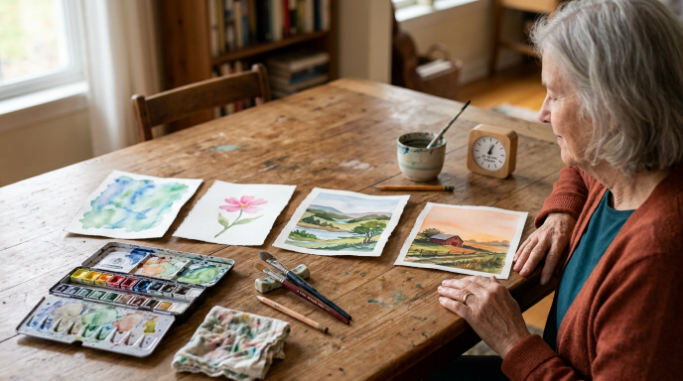
There is no required painting schedule. For a hobby, consistency matters less than whether the activity remains enjoyable enough to return to.
A beginner might start with one or two 20–30 minute sessions each week. Someone who enjoys painting may naturally increase that without needing a formal target.
Try a four-week painting experiment
- Week 1: Learn how your paint, brush, and surface behave.
- Week 2: Paint two simple objects or landscapes.
- Week 3: Repeat a subject and notice what feels easier.
- Week 4: Try one new technique, color combination, or larger painting.
At the end of the month, don’t ask whether you’re talented. Ask whether you look forward to painting again.
That question tells you far more about whether painting is the right hobby. Hobbies should create interest, not another obligation.
Don’t compare your beginning with someone else’s experience
Online painting videos often make techniques look effortless because the instructor has repeated them hundreds of times. Your first attempt is supposed to feel different.
Keep several early paintings instead of throwing them away. After two or three months, those pages can show progress that is hard to notice from one day to the next.
Frequently Asked Questions
Is watercolor painting a good hobby for seniors?
Yes. Watercolor is compact, relatively easy to clean up, and suitable for short seated sessions. A beginner can start with a small palette, two brushes, and watercolor paper, making it a practical choice when storage space or setup effort is limited.
Can you learn to paint at 70 or 80?
Yes. There is no age requirement for learning basic painting skills, and beginners can progress at their own pace. Start with simple subjects and large shapes rather than detailed portraits, then add new techniques only when you feel ready for them.
What is the easiest painting medium for an older beginner?
Watercolor and acrylic are both practical choices. Watercolor offers easy storage and simple cleanup, while acrylic provides stronger opaque color and lets you cover many dried mistakes with another layer of paint.
Is painting good for seniors with limited mobility?
It can be. Painting can be done while seated at a table, and supplies can be arranged within easy reach. Table easels, larger brushes, short sessions, and larger painting surfaces can make the activity more accessible for different mobility levels.
Does painting help seniors stay social?
Painting can become a social hobby when you join a class, senior-center program, community workshop, or informal painting group. Recurring sessions can provide regular opportunities to talk with people who share the same interest while still focusing on a relaxing activity.
How much painting equipment does a beginner need?
Very little. For watercolor, a basic palette, two brushes, paper, water containers, and paper towels are enough. For acrylics, add acrylic paper or a small canvas board and a simple starter selection of paints.
What should a senior paint first?
Choose something familiar with a simple shape, such as a flower, leaf, tree, coffee mug, fruit, or basic landscape. A favorite photograph can also work well, but crop it to one clear subject instead of trying to reproduce every detail.
Final Takeaway
So, is painting a good hobby for seniors? For many older adults, yes—it is creative, flexible, easy to adapt, and simple enough to try without making a major commitment.
You don’t need talent before you begin. You need a few basic materials, a comfortable place to sit, and enough curiosity to make the first brushstroke.
Start small rather than buying a studio full of equipment. Try watercolor or acrylic painting several times over a month and pay attention to one thing: whether you enjoy coming back to it.
If the answer is yes, keep going. A good hobby doesn’t have to impress anyone else to earn a place in your life.
