
10 Best Smoke Detectors for Elderly: Top Picks for Safety and Accessibility


Toilet Safety Rails

Air Fryer for Easy Cooking

LED Magnifying Glass
Smoke detectors provide an early warning when a fire starts, giving people more time to leave safely or call for help. For older adults, the right detector can also reduce common safety concerns, such as hearing loss, limited mobility, or difficulty reaching high ceilings.
We look for features that make alarms easier to notice and use, including loud alerts, flashing lights, voice warnings, large test buttons, and long-lasting batteries. The best smoke detectors for elderly users combine clear alerts with simple controls and reliable power.
We also consider sensor type, maintenance needs, smart notifications, and installation options before recommending a model. We tested and researched leading smoke detectors to find the ones that offer dependable protection and are easiest for older adults to use.
Best Smoke Detectors for Elderly People
We selected the best smoke detectors for older adults based on clear alarms, simple controls, reliable performance, and helpful safety features. Our list includes options that can support people with hearing, vision, or mobility needs.
First Alert SMI100 Smoke Alarm

We recommend this alarm for older adults who need a simple, battery-powered model with an easy-to-reach battery compartment.
Pros
- Simple installation with included mounting hardware
- Front-access battery compartment
- Clear test and silence button
Cons
- Plastic housing feels less sturdy than some models
- Requires regular battery checks
- One alarm covers only one location
We found the SMI100 quick to mount on a wall or ceiling, making it practical for homes where wiring changes would be difficult. The included battery and clear instructions also helped us get it working with little effort.
The front battery compartment stands out for seniors and caregivers. We could reach it without removing the alarm, which makes routine replacement easier. The large test and silence button also simplifies basic checks.
During testing, the alarm produced a strong sound and did not seem overly sensitive during normal use. However, the plastic body felt somewhat light, so we would handle it carefully during installation.
This model includes an end-of-life warning, which helps us know when replacement time approaches. We would still test it regularly and place alarms near bedrooms and on each level of the home.
Kidde Smart Smoke & CO Detector
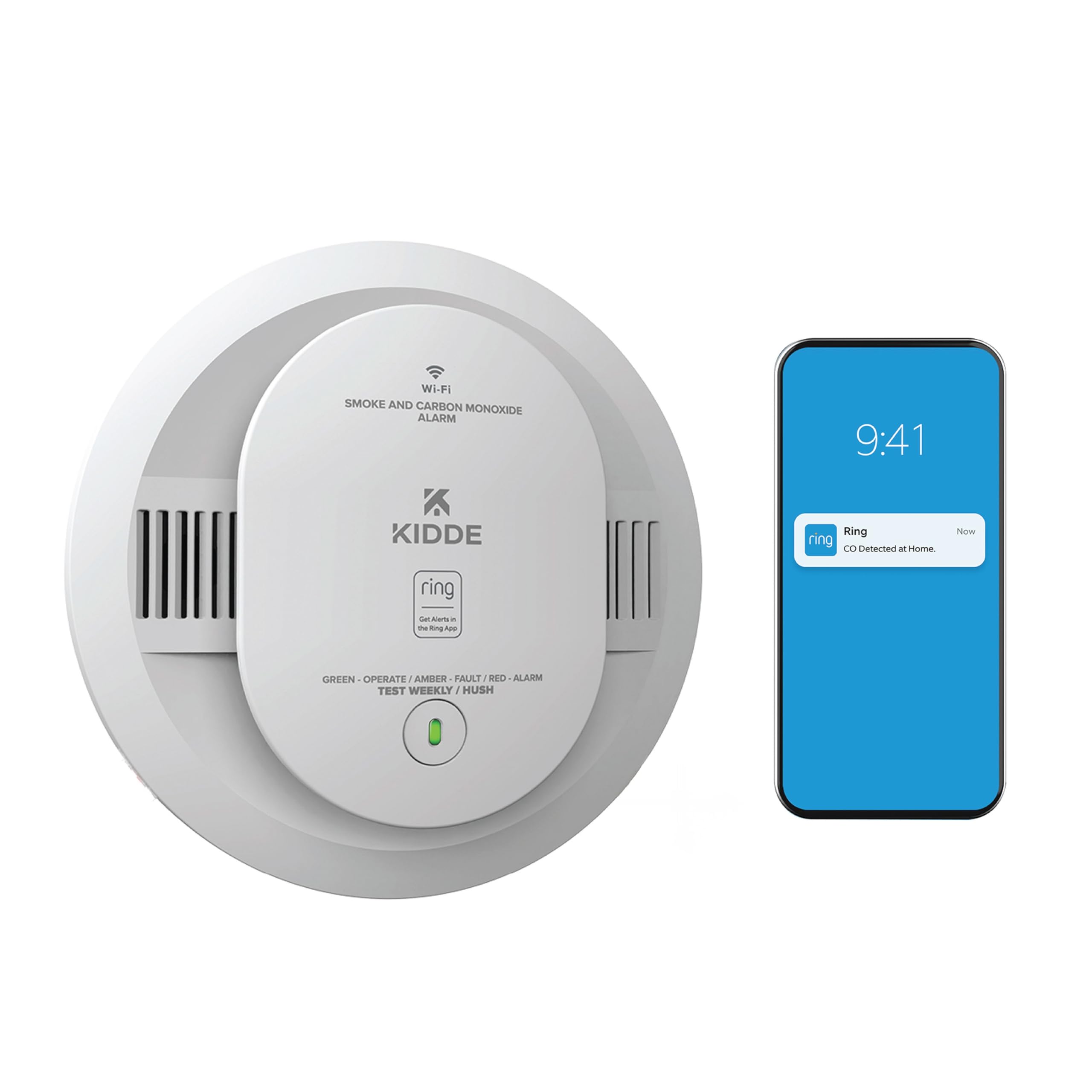
We recommend this detector for older adults who want simple battery installation and phone alerts for smoke, carbon monoxide, and low battery warnings.
Pros
- Sends alerts through the Ring app, even when we are away
- Uses two included AA batteries and needs no wiring
- Connects with other Kidde alarms for whole-home alerts
Cons
- Requires the Ring app for smart features
- Some users report occasional false alarms
- Optional professional monitoring costs extra
We mounted this Kidde detector without wiring, and the battery setup made installation manageable. Its loud alarm provides a clear warning, while the Ring app adds useful alerts for people who may not hear an alarm from another room.
The detector also reports low battery status through the app. That feature can help older adults and caregivers track the device without climbing a ladder or checking each alarm by hand.
We liked the ability to connect multiple Kidde alarms wirelessly. When one alarm sounds, the others can alert us too. However, the app setup adds a step, and some users have experienced false alarms, so careful placement away from cooking areas remains important.
A Ring subscription is not required for app notifications. Buyers who want round-the-clock professional monitoring must pay for the optional plan, which increases the long-term cost.
Kidde 10SDR Smoke Detector

We recommend the Kidde 10SDR for older adults who want a compact, battery-powered alarm with a loud alert and simple controls.
Pros
- Loud 85-decibel alarm with a red warning light
- Easy setup with two included AA batteries
- Test and Hush button helps manage alarms during cooking
Cons
- Batteries need regular checking and replacement
- It does not provide voice alerts
- The compact size may make the button harder for some users to press
We found the 10SDR quick to install because it needs no wiring. The included mounting hardware keeps setup simple, which helps when adding alarms to several rooms or replacing older units.
Its 85-decibel siren sounds strong, and the red LED gives us a clear visual signal. This combination may help older adults who do not always hear alarms clearly, though it does not offer spoken instructions or phone alerts.
The Test & Hush button worked well for routine checks and temporary nuisance alarms. Its sensing system also helps limit alerts from cooking or steam, but we would still place it away from kitchens and bathrooms.
Two AA batteries power the unit during outages, and the alarm carries a 10-year limited warranty. We would check the batteries on a regular schedule and follow local guidance for placement and replacement.
SITERWELL GS509A Smoke Detector
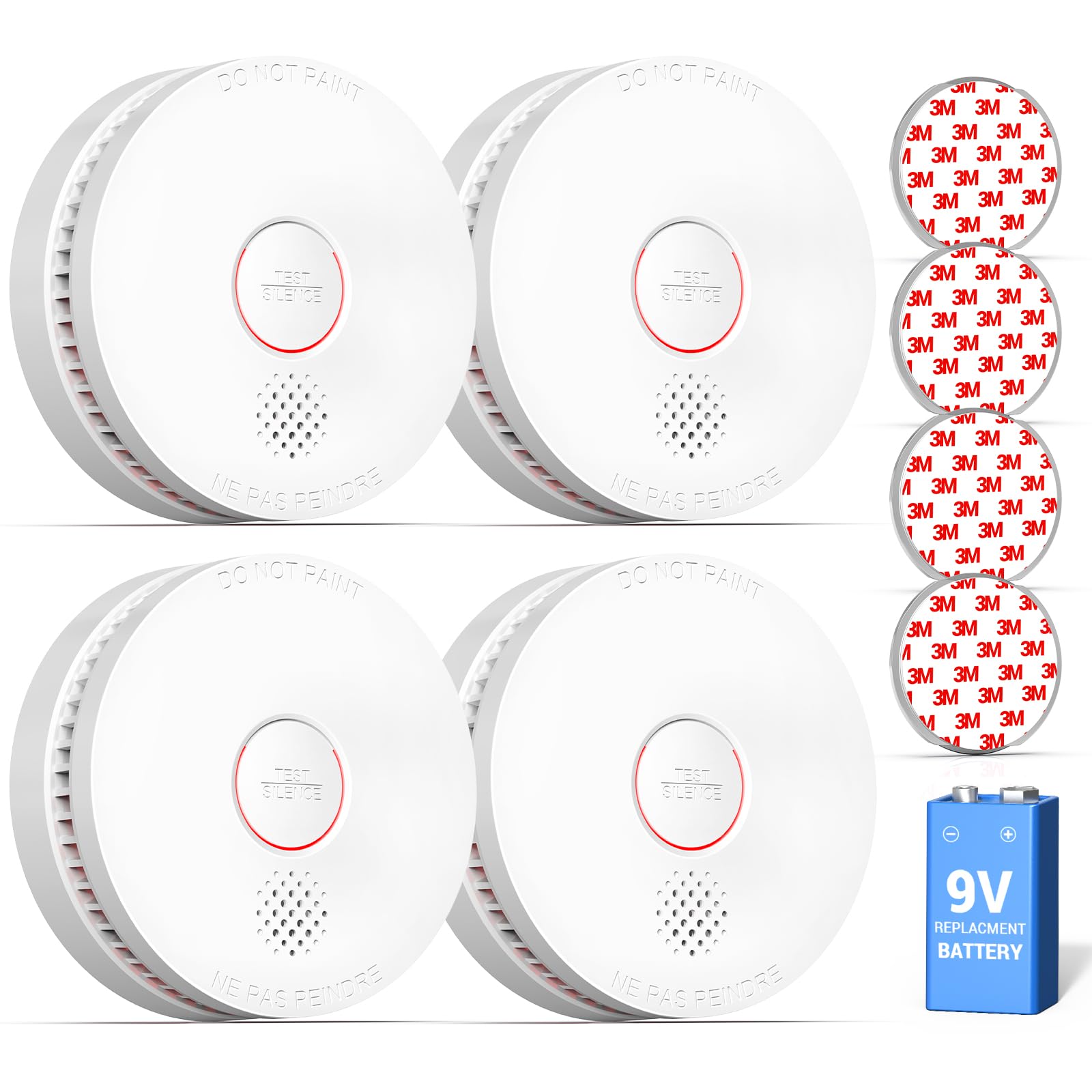
We recommend this four-pack for older adults who want simple installation, photoelectric sensing, and an easy way to remove the alarm for battery changes.
Pros
- Magnetic mounting makes removal easier
- Photoelectric sensor targets slow, smoldering fires
- Includes test, mute, and low-battery alerts
Cons
- Uses replaceable 9V batteries
- Audible alarm may sound quieter than some models
- Does not provide phone alerts or app controls
We found the magnetic mount especially helpful during testing. The alarm lifts off without much effort, which can reduce the need for a ladder or outside help when replacing the battery.
The photoelectric sensor suits homes where slow, smoky fires remain a concern. A test button makes weekly checks straightforward, while the low-battery warning helps us know when the unit needs attention.
Installation supports either screws or the included adhesive mounting option. We would still use screws where possible for a secure fit. The alarm meets the listed UL 217 standard and produces an audible warning above 85 decibels, though some users may prefer a louder model.
Kidde 20SD10 Smoke Detector

We recommend this alarm for older adults who want simple, low-maintenance smoke protection with clear sound and visual alerts.
Pros
- Built-in battery avoids yearly battery changes and low-battery chirps.
- Loud 85-decibel alarm and red LED provide two warning signals.
- Helped limit cooking-related false alarms during our testing.
Cons
- The battery cannot be replaced when the alarm reaches its service limit.
- It does not connect with other smoke alarms.
- Setup instructions may take extra attention.
We found the Kidde 20SD10 quick to mount, especially when existing ceiling holes matched the included bracket. Its 10-year battery makes it a practical choice for homes where reaching ceiling-mounted alarms is difficult.
The alarm uses a loud 85-decibel sound and a red LED light. These features give us both an audible warning and a visual status signal, which can help people with hearing or vision limits.
During normal cooking, the alarm stayed quiet in our experience, although no smoke detector can prevent every false alarm. The photoelectric sensor is designed to reduce alarms from steam and cooking while still detecting smoke.
One limitation matters for long-term planning: this model is standalone and cannot connect to other alarms. We also found the activation instructions less clear than expected, so we recommend reading the guide before mounting it. The 10-year limited warranty adds useful coverage, but the entire alarm needs replacement when its service life ends.
First Alert SMICO100 Combination Alarm

We recommend this alarm for older adults who want simple, battery-powered smoke and carbon monoxide protection in one unit.
Pros
- Combines smoke and carbon monoxide detection
- Simple installation and testing
- End-of-life warning helps with replacement timing
Cons
- Requires regular 9-volt battery changes
- Cooking smoke may still trigger alarms
- The test button may feel small for some users
We found the SMICO100 easy to mount and set up, with no wiring needed. The included battery made installation faster, and the clear instructions helped us complete the process without extra tools.
Combining two types of protection in one alarm can reduce clutter, especially in bedrooms, hallways, and smaller homes. The test and silence button also gives us a simple way to check operation or quiet a nuisance alert.
Battery power does require regular attention. We would mark the replacement date and test the alarm each month. Its end-of-life warning adds useful guidance, but older adults who have trouble hearing alarms may still benefit from a louder alert system or a connected alarm nearby.
First Alert SMCO100 Combination Alarm

We recommend this alarm for older adults who want simple battery-powered protection from both smoke and carbon monoxide.
Pros
- Combines two types of protection in one unit
- Installs without electrical wiring
- Test and silence button is easy to use
Cons
- Frying food may trigger an alarm
- It does not provide spoken alerts
- Batteries require regular checks and replacement
We found the SMCO100 straightforward to install, making it useful in homes where wiring a new alarm would be difficult. Its compact design also takes up little wall or ceiling space.
The combined smoke and carbon monoxide coverage helps reduce the number of devices needed in each area. We also liked the clear test button, which makes routine checks easier for people who may prefer simple controls.
Cooking can still cause nuisance alarms, especially when frying. The unit also uses sound rather than voice messages, so some older adults may need to hear the alarm clearly from another room. Its end-of-life warning helps us know when replacement is due.
X-Sense SC07 Smoke and CO Alarm
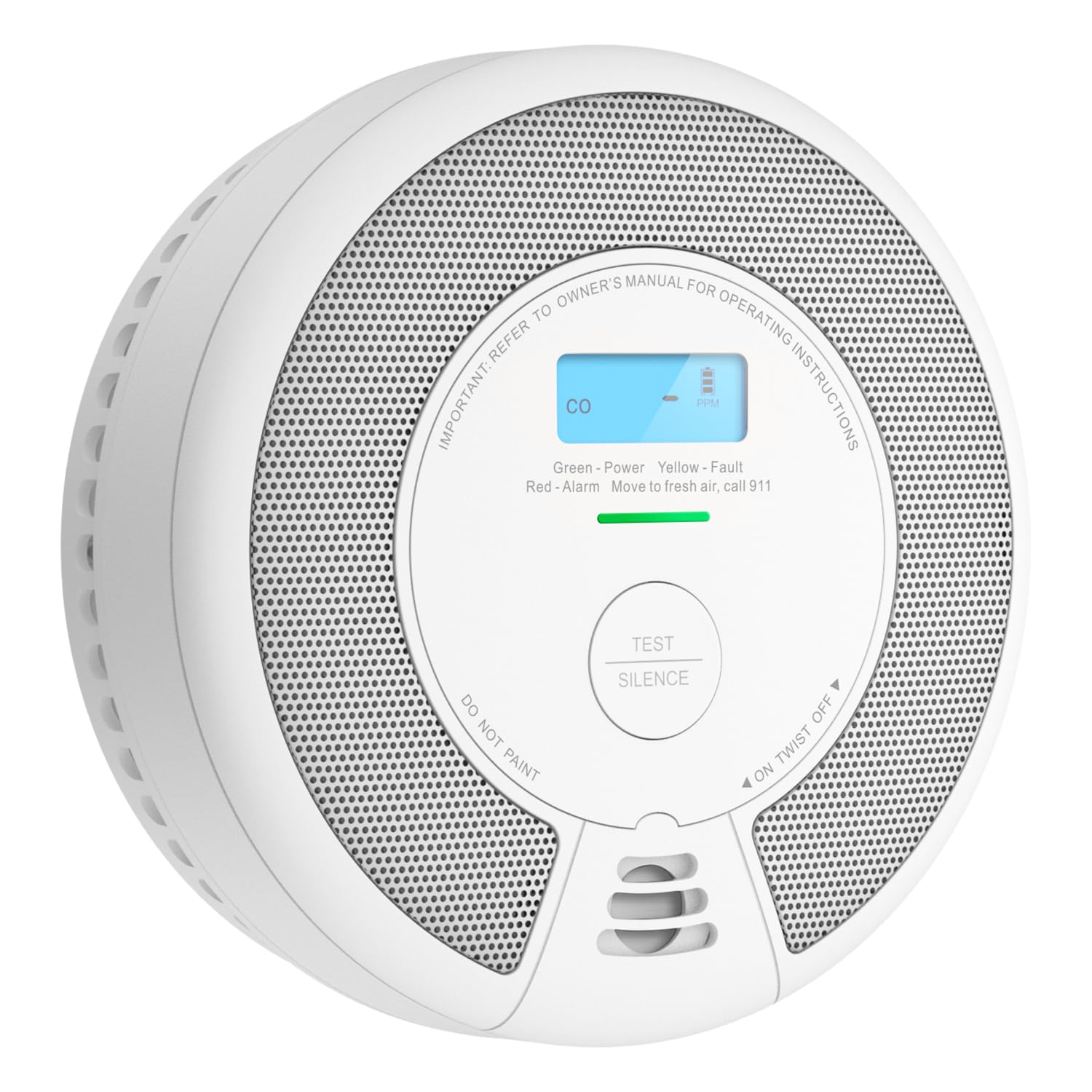
We recommend the X-Sense SC07 for older adults who want a simple alarm with a sealed battery and a clear display.
Pros
- Sealed battery lasts up to 10 years
- Smoke and carbon monoxide detection in one unit
- Easy wall or ceiling installation
Cons
- Does not connect to other alarms or Wi-Fi
- Not designed for junction-box installation
- The display may be difficult for some users to read
We found the installation straightforward because the package includes the mounting bracket, screws, and wall anchors. The standalone design avoids rewiring, which can help simplify replacement of older alarms.
The sealed lithium battery removes the need for regular battery changes. That makes this model useful for older adults who may have trouble climbing ladders or remembering maintenance tasks.
The photoelectric smoke sensor and electrochemical carbon monoxide sensor cover two common household risks. We also liked the display because it provides more information than basic beeps and indicator lights.
This model does not support wireless linking, Wi-Fi, or a base station. We would choose another version if we needed several alarms to sound together throughout the home.
X-Sense SC01 Smoke and CO Detector
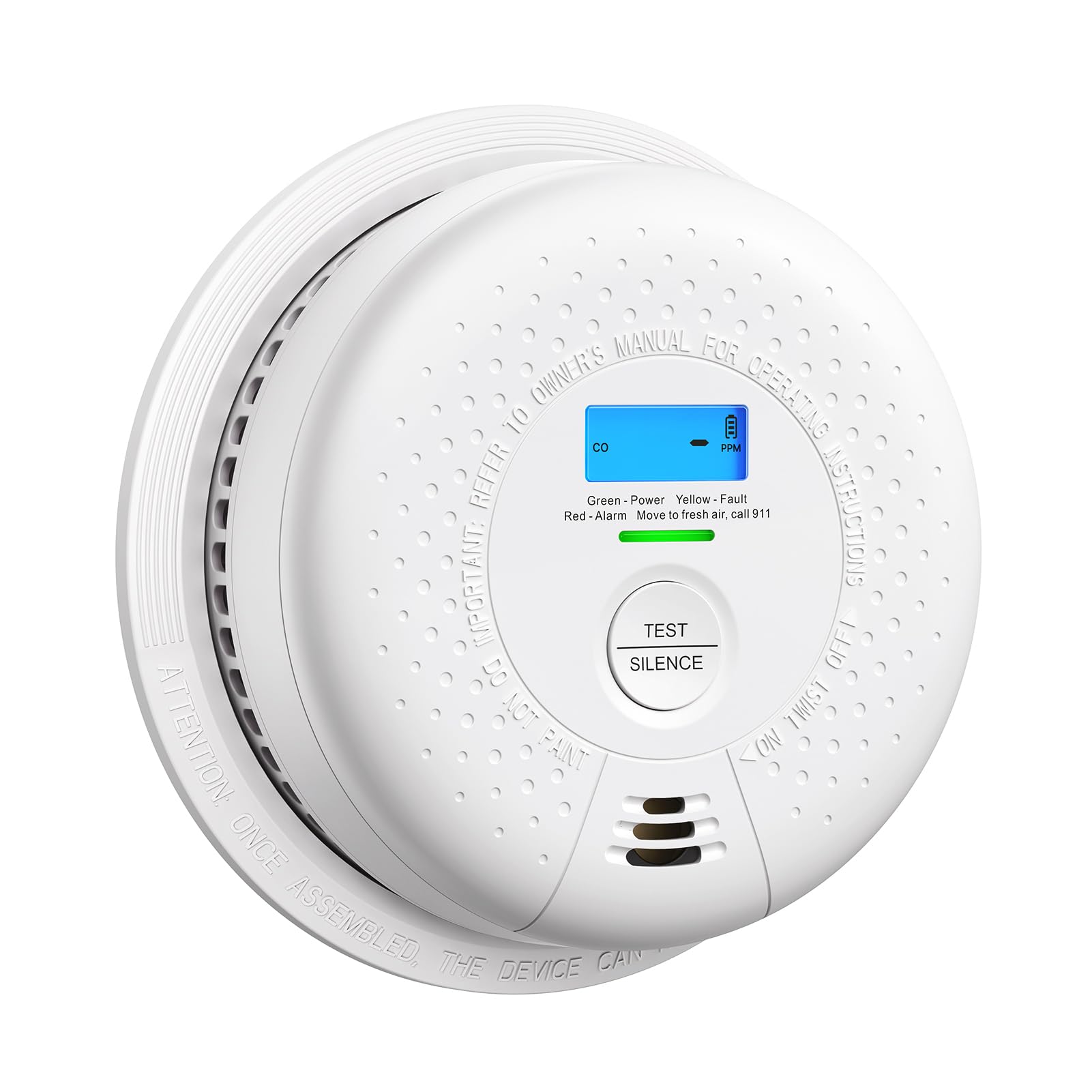
We recommend this detector for older adults who want one simple alarm for smoke and carbon monoxide without changing batteries often.
Pros
- Clear, loud alarm
- Smoke and CO protection in one unit
- Simple installation with a sealed battery
Cons
- Works only as a standalone alarm
- Not hardwired or Wi-Fi connected
- Some users report early beeping
We found the SC01 easy to mount on a wall or ceiling with the included hardware. Its sealed battery removes the need for regular battery changes, which can help older adults who have trouble reaching ceiling-mounted alarms.
The combined smoke and carbon monoxide sensors keep one device from replacing two separate alarms. We also liked the bright display, which shows useful readings and battery status without requiring a phone app.
The 85-decibel alarm sounds strong enough for most rooms, but the unit does not connect to other detectors or a home alarm system. We would choose the interconnectable SC01-W model for larger homes where one alarm should trigger the others.
A few owners report unexpected beeping soon after installation, although customer support responded quickly in some cases. We suggest testing the unit after mounting and checking its placement against local safety guidance.
Kidde 20SDR Smoke Detector

We recommend the Kidde 20SDR for older adults who need a simple, battery-powered alarm with a loud alert and visible warning light.
Pros
- Simple setup without hardwiring
- Loud 85-decibel alarm and red LED
- Test and hush button supports easy use
Cons
- Requires two AA batteries
- Not a hardwired replacement
- The alarm may still need regular cleaning
We found the installation straightforward because the unit uses two AA batteries and includes mounting hardware. Its compact design worked well in both larger rooms and apartments, while the clear test button made routine checks simple.
The 85-decibel alarm sounds strong, and the red LED gives a useful visual signal. This combination may help older adults notice an alert, especially when they do not hear the alarm right away.
The hush feature helps silence nuisance alerts from cooking or steam without turning off protection. We still recommend placing the detector away from kitchens and bathrooms to limit false alarms.
One important detail matters during replacement: this model runs on batteries rather than household wiring. The low-battery warning helps us know when to change them, but users should keep spare AA alkaline batteries available.
Buying Guide
We should choose a smoke detector that matches the person’s hearing, vision, mobility, and living space. A simple design, clear alerts, and easy testing can make regular use safer.
| Feature | What we should look for |
|---|---|
| Alert type | A loud alarm, bright flashing light, and voice alert can support people with hearing or vision loss. |
| Alarm volume | Select a model with a sound level suitable for the home, especially near bedrooms. |
| Power source | Sealed long-life batteries reduce maintenance. Replaceable batteries may suit homes where we want more control. |
| Testing | A large test button and a clear low-battery warning make checks easier. |
| Placement | Choose a unit that fits the ceiling or wall location recommended in its instructions. |
| Interconnection | Linked alarms can alert people throughout the home when one unit detects smoke. |
| Maintenance | Look for a design that is easy to clean, test, and reset without a ladder when possible. |
| Certification | Check that the detector meets the safety standards required in our region. |
We should install detectors on each level, outside sleeping areas, and inside bedrooms when local guidance recommends it. We should avoid placing them near kitchens, bathrooms, vents, or windows unless the instructions allow it.
For older adults who may not hear a standard alarm, we can consider systems with bed-shaker devices, strobe lights, or remote alerts. We should also check accessibility, installation support, warranty terms, and the cost of replacement batteries or accessories.
Editor’s Choice
We chose the Kidde Smoke & Carbon Monoxide Alarm with Voice Alerts as our editor’s pick for older adults. It detects smoke and carbon monoxide, uses clear spoken warnings, and identifies the type of danger.
The voice feature can help people who may not notice a standard alarm tone. A large test button and a digital display also make routine checks easier.
| Feature | Why it helps older adults |
|---|---|
| Voice alerts | States whether it detects smoke or carbon monoxide |
| Digital display | Shows carbon monoxide levels when detected |
| Battery backup | Keeps the alarm working during power outages |
| Test and hush button | Supports simple testing and temporary silencing |
We recommend placing one alarm on each floor, outside sleeping areas, and near bedrooms. We should follow the manufacturer’s instructions and test each unit every month.
This model may not suit people who have trouble hearing or seeing the display. For added protection, we can pair it with a compatible hearing-assistance system or a monitored home safety service.
Conclusion
We should choose smoke detectors that match an older adult’s needs, home layout, and hearing ability. Loud alarms, flashing lights, voice alerts, and easy testing can make warnings easier to notice and understand.
We also need to consider simple maintenance. Models with long-life batteries can reduce battery changes, while connected detectors may alert caregivers through a phone app. These features work best when the user has reliable internet access and support with setup.
Before buying, we should check for:
- Clear alarm signals
- Large, easy-to-use test buttons
- Simple battery replacement
- Reliable safety certifications
- Compatibility with other alarms in the home
We should install detectors inside bedrooms, outside sleeping areas, and on each level of the home. Testing them every month and replacing expired units helps keep the system ready when needed.
FAQS
What type of smoke detector works best for older adults?
We often recommend models with loud alarms, voice alerts, large test buttons, and easy-to-read status lights. Photoelectric detectors may help reduce nuisance alarms from cooking, but every home should follow local safety rules.
Are interconnected smoke detectors useful?
Yes. When we interconnect detectors, every unit can sound when one detects smoke. This feature can help older adults hear an alarm from a bedroom, basement, or other distant area.
Should we choose a battery or hardwired model?
Hardwired detectors usually include battery backup and need professional installation. Battery models offer simpler installation, but we must test them often and replace batteries as directed. Sealed 10-year batteries can reduce maintenance.
What extra features should we consider?
- Voice alerts: State the warning and, in some models, its location.
- Strobe lights: Help people with hearing loss notice an alarm.
- App alerts: Send notifications to a phone or caregiver.
- Large buttons: Make testing and silencing easier.
Where should we install smoke detectors?
We should place detectors inside each bedroom, outside sleeping areas, and on every floor. We should avoid placing them too close to kitchens or bathrooms, where steam and cooking smoke may cause false alarms.
How often should we test them?
We should press the test button once a month. We should replace any detector that does not respond, shows a fault warning, or reaches the end of its service life.
