
10 Best Window Alarms 2026: Top Picks for Home Security


Audiobook Player

Portable Wheelchair

Bathtub Grab Bar
Window alarms provide a simple way to monitor one of the most common entry points in a home. These small devices usually attach to a window frame and sound an alert when someone opens the window or separates the alarm from its sensor. Some models also offer adjustable volume, delay settings, or smart-home features.
The best window alarm for you should be easy to install, loud enough for your space, and reliable without frequent battery changes. We also looked at sensor placement, adhesive strength, control options, and whether each alarm works well for renters, families, or whole-home use. We tested and compared leading models to find the window alarms that offer dependable protection and practical everyday features.
Best Window Alarms 2026
We reviewed window alarms for security features, installation, sound level, battery life, and overall value. Below, we list our top picks to help us find a reliable alarm for different home security needs.
UltraPro Personal Security Window and Door Alarm
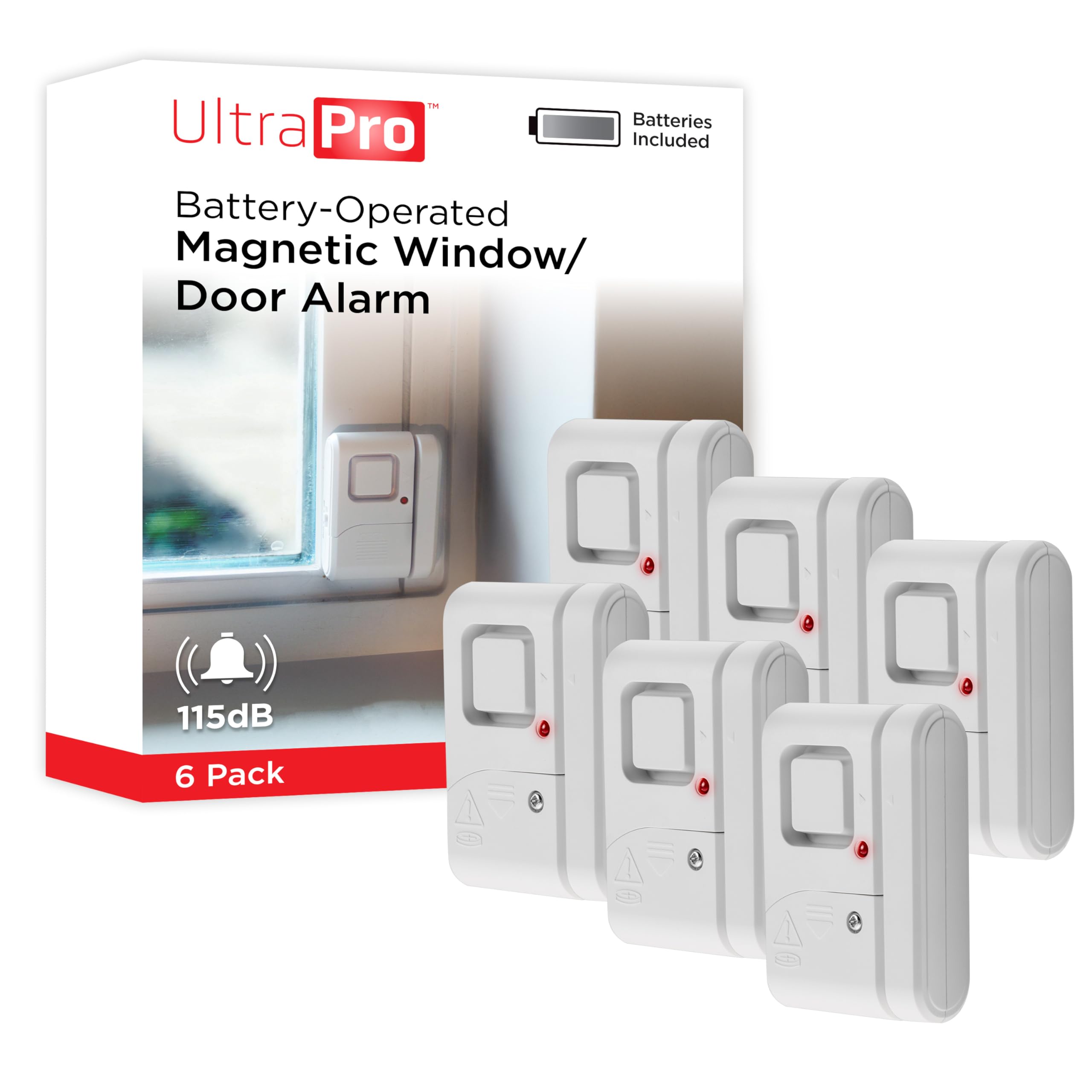
We recommend this six-pack for basic indoor alerts because it installs quickly, offers chime and alarm modes, and needs no app or monthly service.
Pros
- Loud alert that we could hear from other rooms
- Simple wireless setup with included adhesive
- Six alarms cover several doors, windows, or drawers
Cons
- Battery access requires a small Phillips screwdriver
- Adhesive placement must be accurate
- Indoor use limits installation options
We found the alarms easy to mount on clean, flat surfaces. Each unit pairs with a small magnet, and the alarm sounds when the two pieces separate. The switch lets us choose a softer chime for daily awareness or a louder alarm for security use.
The alarm is notably loud for its compact size, which helps us notice an opened entry point from another room. The six-pack also works well for homes with several downstairs windows, a garage door, or interior cabinets that need monitoring.
The included adhesive keeps installation simple, but we would take time to align each alarm and magnet before pressing them into place. We also recommend keeping a small screwdriver nearby for battery changes. These alarms suit renters, dorm rooms, offices, RVs, and homes that need straightforward alerts rather than a connected security system.
TECKNET Window and Door Alarm

We recommend this six-pack for simple, flexible alerts on windows, doors, cabinets, and other entry points.
Pros
- Easy peel-and-stick installation
- Chime and alarm modes
- Three volume levels
Cons
- Needs a flat mounting surface
- Requires regular battery checks
- The alarm may not suit every room
We found the alarms quick to install on clean, flat surfaces. Their small white housings blend into most light-colored doors and windows, though molding or uneven trim can make placement difficult.
The chime mode works well when we want a simple alert, while the continuous alarm provides a stronger warning. We also liked being able to lower the volume in bedrooms or raise it near garages and other noisy areas.
The six-pack gives us enough units to cover several access points without adding wiring or a hub. We would still check the battery and sensor alignment during setup, since a poor fit can prevent the alarm from triggering reliably.
Philips Window and Door Alarms, 4-Pack
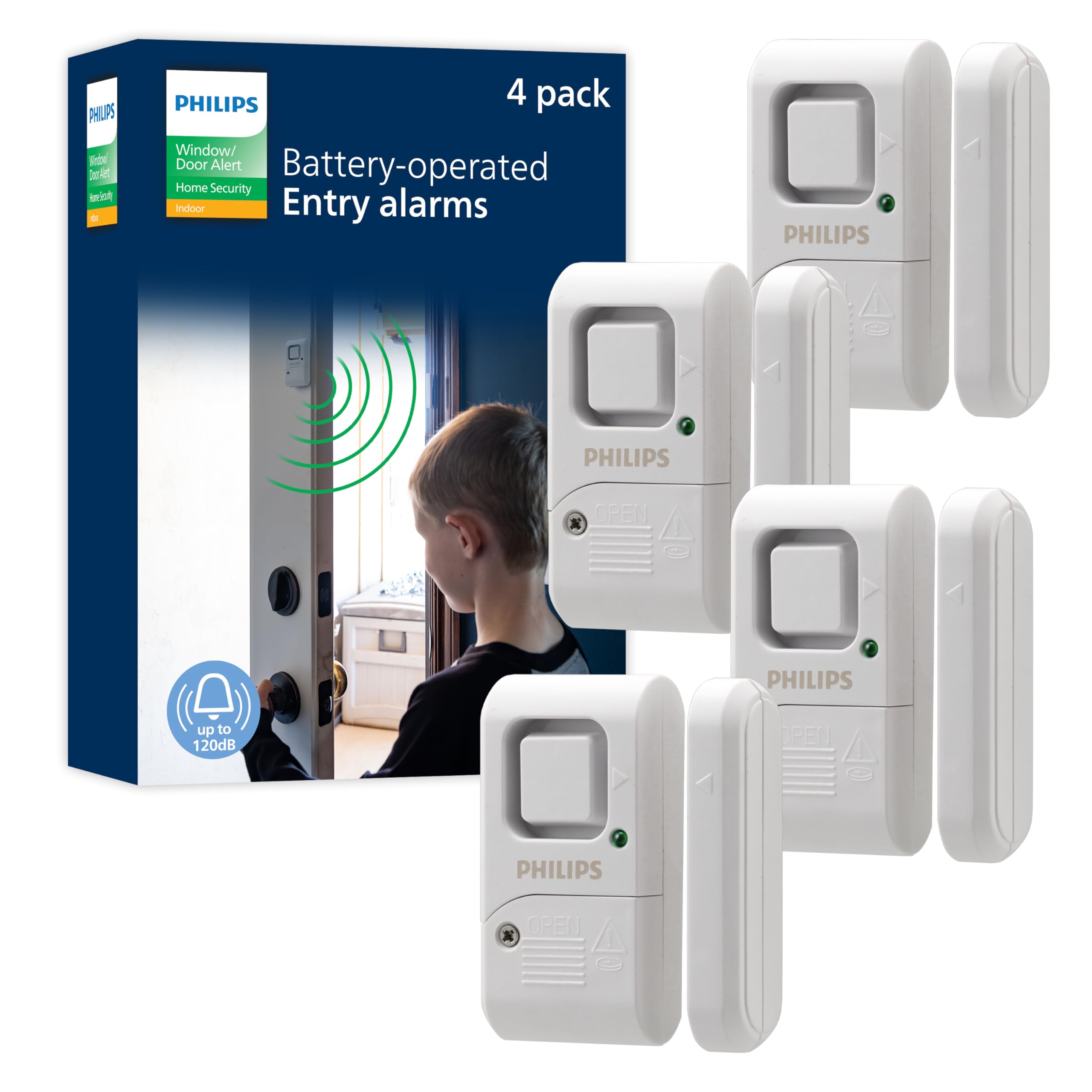
We recommend this affordable four-pack for simple, loud alerts on windows and doors without wiring or a monthly fee.
Pros
- Loud alarm and useful chime mode
- Quick adhesive installation
- Four alarms provide broad coverage
Cons
- The alarm may sound too loud in small rooms
- Adhesive may need extra surface preparation
- Button batteries require periodic replacement
We installed these on several doors and windows and found the setup straightforward. After removing the battery tabs, we used the included tape and aligned each magnetic sensor carefully. The alarms worked as expected when we opened the protected entry points.
The 120-decibel alarm is difficult to miss, even from another room. We also liked the chime setting for everyday awareness, such as knowing when someone opens a door without using the full alarm.
The compact, wireless design works well in apartments, dorm rooms, garages, and offices. The main limitation is the adhesive mount, which may hold better on clean, smooth surfaces than on dusty or textured ones. We would clean the area first and test each unit before relying on it.
Each alarm includes a test button and low-battery indicator. These features make routine checks easier, but we would still keep spare LR44 batteries available for long-term use.
METAK Window and Door Alarm 5-Pack
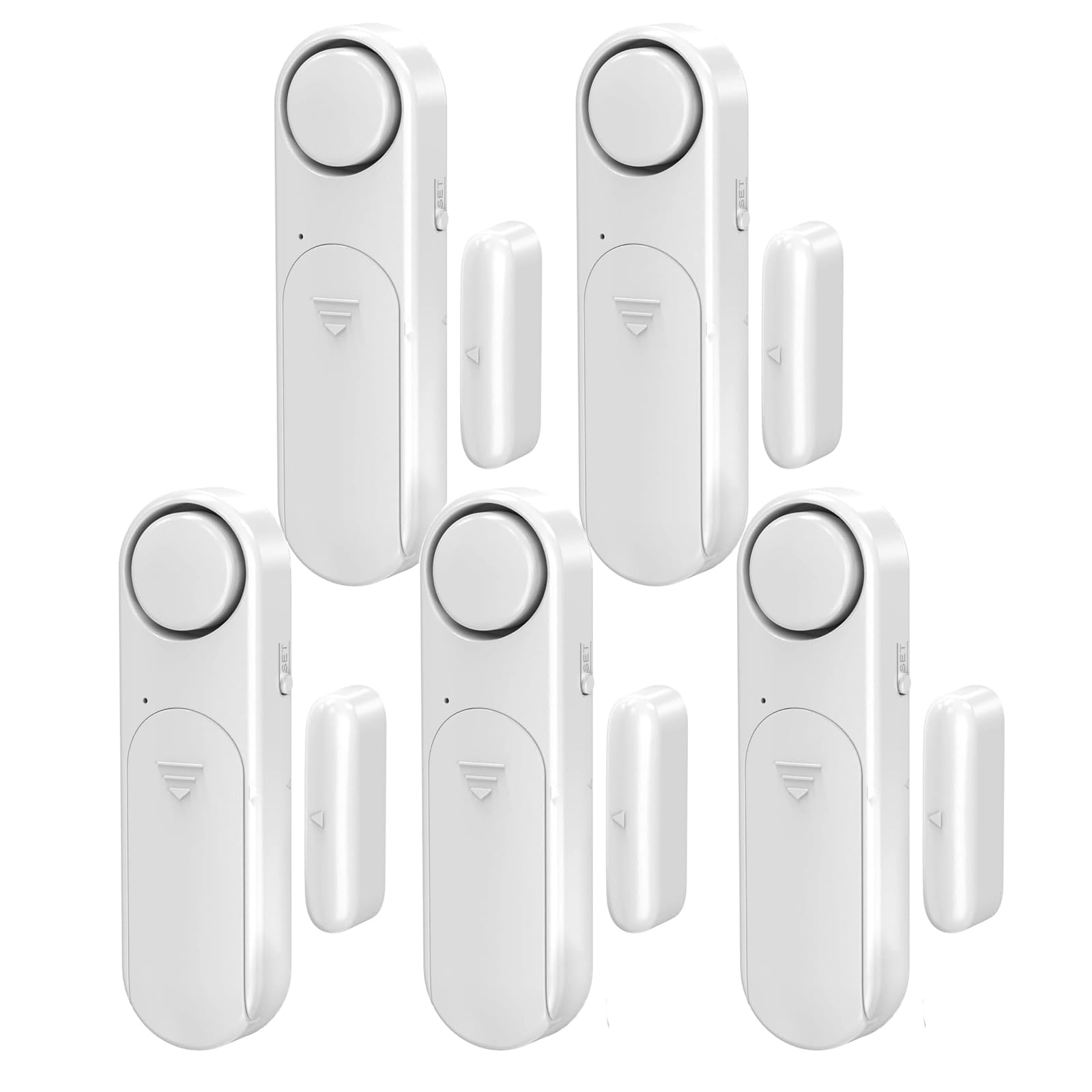
We recommend this five-pack for simple, wire-free alerts on windows and doors, especially when we need coverage in several rooms.
Pros
- Very loud alarm with two volume levels
- Fast adhesive installation without tools
- Slim design fits many doors and windows
Cons
- Batteries are not included
- No remote control
- Loud alerts may be inconvenient in quiet homes
We installed these alarms quickly using the adhesive backing. The slim units fit neatly along door and window frames, and we did not need to drill or run wires. They work well for rentals, apartments, garages, and homes with several entry points.
When we tested the alarm, the 120-decibel setting was loud enough to get our attention from another room. We could lower it to 90 decibels or turn the unit off with the controls on the alarm itself.
The set also works for safety monitoring. We found it useful for detecting access to rooms, cabinets, or other areas that children and older adults should avoid. The flashing red light provides a visual signal when the alarm activates or the batteries run low.
The main limitation is the lack of remote control. We also needed to supply two AAA batteries for each alarm. Overall, this METAK set offers practical coverage at a reasonable price when we want a basic local alert rather than a connected security system.
WimuPath Window and Door Alarms

We recommend this 15-pack for simple, low-cost alerts on windows and doors, especially when we need coverage in several rooms.
Pros
- Loud alarm helps us notice an opened window or door
- Adhesive mounting takes little time
- Multi-pack covers several entry points
Cons
- Batteries are not included
- Adhesive may loosen on some surfaces
- Basic controls offer no smart-home features
We found the magnetic contact design simple to install. We placed one part on the frame and the other on the moving section, then used the switch to turn the unit on before testing the alarm.
The sound is strong enough to get our attention from nearby rooms. It also reminded us to switch the alarm off before opening a protected window or door.
The adhesive worked well on clean, smooth windows during testing, but some users report that units fell from doors. We would clean and dry each surface first, then test the bond before relying on an alarm.
This set suits homes, offices, garages, and care settings that need basic entry alerts. We would choose it for broad coverage at a low price, but buyers who want app alerts or remote control should consider a connected system.
SanJie 5-Pack Window Alarms

We recommend these alarms for basic door and window alerts because they install quickly and produce a very loud warning.
Pros
- Simple peel-and-stick installation
- Three alarm and chime settings
- Includes five sensors for several entry points
Cons
- Thick trim can make alignment difficult
- The loudest setting may be too strong for some rooms
- Batteries need periodic replacement
We attached the sensors to clean, flat surfaces and found the setup straightforward. After switching on the unit and choosing a mode, the alarm responded when the magnet separated.
The 125-decibel setting is loud enough to carry through much of a home. We also liked having a quieter alarm and a chime option for daily use, though the highest setting can feel excessive in a small room.
The five-pack works well for covering several windows, doors, cabinets, or drawers. We would check the magnet alignment carefully, especially around raised door or window trim.
These alarms use included button batteries and provide a low-battery light. They do not replace a monitored security system, but they offer an affordable way to add a clear alert to common entry points.
HIIXHC 10-Pack Window and Door Alarms

We recommend this affordable pack for basic entry alerts, but buyers should test every unit because reliability can vary.
Pros
- Simple adhesive installation
- Loud 90-decibel alarm
- Ten alarms cover several entry points
Cons
- AAA batteries are not included
- Some units may fail or separate
- Proper sensor alignment takes care
We installed these on several windows and doors without tools. The adhesive made setup quick, but we had to position the two sensor pieces closely so the alarm would not trigger incorrectly.
The alarm is loud enough to get our attention from nearby rooms. We also liked the on/off switch, which made it easier to silence the unit when needed.
This pack works best for apartments, garages, offices, and other indoor areas. Since the alarms use adhesive and plastic housings, we would avoid damp locations and clean each surface before installation.
Customer feedback is mixed, with a 3.9-star rating from more than 7,500 reviews. The low price makes the pack useful for basic coverage, but we would test each alarm after installation and keep replacement batteries available.
EVA LOGIK Ultra-Thin Window Alarm

We recommend this eight-pack for affordable window protection because the alarms install quickly, produce a strong warning sound, and offer adjustable vibration sensitivity.
Pros
- Very loud alarm grabs attention quickly
- Sensitivity settings help limit false alarms
- Simple wire-free installation with warning stickers
Cons
- Batteries are not included
- Some units may arrive defective
- Vibration detection may require firm impact
We found the adhesive installation simple on glass and smooth window frames. The compact design stayed out of the way, while the flashing red light made the alarm easy to check at a glance.
The alarm is extremely loud in a small room. We liked having high and low sensitivity options, since the lower setting helped reduce alerts from normal window movement. Still, users may need to test each window because vibration levels vary by location.
The eight-pack works well for covering several entry points, such as ground-floor windows and glass doors. It does not provide professional monitoring or a phone alert, so we would use it as a basic layer of protection rather than a complete security system.
Battery status requires attention because the batteries are not included. We also found reports of occasional faulty units, so testing every alarm soon after installation makes sense.
EVA LOGIK 4-Pack Window Alarms

We recommend this pack for simple glass-window protection, especially when you want a loud alarm, visible warning signs, and easy installation.
Pros
- Loud alarm with adjustable sensitivity
- Flashing LED and warning stickers add visible deterrence
- Peel-and-stick setup works for many windows and glass doors
Cons
- AAA batteries are not included
- High sensitivity may trigger from pets or strong contact
- Some users report inconsistent activation
We found these alarms easy to mount on windows, patio doors, and other glass surfaces. The adhesive backing kept installation simple, and the included warning stickers made the alarms noticeable from outside.
The vibration sensor responds strongly to contact with the glass. We recommend testing each unit after installation and using the lower sensitivity setting if pets, children, or nearby activity cause false alarms.
When triggered, the alarm produces a very loud sound for up to 60 seconds. The flashing red light also remains visible, while rapid flashing indicates a low battery. These units work as standalone alarms, but they do not connect to a larger home security system.
UltraPro Window and Door Alarms
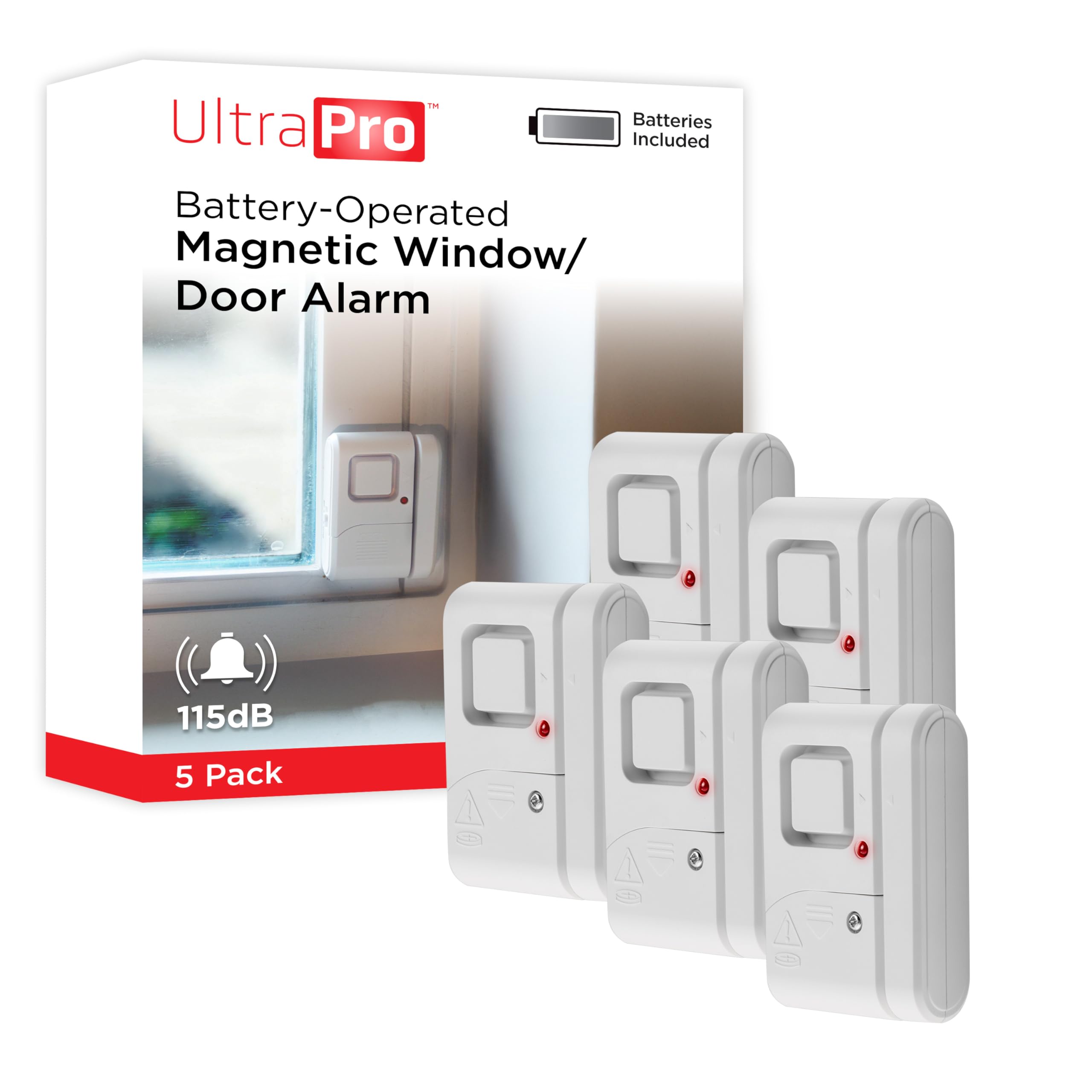
We recommend this five-pack for simple, low-cost alerts on windows, doors, cabinets, and drawers.
Pros
- Loud alarm and chime settings
- Peel-and-stick wireless installation
- Includes batteries and low-battery indicator
Cons
- The chime can sound harsh in small rooms
- Adhesive may not suit every door frame
- Some units may develop a buzz
We found the setup quick because the alarms mount with included double-sided tape. The contact sensor triggers when the alarm separates from its magnet, so we did not need tools, wiring, an app, or a monthly plan.
The alarm is very loud, which makes it useful for drawing attention when a door or window opens. We also liked the chime setting for everyday monitoring, though its volume may startle people nearby.
The side switch moves between off, chime, and alarm modes. The front light helps us notice a low battery, but these units still require periodic battery replacement. Adhesive mounting also works best on clean, smooth surfaces.
With its simple controls and five alarms in one pack, the UltraPro suits apartments, dorm rooms, offices, RVs, and homes that need basic entry alerts. It works best as an added layer of awareness rather than a complete security system.
Buying Guide
We should match the alarm type to the window and the security need. Contact alarms detect when a window opens, while glass-break alarms listen for the sound of breaking glass. Some systems combine both functions.
We should check these features before buying:
| Feature | What to look for |
|---|---|
| Alarm volume | A clear, loud alert that people nearby can hear |
| Power source | Long battery life, easy battery replacement, or a wired design |
| Installation | Strong adhesive or screws suited to the window frame |
| Controls | Simple arming, disarming, and low-battery alerts |
| Smart features | App alerts, hub support, or compatibility with our security system |
| Pets and noise | Settings that help reduce false alarms when needed |
We should confirm that the alarm fits the window’s opening style and frame material. Measure the available space, review the installation method, and check whether the alarm works with our existing system.
A tamper alert can warn us if someone removes the device. For homes with children or frequent visitors, a keypad, remote control, or entry delay may make daily use easier.
We should also review battery access, warranty terms, return policies, and replacement costs. If we need alerts when away from home, we should choose a model with the required hub, Wi-Fi, or mobile connection.
Editor’s Choice
We chose the GE Personal Security Window and Door Alarm as our editor’s pick for 2026. It offers a simple setup, a loud alarm, and a compact design that works well for apartments, homes, and temporary rentals.
The alarm uses adhesive backing, so we can install it without tools. Its contact sensor triggers when the window or door opens, while the on/off switch helps prevent accidental activation during daily use.
| Feature | Details |
|---|---|
| Installation | Peel-and-stick |
| Alarm type | Contact sensor |
| Controls | On/off switch |
| Best for | Basic home security |
| Power | Replaceable battery |
We like this model because it focuses on the features most people need. It does not require Wi-Fi, an app, or a subscription, which keeps setup and maintenance simple.
The alarm does not provide remote alerts or connect to other security devices. We recommend it for users who want a low-cost warning at the window or door rather than a complete smart-home security system.
Conclusion
We should choose a window alarm based on our home’s layout, security needs, and budget. A simple contact sensor may suit an apartment, while a system with app alerts can help us monitor several windows.
Before buying, we should check the alarm’s sound level, battery life, installation method, and alert features. We should also confirm that the device fits the window frame and works with our existing security system, if we use one.
The best window alarm for us will provide reliable alerts without creating unnecessary complexity. Regular battery checks and routine testing will help keep our alarms ready to work when needed.
FAQS
Are window alarms worth buying?
We find window alarms useful for adding a simple warning when someone opens a window. They work best as part of a wider home security plan, not as a replacement for strong locks or a monitored system.
Do window alarms need Wi-Fi?
Many alarms work without Wi-Fi and use a built-in siren. Smart models may need Wi-Fi or a hub to send alerts to our phones, connect with other devices, or store activity records.
Where should we place a window alarm?
We should attach the sensor to the frame and the magnet to the moving window section. The two parts must line up closely when the window is closed, so we should follow the maker’s spacing limits.
Can we use these alarms on sliding windows?
Yes. We can use compatible alarms on sliding windows, but we must check the design and mounting method. Some models support only standard hinged windows.
How loud should a window alarm be?
A louder siren can help us notice an entry attempt, especially in another room. We should check the stated decibel rating and choose an alarm with adjustable volume if available.
How do we prevent false alarms?
We should clean the mounting surface, secure both parts firmly, and replace weak batteries. We also need to check that curtains, pets, or normal window movement do not trigger the sensor.