
Questions to Ask Senior Leaders About Career Development


Sock Aid for Seniors

Easy Grip Knife Set

Portable Wheelchair
Building a successful career requires more than hard work—it demands smart conversations. Asking the right questions to senior leaders about career development can open doors to mentorship, visibility, and advancement opportunities you might never find on your own. This article provides practical, insightful prompts designed to spark meaningful dialogue and help you take control of your professional journey.
Starting your career journey can feel overwhelming. You’re not just looking for a job—you want a fulfilling career with room to grow. But how do you move forward when the path isn’t clear? That’s where senior leaders come in.
Senior leaders aren’t just decision-makers—they’re gatekeepers of opportunity. They influence promotions, mentor rising talent, and shape organizational culture. Yet many high-potential employees hesitate to approach them. Why? Maybe it feels intimidating, or they assume their time is too valuable. But here’s the truth: senior leaders want to invest in people who show curiosity and ambition.
That’s why knowing what to ask matters. This article gives you a roadmap of powerful questions to ask senior leaders about career development. Whether you’re early in your career or looking to level up, these conversations can be transformative.
Key Takeaways
- Strategic questioning builds trust: Asking thoughtful questions shows initiative and genuine interest in growth, helping you connect with senior leaders on a deeper level.
- Career path insights are invaluable: Senior leaders often have a broad view of company structure and opportunities—use their experience to map your own development plan.
- Mentorship accelerates success: Proactively seeking guidance increases your chances of getting mentorship from experienced professionals who can offer real-world advice.
- Skill gaps become clear: Leaders can identify competencies you need to develop, turning vague goals into actionable improvement plans.
- Visibility matters: Discussing your aspirations with senior staff helps ensure your contributions are recognized when promotion decisions are made.
- Networking becomes intentional: These conversations naturally expand your internal network, creating relationships that support long-term career mobility.
📑 Table of Contents
- Why Career Development Conversations Matter
- Top Questions to Ask About Your Career Path
- Questions About Organizational Culture and Opportunities
- Questions to Build Relationships and Visibility
- Questions About Mentorship and Feedback
- Practical Tips for Asking Questions Effectively
- Real-Life Examples: How People Used These Questions
- Common Mistakes to Avoid
- Conclusion: Own Your Career Narrative
Why Career Development Conversations Matter
Many people think career growth happens automatically with performance alone. But research shows that visibility, relationships, and strategic self-promotion play huge roles. In fact, studies from Harvard Business Review reveal that employees who regularly discuss career paths with managers are 3x more likely to receive promotions.
So why don’t more people do it? Often, it’s fear—fear of seeming arrogant, asking the wrong thing, or wasting someone’s time. But senior leaders expect questions. They’ve been there. And if you approach them respectfully and prepared, they’ll appreciate your initiative.
Think of it this way: You wouldn’t wait for someone to hand you a promotion. Why would you wait for career advice?
The Power of Asking the Right Questions
Questions are tools. A well-crafted question opens doors. For example, instead of saying, “I want to get promoted,” try asking, “What qualities do leaders typically demonstrate before moving into [target role]?” That shifts from demand to learning.
Senior leaders respond better to curiosity than certainty. When you ask about their journey or advice, you signal that you’re serious about growing—not just taking.
Plus, these conversations create natural follow-ups. After one chat, you might get invited to shadow a project or join a leadership meeting. Those small moments add up fast.
When to Have These Conversations
Timing is everything. Don’t ambush a CEO during investor meetings. Instead, look for natural openings: after team presentations, at industry events, or during scheduled check-ins.
If your company has formal mentoring programs, use those as entry points. Even better—request a conversation with someone whose leadership style inspires you. Most will say yes if you explain your goals clearly.
Remember, consistency beats frequency. One meaningful talk every few months beats five awkward ones per year.
Top Questions to Ask About Your Career Path
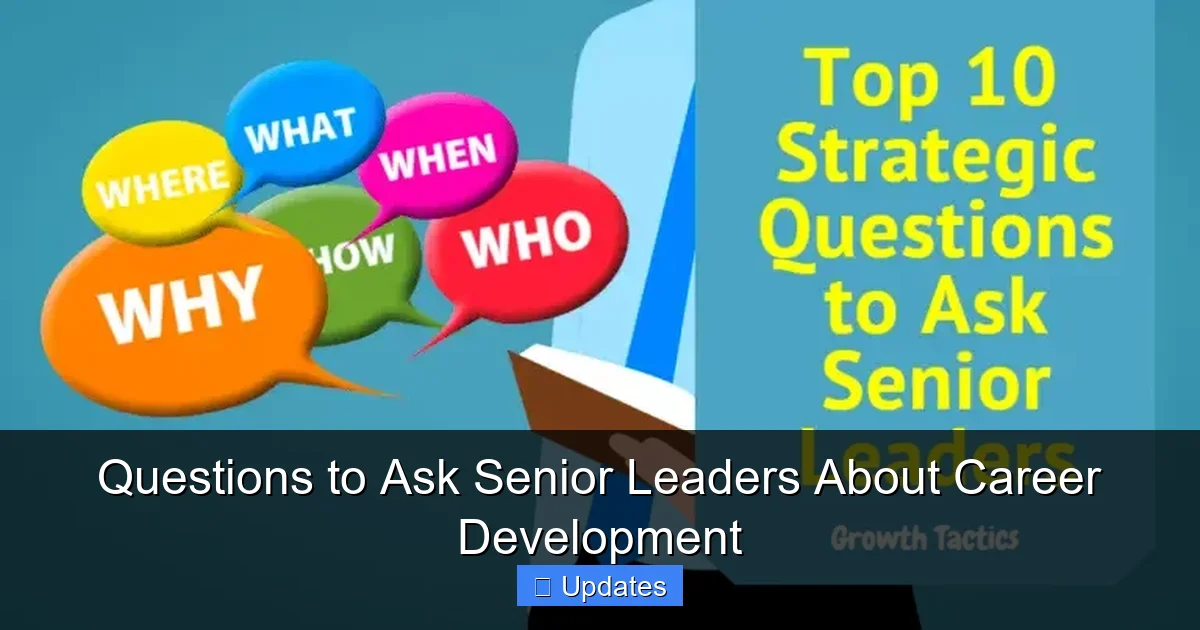
Visual guide about Questions to Ask Senior Leaders About Career Development
Image source: growthtactics.net
Let’s dive into specific questions. These fall into categories like growth strategies, skill-building, and organizational insight.
1. What does success look like in this organization?
This question gets straight to the heart of expectations. It’s not just about titles—it’s about behaviors, results, and mindset.
For example, a software engineer might learn that “success” includes mentoring juniors, owning cross-team initiatives, and speaking at conferences. Armed with that, they can focus on developing those skills instead of just writing code.
Pro tip: Always follow up by sharing what you’ve heard. Say something like, “Based on what you said, I’m focusing on improving my presentation skills so I can contribute more in client meetings.”
2. How did you advance within the company?
Everyone loves sharing their story. And hearing how others navigated challenges offers real-world lessons.
Ask about pivotal moments—projects that changed careers, mentors who helped, or failures that taught resilience. You’ll likely uncover patterns: maybe they took on stretch assignments early, built relationships across departments, or pursued certifications.
Use this info to reverse-engineer your own path. If they mention volunteering for high-visibility tasks, consider doing the same.
3. What skills should I prioritize developing?
Here’s a golden opportunity to get honest feedback. Senior leaders see the big picture—what’s missing in teams, what gaps hold people back.
They might say, “We need more data-driven thinkers in marketing,” or “Leadership is struggling with remote team management.” Knowing this lets you target your learning.
Action step: Create a personal development plan based on their input. Share it with your manager to align your growth with business needs.
Questions About Organizational Culture and Opportunities
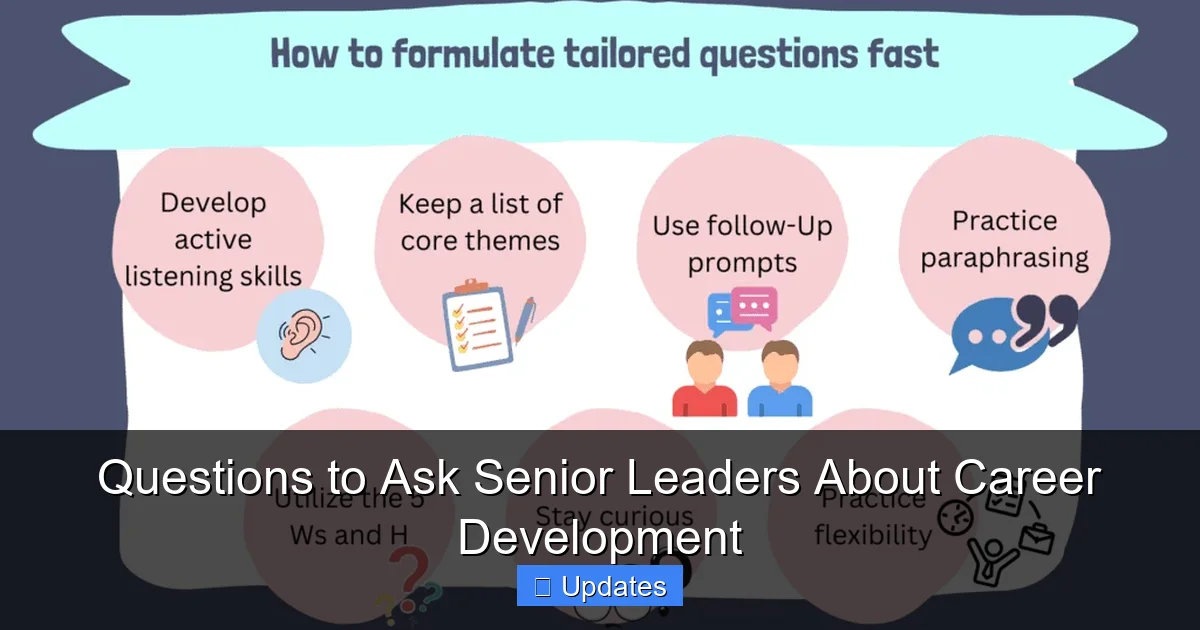
Visual guide about Questions to Ask Senior Leaders About Career Development
Image source: joingenius.com
Culture eats strategy for breakfast—and it shapes your ability to succeed. Understanding how things really work behind the scenes is key.
4. Are there hidden opportunities or unspoken rules about advancement?
Some companies reward loyalty. Others favor bold innovators. Some require political savvy. Getting the inside scoop prevents wasted effort.
Try phrasing it as curiosity: “I’d love to understand how promotions usually happen here. Is there anything most people overlook?”
Leaders often admit things like, “We promote people who volunteer for tough projects even if they fail,” or “Cross-functional collaboration is undervalued but crucial.”
5. Who are the key influencers in this organization?
Influence isn’t always visible. Sometimes it’s quiet advocates, sometimes it’s loud critics. Identifying them helps you navigate alliances and avoid blind spots.
Ask, “Who tends to shape decisions around here?” Then observe how they operate. Do they attend certain meetings? Publish articles internally?
Building rapport with these figures indirectly boosts your credibility.
6. How does this department support long-term career growth?
Not all roles offer equal growth potential. Some departments rotate talent frequently; others keep people locked in silos.
Ask your leader: “How does this team prepare people for broader responsibilities?” Listen for signals like rotation programs, stretch assignments, or leadership training.
If the answer is vague, that’s a red flag. Look for roles in organizations that actively develop talent.
Questions to Build Relationships and Visibility

Visual guide about Questions to Ask Senior Leaders About Career Development
Image source: joingenius.com
You can’t advance in a vacuum. Visibility is half the battle—and senior leaders decide who gets seen.
7. How can I increase my visibility within the company?
This is a direct ask for amplification. Leaders know which platforms matter: town halls, newsletters, external speaking gigs.
Example response: “Present at our quarterly review meeting next quarter. I’ll share insights from my recent project.”
Then deliver! Consistency proves reliability.
8. What projects or initiatives should I get involved with?
Stretch assignments are stepping stones. Senior leaders often know which efforts will showcase your potential.
Ask specifically: “Are there upcoming strategic projects where I could contribute meaningfully?”
Avoid generic asks like “Give me more responsibility.” Be precise.
9. How do you recommend building relationships across departments?
Silos kill careers. Cross-departmental connections open doors.
Ask: “Who should I connect with to understand [adjacent function]?” Then schedule coffee chats. Show up consistently.
Over time, you’ll become known as someone who bridges gaps—a trait leaders value.
Questions About Mentorship and Feedback
Feedback is fuel. Without it, you drive blindfolded.
10. Could we schedule regular check-ins to discuss my progress?
Formalize the conversation. Say, “Would monthly 15-minute calls work for us to review my goals?”
Treat it like a mini-mentorship. Come with updates, challenges, and questions.
Most leaders welcome structured dialogue over vague requests.
11. What’s the best way to give and receive feedback here?
Different cultures handle feedback differently. Some prefer blunt honesty; others value diplomacy.
Ask: “How does your team usually provide constructive criticism?” Then adapt your style accordingly.
This shows cultural awareness—another leadership quality.
12. Would you be open to being a mentor or sounding board?
Direct mentorship is rare but powerful. Frame it as mutual benefit: “I’d value your perspective as I navigate early-career decisions.”
Even if they decline, they’ll remember your professionalism.
Practical Tips for Asking Questions Effectively
Conversations aren’t magic—they require preparation and presence.
Prepare Ahead of Time
Never go in cold. Research the leader’s background: read their LinkedIn, company blogs, or news mentions. Note shared interests—maybe both attended the same university or care about sustainability.
Craft 2–3 questions beforehand. Practice saying them aloud. Confidence comes from rehearsal.
Choose the Right Setting
Pick low-pressure moments: post-meeting coffee, virtual lunch, or scheduled 30-minute slot. Avoid interrupting busy workflows.
If it’s your first talk, suggest a short call rather than an hour-long sit-down.
Listen More Than You Talk
Great questions come from listening. If they mention a challenge you faced, reference it: “You mentioned X issue last week—I ran into that too. How did you handle it?”
This builds rapport and yields richer insights.
Follow Up Immediately
Send a quick thank-you email summarizing action items. Example:
“Thanks again for your time today. As discussed, I’ll:
– Complete the AWS certification by Q3
– Present findings from Project Alpha at Friday’s sync
– Connect with Sarah in Finance to learn more about budgeting processes”
This demonstrates accountability.
Be Patient but Persistent
Growth takes time. Don’t expect overnight changes. Revisit conversations quarterly.
Track progress in a notebook. Note what worked, what didn’t, and adjust.
Real-Life Examples: How People Used These Questions
Meet Priya, a mid-level analyst at a healthcare firm. She asked her VP, “What skills do analysts typically master before becoming managers?” He replied, “Strategic thinking and stakeholder management.”
Priya started volunteering for executive briefings and joined a leadership workshop. Within a year, she was promoted to Associate Director.
Then there’s Marcus, a junior developer. He asked his engineering lead, “How did you transition from coding to architecture?” The answer: “By leading design reviews and documenting system decisions.”
Marcus began contributing to architecture docs and speaking up in design meetings. His visibility grew—and he landed a technical lead role.
These stories prove: targeted questions + consistent action = momentum.
Common Mistakes to Avoid
Even with good intentions, missteps happen. Watch out for these pitfalls:
- Asking too many yes/no questions: Avoid “Can I get promoted?” Instead, ask, “What steps do people usually take before promotion?”
- Being vague about goals: Don’t say, “I want to grow.” Specify: “I’d like to lead product launches within two years.”
- Neglecting follow-up: Failing to act on advice breaks trust. Always implement agreed-upon steps.
- Talking only about yourself: Balance self-interest with value. Ask, “How can I contribute to your priorities?”
- Expecting immediate answers: Leaders are busy. Give them space to think and respond thoughtfully.
Conclusion: Own Your Career Narrative
Your career isn’t handed to you—it’s built through choices, conversations, and courage. Asking senior leaders about career development isn’t bragging; it’s stewardship. You’re taking ownership of your growth.
Start small. Pick one question from this article. Reach out to a leader whose path intrigues you. Prepare. Show up. Follow through.
Over time, these conversations compound. They build relationships, clarify direction, and unlock opportunities. And that’s how careers take off.
Remember: The most successful people aren’t just talented—they’re proactive. They ask better questions, listen harder, and act faster. Now it’s your turn.
For more insights on navigating leadership conversations, explore our guides on strategic questions to ask senior leaders or how to build mentorship relationships that last.
Frequently Asked Questions
What are some good questions to ask senior leaders about career growth?
Great questions include: “What does success look like in this role?” “How did you advance within the company?” and “What skills should I prioritize developing?” These show initiative while seeking valuable guidance.
How do I approach a senior leader for career advice without bothering them?
Schedule a short, focused conversation by suggesting a 15–30 minute meeting. Come prepared with specific questions and express gratitude for their time. Respect their schedule and keep it concise.
Should I ask multiple senior leaders the same questions?
Yes! Different leaders offer unique perspectives. Just tailor each conversation to their expertise. For example, ask an HR head about company policies, while a department head discusses operational challenges.
What if my senior leader says they don’t have time to meet?
Politely ask if they’d share a few minutes virtually or via email. Alternatively, request a referral to someone who might have time. Persistence paired with respect often pays off.
How soon after starting a new job should I have these conversations?
Aim for your first 90 days. Use onboarding meetings or performance check-ins as entry points. Early conversations show commitment and help align your goals with organizational needs.
Can these questions work in industries without traditional hierarchies?
Absolutely. In flat structures, focus on peer leaders or informal influencers. Ask, “Who do you collaborate with most?” to identify key players. Adapt language to fit your culture.