
What Is a Senior League Bat


Big Button Mobile Phone

Long Handle Shoe Horn
Bed Rail for Seniors
A senior league bat is a baseball or softball bat designed for players aged 13 and up, typically in middle school, high school, and amateur adult leagues. These bats must meet specific performance and safety standards, most commonly BBCOR for high school/college or USSSA for travel ball. Choosing the right one involves understanding length-to-weight ratio (drop), material, and your league’s certification requirements.
Hey there, future slugger (and proud parent or coach)! If you’ve found yourself here, you’re probably staring at a wall of baseball bats at the sporting goods store, feeling utterly overwhelmed. Terms like “BBCOR,” “USSSA,” “drop,” and “composite vs. alloy” are flying around, and you just want to know: what in the world is a senior league bat, and which one is right for your player? You’ve come to the right place. We’re going to break it all down, plain and simple. Think of this as your friendly, no-nonsense guide to navigating the world of senior league bats in 2026.
First, let’s clear up the most common point of confusion right away. The term “senior league” in baseball and softball refers to the age group and competition level, not the age of the person playing. It’s for teenage and adult athletes. This is completely separate from content about what age is considered a senior citizen in other contexts. A 15-year-old star shortstop and a 45-year-old playing in a recreational league both use senior league bats. Got it? Okay, let’s dive in.
Key Takeaways
- Age & League Focus: Senior league bats are for players 13+, used in high school, middle school, and adult amateur leagues, not to be confused with senior citizen activities.
- Mandatory Certifications: The two main standards are BBCOR (-3) for high school/college and USSSA (1.15 BPF) for many travel ball leagues; always check your league’s rulebook first.
- Drop Matters: The “drop” is length minus weight (e.g., a 33″ 30oz bat is a -3). Senior bats typically range from -3 to -5, with -3 being the most common required standard.
- Material Choice: Alloy (aluminum) bats are durable and ready-to-use; composite bats offer a larger sweet spot and less vibration but require a break-in period.
- Proper Sizing is Crucial: Bat length and weight must match the player’s height, weight, and strength for optimal swing mechanics, control, and power.
- Technology Affects Performance: Features like balanced vs. end-loaded swing weights, barrel diameter (usually 2 5/8″ or 2 3/4″), and handle design impact feel and bat speed.
- Maintenance Extends Life: Store bats away from extreme temperatures, avoid hitting non-game balls, and rotate the barrel regularly to distribute impact wear evenly.
📑 Table of Contents
What Exactly Is a “Senior League” Bat?
In the simplest terms, a senior league bat is any bat that meets the certification standards for organized play for players aged 13 and older. This encompasses middle school teams, high school varsity/junior varsity, college, and most adult amateur leagues (like men’s leagues, women’s leagues, and co-rec). The key identifier is that these bats are built to withstand the higher pitch velocities and stronger hitters at these levels, and they are subject to strict performance standards to ensure a level playing field and safety.
The Two Big Certifications: BBCOR and USSSA
When you shop for a senior bat, you’ll see two acronyms everywhere. They are not interchangeable; they are the rulebooks different leagues follow.
- BBCOR (Batted Ball Coefficient of Restitution): This is the gold standard for high school and college baseball (NCAA). BBCOR bats have a maximum trampoline effect (how much the ball “jumps” off the bat) that is tightly controlled. The result is that they perform more like wood bats—less “pop” than older, hotter bat standards. The mandatory weight-to-length ratio is a -3 drop (e.g., a 33-inch bat must weigh 30 ounces). Barrel diameter is typically limited to 2 5/8 inches.
- USSSA (United States Specialty Sports Association): This is the dominant standard for travel ball, many high school summer leagues, and most adult amateur leagues. USSSA bats are allowed to have slightly more trampoline effect than BBCOR, meaning they can be a bit “hotter.” They come in various drops, most commonly -3, -4, or -5. Barrel diameter is often 2 3/4 inches (though 2 5/8″ is also common). They bear a USSSA certification stamp.
Rule #1: You must use the bat your specific league requires. A BBCOR bat is not legal in a USSSA-only league, and vice-versa. Always check your league’s current rulebook before buying.
Decoding the Specs: Length, Weight, and Drop
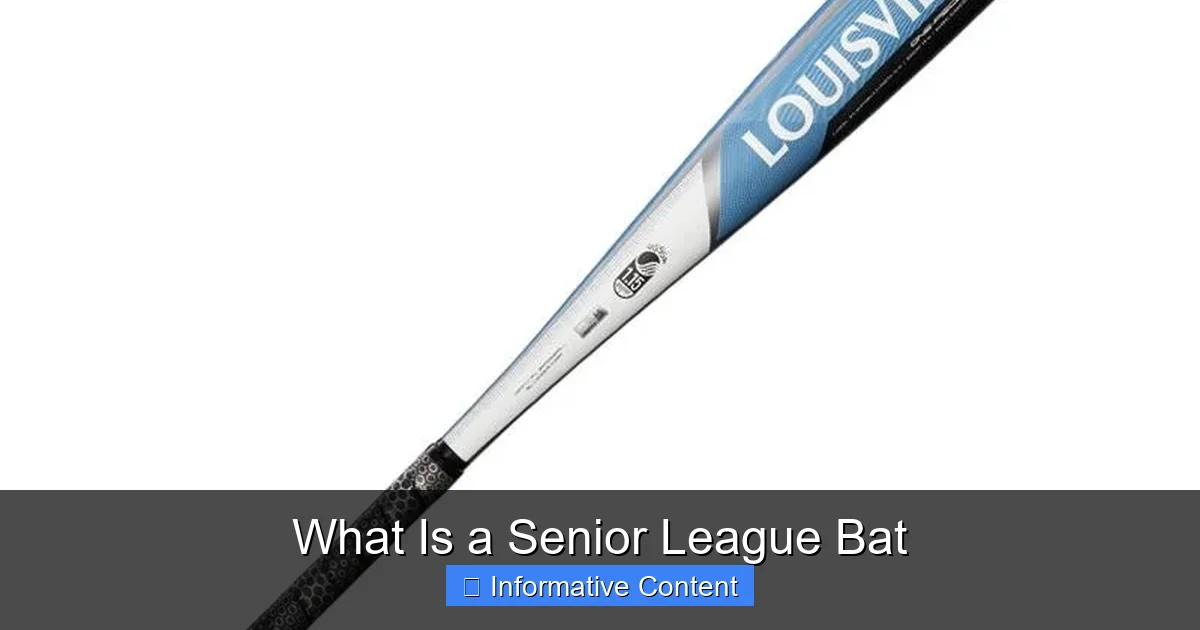
This is where sizing happens. The three numbers you need to understand are length (in inches), weight (in ounces), and the resulting “drop.”
Visual guide about What Is a Senior League Bat
Image source: batsunlimited.com
What Is “Drop”?
The drop is the difference between the length and the weight. It’s always a negative number. A -3 drop is the standard for BBCOR. A -5 drop means the bat is 5 ounces lighter than its length. A -5 bat on a 33-inch length would weigh 28 ounces. Generally, the lower (more negative) the drop number, the lighter the bat is for its length.
How to Choose the Right Size
This isn’t about what’s cool; it’s about what the player can control. A bat that’s too long or too heavy will lead to poor mechanics, slow swing speed, and frustration.
- For Younger Teens (13-14): Often start with a -3 bat in lengths from 31″ to 33″. A good test: have the player hold the bat straight out with one hand (arm extended). If they can hold it steady for 30 seconds without the barrel drooping significantly, it’s likely not too heavy.
- For High School (15-18): Most use a -3 bat in lengths from 32″ to 34″. Strength and hitting style matter. Power hitters may prefer a slightly heavier, end-loaded bat. Contact hitters often prefer a balanced swing weight for more bat control.
- For Adults: This varies wildly based on league rules (BBCOR vs. USSSA) and the player’s history. Many adult players revert to the size they used in high school or college, but some opt for a slightly shorter, lighter bat to maintain swing speed. A custom club fitting mindset applies here too—personal comfort is key.
When in doubt, start with a general sizing chart based on height/weight, but the “feel test” is the ultimate decider.
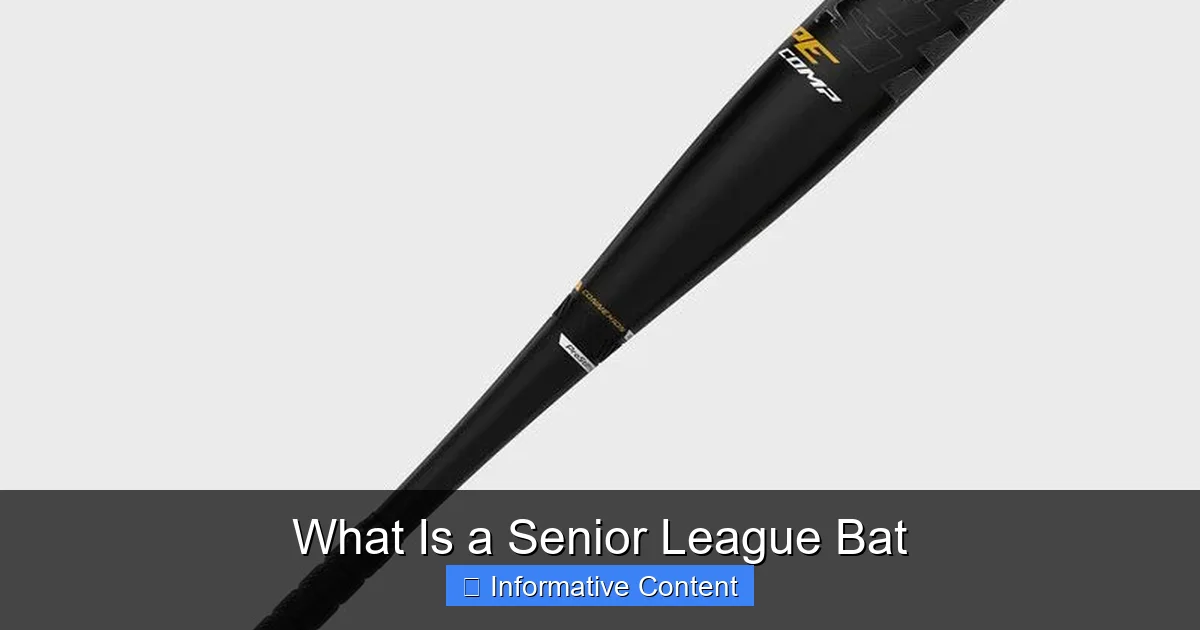
Material World: Alloy vs. Composite vs. Wood
The bat’s material dramatically affects performance, feel, durability, and price.
Visual guide about What Is a Senior League Bat
Image source: baselinesports.online
Alloy (Aluminum) Bats
These are the workhorses. They are made from a single-piece or multi-wall aluminum alloy.
- Pros: Ready to use right out of the wrapper (no break-in needed), very durable (often lasts multiple seasons), typically more affordable, perform well in cold weather.
- Cons: Can have more vibration or “sting” on mishits, sweet spot can be slightly smaller than top-tier composites, sound is metallic.
Composite Bats
Made from layered composite materials (carbon fiber, graphite, resin). They are the high-tech option.
- Pros: Generally have a larger, more forgiving sweet spot, significantly reduced vibration and sting on mishits (thanks to composite material dampening), lighter swing weight possible, often have a “crack” sound on contact.
- Cons: Require a proper break-in period (hitting 150-200 real baseballs, rotating the barrel), can be damaged by cold temperatures (below 60°F/15°C), often more expensive, performance can degrade over time.
Wood Bats
Mostly used in professional baseball, wood bat leagues, and for training. Ash, maple, and birch are common.
- Pros: Required in MLB and many elite summer leagues, excellent feedback feel, no performance standards (pure skill), classic “crack” sound.
- Cons: Smaller sweet spot, less “pop” than metal, can break, more sensitive to pitch location and swing mechanics.
2026 Note: Composite technology continues to improve, with better cold-weather tolerance and faster break-in times. Alloy alloys are also getting more sophisticated, mimicking composite feel.
Swing Weight and Barrel Tech: What’s Really Happening?
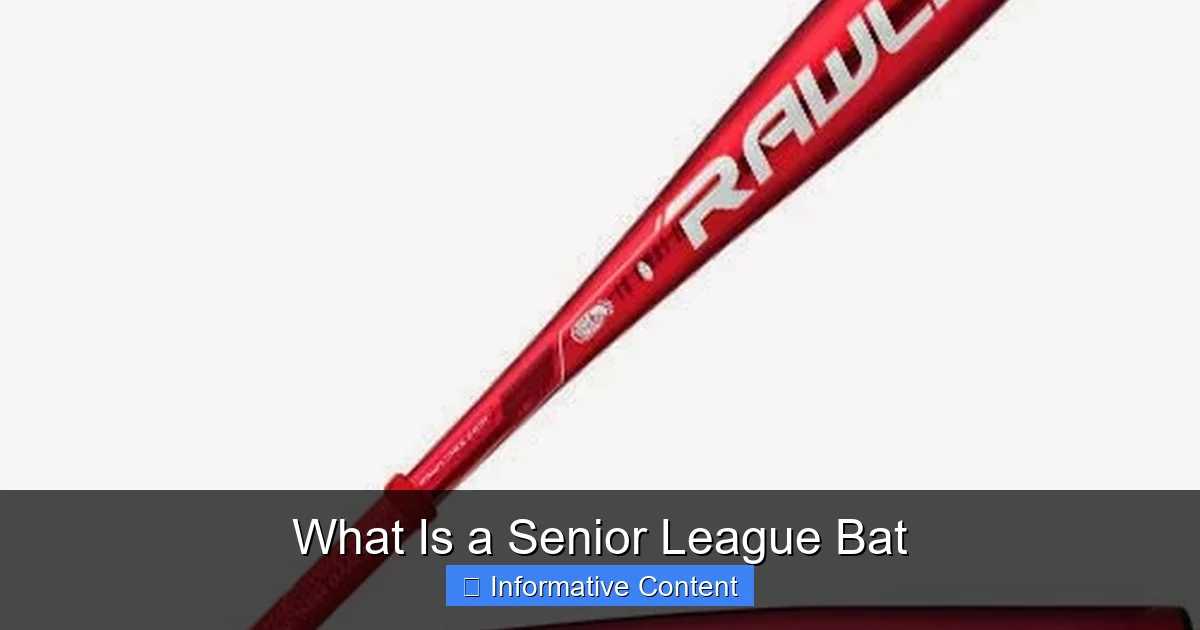
Two bats with the same length and weight can feel completely different because of their swing weight and balance point.
Visual guide about What Is a Senior League Bat
Image source: 1.bp.blogspot.com
Balanced vs. End-Loaded
- Balanced: Weight is distributed evenly along the bat. Easier to swing faster, better for contact hitters, and provides more control. Often described as having a “whip” through the zone.
- End-Loaded (or “Loaded”): Extra weight is placed toward the barrel’s end. This creates more mass at the point of impact, potentially generating more power for strong hitters. However, it feels heavier and can slow bat speed slightly. Requires more strength to control.
Barrel Diameter and Taper
As mentioned, senior league barrels are typically 2 5/8″ or 2 3/4″. A larger diameter gives a bigger hitting surface but also makes the bat slightly heavier. The “taper” is how the barrel narrows down to the handle. A longer, thinner taper can help with bat speed. Look for terms like “large barrel” or “max barrel” in marketing.
Buying Guide: Your Step-by-Step Checklist
Don’t walk into the store unprepared. Follow this plan.
- Confirm League Rules: This is non-negotiable. Get the exact certification (BBCOR, USSSA 1.15 BPF, etc.) and any barrel diameter restrictions. Write it down.
- Determine Starting Size: Use a sizing chart as a baseline. For a first senior bat, a -3 in a length like 32″ or 33″ is a very common starting point for a teenager.
- Choose Material Based on Player:
- For a young teen just moving up, a durable alloy bat is a fantastic, worry-free choice.
- For a serious, strong high school or travel ball player who can break in a bat, a composite offers a premium feel.
- Go Swing Some Bats: This is the most important step. Have the player take a few practice swings in the store (or batting cage). How does it feel? Can they swing it smoothly? Does it feel like it’s pulling their hands? Compare 2-3 options that meet the rules.
- Consider Your Budget: You can get a great BBCOR alloy bat for $150-$200. Top-tier composites run $300-$400. The most expensive bat isn’t always the best fit. A well-sized, rule-compliant alloy bat is better than an ill-fitting composite.
- Think About Future Growth: If the player is still growing, you might consider a bat that’s a half-inch longer than current comfort, but never a weight they can’t handle. You can always add a little tape to the knob to make it feel shorter if needed.
Care, Maintenance, and Longevity
A good bat is an investment. Here’s how to protect it.
- Temperature is the Enemy: Never leave a composite bat (or any bat, really) in a hot car. Extreme heat can damage the composite fibers and drastically reduce performance. Alloy bats are more tolerant but still shouldn’t be baked.
- Avoid Non-Game Balls: Don’t use your senior league bat to hit soft foam balls, wiffle balls, or pitching machine balls that aren’t regulation baseballs/softballs. It damages the barrel and can void warranties.
- Rotate the Barrel: After every few swings in practice, rotate the bat a quarter turn. This distributes impact wear evenly across the barrel, preventing a “dead spot” from forming in one area.
- Clean Properly: Use a damp cloth to wipe down the barrel and handle. Never use abrasive cleaners.
- Store Smart: Keep it in a bat bag or rack at room temperature. Don’t stack heavy items on it.
- Know the Warranty: Most reputable brands offer a 1-year warranty against defects. This usually does NOT cover normal wear and tear, player misuse, or hitting non-regulation balls. Register your bat immediately after purchase.
Understanding these care basics can add seasons to your bat’s life, saving you money in the long run. It’s just as important as the initial purchase decision.
Conclusion: Finding Your Perfect Swing
So, what is a senior league bat? It’s the tool that bridges the gap between youth baseball and the big leagues—a piece of equipment engineered for the faster speeds and stronger athletes of teenage and adult competition. It’s defined by its certifications (BBCOR or USSSA), its weight-to-length drop (usually -3), and its construction (alloy or composite).
The journey to finding the right one is part science (understanding the specs and league rules) and part art (finding the bat that just *feels* right in your hands). There is no single “best” bat for everyone. The best bat is the one that is legal for your league, fits your physical size and strength, and gives you the confidence to step into the box and swing without hesitation.
Take your time, use the checklist, swing a few, and don’t get swayed by hype. The perfect bat for your 16-year-old travel ball star or your 30-year-old recreational league teammate is out there. Now you have the knowledge to find it. Get out there and hit some balls!
Frequently Asked Questions
What’s the difference between a senior league bat and a youth bat?
Senior league bats are for ages 13+ and have stricter performance standards (BBCOR/USSSA) and heavier weights (-3 drop is common). Youth bats (for players roughly 12 and under) have more lenient standards (like USA Baseball) and often have lighter drops like -10 to -12, making them easier for younger, weaker players to swing.
Can I use a BBCOR bat in a USSSA tournament?
No. BBCOR and USSSA are separate certification standards with different performance limits. A BBCOR bat will not have the USSSA 1.15 BPF stamp and is illegal in any league that specifically requires USSSA certification, even if it’s a -3 drop. Always check your tournament or league rules.
Do composite bats need to be broken in?
Yes, most composite bats require a break-in period of about 150-200 hits with regulation baseballs. You should hit the ball all around the barrel, not just the sweet spot, to evenly break in the composite material. Rotate the bat every 10-15 swings during this process. Alloy and wood bats are ready to go immediately.
What does “drop” mean on a bat?
The drop is the difference between the bat’s length and its weight. It’s expressed as a negative number (e.g., -3, -5). A 33-inch, 30-ounce bat is a -3 drop. A lower (more negative) drop number means a lighter bat for its length. Senior league bats most commonly have a -3 drop, but USSSA bats can also be found in -4 or -5 drops.
How long should a senior league bat last?
With proper care and use, a good alloy bat can last 2-4 seasons for a dedicated player. A composite bat, if broken in correctly and not abused, can also last 2-3 seasons, though the performance may gradually decrease. Wood bats have the shortest lifespan and can break at any time. Hitting cold balls or non-regulation balls will drastically shorten any bat’s life.
Is a bigger barrel always better?
Not necessarily. A larger barrel (2 3/4″ vs. 2 5/8″) provides a slightly bigger hitting surface, which can be more forgiving. However, it often adds a tiny bit of weight and can change the bat’s balance. The best barrel size is the one the player feels most confident with. Many elite players prefer the slightly slimmer 2 5/8″ barrel for its quicker swing feel. League rules may also cap barrel diameter.