
What Are Senior Selection Letters


Orthopedic Sandals

Bathtub Transfer Bench

Non-Slip Bathroom Mat
A senior selection letter is a formal document, typically from a healthcare or social service professional, that officially designates an individual as a senior for the purpose of accessing age-specific programs, benefits, and care services. It serves as a key that unlocks tailored support, from discounted services to specialized living arrangements. Understanding how to obtain and utilize this document is crucial for seniors and their families to ensure they receive the appropriate resources and respect due to their life stage.
Key Takeaways
- Definition: A senior selection letter is an official verification document, not a medical order, used to confirm an individual’s eligibility for senior-focused programs and benefits based on age or life circumstances.
- Primary Purpose: Its core function is to streamline access to services—from financial discounts to assisted living—by providing a standardized, credible proof of senior status to providers and agencies.
- Typical Issuers: These letters are most commonly issued by physicians, geriatric care managers, licensed clinical social workers (LCSWs), or authorized representatives from government agencies like the Area Agency on Aging.
- Critical Importance: Beyond discounts, it can be mandatory for enrollment in specific health plans, community centers, and senior housing, and it formally acknowledges the transitional needs of aging.
- Not a One-Size-Fits-All: Requirements vary significantly by program; a letter for a movie discount differs from one needed for a Medicaid waiver program. Always confirm the specific recipient’s requirements.
- Legal & Ethical Weight: While not a legal contract, the letter carries professional weight. Issuers must be truthful, and recipients should understand it verifies eligibility, not guarantees service approval.
- Proactive Tool: Families should view obtaining this letter as a proactive step in senior care planning, ideally before a crisis hits, to avoid delays in accessing necessary support systems.
📑 Table of Contents
- What Exactly Is a Senior Selection Letter? Demystifying the Document
- Who Issues These Letters and Why Their Credentials Matter
- Why This Letter is Your Most Powerful Access Tool in 2026
- Step-by-Step: How to Obtain Your Senior Selection Letter
- Common Pitfalls and How to Avoid Them
- The Future of Selection Letters: Trends for 2026 and Beyond
- Conclusion: Your Proactive Next Step
What Exactly Is a Senior Selection Letter? Demystifying the Document
Let’s talk about something that might sound bureaucratic but is actually a powerful tool in your senior care toolkit: the senior selection letter. In simple terms, it’s an official piece of paper that says, “Yes, this person qualifies as a senior for our specific program.” Think of it less like a medical diagnosis and more like a keycard. The keycard (the letter) doesn’t build the building (the service), but it proves you have permission to enter and use what’s inside.
This isn’t a one-size-fits-all document from a government office. It’s a tailored verification, usually authored by a trusted professional who knows the individual’s situation—most often a doctor or a social worker. Its sole job is to bridge the gap between a person’s age or functional needs and an organization’s requirement for proof. In 2026, with an aging population and more fragmented service systems, this letter has become a critical navigational aid.
The Core Components: What’s Inside the Letter?
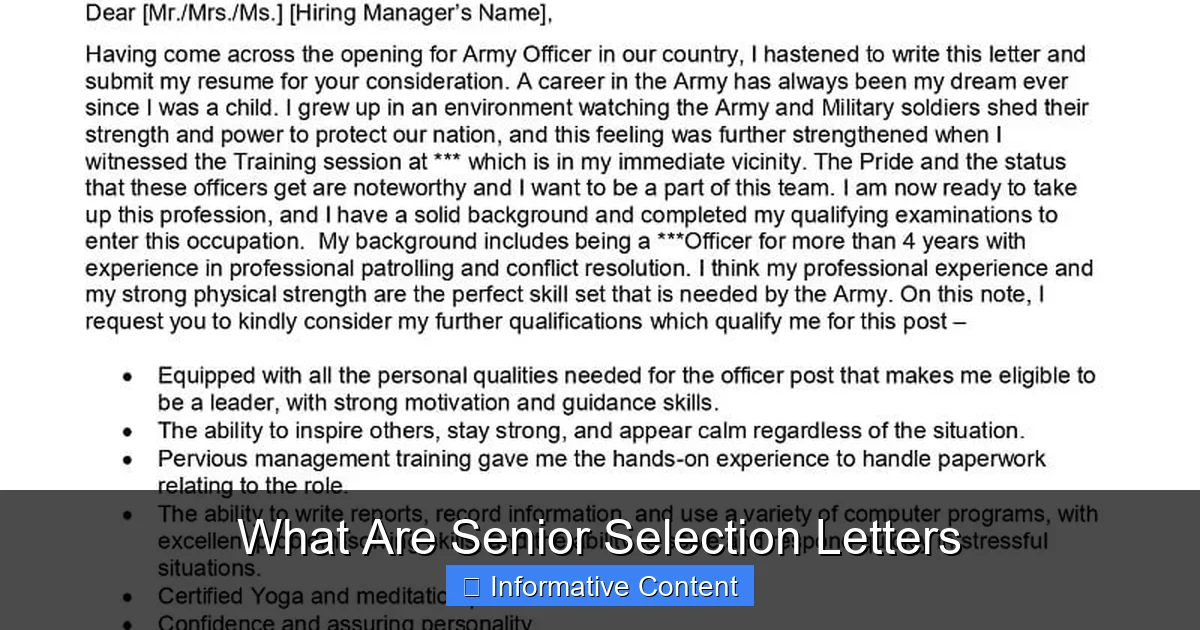
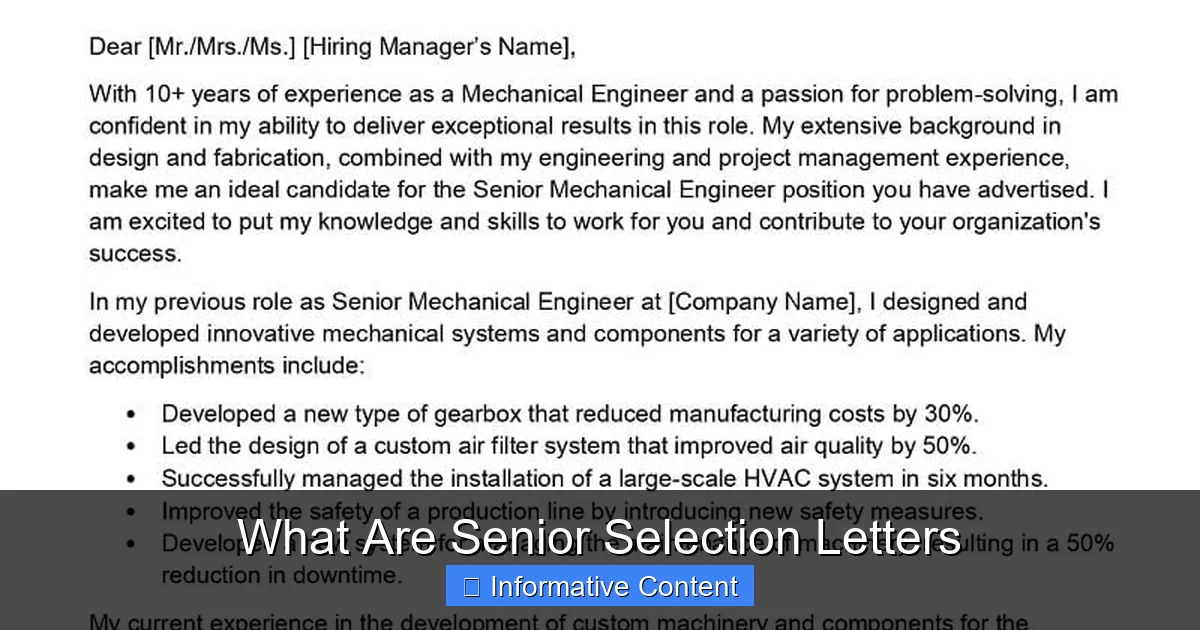
A proper senior selection letter contains specific elements to be valid and useful. First, it has the issuer’s official letterhead, complete with their name, title, credentials (like MD or LCSW), license number, and contact information. This establishes credibility. Second, it clearly states the date of issuance. Third, and most importantly, it includes a clear statement of verification. This reads something like: “This letter is to verify that [Senior’s Full Name], born on [Date of Birth], meets the eligibility criteria for senior status as defined by [Specific Program Name, if applicable] due to their age of [Age] and/or documented need for [Type of Support, e.g., assistance with activities of daily living].”
Finally, it includes the issuer’s signature and, often, a direct phone number for the recipient to verify the letter’s authenticity. Some programs may also request a brief narrative explaining the senior’s functional status or care needs, especially for services aimed at those with limitations rather than just age-based discounts.
Who Issues These Letters and Why Their Credentials Matter
The power of a senior selection letter is directly tied to the authority of the person signing it. Not just anyone can write one that will be accepted. The issuer must be a licensed or certified professional whose opinion is trusted by service providers. The most common and widely accepted issuers are:
Visual guide about What Are Senior Selection Letters
Image source: assets.qwikresume.com
- Physicians (MD or DO): A doctor’s letter carries significant weight, especially for medical-related services, insurance plans, or programs requiring proof of health-related need. A family doctor or geriatrician can attest to both age and health status.
- Licensed Clinical Social Workers (LCSW) or Geriatric Care Managers: These professionals are experts in assessing social and functional needs. Their letters are gold standard for community-based services, adult day programs, and many senior housing applications, as they speak to daily living capabilities.
- Advanced Practice Registered Nurses (APRN) or Physician Assistants (PA): Under the supervision of a physician or within their scope of practice, these clinicians can also provide valid verification, particularly for health-focused programs.
- Authorized Government or Agency Representatives: Staff from the local Area Agency on Aging, Veterans Affairs officers, or case managers from Medicaid/Medicare offices can issue letters that are specifically tied to the programs they administer.
Why does this matter? A letter from your next-door neighbor, no matter how well-meaning, won’t be accepted. The recipient organization needs assurance that the verification comes from a regulated professional with the expertise to assess senior criteria. Always ask the program you’re applying to *who* they accept letters from before you go seeking one.
Why This Letter is Your Most Powerful Access Tool in 2026
You might be thinking, “Can’t I just show my driver’s license?” For many simple discounts, yes. But the senior selection letter operates on a different level. It’s the difference between a casual perk and essential, often complex, services. Here’s where it becomes indispensable:

Visual guide about What Are Senior Selection Letters
Image source: assets.qwikresume.com
Unlocking Specialized Care & Housing
Consider applying for an assisted living community or a Medicaid-funded home and community-based services (HCBS) waiver. These programs don’t just need to know you’re 70; they need to know you have a *clinical need* for support. A doctor’s or social worker’s letter detailing specific limitations—like difficulty with bathing, medication management, or mobility—is frequently a non-negotiable part of the application packet. Without it, an otherwise eligible senior may be denied crucial care.
Navigating Complex Benefit Systems
In 2026, benefit systems are increasingly intertwined. A senior selection letter can serve as a foundational document for multiple applications. It can be used to:
- Enroll in certain Medicare Advantage plans that offer special senior-focused benefits.
- Apply for property tax exemptions or utility bill assistance programs for seniors, which often require more than just age proof.
- Gain entry to senior community centers that have membership criteria based on functional need or age within a specific range (e.g., 55+ communities).
Financial Planning & Discounts
While many restaurants and stores offer senior discounts with just an ID, some larger financial and service contracts require formal verification. This includes some insurance policies (like final expense or certain annuities), reduced-fee legal services, or even tuition waivers for continuing education programs at universities. Having a pre-prepared letter saves time and hassle.
Furthermore, understanding the landscape of what senior discounts start at 50 is important, as some programs have lower age thresholds. Your selection letter can be tailored to reflect eligibility for these “early senior” benefits, potentially saving you money years before the traditional 65+ mark.
Step-by-Step: How to Obtain Your Senior Selection Letter
Getting this letter is usually straightforward, but knowing the steps prevents delays. Here is your actionable guide:
Visual guide about What Are Senior Selection Letters
Image source: assets.qwikresume.com
Step 1: Identify the Exact Requirement
Before you ask anyone for a letter, get the specifics. Contact the program, facility, or benefit provider. Ask: “What exact criteria must the letter address? Do you have a template or specific wording you require? Which professional credentials do you accept?” Some will provide a form; others want a narrative. This step is critical—a generic letter may be rejected.
Step 2: Choose the Right Professional
Based on the requirements from Step 1, select your issuer. If it’s for medical need, schedule an appointment with the senior’s primary care physician. If it’s for community services, contact a local social worker or the Area Agency on Aging. Be prepared to explain why the letter is needed and provide any program guidelines to the professional.
Step 3: Prepare the Information
Make the professional’s job easy. Have the senior’s full legal name, date of birth, address, and the specific program name and address ready. If the letter needs to describe functional limitations (e.g., “needs assistance with dressing”), have specific examples and dates prepared. If you have previous assessments or care plans, bring those as reference.
Step 4: Follow Up and Provide Additional Info
After the appointment, ask how long it will take and if you need to pick it up or if it will be mailed/faxed. Offer to provide a pre-addressed, stamped envelope if it needs to be sent directly to the recipient. Always get a copy for your records. Politely confirm with the program after a week to ensure they received it and that it meets their needs.
Common Pitfalls and How to Avoid Them
Even with the best intentions, families can stumble. Here are the top mistakes and how to sidestep them:
- Pitfall: Using an Outdated Letter. A letter from three years ago is often not acceptable. Requirements change, and a senior’s status can evolve. Always aim for a letter issued within the last 6-12 months.
- Pitfall: Vague Language. “John is an elderly gentleman” is not sufficient. The letter must explicitly state the senior’s name, date of birth, and how they meet the *specific* eligibility criteria (age, functional need, etc.).
- Pitfall: Wrong Issuer. Sending a letter from a chiropractor or a non-licensed counselor when the program requires an MD or LCSW will cause an instant denial. Double-check the accepted credentials list.
- Pitfall: Not Addressing the “Why Now.” If applying for a service based on need (not just age), the letter must explain the current, documented need. A history of arthritis isn’t enough; it needs to state how that arthritis currently limits daily activities.
- Pitfall: Forgetting the Senior’s Consent. HIPAA laws are strict. You must have the senior’s written consent (a HIPAA authorization form) for the professional to discuss their information and for the program to contact the issuer for verification. The professional’s office will usually have this form.
The Future of Selection Letters: Trends for 2026 and Beyond
The world is going digital, and senior verification is no exception. By 2026, we expect to see two major shifts:
Digital Verification & Secure Portals
Instead of paper letters, we’ll see the rise of secure, verifiable digital credentials. A doctor or social worker could upload a verified letter to a patient portal or a state-run senior services hub. The senior or their caregiver could then grant time-limited, secure access to this document to any authorized service provider via a link or digital key. This reduces paperwork, prevents loss, and speeds up application processes. Some forward-thinking senior living communities are already piloting such systems.
Integration with Broader Care Plans
The senior selection letter will become less of a standalone document and more of a component within a comprehensive, electronic care plan. As electronic health records (EHRs) and long-term services and supports (LTSS) systems talk to each other, the verification of “senior status” and associated needs will be an automatically populated field, pulled from the clinician’s assessment. This seamless integration will reduce administrative burden on families and ensure consistency of information across a senior’s care team.
However, the fundamental principle remains: a qualified professional must assess and verify the senior’s status. Technology will simply make that verification easier to share and validate.
Conclusion: Your Proactive Next Step
A senior selection letter is more than paperwork; it’s a strategic tool in your advocacy arsenal. It transforms the vague concept of “being a senior” into an official, recognized status that opens doors. The best time to think about this letter is not when you’re in the middle of a crisis application, but as part of a proactive planning process. During an annual check-up or a care planning meeting, ask the professional, “Could you provide a general verification letter that outlines [Senior’s Name]’s age and overall health status? We’d like to have it on file for future program applications.”
Having this document ready—updated, specific, and from the right source—means you’re not scrambling when an opportunity or need arises. It means you can act with confidence, knowing you have the key in hand. In the complex ecosystem of senior services, that kind of preparation isn’t just helpful; it’s empowering. Take the step today to speak with your senior’s doctor or care manager about this simple yet profoundly impactful document.
Frequently Asked Questions
Who exactly needs a senior selection letter?
Any senior or their caregiver who is applying for a program, service, or benefit that requires formal verification of senior status beyond a standard ID. This typically includes applications for specialized senior housing, Medicaid waiver services, certain healthcare plans, and community-based programs that assess functional need.
Is there a cost to get a senior selection letter?
Often, the cost is bundled into a consultation or appointment fee with the issuing professional (like a doctor’s visit). Some social service agencies or Area Agencies on Aging may provide the letter free of charge as part of their case management services. Always ask about potential costs when scheduling the appointment.
How long is a senior selection letter valid?
There is no universal expiration, but most requesting organizations will only accept letters issued within the past 6 to 12 months. This ensures the information is current. For age-based verification, a letter remains factually true, but for need-based services, a recent assessment is almost always required.
What’s the difference between a senior selection letter and a medical order or prescription?
A medical order (like for a wheelchair or home health) is a directive for a specific medical device or treatment. A senior selection letter is a broad verification of status for eligibility purposes. One tells a supplier *what* to provide; the other tells a program *who qualifies* to apply.
What if a senior living community rejects the letter I provide?
First, don’t panic. Ask for the specific reason for rejection in writing. Common reasons are an outdated letter, wrong issuer, or missing information. Then, work with the community’s admissions director to understand their exact requirement and obtain a new letter from the correct professional that meets their template or wording needs.
Can I write my own senior selection letter?
No. The letter must come from an authorized, credentialed professional. A self-written letter, even if notarized, will not be accepted by any legitimate program because it lacks the impartial, professional verification that the issuer is qualified to make.
